@kushalbhagia Real enterprise AI adoption will happen via open source models. Currently everyone is running trials, eventually when it comes to scale costs will completely go out of hand if using frontier models. We will be spending in USD but to AWS, Azure, GCP and the likes of it
Reminder- If you’re starting up, keep the team small for as long as possible. A few solid engineers, designers, and people who can tell a story are enough to win. More employees create power games & gossip shops you can’t control. Build products customers genuinely need that make them a paying hostage. Don’t chase investors. They will chase you if you get the above right. Avoid stupid PR tactics like paying influencers to talk about you. Faking things will hurt more. Build your own distribution and own your narrative. That’s a moat money can’t buy. Conferences are overrated and networking is mostly noise. Buy books for your team and meet their families. They won’t remember team parties , but they’ll remember being respected. Most startup metrics are created by people who’ve never built anything meaningful. Real builders are obsessed with making profits and get depressed when they loose money. Don’t follow investor trends and projections. If they knew so much, they should have built it. Don’t waste time posting AI slops and your picture sitting with a cofee. You look dumb. But no one will tell you this. Build something so good that others point to it for inspiration.
The heat has been brutal this past week. Temperatures hit 45° in Nagpur, 44° in Ahmedabad, 43° in Prayagraj, 42° in Delhi. Even Bengaluru hit 37°. And we're still in April 😬
A big contributing factor behind rising temperatures is the loss of forest cover, and India has lost a lot of it. Back in 2020, we met the team behind Farmers for Forests (F4F). Their idea was to do agroforestry at scale. The challenge is that farmers can't afford to wait years for trees to pay off, and most tree-planting projects don't survive the first monsoon. The idea was ambitious, and we at @RainmatterOrg backed them early.
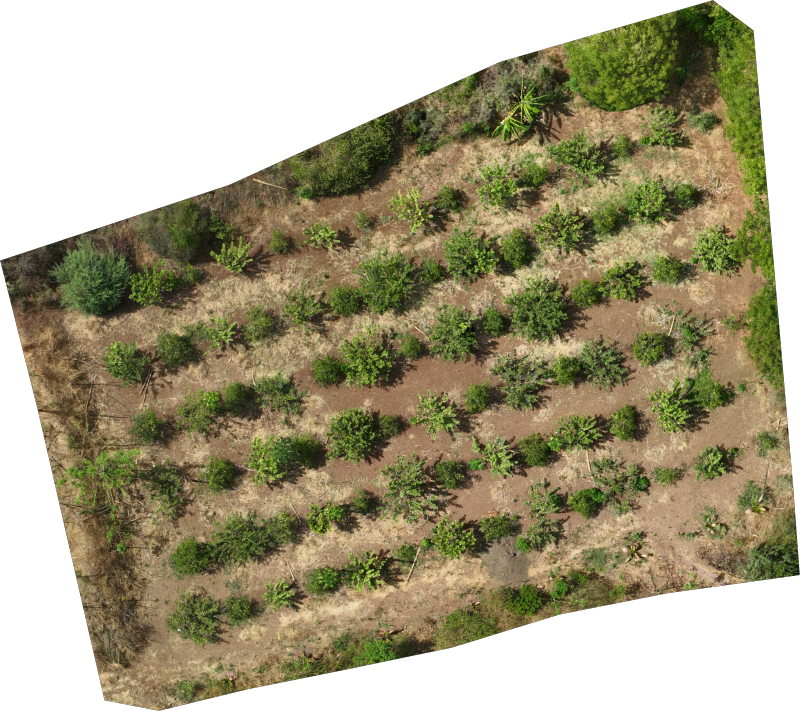
Most tree-planting in India is monoculture, just rows of one species. But a plantation isn't a forest. F4F plants multi-layer agroforests with fruit, timber, shrubs, intercrops, and native species, trying to mimic what an actual forest does.
Six years later, they've gone from 50 acres to 5,000 acres and have just secured funding to reach 40,000 over the next three years. Compared to traditional crop farming, per acre, they're seeing ~4x carbon sequestration, ~3x farmer income, and meaningful improvement in biodiversity and soil health. Still early days, but promising.
Those numbers needed to be verifiable. So F4F built TreeLens, an open-source tree-tracking system that uses drone imagery to measure carbon sequestration, tree height, and biodiversity across thousands of small farms. 15 other organisations now use it.
The hardest problem in agroforestry is time. Fruit trees take 5 to 7 years to pay off, and most small farmers simply can't wait that long. So F4F is now working with the government and the larger ecosystem to design financial instruments like carbon bonds and first-loss guarantees that protect farmers while the trees grow.
Really glad we backed Arti, Aditya, and Krutika early.
For god sake stop reviewing the code and start focusing on “is it working as expected” - you can do that with AI - earlier you were lazy to write test and gave excuses that it slowed devs but now there is no excuse, get your specs right with acceptance criteria.
1/ In the AI/robotics revolution, the biggest winner is actually going to be @ycombinator—because the world is about to need 100x more founders. And YC creates great founders at scale.
Sounds weird but hear me out for a hot second 🧵👇
AI has made brilliant folks 100x more productive. AI can’t increase intelligence it’s just an accelerator for folks who already have it. The only difference between who makes it through and who doesn’t will be love for their craft and hunger.
hot take :) The biggest and most productive people in the AI era are the folks who are already good at their jobs. AI as a multiplier, not an equalizer/democratizer
OpenClaw is amazing until it does something funny like alter its own config file because you asked to try the new dream mode and then it can’t restart because of invalid config with the wrong version. This happened to me yesterday morning.
I had to go ssh in with Claude Code to get it fixed.
But the sheer fact all of these can happen shows you we are at Apple I stage: assemble your own motherboard stage.
But the Apple II personal computer moment (where anyone can go to the store and buy a PC and it works) is coming for OpenClaw
We are so early and this is the worst it will ever be
I thought people were exaggerating. Then I burned $100+ of extra Claude usage in 1 hour.
What happened: agentic coding with Claude in Chrome enabled. 10-20x multiplier on already expensive operations.
A survival guide until the fix ships:
Claude Code (terminal):
→ npx @anthropic-ai/claude-code (bypasses the Bun cache bug)
→ Avoid --resume (breaks cache)
→ /compact to compress context mid-session
→ /effort medium for routine work, /effort low for simple tasks
→ --model sonnet for exploration. Opus for final passes only
→ /mcp — disable servers you're not actively using
VS Code / Cursor:
→ Same engine. Same bugs. Same fixes.
Cowork (desktop):
→ Default to Sonnet. Not every task needs Opus.
→ Auto-selects effort
→ Start a fresh session if context bloats
Dispatch (mobile):
→ No model picker in UI
→ Delete session, start new one if it spirals
→ You can ask it to dispatch sessions with specific models
The biggest lever most people miss: stop using Claude in Chrome for scraping. Dev-browser gives you DOM snapshots instead of screenshots. Text is 10-100x cheaper than pixels.
Anthropic knows. Fix is coming. Until then — /compact, /effort medium, and kill your unused MCPs.
A CEO from one of our portfolio companies shared this with their team. I’m re-sharing it with their permission, because it resonated and reflects what all founders and CEOs should be communicating.
--
We are living through a period of compounding change. And in moments like this, the biggest risk is no longer making the wrong decision. It is moving too slowly while the world moves around you.
There are two paths. We can play defense:
- Protect what we have
- Optimize what works
- Wait for clarity
It feels safe. It isn’t.
Or we can play offense:
- Learn faster than the environment changes
- Use new tools to solve old problems in better ways
- And create entirely new strategies and businesses
That’s where the opportunity is.
Challenge yourself to do things faster and better than you have ever attempted. Stay uncomfortable. Stay on the front foot.
"I don't think many tech companies execute M&A well."
Palo Alto Networks CEO @nikesharora breaks down his strategy for successful M&A:
"Purchase price is an irrelevant artifact. If it's going to work, it's going to work phenomenally well, or you're going to screw it up. It's not what you paid, it's what you're able to do with it."
"You could say that Instagram was expensive, or YouTube was expensive, or DoubleClick was expensive. They all worked perfectly. AOL Time Warner is a different story. So it boils down to how you execute past the price you pay for it."
"In tech, when you buy a company, you buy a team, you buy an existing product, and you buy a roadmap for the future. The question is: can you deliver on that roadmap? Can you accelerate that roadmap? Does it work?"
"We sign a term sheet, and we ask the founders to sit with our team and redesign the product roadmap so we like it and they like it. And if they don't agree with our expectations and we don't agree with theirs, we don't buy the company."
"We make them in charge. My teams have to work for them, which makes them really unhappy. And not many of them like it. But I'm like, look, these guys went out there, raised money, kicked your ass in your category, and you want them to work for you? That makes no sense to me. You're going to work for them. Learn from them."
"So our job is to enable these people. We look at them and say, whatever your business plan was when you were a small private company, find me a business plan that's twice as assertive and bold as the one you had then."
"We've built a phenomenal system to take them to market. I have 3,000 people in the field... 3,000 people go out there and see 10,000 customers. So that's where the secret sauce kicks in."
"We've bought 34 companies so far. I think our hit rate on things that have worked is over 70%."