A series of studies reveals that mainstream brands do not resonate as well with minority consumers, but mainstream brands can improve their standing by making ads featuring diverse ensembles because these integrated ads enhance societal identification. https://t.co/BeCUJ9YZL0
When do targeted discounts make untargeted buyers less profitable? A B2B field study finds that discount spillover is pervasive.
https://t.co/sypexAMGWW
What stops consumers who care from taking effective actions to mitigate climate change? A new JAMS article investigates how knowledge gaps and psychological biases can lead consumers astray. https://t.co/Xfygz1yGRA
Does incentivizing customer reviews make a difference? Find out in a write-up describing a new paper in @Mrktng_Science. @AndreyFradkin@daveholtz
https://t.co/P0LKOGr53k
The anchoring effect has been one of the most far-reaching phenomena across the behavior sciences with a history spanning 50 years. Have you every been curious what we have learned over these decades? Take a look at our new preprint: https://t.co/p2Tl6gkO7z
Accessing #ChatGPT from #R is super easy, you can interact with the API simply via HTTP using the httr package from R.
Download a simple code example from my Github (Link in Comments)
New paper! 📈
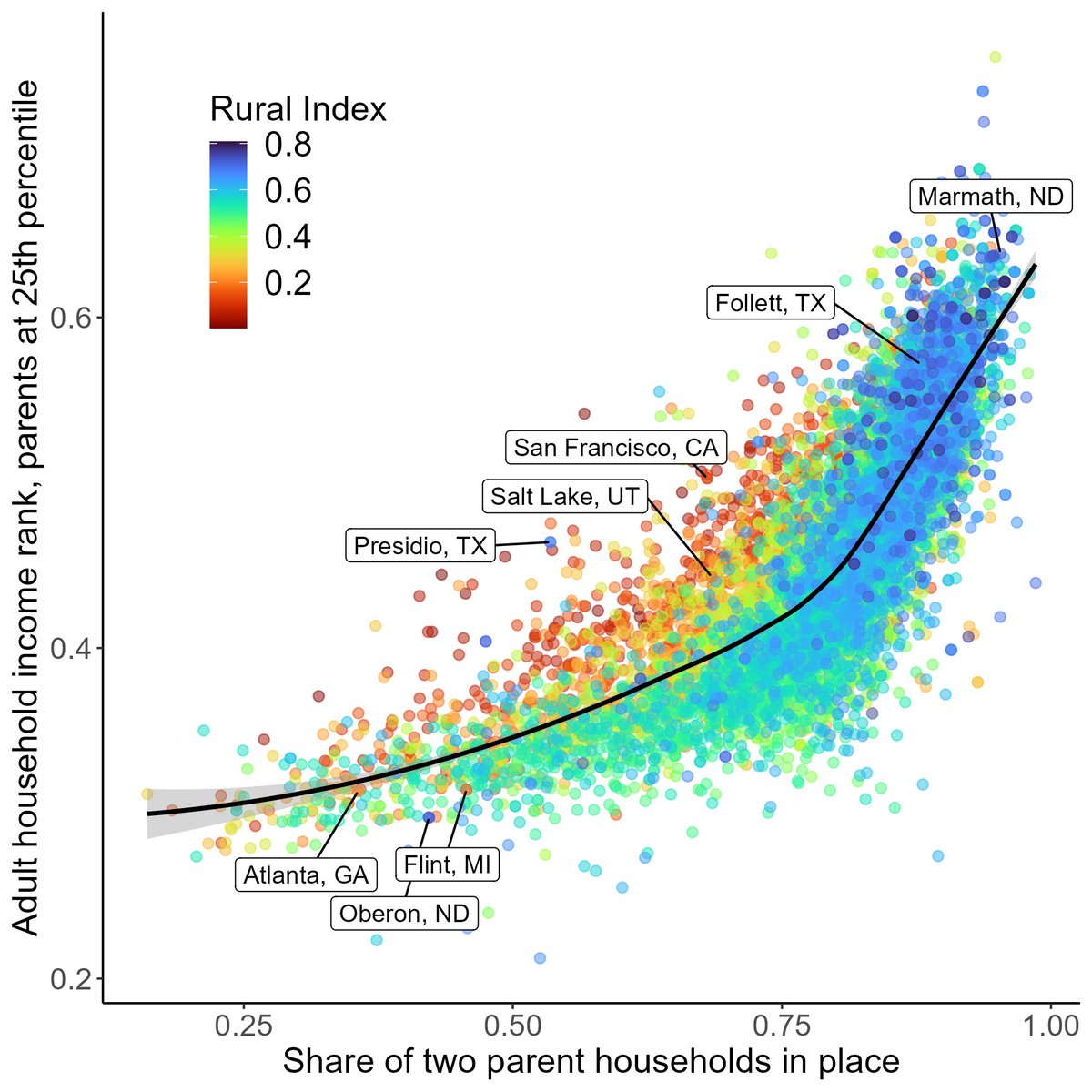
Why do kids born into poverty in rural areas climb the income ladder at higher rates than their urban peers? Answer: rural boys, who benefit from life in small places with more two-parent households.
https://t.co/yBObBQHX2S
#AcademicTwitter#EconTwitter#rstats 1/8
Do online ad serving algorithms increase gender bias?
Does marketing response to political events matter?
How can I make my writing have more impact?
NEW SI on Consumer insights from text analysis is here.
Co-edited by @grantpackard, Sarah Moore, @j1berger
https://t.co/SKgLVGABfT
Profanity is typically thought to be offensive language that breaks social norms in marketing contexts. The authors of a recent @ama_journals study discovered that consumers actually often perceive product reviews with swear words to be more helpful.
https://t.co/bNfMwWk9oo
New #choicemodelling paper alert! “Towards machine learning for moral choice analysis in health economics: A literature review and research agenda” by ECMC members @nsmeele, Caspar Chorus, Maartje Schermer, and Esther de Bekker-Grob. Read the paper here: https://t.co/GTgicVvrDo
Forthcoming in AEJ: Microeconomics: "Supervised Machine Learning for Eliciting Individual Demand" by John A. Clithero, Jae Joon Lee, and Joshua Tasoff. https://t.co/7z2QDux2My
By taking context and comparisons into account, a new Journal of Marketing study provides an improved methodology for determining willingness to pay. Learn more: https://t.co/COpszytKBk
By @Sharlene_He, Eric T. Anderson, and @derekdrucker#pricing#marketingmethodology
Exciting news!! After 4 years, I'm so thrilled to share a preprint of our paper on building a formal mathematical and computational model of suicide.
This is the hardest I've ever worked on a paper, and it's some of the work I'm most proud of to date!
https://t.co/9ehsV9gSdN
New JMR article available: "Divergent Versus Relevant Ads: How Creative Ads Affect Purchase Intention for New Products"
Read it here: https://t.co/1UcVjVtf7R