PIXSTOX Insights - “The New Bull Market Inside the Bear”
Bull market in a bear? Yes!
Find out where. Now. PIXSTOX Insights - “The New Bull Market Inside the Bear”* - https://t.co/YSpCofgYdt
#StockAlert#India
Disclaimer: PIXSTOX is not SEBI-registered. This content is for educational purposes only and should not be taken as financial advice. Consult a SEBI-registered advisor before investing. Investments carry risks, and past performance is not indicative of future outcomes.
India's Biggest Economic Challenge Is not Inflation, Oil, or War - It is an Unskilled Population Addicted to Distraction.
Every time oil prices rise, economists panic. Every time a war breaks out in the Middle East or Europe, television studios declare that India's economy is under threat. And yes, both matter. But neither represents India's greatest economic challenge. The real crisis is unfolding much closer to home.
It is a generation that spends more time consuming content than creating value. A workforce that debates geopolitics without mastering spreadsheets, artificial intelligence, coding, welding, precision manufacturing, sales, finance, communication, or even basic problem-solving. An economy where attention has become the most wasted national resource.
India is one of the youngest countries in the world. That should have been our greatest competitive advantage. Instead, we risk turning our demographic dividend into a demographic liability.
The Age of Endless Consumption
Never before has information been so accessible. Yet never before have so many people spent so much time learning so little. Hours disappear into political debates, celebrity gossip, cricket controversies, influencer reels, conspiracy theories, and outrage cycles that have absolutely no impact on an individual's earning potential. Ask someone how many hours they spent on social media last week. Then ask them how many hours they invested in acquiring a new professional skill. For many, the answer is uncomfortable. We have become experts at commenting on the economy while contributing very little to it.
Degrees Are Not Skills
India has no shortage of graduates. It has a shortage of employable graduates. Companies repeatedly report the same problem: vacancies exist, but suitable candidates are difficult to find. Not because people lack certificates. Because many lack practical skills. The world is rewarding competence, not credentials.
- Can you solve problems?
= Can you communicate effectively?
- Can you sell?
= Can you lead a team?
- Can you analyze data?
- Can you use AI to improve productivity instead of merely asking it amusing questions?
- Can you create something that another person is willing to pay for?
Those are the questions that determine economic success. Not the number of degrees hanging on a wall.
Attention Is the New Currency
The biggest theft today is not of money. It is of attention. Every notification fragments concentration. Every endless scroll delays mastery. Every hour spent consuming outrage is an hour not spent building expertise.
Modern economies reward deep work, specialized knowledge, creativity, and disciplined execution. Algorithms reward emotional reactions. Unfortunately, millions choose the algorithm.
The Coming Divide
Artificial intelligence is not replacing everyone. It is replacing people who refuse to learn. The future will belong to workers who continuously upgrade themselves. Those who combine human judgment with technological tools will become dramatically more productive. Those who stop learning will find themselves competing for fewer opportunities at lower wages. The divide will not be between rich and poor. It will increasingly be between skilled and unskilled.
National Growth Begins With Individual Discipline
Governments can build highways. Businesses can build factories. Universities can build campuses. But none of them can force an individual to develop skills. Economic transformation begins with personal responsibility. Spend one less hour arguing online. Spend one more hour learning. Read instead of scrolling. Build instead of complaining. Acquire one valuable skill every year. Become indispensable.
If millions of Indians made that simple choice, the country's economic trajectory would change more profoundly than any fiscal stimulus, any election promise, or any temporary fall in oil prices.
Wars will end. Oil prices will rise and fall. Markets will recover. But a nation that neglects skill development while surrendering its attention to endless distraction will struggle long after those headlines have disappeared.
The strongest economy is not built by the loudest voices. It is built by the most capable people.
#JaiHind
Her name is Kalpana Saroj.
She was born in 1961 in Akola, Maharashtra, into a Dalit family. Her father was a police constable. She loved school. Her teachers seated her separately because she was Dalit.
At 12, her parents married her off to a man ten years older. She moved to a ten by five feet room in a Mumbai slum shared by twelve people. She was malnourished and abused every day.
Six months later, her father visited without warning. He could not recognise her. He took her home immediately.
Back in the village, the taunts were unbearable. One day, she drank three bottles of rat poison. She survived. She decided that if she had been given a second life, she would do something with it.
She moved to Mumbai and worked at a garment factory for two rupees a day. She took a government loan of Rs 50000 and started a tailoring business. Then furniture. Then real estate.
In 2001, the workers of Kamani Tubes approached her. The company had Rs 116 crore in debt. Workers unpaid for three years. 140 legal cases pending.
She took it on.
The court told her to clear the bank loans within seven years. She did it within one. The court told her to pay unpaid wages within three months. She paid more than what was owed.
Today, she runs six companies with a combined turnover of over Rs 2000 crore. Padma Shri 2013. Board of IIM Bangalore. Board of Bhartiya Mahila Bank.
She once worked for two rupees a day.
She said Ivy League degrees and fancy MBAs are not what make an entrepreneur. Grit, perseverance and a superhuman ability to have faith in yourself does.
Follow for real stories India never makes headlines about.
In 1942, the Japanese rounded up all Chinese men in Singapore.
They were filtering out the healthy young ones to execute.
Lee Kuan Yew was 18. A guard pointed at him and said: "Go to that lorry."
He knew what that meant. The lorry went to the beaches. The beaches meant machine guns.
He asked: "Can I collect my other things?"
They said yes.
He walked away, found his family's gardener, and hid in his quarters for two days.
When they changed the screening inspectors, he tried again. This time, he got through.
The ones sent to that lorry were taken to the beaches and shot. Somewhere between 50,000 and 100,000 didn't survive.
60 years later, he sat down at Harvard to explain how he built Singapore from a tiny island into one of the wealthiest nations on Earth:
On what the war did to him:
"We lived in happy, placid colonial Singapore in the 1920s and 30s. The British Empire would have lasted another thousand years, so we thought."
Then the Japanese came. In less than one and a half months, the British collapsed.
"Three and a half years of hell. Butchery. Brutality. Many didn't survive. I was fortunate. I did."
"But it changed us."
"What right did they have to do this to us? Why did the British let us down so badly?"
When the war ended, Lee went to Cambridge to study law. But he was watching with different eyes.
"Can they govern me better than I can govern myself? Because they scooted when the Japanese came in. And why shouldn't I be running the place?"
On learning languages to lead:
Lee was the best speaker in English. But only 20% of Singapore spoke English.
The masses spoke Hokkien, Mandarin, and Malay.
"So every day at lunchtime, instead of having lunch, I would sit down with a Hokkien teacher and laboriously and painfully learn to convert my Mandarin into Hokkien."
"Had I not mastered that, the battle would be lost by default."
His first speech in Hokkien, the kids laughed at him.
"I said, please don't laugh. Help me. I'm trying to get you to understanding."
By 6 months, he could get his ideas across. By 2 years, he was fluent.
"Believe it or not, at the end of two years I could speak better than most of them."
"That came respect."
It showed two things: how determined he was, and how sincere. Here was a man doing all these other things and still learning their language just to talk to them.
On fighting the Communists:
The Communists had been organizing since 1923. The year Lee was born.
"Here we were in the 1950s trying to beat them. And they are professionals at organization."
They had elimination squads. Guerrillas in the jungle. Killer squads in the towns.
Lee stood up and said no.
"They denied that they were Communists. 'We're just left-wing socialists.' So I did a series of 12 broadcasts to set the scene. And I made it in three languages."
English. Malay. Mandarin. 20 minutes each.
"When I finished each broadcast, the director of the station couldn't see me. Went into the room and found me lying on the floor trying to recover my breath."
"But it was a fight for survival. Life or death."
On where trust comes from:
"It's difficult to establish trust in times of calm. You just say, 'Well, it's an argument, therefore I'm a better guy than you.'"
"But when the chips are down and you can get eliminated in a very unpleasant way and you show that you're prepared for it and you'll fight for them, it makes a difference."
"Without that trust, we could not have built Singapore."
On IQ vs EQ:
Harvard asked him: would you prefer high IQ or high EQ in a leader?
"IQ, you can get beautiful paper done. Complex formulas worked out. Elegant solutions."
"But when you've got to get a team to work and put that formula into practice, you're dealing with human beings."
"If you're not good at EQ, you can't sense that A doesn't get on with B, and you put them in the same team. It's no good."
He rated his own EQ as 7 or 8 out of 10. His IQ as "maybe 120."
But he had colleagues who could sense a person instantly.
"He shook hands with the man and said, 'I recoiled when I felt his palm. Evil man.' And he was. How does he know? I don't know."
"So I learned whenever I had to do interviews to choose people, I would get people who are very good at seeing through a candidate."
On corruption:
Singapore in the 1950s was full of deals, bribes, and organized crime.
"When we took over, we decided that this was the critical factor. If we did not make it so that every dollar put in at the top reaches the ground as one dollar, we're not going to succeed."
"We came in and made a symbolic act. We dressed in white shirts, white trousers, and said we will be what we represent."
He put the anti-corruption bureau under his personal portfolio.
"I gave the director the authority to investigate everybody and everything. All ministers. Including myself."
One of his own colleagues took half a million in bribes. When the investigation started, he asked to see Lee.
"I said, if I see you then I'll be a witness in court. So best not see me. Better see your lawyer."
The man committed suicide. Left a note saying: "As an oriental gentleman who believes in honor, I have to pay the supreme price."
"It's a heavy price. But it reminds every minister that there are no exceptions."
On consistency:
Lee had three journalists analyze 40 years of his speeches.
He asked them: what was the dominant theme?
All three said the same thing: consistency.
"What I said at the beginning, throughout all that period, the theme stayed loud and clear."
"That made it simple. Because you know where you stand with me. And you know what I want to do."
On delivering results:
"We deliver the homes, the schools, the jobs, the hospitals."
"Today, 98% of our people own their own homes. The smallest would be about $100,000 US. The biggest about $300,000."
"Once you own that amount of assets, you are not in favor of risking it with a crazy government. Your assets will go down in value."
"But that was planned."
Why? Because Singapore is small. Everyone does national service. If you're going to fight, you better be fighting for something you own.
"So we give everybody a stake."
On changing culture slowly:
Lee wanted Singapore to speak English. But he couldn't force it.
"Had I passed a law and said you will all learn English, we would have had mayhem. Riots."
Instead, he let parents watch who got the best jobs. The jobs were already there, from the multinationals and banks. They all used English.
"They watched and saw who got the best jobs. And they switched."
It took 16 years.
"I did not want to have said 16 years. Because in those 16 years I lost 20,000 Chinese graduates who had poor jobs. I wanted to make it shorter. I couldn't. I would have run into flack."
On whether leadership can be taught:
Lee quoted Isaac Singer, the Nobel Prize winner for Yiddish literature.
Someone asked Singer: "Can you make a writer write great literature?"
He paused. Then said: "If he has the writer in him, I will make him a good writer in a shorter time."
Lee's version:
"Can you make a leader of anybody? I don't think so."
"He must have some of the ingredients. He must have that high energy level. He must have the ability to project himself, his ideas. He must have the desire, almost instinctively, to say 'let's do something better.' Of wanting to do something for his fellow men and not just for himself and his family."
"You can't teach those things. He's either got it or he hasn't got it."
"But if he's got that, then you can save him a lot of trouble."
On sustaining yourself:
Harvard asked how he managed despair over decades of leadership.
"If your message is one of despair, then you should not be a leader. You must give people hope."
"But there are moments when you feel very down. Either because you're physically down, or emotionally down, or because the world has turned adverse against you."
"When you are in that condition, the first thing you do is get a good night's sleep. Then get a swim or chase a ball. Get the cobwebs out of your mind."
"If you're not fit, you're going to make mistakes. Physically fit. You must stay physically and mentally fit."
In his later years, he learned to meditate.
"At the end of 20 minutes to half an hour, my pulse rate can go down from 100 to about 60. You can feel yourself subside. You still your mind. You empty your mind."
"Then when you are rested, you resume quietly. You still got the same problems. Maybe you sleep on it. Come back. Look at it for a few days. Then decide."
This 2 hour Harvard interview will teach you more about leadership than every business book you've read combined.
Bookmark & give it 2 hours this weekend, no matter what.
Andheri is not named after Udayanagari (aka the Mahakali Caves hill) but after Gilbert Hill, in the then Undheree Village, known first as Andhakagiri, then Andhragiri, and later Aandheree, before the British renamed it after a random white officer/geologist. It means 'Dark Hill'.
MFDs below GST limit to see around 20% cut in earnings due to new AMFI rules on GST. According to @assetplusvish this could affect about 1 lakh of the 1.7 lakh MFDs. Full story by @VedantVichare99
https://t.co/s5ZggOOPMW
#Microcaps are Actual Businesses not just a Stock price.
When Stocks fall it feels like Business is dying.
A 1000 cr Mkt Cap co with low debt and 100-200 cr PAT is not going to die. ,
Some even have cash of 300-500 cr.
Will need a 3+ year view can move up in 3 months also.
“@JeepIndia Bought a Jeep Meridian in Jan-23. Boot liftgate failed in Dec 25. Service took 2 months to get the part. Paid Rs 28k last Saturday for replacement and now the motor has failed too. Another Rs 20k+? Boot still doesn’t work. Bad product or service or both? @Jeep
Just coming back into #Mumbai from #Nashik. Crazy traffic both ways on the bridge before Thane. This has always been a bottleneck as far as I remember. Infra is WIP - bad roads overpasses in construction. Even #nashik was dug up or at least Ambad was. Traveling is painful!
🚘 China has created foldable flexible displays for electric cars. The screens from BOE unfold like flowers and then lie flat on the front panel of the car.
How a retired engineer mastered an ancient Japanese art to keep it alive
A Retired Pune engineer builds a globally recognised fountain pen business after mastering an almost 'extinct' Japanese art
https://t.co/64DBGDHJf1 #Pune
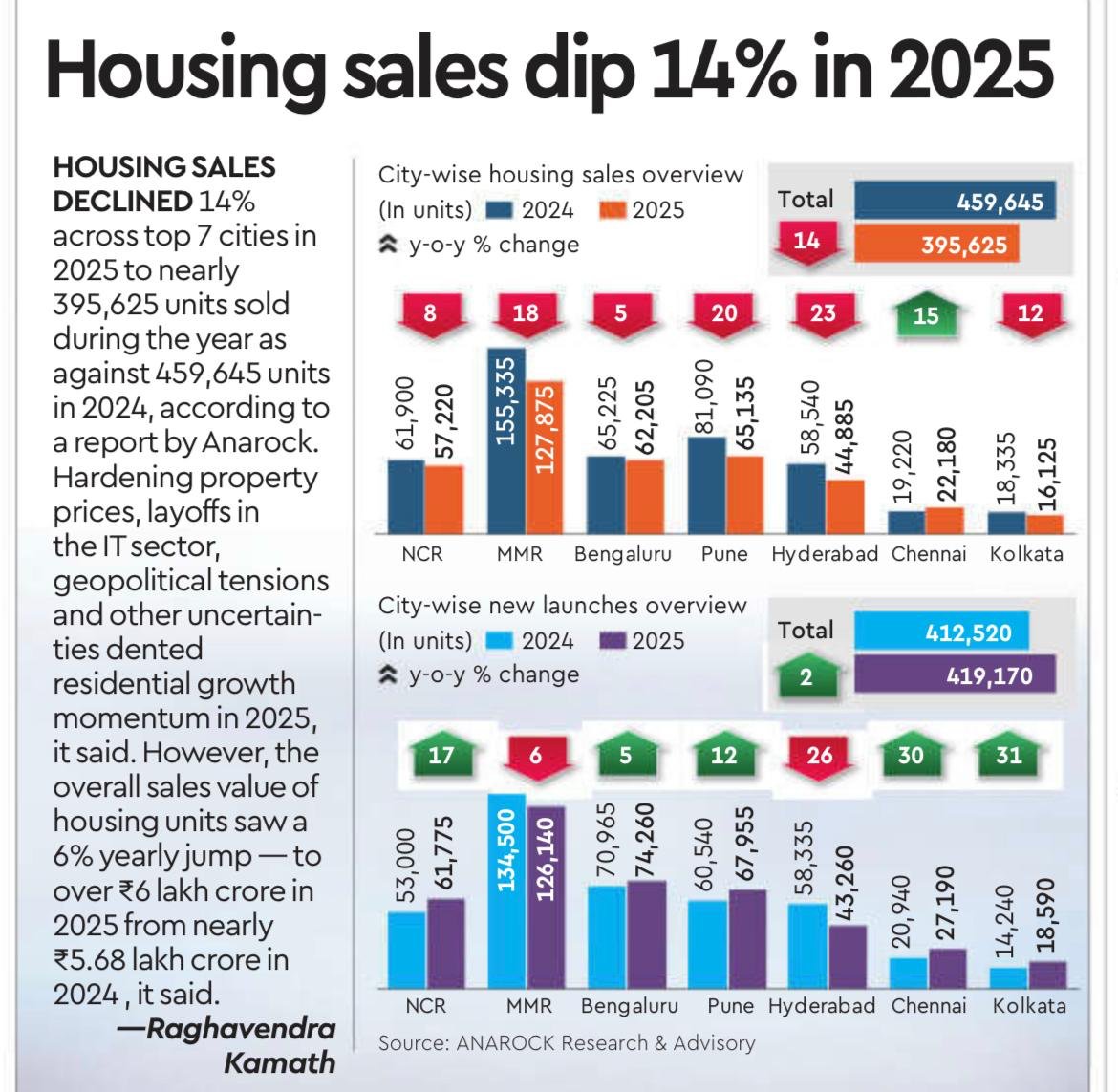
Residential Sales hit a 14% de-growth in 2025 across #India.
#Hyderabad is down with 23% in sales & 26% in new launch.
#Pune is down 20%
#Mumbai is down 18%
#DelhiNCR is down 8%
#Bengaluru is steady with 5% de-growth & 5% growth in launches.
#Chennai registered 15% growth
📘 Mutual Fund Ratios Handbook (Professional Edition)
Understanding Mutual Fund Ratios is crucial for evaluating fund performance, risk, and consistency.
To make it easier, I’ve compiled a comprehensive matrix of key ratios — covering Investment Ratios, Risk Ratios, and Return Ratios — with their meaning, formula, and interpretation.
Designed for professionals, investors, and learners who want to analyze funds with clarity and confidence.
Telegram: https://t.co/vTlAXA6pkf
Disclaimer: Educational content only. Not investment advice. Markets involve risks; please consult a qualified advisor before making financial decisions.
#MutualFundsIndia #QuantInvesting #FundAnalysis #FinTools #MarketInsights #PortfolioAnalytics
@MTPHereToHelp gridlock traffic at the junction ceased road and JP road near azad nagar metro station Andheri. Nothing moving. Does need traffic police here
I have a #coconutoil production facility - set up more than 110 years back - we pride ourselves for maintaining the quality for over a century but find it very difficult to compete in the market where coconut oil is sold at below the conversion cost - leave aside rest of the expenses like sorting - packing . Today's price of Copra (basic raw material) is Rs. 240/- per kg - Conversion rate (roughly) is 65% - 1000 kgs of Copra gives you 650 litres of pure coconut oil. Price per litre works out to Rs. 370/- add all our expenses (except Selling & Marketing) it works out Rs. 390-400 per litre then keep a small profit margin for the stakeholders. Anyone selling below this threshold - you can understand what's happening. And for larger brands add huge marketing costs ......
@MTPHereToHelp hello is there some VIP traffic on Western Express Highway? Have been stuck on the service road for 15+ min waiting to enter the highway at Andheri East