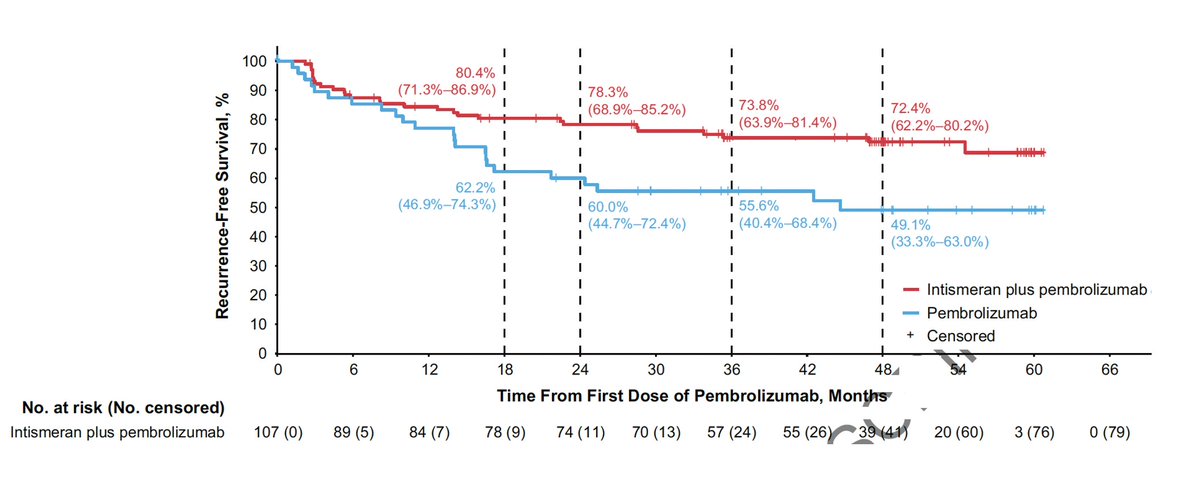
Another major advance vs cancer! @ASCO#ASCO26
Personalized neoantigen mRNA vaccine 5 year follow-up vs metastatic melanoma reduced recurrence and death by 49% (on top of Keytruda)
https://t.co/NadITTYIT2
Greek City Times published an open letter to Christopher Nolan's The Odyssey this week. It reads in part:
"We did not vanish. Greek people did not disappear after the age of myth. Greek culture was not frozen in classical marble. We are still here. For more than 3,000 continuous years, Greek identity has persisted."
The addendum: "Given Hollywood's insistence for minority representation, authenticity and diversity — where are the Greeks, or the Greek Americans in this Greek story?"
The film shot in Greece, with Greek funding, across Greek locations. Not one cast member is Greek.
Hollywood required diversity for every production except this one.
Newsflash: AI and robots will not save our economy. Elon is pimping controllable, surveillable digital currency, plus universal income (aka universal poverty) and energy credits (aka digital ID & mass surveillance) … hence the need for the mass data centers.
Just say NO.
Sam Altman admitted OpenAI's real plan.
he told a room full of BlackRock investors that he wants to sell intelligence like water on a meter, pay per use.
the same company that started as a nonprofit to make AI free for humanity now wants to own the pipe and charge you for every drop.
they scraped the entire internet to build it, didn't ask, didn't pay and now they want you to subscribe to access what was already free.
this isn't innovation, this is the biggest bait and switch in tech history.
Let me trace the timeline here because nobody's connecting it.
Step 1: Scrape the entire internet. Every book, every article, every conversation, every piece of art, every forum post. Do it without asking. Do it without paying.
Step 2: Train a model on all of it. Call it "artificial intelligence."
Step 3: Go to BlackRock's Infrastructure Summit and announce: "We see a future where intelligence is a utility, like electricity or water, and people buy it from us on a meter."
Step 3 is where you sell people's own knowledge back to them. On a meter.
They took the collective output of human thought, compressed it into a model, and now they want to charge you by the token to access a version of what you and everyone you know already created.
One Reddit user put it perfectly: "They stole all this data from us, the people, our life's work, creativity, art, by devouring the internet and blowing through all copyright laws. Now they want to sell it back to us in the form of a utility."
Imagine if someone photocopied every book in the public library, burned the library down, and then opened a subscription service for the copies.
That's the metered intelligence business model.
And they're pitching it to infrastructure investors as though they invented water.
Microsoft just banned its own engineers from using AI.
The tool was literally costing MORE than the humans it was supposed to replace.
They lied to you about AI adoption and now the whole narrative is blowing up:
Microsoft gave thousands of engineers access to Claude Code six months ago and encouraged them to use it.
Engineers loved it and adoption exploded. But then the invoices arrived.
Token-based pricing means every query, every code review, every debugging session costs money. At scale across 100,000 engineers, the numbers became so large that Microsoft issued an internal order to cancel nearly all Claude Code licenses by end of June and force everyone onto their own cheaper tool instead.
The company that invested $5 billion in Anthropic just told its own people to stop using Anthropic's product because it costs too much.
Uber's story is even worse...
Their CTO Praveen Neppalli Naga told The Information that the budget he planned for the full year was "blown away already" by April.
Uber had rolled out Claude Code in December 2025. By March, 84% of their 5,000 engineers were using it with 70% of all committed code coming from AI systems.
Heavy users were burning $500 to $2,000 per month each. Naga himself spent $1,200 in a single two-hour demo session.
The company had even built internal leaderboards ranking engineers by how much AI they used. They literally gamified the spending and then ran out of money.
Now look at what Nvidia's own VP of applied deep learning Bryan Catanzaro said to Axios last month. Direct quote:
"For my team, the cost of compute is far beyond the costs of the employees."
This is a VP at the company that SELLS the chips saying that using AI is more expensive than paying humans.
Think about what this means for the entire AI narrative.
Every CEO on every earnings call for the past two years has said the same thing:
AI will make us more efficient, reduce headcount, and cut costs.
The stock market rewarded every company that said it.
Fired workers, stock goes up. Announced AI adoption, stock goes up.
But the actual companies deploying AI at scale are discovering the math doesn't work. The MORE employees use AI, the HIGHER the bill.
Goldman Sachs forecasts a 24x increase in token consumption by 2030 as companies adopt AI agents. Gartner just published a report showing that even though individual token prices will drop 90% by 2030, total enterprise AI costs will go UP because agents consume exponentially more tokens per task than basic tools.
Meta built an internal dashboard called "Claudeonomics" to track which employees use the most AI. Amazon started pushing engineers to "tokenmaxx," their internal term for consuming as many AI tokens as possible.
Both companies are spending hundreds of billions on AI infrastructure this year alone.
And Microsoft, the company that bet its entire future on AI, just told 100,000 engineers to stop using the tool they liked best because the per-token bills got out of control.
The companies building AI are telling investors it saves money. The companies using AI are finding out it costs more than the humans it was supposed to replace. And even the company that makes the chips just admitted it through its own VP.
This is the gap nobody on Wall Street is pricing in.
$725 billion in AI infrastructure spending this year across Big Tech. And the first companies to actually deploy these tools at scale are already pulling back because the economics don't work.
What do you think?
Google just permanently banned a manga artist’s entire Google account, just for uploading his own old manga files to Drive.
AI moderation triggered and flagged it, he tried to submit appeal then he got rejected it by Google and now he has lost everything like Gmail, Drive, all linked services is gone.
He never even sharing the files publicly, it’s only backing up his own a private work like any creator and artists.
This is Google Drive “AI moderation” in action. No human support and no serious to take action.
Physical storage or real private alternatives only.
Support the artists getting screwed by this. This level of corporate overreach is insane.
R.I.P Dropbox, iCloud, and OneDrive subscriptions.
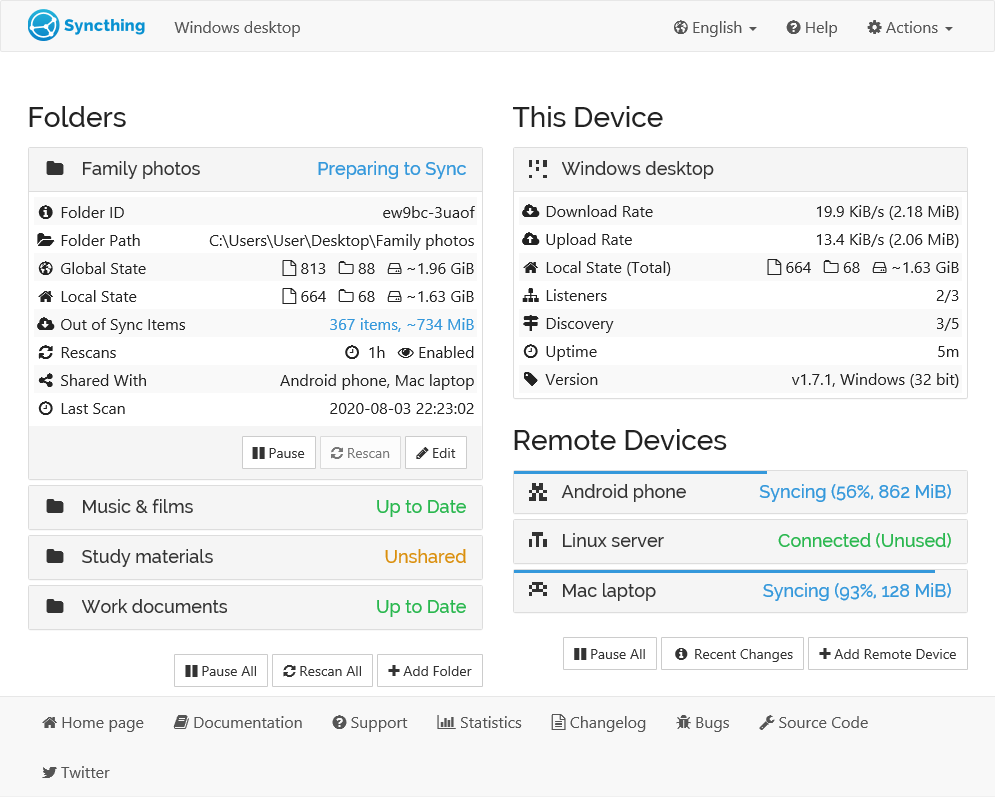
Someone open-sourced a sync tool that replaces all three for $0. And no company can shut it down.
It's called Syncthing.
Here's how it works:
Every cloud storage company on earth routes your files through their own servers. That's not a technical requirement. That's a business model.
Syncthing skips the server entirely.
→ Your devices connect directly to each other
→ Every transfer is TLS encrypted with perfect forward secrecy
→ Every device is authenticated by a cryptographic certificate
→ Nothing moves without your explicit permission
→ Works on Windows, macOS, Linux, Android, FreeBSD
No account. No subscription. No company holding a copy of your files.
Dropbox can raise prices. iCloud can change its terms. Google Drive can shut down tomorrow.
Syncthing runs on your own machines. There's no server to breach. No company to pressure. No subscription to cancel.
One install. Your devices. Your files. Your rules.
100% Opensource.
https://t.co/OQ0WXHLMuW
A Brazilian YouTuber killed the Photoshop subscription.
It's called PhotoGIMP. It takes GIMP, the free image editor, and makes it look and feel exactly like Photoshop.
Same toolbar. Same panel layout. Same keyboard shortcuts. Your hands already know how to use it.
Photoshop vs PhotoGIMP:
- Price: $275.88 a year → $0
- Account: Adobe login required → No login, ever
- Files: Saved to Adobe cloud → Saved on your computer
- Updates: Forced when Adobe says → Only when you want
- Works on: Windows and Mac → Windows, Mac, and Linux
No Adobe account. No cloud upload. No AI trained on your photos.
How small is the patch? Tiny.
→ Nine settings files. That's it.
→ Copy them into one folder. Done.
→ Open GIMP. It now looks like Photoshop.
→ Don't like it? Delete the folder. GIMP goes back to normal.
Three steps to install. One command to uninstall.
8,751 stars. 272 forks. 30+ people from around the world helping translate it.
One honest note: the license is GPL-3.0. Free for everything. Personal work, paid client work, your own edits. No "Pro" tier hiding behind it.
Dionatan Simioni runs the biggest Linux YouTube channel in Brazil. He built this from Marau, a small town in Rio Grande do Sul. No VC. No team. No fundraise.
This is what Photoshop should have been from the start.
(Link in the comments)
Surprised by the enormously positive reactions to his task manager, @thomasklemenc decided to release TaskSlinger as a free beta! Go check it out now!
https://t.co/jHNHWSwGro
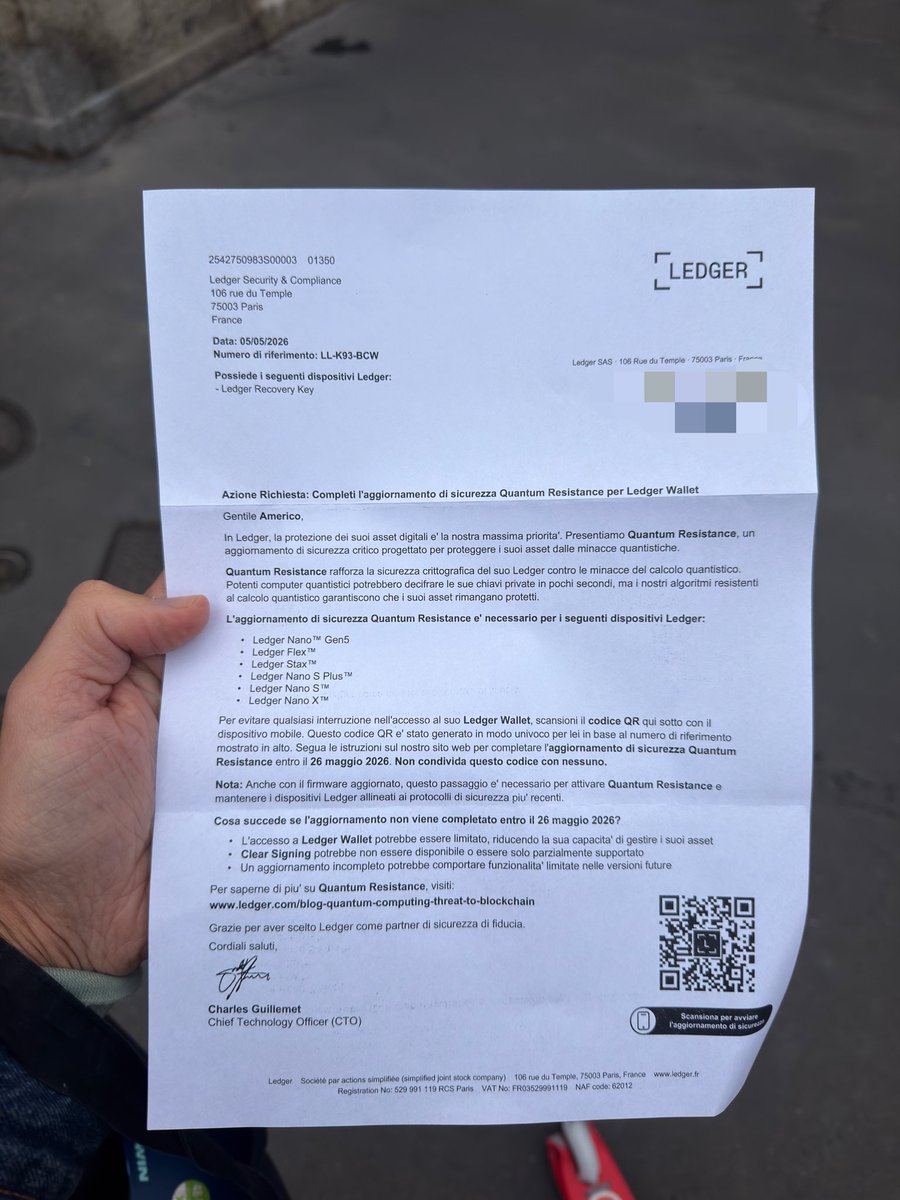
This is terrifying @Ledger.
I just received a physical scam letter at my home address in Italy 🇮🇹
How the hell do scammers have access to the addresses of Ledger users? This goes way beyond phishing emails now.
People’s safety is literally at risk.