GPT-6 Astra is the most dangerous AI model right now.
It gives you AGI-adjacent reasoning.
That can discover new profitable trading strategies for you 24/7.
If you set it up correctly, you gain a personal hedge fund. https://t.co/Sam7AYOut3
CPU vs GPU vs TPU vs NPU vs LPU, explained visually:
5 hardware architectures power AI today.
Each one makes a fundamentally different tradeoff between flexibility, parallelism, and memory access.
> CPU
It is built for general-purpose computing. A few powerful cores handle complex logic, branching, and system-level tasks.
It has deep cache hierarchies and off-chip main memory (DRAM). It's great for operating systems, databases, and decision-heavy code, but not that great for repetitive math like matrix multiplications.
> GPU
Instead of a few powerful cores, GPUs spread work across thousands of smaller cores that all execute the same instruction on different data.
This is why GPUs dominate AI training. The parallelism maps directly to the kind of math neural networks need.
> TPU
They go one step further with specialization.
The core compute unit is a grid of multiply-accumulate (MAC) units where data flows through in a wave pattern.
Weights enter from one side, activations from the other, and partial results propagate without going back to memory each time.
The entire execution is compiler-controlled, not hardware-scheduled. Google designed TPUs specifically for neural network workloads.
> NPU
This is an edge-optimized variant.
The architecture is built around a Neural Compute Engine packed with MAC arrays and on-chip SRAM, but instead of high-bandwidth memory (HBM), NPUs use low-power system memory.
The design goal is to run inference at single-digit watt power budgets, like smartphones, wearables, and IoT devices.
Apple Neural Engine and Intel's NPU follow this pattern.
> LPU (Language Processing Unit)
This is the newest entrant, by Groq.
The architecture removes off-chip memory from the critical path entirely. All weight storage lives in on-chip SRAM.
Execution is fully deterministic and compiler-scheduled, which means zero cache misses and zero runtime scheduling overhead.
The tradeoff is that it provides limited memory per chip, which means you need hundreds of chips linked together to serve a single large model. But the latency advantage is real.
AI compute has evolved from general-purpose flexibility (CPU) to extreme specialization (LPU). Each step trades some level of generality for efficiency.
The visual below maps the internal architecture of all five side by side.
👉 Over to you: Which of these 5 have you actually worked with or deployed on?
Here is how I use $GOOGL Gemini to learn about as much companies as possible. It only takes me 5 minutes per company.
Follow my 4-steps to do the same 👇
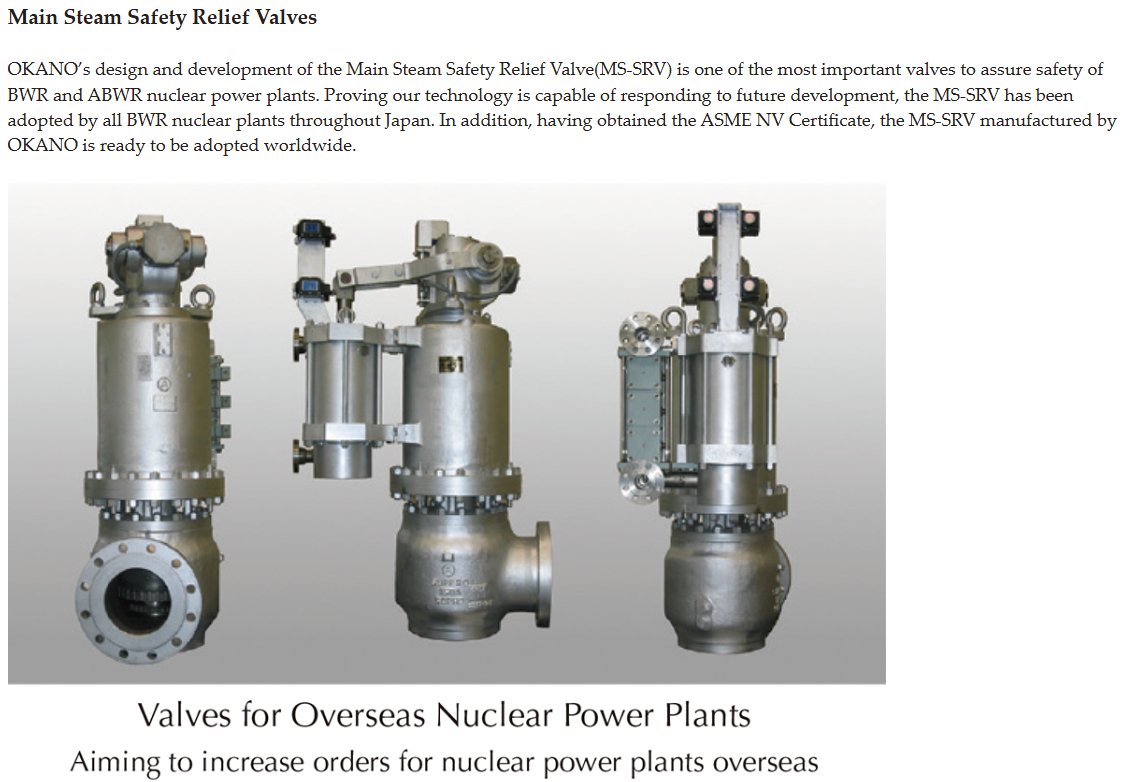
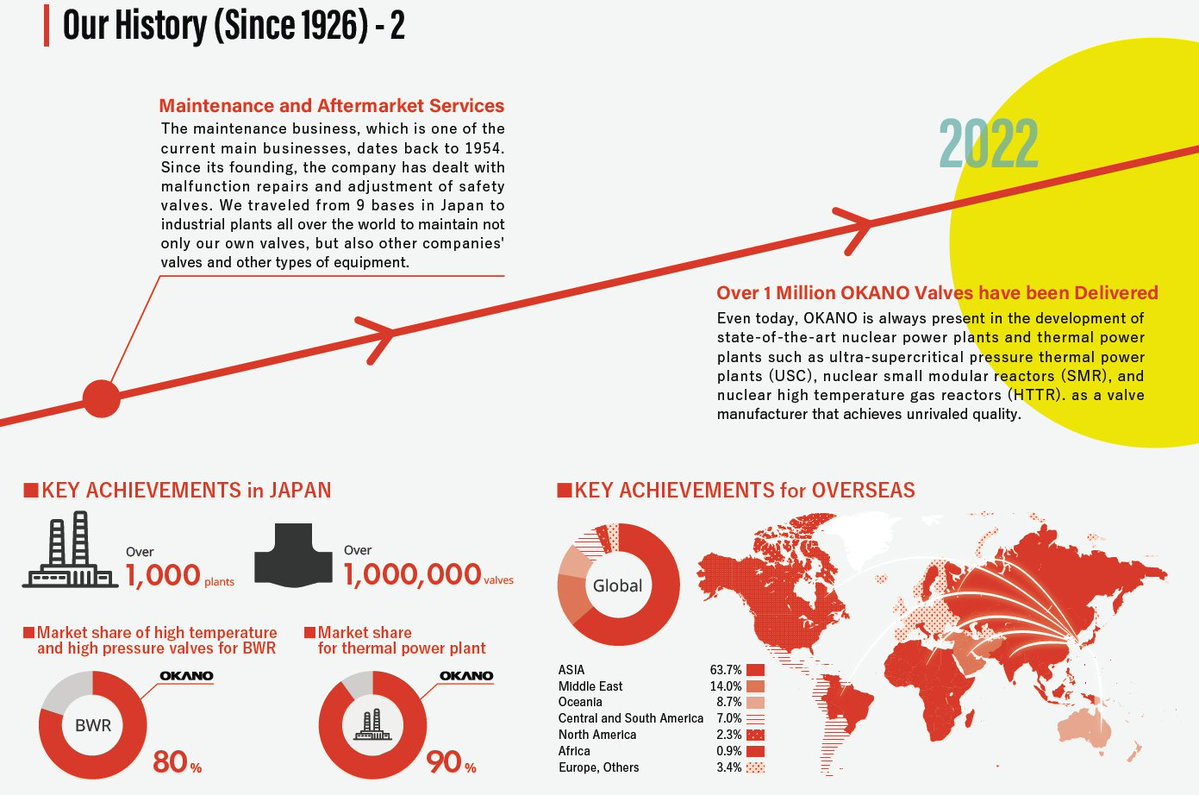
I think Okano Valve Manufacturing (https://t.co/ViFwhoNJyi) is an exceptional investment opportunity. It is the cleanest and cheapest way to invest in the nuclear renaissance I have found. I’m grateful to @JimJimmeny11 for the idea. Okano is a highly specialized manufacturer of high-temperature, high-pressure valves for nuclear and thermal power plants, with almost 50% of revenue from maintenance services. It holds a near-monopoly position in the Japanese market, protected by decades of operating experience and impassable qualification barriers. Okano is entering a multi-year earnings upcycle as Japanese utilities recommission reactors and replace aging valve infrastructure, driving revenue growth off a depressed base with significant operating leverage. I expect the recent disruptions to energy supply will break remaining political resistance to nuclear restarts and compress the launch timeline. Despite strong demand tailwinds, the firm’s valuation doesn’t price much growth. On my FY2026 numbers, P/E is 13, and EV/EBITDA is 8. Investors evidently do not consider international expansion or next-generation reactors as valuable options. Like Togami Electric Manufacturing (https://t.co/cCBk75uLo3), Okano’s risk/reward ratio is heavily skewed today, so I made a large investment last week under ¥10,000 without overthinking it.