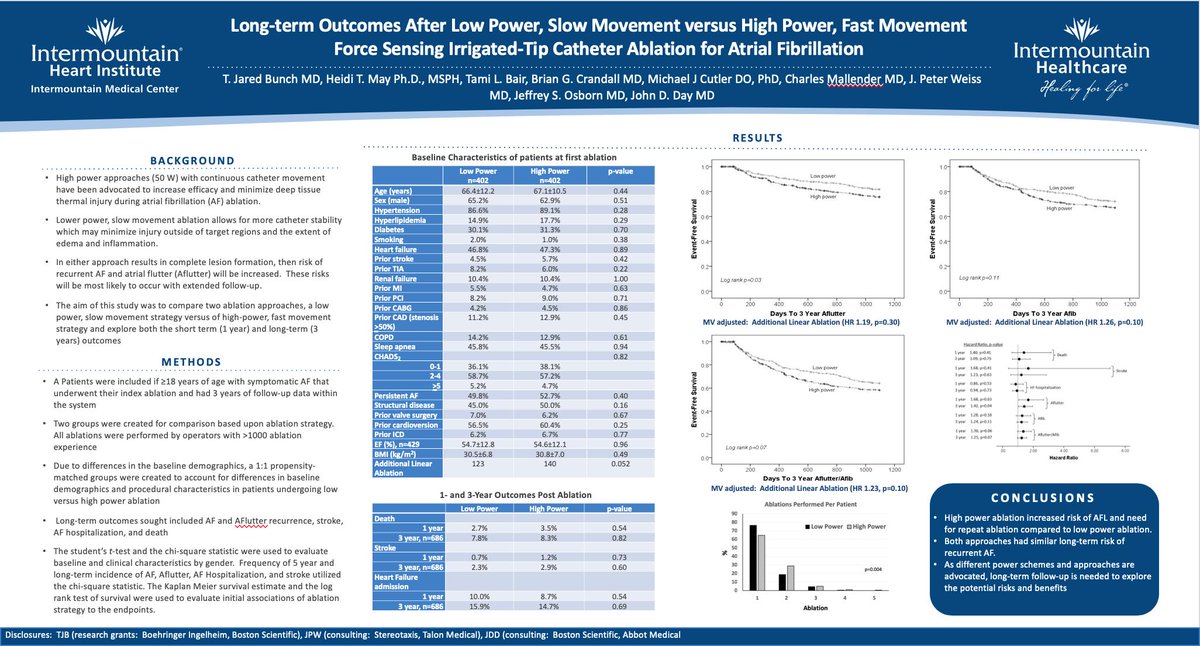
Our long-term propensity-matched analysis of low power (30 W) vs high power ablation (50 W) for #Afib (first case), when followed for 3 years & longer, flutter rates augmented @IntermtnMedCtr@HRSonline#HRS2019 As high power approaches are advocated, long-term data are critical
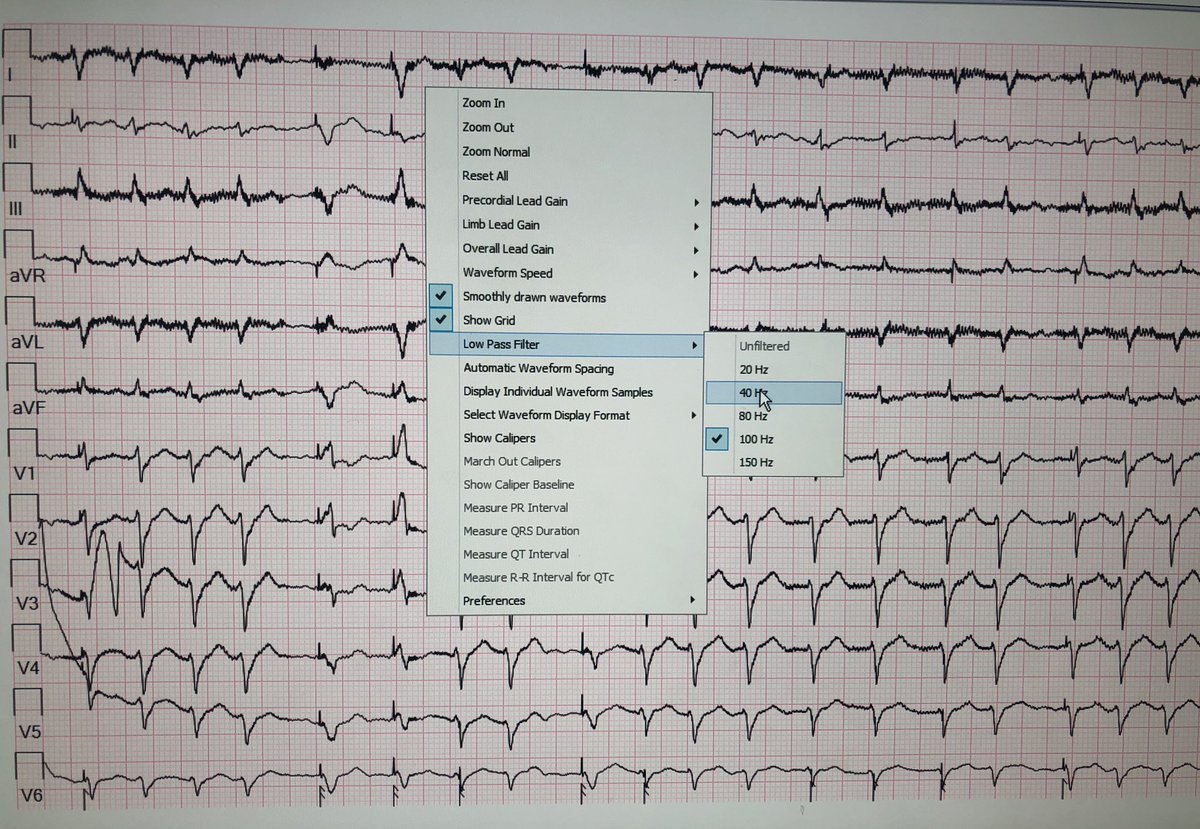
A reminder to #cardiotwitter and #EPeeps with MUSE EKG reading software — low pass filtering can be modified *after* the recording is made. Here’s an EKG in my reading list today, before and after changing the low pass filter via the right-click menu. Helpful for LVAD patients.
P-wave axis outside of 0-75° increases stroke risk in AF...
Refining Prediction of Atrial Fibrillation-Related Stroke Using the P2-CHA2DS2-VASc Score: The ARIC Study and MESA | Circulation https://t.co/tzr3tQktVd
Sad to hear about Earl Bakken, Minnesota and EP icon. 60 years ago, the 1st successful battery-operated pacemaker that he developed was surgically implanted by University of Minnesota heart surgeon C. Walton Lillehei.