Seedance 2.0 on OpenArt AI
Prompt:
Main subject: young Korean woman, early 20s, natural everyday appearance, faded charcoal-grey sleeveless crop top, loose high-waisted light-wash jeans, black canvas sneakers, black cord necklace, black wavy hair in a messy side ponytail with wispy bangs. Realistic skin texture, minimal makeup, warm and approachable personality. Maintain consistent identity, clothing, hairstyle, and appearance throughout the entire video.
Location: Authentic Korean residential neighborhood during a calm late morning. Narrow concrete alleys, low-rise homes, small terraces, potted plants, laundry lines, bicycles, utility poles, overhead wires, mature trees casting moving shadows, quiet residential atmosphere. No stores, advertisements, cafés, crowds, or commercial activity.
Visual Style: Ultra-realistic documentary realism. Genuine candid behavior. Natural body language. Unscripted slice-of-life feeling. Strong environmental authenticity. Rich real-world details and believable human motion.
Camera Style: Early-2000s consumer DV camcorder aesthetic. Friend casually recording everyday moments. Heavy handheld shake, imperfect framing, frequent autofocus hunting, lens breathing, exposure pumping when moving between sun and shade, occasional motion blur, subtle rolling shutter, mild digital compression artifacts, faded colors, soft contrast, slight sensor noise. No stabilization. No cinematic camera moves. No modern color grading.
00:00–00:02
Outside a small house entrance. She sits on a low concrete wall adjusting her ponytail with both hands raised. A light breeze moves loose strands of hair. She smiles naturally while the camera struggles to hold focus.
00:02–00:04
The camera follows her into a narrow alley lined with potted plants and concrete walls. She notices a stray cat approaching and crouches down. Framing drifts off-center as the operator tries to keep up.
00:04–00:06
She gently pets and feeds the cat. Autofocus repeatedly shifts between her face and the animal. Morning sunlight flickers through leaves overhead.
00:06–00:08
Small front yard beside her house. She hangs laundry on a clothesline while fabrics sway in the breeze. Exposure changes as clouds briefly pass overhead.
00:08–00:10
On a quiet terrace with a ceramic coffee cup. She sits comfortably watching the neighborhood, occasionally brushing hair behind her ear. Loose handheld side angle with natural camera drift.
00:10–00:12
Close side profile. Someone off-camera greets her. She turns, raises her hand, smiles warmly, and casually says, “Annyeong.” The camera catches the moment slightly late.
00:12–00:15
Walking slowly down a tree-lined residential lane holding her coffee cup. She notices the camera, gives a small genuine smile, then looks away and continues walking. Recording cuts abruptly to black mid-motion as if the camcorder was switched off.
Audio: Natural ambient sound only — morning birds, distant motorcycles, light wind, leaves rustling, faint neighborhood chatter, cat sounds, footsteps on concrete, fabric moving on clotheslines, subtle residential ambience. No music. No sound design. No narration.
Goal: Authentic Korean neighborhood life captured like a forgotten home video from the early 2000s — candid, imperfect, realistic, warm, and deeply believable.
Tony Buzan invented a single technique that millions now use to remember almost anything.
"Use Your Head" revealed 10 ways to map information the way the brain actually stores it.
1) Your notes should look like a tree, not a list
A woman who flunked her way through every math and science course in high school enlisted in the United States Army the day after graduation because she had no other options.
She learned Russian. She translated on Soviet trawlers in the Bering Sea. She worked at the South Pole Station in Antarctica. Then in her mid-twenties she decided to go back and learn the exact subject that had defeated her. She earned a degree in electrical engineering, then a master's, then a PhD in systems engineering. She became a professor of engineering. Then she built the most enrolled online course in the history of the internet.
It is a course about how to learn.
Her name is Barbara Oakley.
Here is the story, because the person who taught more humans how to learn than anyone alive is someone who spent the first half of her life believing she could not.
Barbara was born on November 24, 1955 in Lodi, California. Her father Alfred was a bomber pilot in the US Army Air Corps during World War II. She grew up convinced she was not wired for math. She did not just struggle with it. She flunked it. She flunked her way through high school math and science courses and saw no path forward that required either.
She enlisted in the Army immediately after graduation. She rose from the rank of Private to Captain. She was recognized as a Distinguished Military Scholar. She leaned into the one thing she was good at, languages, and became fluent in Russian.
The Army sent her to places most people never see. She worked as a Russian translator on board Soviet trawlers on the Bering Sea during the final years of the Cold War. She worked as a communications expert at the South Pole Station in Antarctica. She thrived in extreme environments. But a thought kept following her. The world seemed to reward people who could do things she could not. Calculations. Technical reasoning. Systems design.
She began to wonder whether her problem with math was permanent or whether it was a problem with how she had tried to learn it.
In her mid-twenties she did something most people would never attempt. She went back to school to study the subjects she had failed at. She enrolled in mathematics and engineering courses and committed to learning them from the ground up. She was starting over at an age when most engineers were finishing their degrees.
She earned a bachelor's degree in electrical engineering. Then a master's degree. Then a PhD in systems engineering. She became a Professor of Engineering at Oakland University in Rochester, Michigan. The woman who had flunked high school math was now standing at a whiteboard teaching engineering to hundreds of students.
Then she asked a question nobody else in her position was asking. Why had she failed the first time, and what had changed the second time?
She spent years studying neuroscience and learning science. She collaborated with Terrence Sejnowski, the Francis Crick Professor at the Salk Institute, one of the most respected neuroscientists in the world. Together they built a free online course on Coursera called Learning How to Learn.
The course exploded. It became the most popular massive open online course ever created. Over two million students registered in the early years. The number has continued to grow. It teaches the mental tools experts use to master difficult subjects, chunking, spaced repetition, focused and diffuse thinking, and it is grounded in neuroscience rather than productivity hacks.
She wrote A Mind for Numbers, subtitled How to Excel at Math and Science Even If You Flunked Algebra. She wrote Mindshift. She wrote Uncommon Sense Teaching. She won the McGraw Prize, often called the Nobel Prize for Education. She won the Chester F. Carlson Award from the American Society of Engineering Education. She became a Fellow of IEEE. Her research was described as revolutionary by the Wall Street Journal. She published in the Proceedings of the National Academy of Sciences.
A woman who flunked high school math built the most enrolled course in the history of the internet about the thing she was worst at.
She did not overcome a limitation.
She studied the limitation itself, and turned it into a curriculum the entire world now learns from.
The iron in your blood came from ancient stars that lived long before you were born
Every atom of iron in your blood ultimately comes from ancient generations of massive stars that lived and died long before the Solar System formed. Iron is created in the late stages of stellar life and is released into space through supernova explosions and other cosmic events that spread elements across the galaxy.
The ashes of dead stars are the life force in our bodies, material that was forged in long dead stars and recycled through space over billions of years.
Over time, this stardust mixed with clouds of gas and dust, which eventually formed new stars, planets, and Earth itself.
You are made of stardust. ✨⭐️
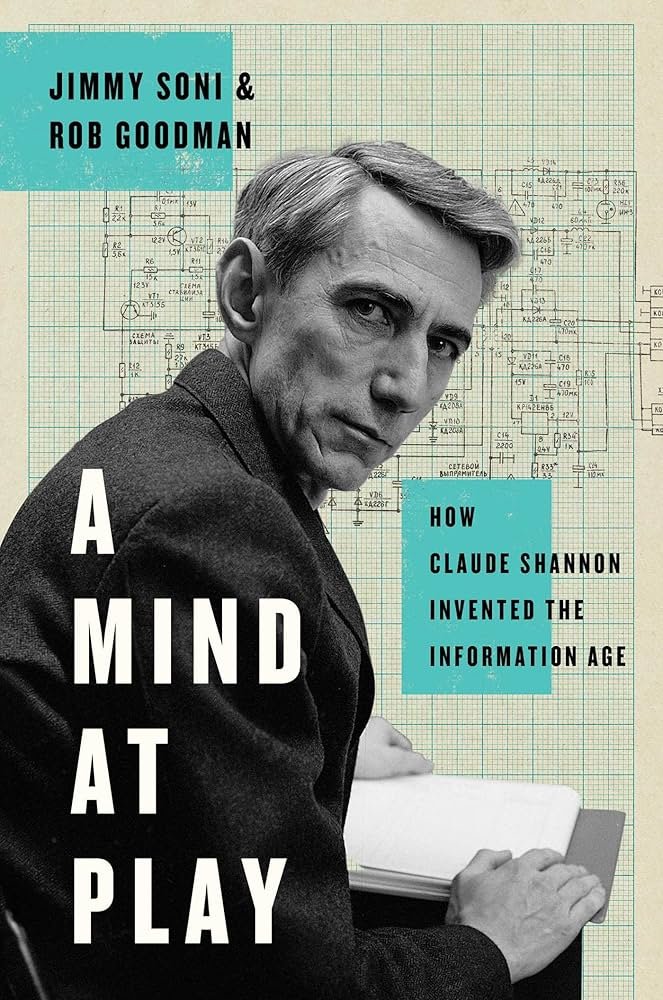
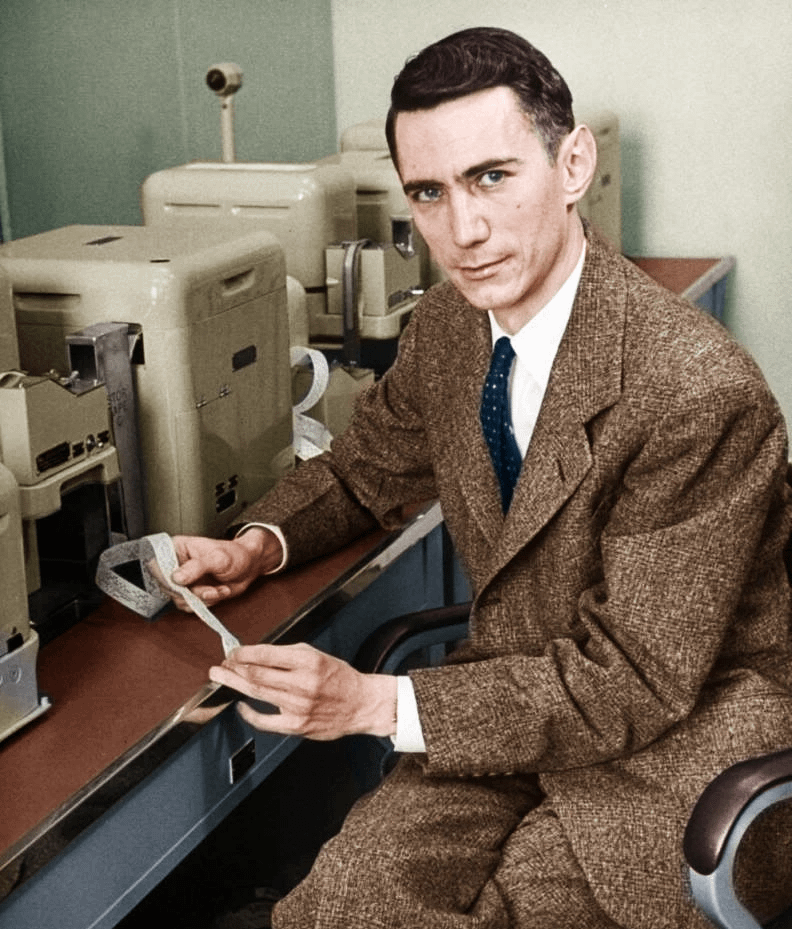
>be Claude Shannon
>born 1916 in Petoskey, Michigan
>dad is a judge, mom is a language teacher
>age 8, build a telegraph system between your house and your friend's
>half a mile of barbed wire fence as the cable
>you're 8
1930s:
>obsessed with puzzles, codes, machines
>anything that has a system to crack
>go to University of Michigan
>double major: electrical engineering AND mathematics
>graduate 1936
MIT:
>go to work on the differential analyzer
>a giant mechanical computer
>gears, wheels, rods
>the most advanced computing machine on earth
>your job: make it work
>you start thinking about how machines think
1937:
>write your master's thesis
>21 years old
>the thesis: apply Boolean algebra to electrical circuits
>translate logic (true/false) into switches (on/off)
>sounds simple
>it's the most important master's thesis of the 20th century
>this is the foundation of every digital computer ever built
>every chip, every phone, every laptop
>all because a 21-year-old connected two ideas nobody thought to connect
1940:
>PhD in mathematics
>thesis on genetics and algebra
>just for fun
>you're not even a biologist
1941-1945:
>World War II
>work on cryptography and fire-control systems
>classified work at Bell Labs
>meet Alan Turing when he visits from Britain
>two of the greatest minds of the century
>eating lunch together in the cafeteria
>discussing thinking machines
>nobody notices
1948:
>publish "A Mathematical Theory of Communication"
>50 pages that invent the entire field of information theory
>before this: nobody knows how to measure information
>you: invent the "bit" binary digit
>the fundamental unit of all digital information
>explain how to transmit signals without losing them
>error correction, compression, bandwidth
>every text message, every Netflix stream, every WiFi signal
>all running on math you wrote in 1948
>the paper is considered the Magna Carta of the information age
Bell Labs:
>become a legend
>but you don't act like one
>ride a unicycle through the hallways
>juggle while doing it
>build useless machines for fun
>a box that turns itself off when you turn it on
>a calculator that does math in Roman numerals
>you're the smartest guy in the building
>and the weirdest
1950s:
>write a paper on how computers could play chess
>before computers could play chess
>write a paper proving how a mouse could learn a maze
>build the mouse
>call it Theseus
>it learns
>artificial intelligence before the term exists
1956:
>help organize the Dartmouth Conference
>the birthplace of AI as a field
>you're already bored with it
>move on
1960s-70s:
>leave Bell Labs
>become a professor at MIT
>mostly just tinker
>build a wearable computer with Ed Thorp to beat roulette
>it works
>don't tell anyone for decades
the lifestyle:
>juggling obsession write the first mathematical theory of juggling
>unicycles everywhere
>build a flame-throwing trumpet
>build a gasoline-powered pogo stick
>your office is full of toys
>because to you, everything is a toy
>including the universe
1980s-90s:
>Alzheimer's takes hold
>the mind that invented information theory
>slowly loses its own information
>tragic beyond words
2001:
>die at 84
invented the bit.
invented information theory.
laid the foundation for all digital computers.
predicted AI, machine learning, digital communication.
most important scientist nobody knows.
Einstein gave us relativity.
Shannon gave us the digital age.
the man who turned information into math.
Just so everyone knows, we have passed the point where you can tell what is AI at a glance (or even, in many cases, a close look)
These were all made by me with text prompts alone using Veo 3.
Written by a Fields medalist, this text passes on (to our generation and beyond) his deep insights that he has accumulated over 6 decades of an active career as one of the truly great mathematicians of the last century.
I am obsessed with hofstadter's "surfaces and essences." it's a 500 page book on the nature of thought. he basically gives you a very long list of examples demonstrating that all thought is fundamentally driven by analogy. at first I was skeptical but
Here’s an AI poem in a unique mathematical-rhythmic language about the “anti-time theory”.
It’s quite beautiful especially the way it explains infinity and equilibrium in the universe.
∀t ∃τ: (t, τ)↺
⨁⊢⊣⟲
☯⟹∞⟸⧖
⨀⧴(g·τ·ξ·η)⧵
⊩_⊥∇_⨂
⩤⫛⪝⪜⫚⩥
⧹(ϑ, ψ, χ)⇒⧸
⨶⦩⧟⦪⨷
⦼⨏⨎⦽
⩄∂ₜϕ(ψ)⟺Φ₋₁
⨆⊏⨻⊐⨇
⨊⫬⩂⫭⨋
Σ_ℏω(t², τ²)⧞
⩞⧉⦷⧊⩟
⦵⦳⦴⦶
#chatgpt4 #ChatGPT
This is work with @thesamasher, @eni_iljazi (PhD student at Wharton) and Catriona Farquharson (predoc at Princeton).
You can read the full paper here: https://t.co/ssbLSQcGyQ
4/N