Elastic has entered into an agreement to acquire Deductive AI, an AI-powered investigation platform.
As applications become more distributed and complex, engineering teams are dealing with more telemetry than ever before. Understanding what happened, why it happened, and what to do next often means pulling together information from multiple systems, with too much of the investigation still done manually.
Deductive AI has built an AI SRE agent that connects code, telemetry, and organizational knowledge to investigate alerts and production issues. It gathers evidence, tests hypotheses, and continuously learns from every investigation to help teams identify root causes faster.
Bringing these capabilities together advances our vision for AI-driven investigations in Elastic Observability. By combining Elastic's ability to infer meaningful entities, relationships, and operational events from telemetry with Deductive AI's investigation engine and knowledge graph, we'll help users investigate issues with richer context, identify root causes faster, and spend less time on manual investigation.
We’re looking forward to sharing more as we bring these capabilities into Elastic Observability.
Read more: https://t.co/m227P4vn8g
Reasoning over extremely large amounts of data under uncertainty is one of the most fascinating problems in computer science.
In this first of many under-the-hood posts, we describe how we think about incident investigation at @DeductiveAI as an online hypothesis-ranking problem, applying incremental Bayesian inference to maintain and update a posterior over competing root-cause hypotheses as noisy (and sometimes, even contradictory) observations arrive at scale.
If you care about probabilistic reasoning, causal inference, and building agents that operate under real-world uncertainty, you’d really enjoy this one: https://t.co/WGs3zVs97y
Every major outage I have seen had two root causes. A small bug in the system and a big assumption in someone’s head. We always overindex on fixing the bug and underindex on exposing the assumption.
Over the past year, we’ve been focused on a simple idea: engineers shouldn’t have to sift through dashboards, logs, and code to understand why something broke.
Working with several amazing customers like @DoorDash, @Foursquare , and @Kumo_ai_team, we’ve seen the same pattern across fast-moving teams. Complex systems, scattered signals, and engineers piecing together the story of an incident from scratch every time.
We built @DeductiveAI to change that. By bringing code, metrics, and logs into a single reasoning surface, it gives engineers a clear, end-to-end understanding of what happened and why, so they can get back to building.
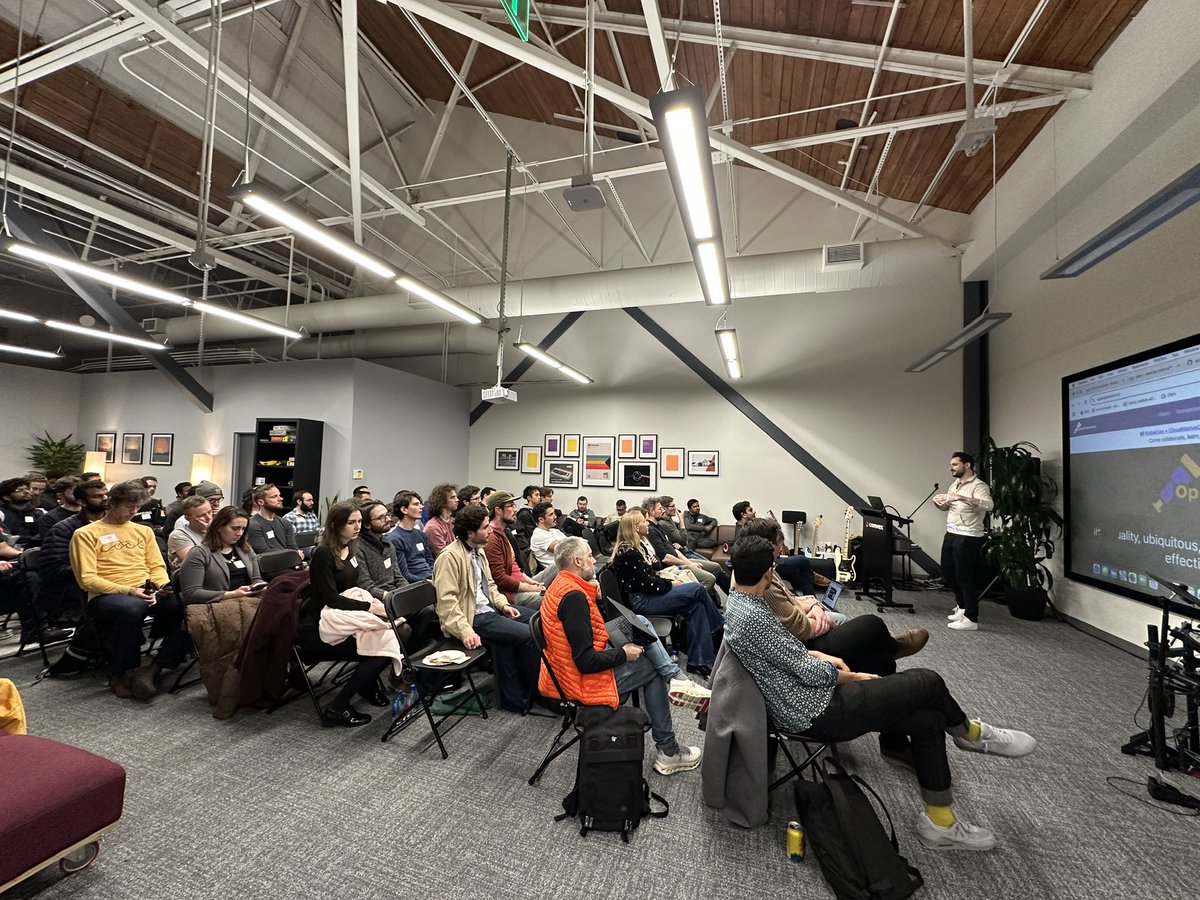
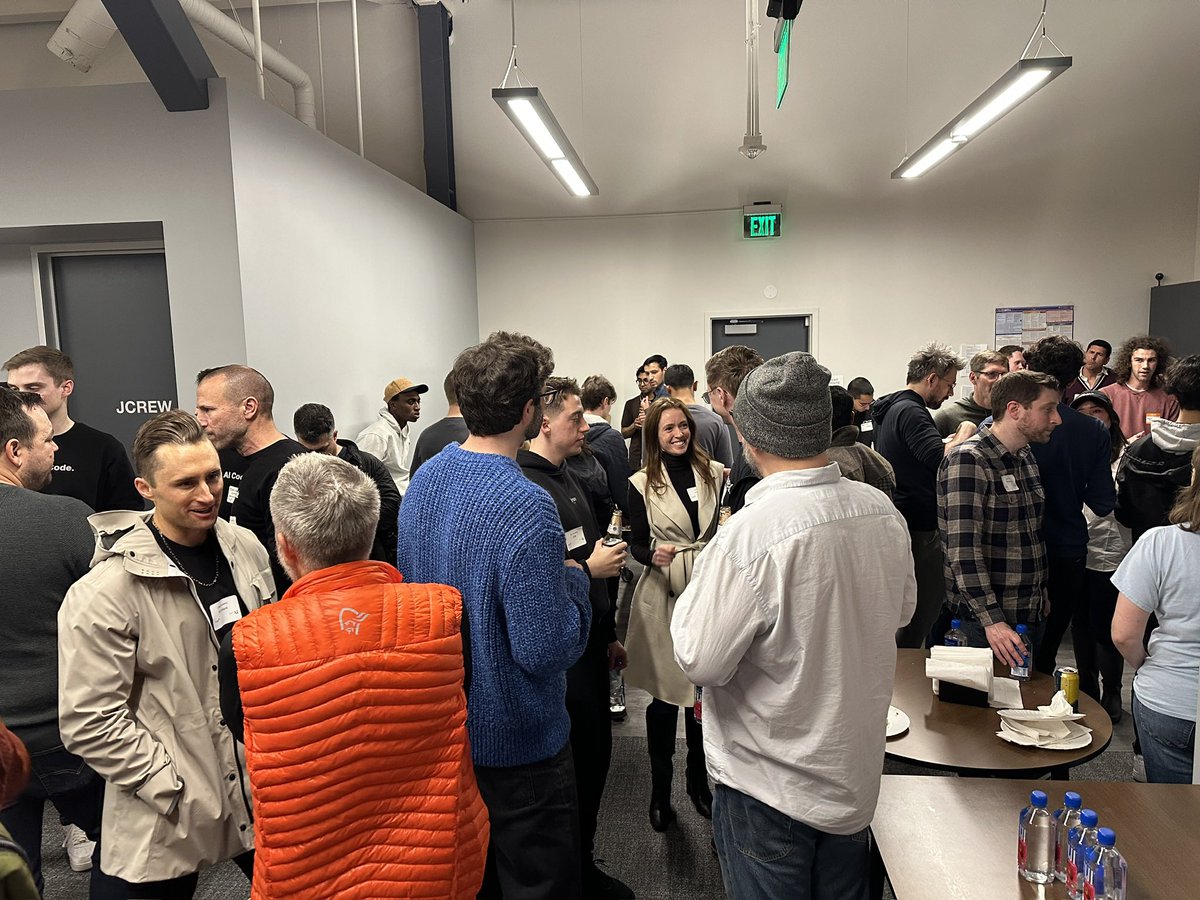
It was standing room only for the best SRE leaders in SF to learn if they would still have a job in 5 years 🔥🔥🔥
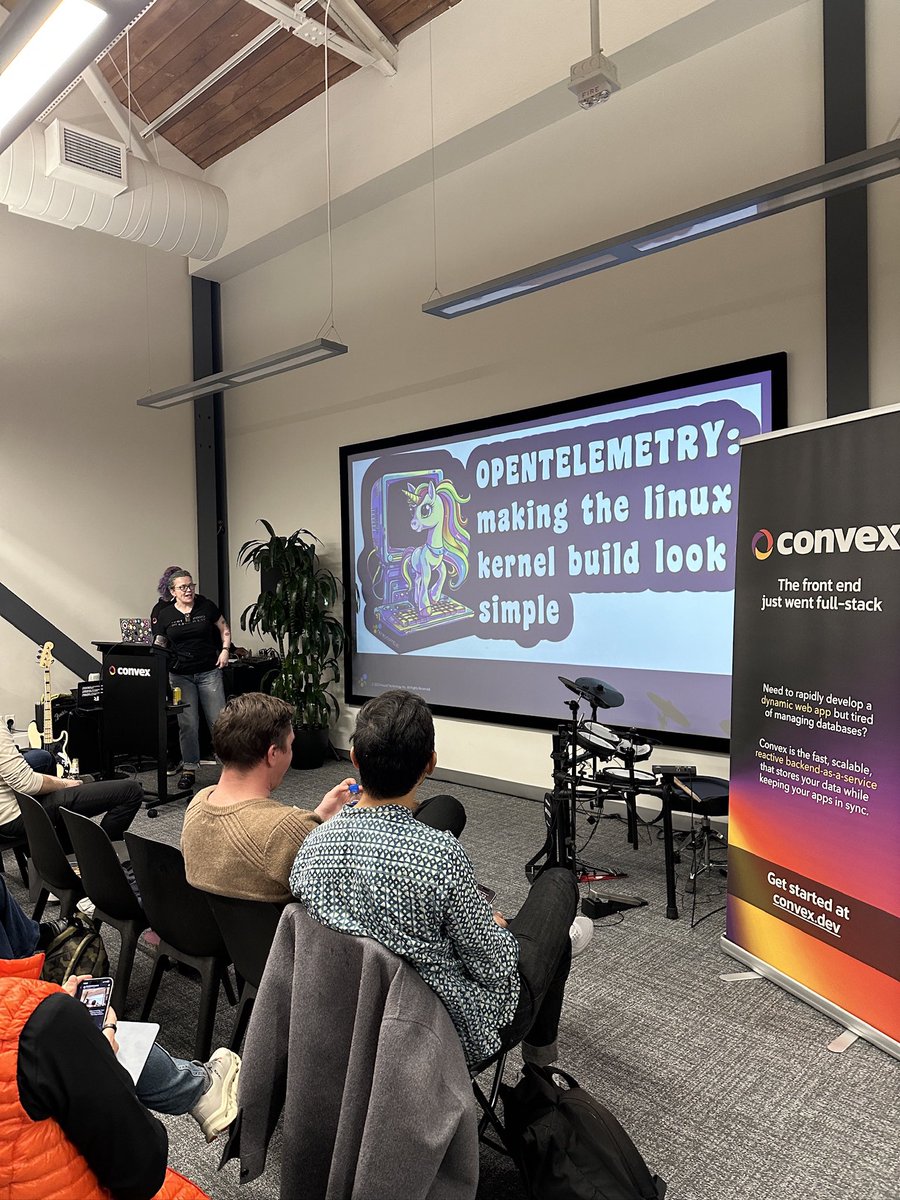
At the InfraSF meet-up last week @mipsytipsy@__Achille__@sagrw gave incredible ⚡️ talks on the future of o11y - the physics of computing scrapping your plans, the rise of the o11y data lake and the architecture of SRE agents 🚀
SREs are safe for now but the role is evolving! My brain is still buzzing from the discussions after, link in thread to join the next one 🫶
@martin_casado Interesting insight! Thinking through this from the lens of IP Anycast & BGP, it’d be interesting to see the emergence of equivalent 'Gateway Protocols' that can abstract the complexities of model selection, load balancing, & failure recovery for multi-model/agent architectures.
I’ve been in the AI trenches since 2009, and LLMs are certainly a game-changer. But they also seem to be a warm-up act for the main event—the next cycle of AI innovation, coming in the next 12-18 months.
Here are 3 areas we’re looking at to fuel this cycle, where founders can make real AI magic →
Multimodality 📸
Multiple agents 🤖🤖🤖
Post-transformer architectures 🛠️
Latest blog: https://t.co/0D706dgfVk
#EuroSys23 Test-of-Time AWARD
BlinkDB: queries with bounded errors and bounded response times on very large data
Sameer Agarwal
Barzan Mozafari
Aurojit Panda
Henry Milner
Samuel Madden
Ion Stoica
Congratulations!
Announcing Microsoft Azure Databricks! A fast, easy and collaborative Apache® Spark™ based analytics platform optimized for Azure. https://t.co/GobjZ5lNvM #analytics#Azure
@NiranjanKamat Stratified samples are an option but then we'll have to make assumptions about the query plan. Definitely plan on exploring this direction!
@NiranjanKamat Problem with random samples is that statistics are hard to accurately estimate/propagate in the query plan (especially via joins/subquery)
@NiranjanKamat Thanks @NiranjanKamat! Incremental statistics definitely (at least for per-file/partition increments). Sampling- not in the first phase.
@ChiefScientist We hope CBO is a major step in that direction; accurately estimating the cost of a query plan is a strong pre-requisite for sample selection
@ChiefScientist Thanks a lot @ChiefScientist! After iOLAP, I don't unfortunately get much time to work on BlinkDB these days but hope to pick it up soon...