Instructor at MD Anderson Cancer Center | Review editors @FrontCellDevBio & @FrontBioinf | Alma mater @csir_ncl & @CalcuttaUniv | Computational Biologist
Another step forward in targeting RAS.
A new @NatureMedicine phase 1 study of GFH375/VS-7375, an oral drug designed specifically for KRAS G12D, showed tumor shrinkage in about 1 in 3 heavily pretreated patients with pancreatic or lung cancer.
In pancreatic cancer, median PFS was 5.5 months and median OS 9.9 months. About a third of patients had grade ≥3 treatment-related side effects.
While the recently approved daraxonrasib targets multiple RAS mutations, this drug is selective for KRAS G12D. Still early, but another encouraging approach against a historically difficult target.
In the largest study to date of localized appendix cancer, researchers found that fewer than 10% of patients experienced recurrence after surgery, and chemotherapy given after surgery was not associated with improved survival: https://t.co/DHJ3mEtqit @jpshen_md#EndCancer
Preclinical findings showed strong anti-cancer activity from a first-in-class therapy to target MYC, a protein involved in about 70% of cancers.
How this experimental drug works to break communication between MYC and the GSPT1 gene: https://t.co/DbeNvhK1gC #EndCancer
Proud to share this work from @MDAndersonNews in collaboration with @Natera.
let’s connect and talk about advancing care for rare GI cancers through robust genomic insights! @jpshen_md
Presenting our poster at #AACR2026!
Through large-scale genomic and transcriptomic analysis of one of the biggest cohorts to date, we show that goblet cell appendiceal adenocarcinoma is molecularly distinct from other appendix cancers — revealing a unique genomic landscape!
Date: Tuesday, April 21, 2026
Time: 9:00 AM – 12:00 PM (PT)
Location: Poster Section 2, Board #5
San Diego Convention Center
Come by to discuss the data!
Preclinical Characterization and Clinical Activity of RNK08954, a Highly Selective and Orally Bioavailable KRASG12D Inhibitor | Cancer Discovery | American Association for Cancer Research https://t.co/vBsS6wuRYJ
MSK-IMPACT is truly the gift that keeps on giving!
Cancer type-specific variation in patterns of driver alterations across 50,000 tumors (!!)
https://t.co/70ethQQWMn
"One-third of all drivers arose in non-canonical contexts"
Congratulations @MFBerger1@DSolit & team.
for a while i've had a slight fear that the bluetooth from my airpods could be frying my brain
this weekend i pulled the raw data from a $30m government study of 1,679 mice blasted with cell phone radiation and reanalyzed it
what i found was...not what I expected?
🧵
We’ve trained a multimodal AI model to turn routine pathology slides into spatial proteomics, with the potential to reduce time and cost while expanding access to cancer care.
🆕 @ScienceMagazine
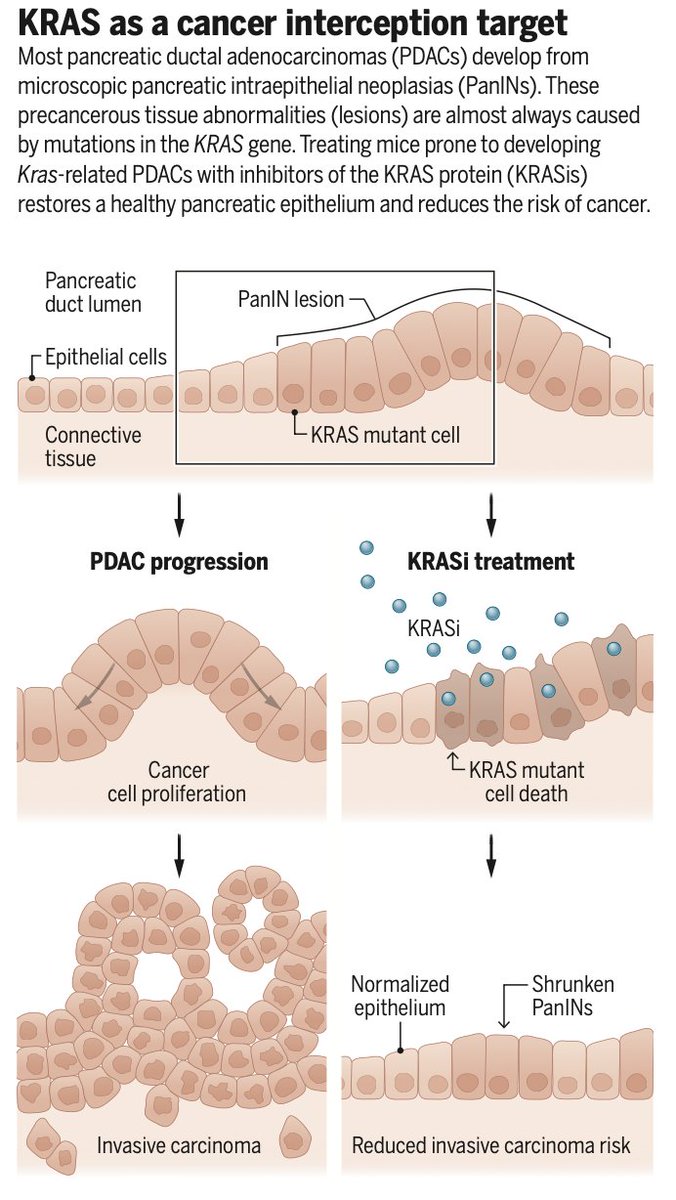
An exciting new approach vs pancreatic cancer: "cancer interception"
Considered ubiquitous, the pancreas in healthy adults has hundreds of PanINs of microscopic premalignant cancer that can be regressed in the experimental model
https://t.co/erVtthSMjS
https://t.co/2xHIYdIPrx
Why are more young adults getting appendix cancer? In the latest Cancerwise podcast episode, our experts explain why this rare cancer is often missed and share the latest treatment advances.
Listen now. https://t.co/Rafl3enA7d #EndCancer@jpshen_md
@jitcancer@sara_lonardi1@michael_overman Happy to highlight our work on POLE mutant CRC. If tumor has a mutant allele that causes loss of the proofreading then definitely want to go with up front immune checkpoint blockade. If there is question about functionality of the mutation, either TMB or mut profile has answer
New #JITC article: Prognosis and treatment response stratification according to loss of proofreading (LOP) POLE variants https://t.co/Yym3u30q8x
@sara_lonardi1@michael_overman@jpshen_md
On Tuesday, Texans voted to create DPRIT, the Dementia Prevention and Research Institute of Texas, allocating $3 billion for research into the prevention and treatment of dementia, Alzheimer’s, and Parkinson’s disease. UT System institutions are already deeply immersed in leading research and clinical efforts in the battle against dementia, and we’re ready to do more.
BREAKING NEWS
The 2025 #NobelPrize in Physiology or Medicine has been awarded to Mary E. Brunkow, Fred Ramsdell and Shimon Sakaguchi “for their discoveries concerning peripheral immune tolerance.”
Results of a study that examined the effects of sugary drinks on the progression of colorectal cancer found that the glucose–fructose mix can directly fuel metastasis.
Read more about how these findings point to possible new treatment targets: https://t.co/BJT61EBXhb #EndCancer
Absolutely insane amount of data in this resource from @mason_lab
The Spatial Atlas of Human Anatomy (SAHA): A Multimodal Subcellular-Resolution Reference Across Human Organs
https://t.co/rwKWVtidfZ
Spatial data on 15million cells from 100 donors across multiple ages, mainly GI