Introducing Waddle Labs: Claude Code for robots.
Connect our API to your robot and enter a prompt, then our agents write code to achieve the task in 20 minutes.
@yiding_song@theWaddleLabs
Claude Opus 5 one-shotted this game.
EVERYTHING you see in this demo is custom code... not a single external asset was used.
AI games are going to be amazing.
(sound on)
NVIDIA did it again..
they trained a GPT that generates human movement instead of text.. next-token prediction, but the tokens are body motions.
it's called GPC and it hit a 99.98% success rate reproducing a massive corpus of motion clips.. cartwheels, vaults, flips, all of it.
→ 99.98% success rate reproducing motion clips
→ learns cartwheels, flips, vaulting from raw data
→ adapts to new tasks with <1% extra parameters
studios spend 6-12 months and millions of dollars building custom controllers for one character in one game.
GPC does it in one forward pass.
Pixar, Ubisoft, and every mocap studio on the planet just felt a chill down their spine.
the same next-token trick that gave us ChatGPT is now doing parkour inside a physics engine.
In Veo3, the coffee pod seems to appear out of nowhere and disappear into the button. The KlingAI video seems a bit more coherent, but the empty pod container disappears into thin air. We still have some way to go before we start using these models to provide IL demos.
#robot
I tested two #Text2Vid models with the same prompt, and here are the results.
I gave the prompt "a robot making coffee in kitchen" @veo3gemini and @Kling_ai models. The first video here is generated by the Veo3 model, and the second is by KlingAI.
#robotics#ai#genai
Part III of my Building Physics Simulations series covers one of my favorite topics: constraints.
I focus on the intuition behind each constraint instead of just explaining the API
Link below! 👇
#Python#Pymunk#Simulation#Robotics#physics
I often use simulators like MuJoCo or Isaac Sim. They're incredibly powerful, but it's easy to treat them as black boxes. Building a simple simulator yourself gives you a much better intuition for what's happening underneath. 1/3
#robot#robotics#ai
So, I wrote a hands-on guide to building 2D physics simulations from scratch using PyMunk and Pygame on @Medium , published with @towards_AI This is part 1 of a series, more comming soon!
2/3
#physics#gaming#computervision
This is actually insane. 🔥
NVIDIA built a single AI that replaces decades of animation technology.
15,000 frames per second. 2 milliseconds of delay. For robots and games.
It's called MotionBricks. One neural network trained on 350,000 motion clips. You tell it: go here, pick up this sword, do it in zombie style.
It generates everything else foot placement, balance, transitions, follow-through in real time.
No animation graphs. No hand-crafted transitions. No per-task training. One model does it all.
In the demo, a character navigates a space, picks up a sword, vaults over a bench, sits down, and switches between zombie, injured, and skipping styles. Every single frame generated live by the AI.
And here's the part that matters most.
This is now the core motion engine inside NVIDIA's GR00T the stack powering humanoid robots used in research globally.
Same AI that animates game characters is now teaching robots how to move their entire body.
vc: @NVIDIARobotics
Autoresearch just left the sandbox and entered the embodied world.
We are excited to introduce 𝐄𝐍𝐏𝐈𝐑𝐄: a system that drops frontier coding agents onto a fleet of real robots and hands them the entire loop:
reset the environment → search the literature → implement ideas and build the infra → train and deploy → self-verify → analyze the logs and rewrite the code → repeat, until the policy is reliable in the real world. No human in the loop.
Guided only by the robot's self-proposed, heuristic-based success signal, the agents hill-climb to 99% on dexterous real-world tasks: organizing pins into a box, seating GPUs, tying zip-ties.
We envision the bottleneck in robotics shifting — from building smarter algorithms to building the closed physical feedback loops an agent can finally turn on its own.
🔗 https://t.co/3tL2ArGo3v
From @NVIDIA@CMU_Robotics@Berkeley_AI
🧵
"Test-Time Gradient Guidance of Flow Policies in Reinforcement Learning"
This paper uses expressive flow policies for RL without making policy training fragile.
So they don't train the policy with actor critic updates which is unstable, they instead train the policy with plain behavior cloning and improves it only at test time.
The key idea is to guide each denoising step with a critic gradient, but compute that gradient on an approximate clean action rather than a potential noisy intermediate action.
This avoids bad OOD gradients and expensive backprop through denoising, while still getting strong offline RL performance.
He saw the best minds in the world wasting years on plumbing.
At the Dyson Robot Learning Lab, he realized: "We are all solving the same boring problems instead of solving intelligence."
So he founded @Neuracore_AI.
Watch my complete interview with him here:
https://t.co/Dneb6wSbdK
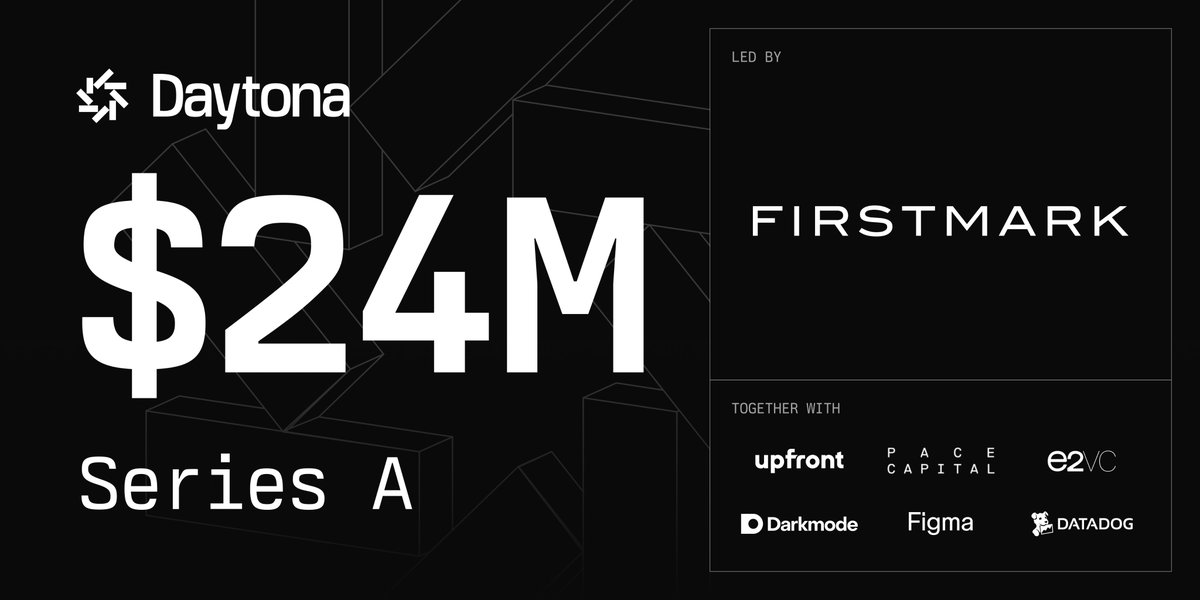
Today, Daytona is announcing a $24M Series A, led by @FirstMarkCap, to give every agent a computer.
This round reflects what the market is increasingly concluding: the cloud was not built for agents.
Full announcement 👇
Vision Language Action models are the backbone of Physical AI.
This guide maps how we got from early VLAs to VLA+ models like Microsoft’s Rho-alpha, covering Gemini Robotics, π0, SmolVLA, Helix, and more.
A clear snapshot of where robot intelligence stands today.
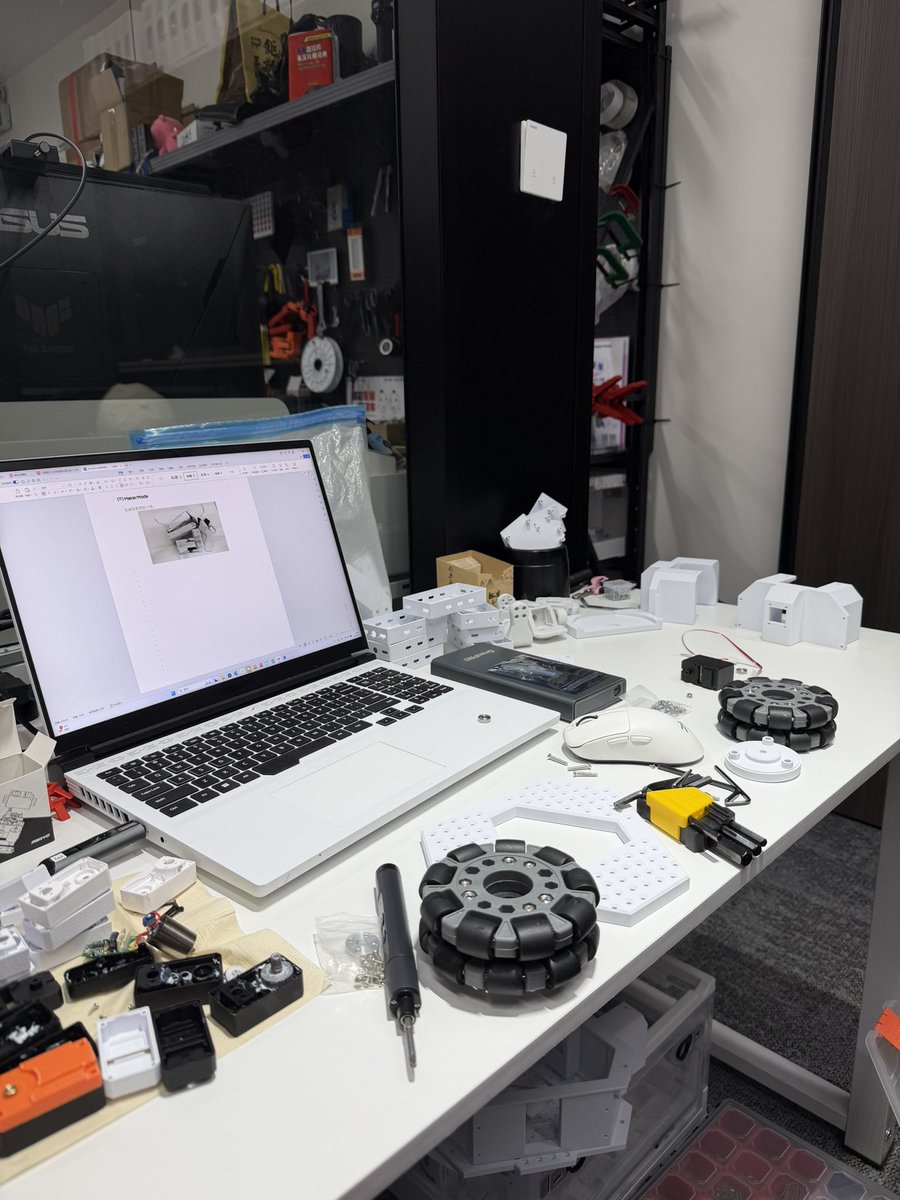
We just upgraded XLeRobot 🚀
Built by the MakerMods team @IsaacSin12, @ThomasSchicksal and @QILIU9203.
• Easier to build
• Improved chassis
• Reduced 3D-print time and material
• Designed in collaboration with the original author @VectorWang2
Fully open-source
Full build guide
GitHub release coming soon