Iranian crypto users are neither participants in political conflicts nor responsible for them.
They simply want to take part in the digital economy, just like millions of other crypto users around the world. As Iranian entrepreneurs, we have spent years building despite limitations, striving to be part of the global crypto community—a community founded on freedom, transparency, and individual choice.
That is why it is difficult to accept that the consequences of political complexities are ultimately borne by ordinary citizens and independent businesses that have always believed in those very values.
If crypto is meant to make borders less relevant, it should not treat users differently because of where they were born.
🫶 Welcome back #Iran! Metrics show a further rise in connectivity as mobile networks and other segments are reconnected to the global internet:
• Filternet remains in place but can be worked around
• WhatsApp now restricted, requiring circumvention
• Some users still offline
😶 Metrics show that #Iran's internet blackout is ongoing into its 79th day in its twelfth week. The mass-censorship measure has reshaped the nature of civic participation with information controls being used to relegate the general public to mere observers in their own country.
🕰️ Today is the 74th day that #Iran has been largely cut off the global internet, with the incident now passing hour 1752. Since 28 February 2026, the world has seen advances in science and technology. Meanwhile, Iran's regime has been arresting and executing technologists.
📢 The internet blackout in #Iran has entered its 73rd as the incident surpasses 1728 hours. Open internet access is a right that underpins all other liberties, and its deprivation severely limits the public's ability to document and remediate fundamental human rights violations.
📵 #Iran's internet blackout is entering its 68th day after 1608 hours. The general public have now been largely cut off from the global internet for 70% of the year 2026 to date, with some reporting no contact since the beginning of the first digital shutdown in January.
Balaji: If Iran wins, it's the end of five eras.
1991-2026: the unipolar era
1974-2026: the petrodollar era
1945-2026: the postwar era
1776-2026: the union era
1492-2026: the Western era
If Iran wins, it's the end of five eras.
1991-2026: the unipolar era
1974-2026: the petrodollar era
1945-2026: the postwar era
1776-2026: the union era
1492-2026: the Western era
Specifically, the end of the petrodollar (1974) would also be the end of the unipolar moment (1991) and the postwar order (1945). It would mark the moment when Eurasian powers were once again dominant over Western powers (1492). Finally, a rapid crash in the dollar's purchasing power coupled with military defeat could well break apart the American union (1776).
Few seem to viscerally understand just how dependent America is on money printing. But the end of the petrodollar is the end of Keynesianism as we know it.
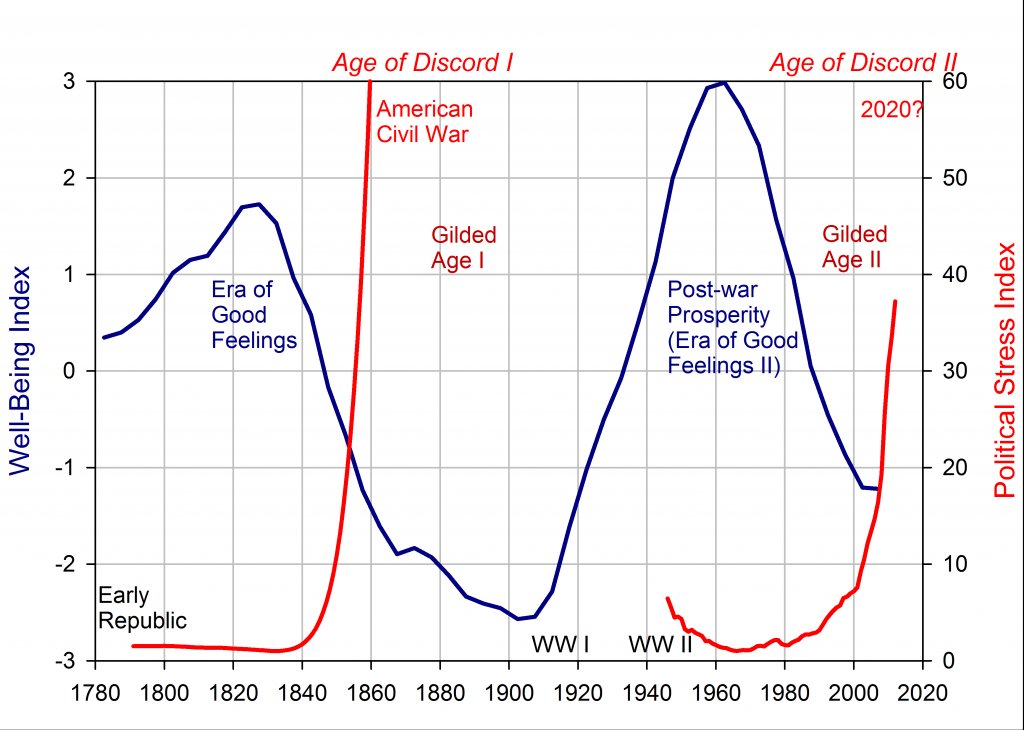
And if there's a sudden cost-of-living spike on top of pre-existing levels of political polarization, which are already near Civil War levels...we could see the scenarios that Dalio, the Fourth Turning, and Turchin have described.
Ali is usually right, but calling desparate survivors of a massacre as “wrong”, is wrong.
The better phrasing is “they were massacred, gambled, and they lost the gamble”
⚠️ Update: Two full weeks have now passed since #Iran fell into digital darkness amid a regime-imposed internet blackout.
The public remain isolated from the outside world with only a limited domestic intranet after 336 hours while state-approved accounts get whitelisted access.
@tparsi Thanks but facts of the next hours was different:
(1) Iran continued their attack regardless of what he said
(2) in the 2pm news, IRGC specifically rebuffed what he said
https://t.co/uTQbmhOE4Y
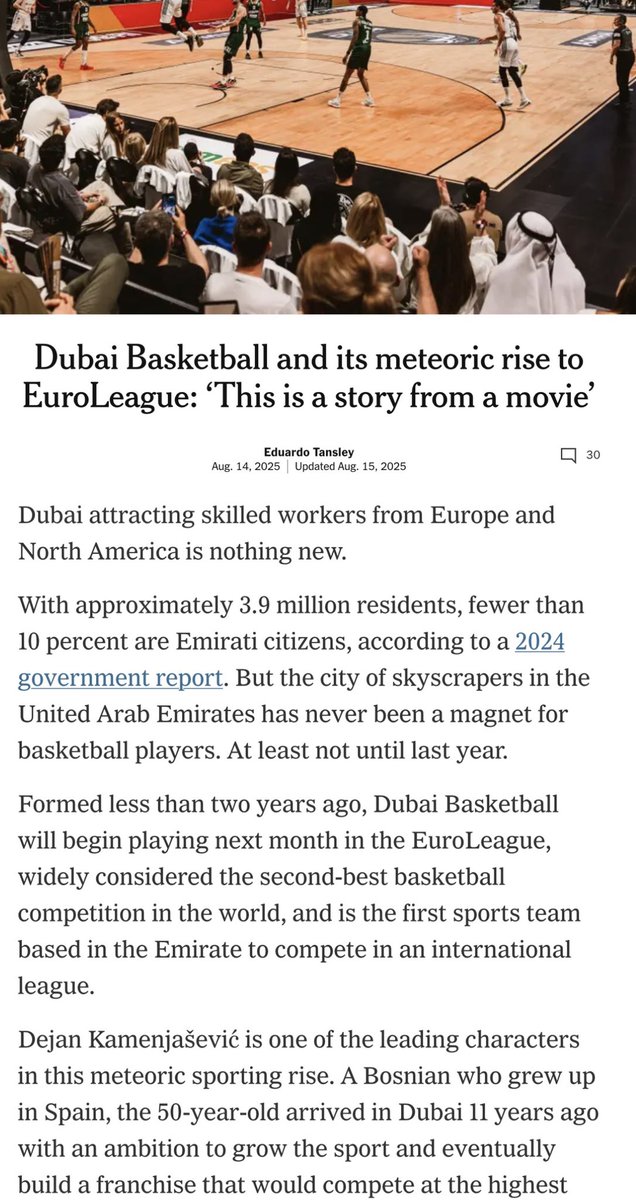
The rise and excellent performance of @dubaibasket in the @EuroLeague is one of the great examples of investments by Dubai. (We have covered Dubai investments since 2007 and we will focus on this story in our special coverage).
NYTimes story:
Joint Statement: Internet Architects & Leaders Condemn the Iran Shutdown
January 11, 2026
To: The Government of the Islamic Republic of Iran and the International Community
As architects, operators, and stewards of the global Internet infrastructure, we define the Internet not merely as a network of cables and routers, but as a foundational instrument for human connection, economic survival, and the free flow of information.
We observe with grave concern the deliberate, total shutdown of Internet connectivity within Iran.
This action is not a matter of internal traffic management; it is a disconnection of a nation from the world.
By severing the digital lifelines of over 90 million people, the authorities are inflicting profound harm on their own citizens: disabling emergency services, crushing economic activity, and isolating individuals from their families and the global community during a time of crisis.
We assert the following principles:
1. Connectivity is a Fundamental Enabler of Human Rights: In the 21st century, the right to assemble, the right to speak, and the right to access information are inextricably linked to internet access.
2. Protecting the Global Internet Commons: National-scale shutdowns fragment the global network, undermining the stability and trust required for the internet to function as a global commons.
3. Transparency: The technical community condemns the use of BGP manipulation and infrastructure filtering to obscure events on the ground.
We call upon the relevant authorities in Iran to immediately restore full, unfiltered internet access. We further call upon the international technical community to remain vigilant in monitoring connectivity and to support efforts that ensure the internet remains open, interoperable, and accessible to all.
The internet belongs to everyone. It must not be weaponized against the people it was built to serve.
Signed,
(Signatures are on personal title; affiliations are mentioned for indicative purposes)
Internet Pioneers & Governance Leadership
- Esther Dyson – Founding Chair, ICANN; Author, “Term Limits: Time and scale in the age of AI”
- Geoff Huston – Chief Scientist, APNIC; Internet Hall of Fame Inductee
- Andrew Sullivan – Past IAB member, past IAB Chair, past Internet Society President and CEO
- George Sadowsky – Former ISOC & ICANN Board Member; Internet Hall of Fame Inductee
- Robert Madelin – Former Director-General for Internet matters at the European Commission; Senior Strategist at FIPRA International
- Wolfgang Kleinwächter – Professor Emeritus for Internet Policy and Regulation; Former ICANN Board Member
- Maarten Botterman – Former Chairman of the ICANN Board; Director, GNKS Consult
- Kaveh Ranjbar – Former CIO/CTO, RIPE NCC; Former Board Member, ICANN
- Asha Hemrajani – Former Member, ICANN Board of Directors
- Desiree Miloshevic – Emeritus Board Member, Internet Society; Member, IGF Multistakeholder Advisory Group
Global Innovation & Business Leadership
- Anousheh Ansari – CEO, XPRIZE Foundation; First Female Private Space Explorer
- Khaled Koubaa – CEO, Worthy Technology
Policy, Law & Human Rights
- Lawrence Lessig – Roy L. Furman Professor of Law and Leadership, Harvard Law School; Founder, Creative Commons
- Meredith Whittaker – President, Signal
- Bart Groothuis – Member of the European Parliament; Former Head of Cybersecurity, Dutch Ministry of Defence
- Daniel Attard – Member of the European Parliament; Vice-Chair, Delegation for relations with Iran
- Patrick Breyer – Former Member of the European Parliament; Digital Rights Advocate
- Milton L. Mueller – Professor, Georgia Institute of Technology; Director, Internet Governance Project (IGP)
- Alec Ross – Distinguished Professor, University of Bologna Business School
Security, Cryptography & Technical Experts
- Bruce Schneier – Harvard Kennedy School / Munk School at the University of Toronto
- Bart Preneel – Professor of Cryptography and Information Security, KU Leuven
- Randy Bush – Researcher, Operator, old Internet curmudgeon, Portland Oregon
- Michele Neylon – Founder & CEO, Blacknight Solutions; Former Chair, ICANN Registrar Stakeholder Group
- Carmela Troncoso – Scientific Director, Max Planck Institute for Security and Privacy
- Jaap-Henk Hoepman – Professor of Privacy by Design, Karlstad University / Radboud University
- Simone Fischer-Hübner – Professor for Cybersecurity and Privacy, Karlstad University / Chalmers University of Technology
- Stephen Farrell – Research Fellow, Trinity College Dublin
- Aurélien Francillon – Professor, EURECOM
#Iran #DigitalBlackoutIran #internet #IranProtests