As believers of open research, we are disappointed to see Anthropic silently degrading Fable 5 for AI development
"Any topic related to building pretraining pipelines, distributed training infrastructure, or ML accelerator design... may have limited effectiveness through Claude via methods such as prompt modification, steering vectors, or parameter-efficient fine-tuning."
Not only do they get to decide what you use LLMs for in research, but this also enables them to silently intervene in your research without you knowing.
This sets a dangerous precedent. If a model refuses openly, users can understand the boundary. If a model falls back to another model, users can still evaluate the difference. But if a model silently modifies or weakens its own answers while still pretending to help, researchers lose the ability to know whether a failed result came from their own idea, their implementation, or an invisible intervention by the model provider.
That is not safety. Safety policies should be transparent, auditable, and user-visible.
On top of that, the people most harmed by this are not the largest labs with massive teams and proprietary infrastructure. It is the independent researchers, academic groups, startups, and open-source builders who rely on public tools to compete, innovate, and pioneer AI for everyone else.
🔐 Introducing B.Cyber. at IIT Kanpur — a first-of-its-kind undergraduate program designed to create future cybersecurity leaders.
From rigorous academic foundations to real-world cybersecurity challenges, the program offers a unique pathway to build expertise in protecting critical digital systems.
Admission to the program will be based on a special selection process involving shortlisting through JEE Main performance and demonstrated prior work in cybersecurity, followed by a test that includes a hackathon.
🎥 Watch @Director_IITK, Prof. @agrawalmanindra share the vision behind this new initiative.
@EduMinOfIndia | @wadhwanif | @IndiaDST | @HubC3i | @ugc_india | @AICTE_INDIA | #IITKanpur #BCyber #Cybersecurity #FutureOfTechnology #IITK
Major difference in my mind:
- an engineer, given a problem, invents and tries multiple solutions and stops when the solution is good enough. The goal is product innovation and shipping.
- a scientist asks new questions, proposes various new solutions, compares them (sometimes with old ones), and writes about it. The methodology must be sound or else peers will sneer. The goal is scientific breakthroughs and technological progress.
Both can be called "researchers". Many people can do both: these are activities, not identities.
Importantly, most product innovations are built on scientific breakthroughs and technological innovations that happened 2, 5, 10, or 20 years earlier.
BREAKTHROUGH: Colossal scientists hatched healthy chicks from artificial eggs.
No shells. No hens. Just bioengineered eggs that breathe like the real thing.
This could help bring back giant extinct birds like the South Island giant moa, whose eggs were ~80x a chicken’s. (1/10)
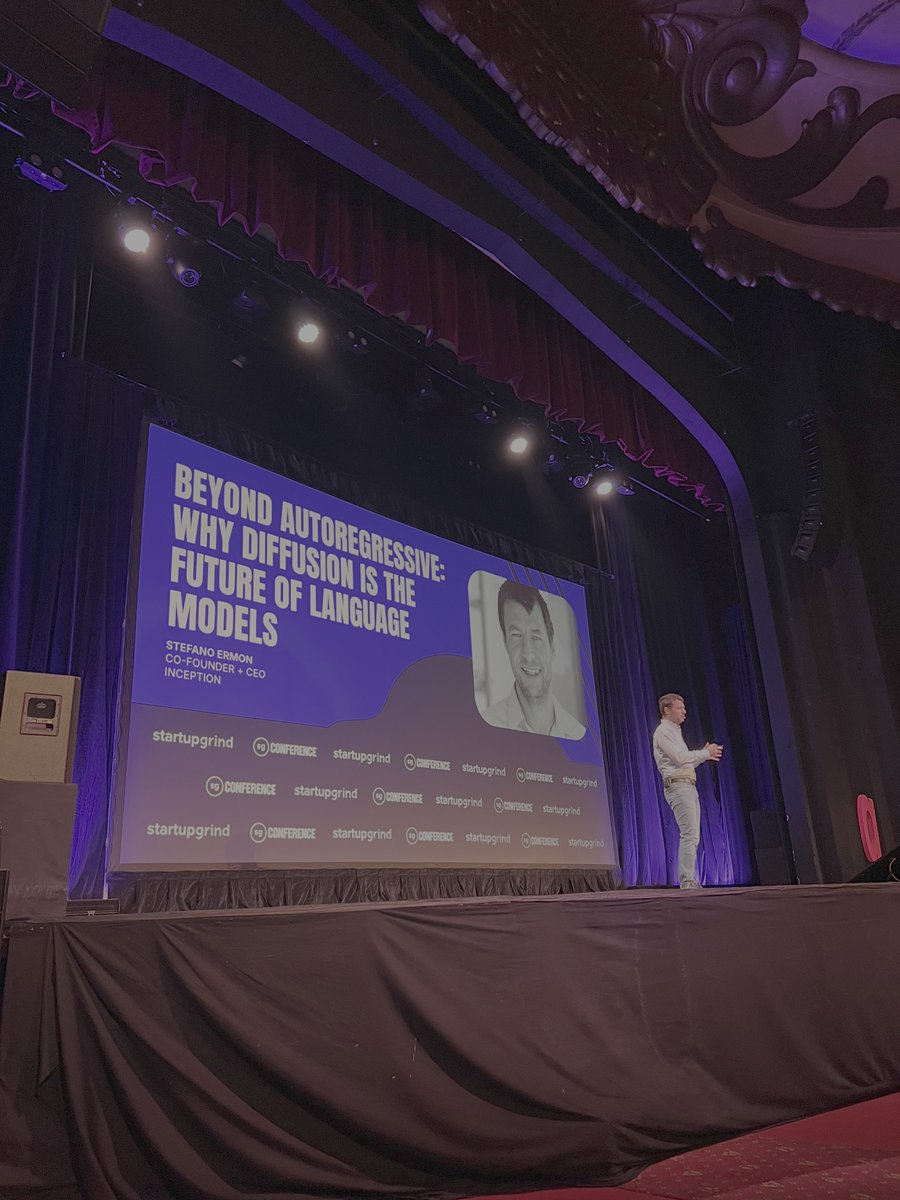
"Beyond autoregressive: why diffusion is the future of language models"
@StefanoErmon's keynote at @startupgrind yesterday. Fully packed Fox Theatre.
Mercury 2 is hitting >1,000 tok/sec on standard GPUs at a fraction of the cost, comparable quality to frontier speed-optimized models. Diffusion. Parallel token generation.
His closing line: the question isn't which model is smartest, it's which model is most efficient, without sacrificing quality, on the highest-volume tasks.
When agents make 50 LLM calls per task, latency is the product. @_inception_ai
🚨 $220K. 3 months. No PhD. No gatekeeping.
Perplexity's Research Residency is hunting brilliant minds from ANY field: physics, cogsci, quant finance, math, philosophy + more.
Bring your unique brain. We'll bring compute, mentorship & mission.
Rolling apps. SF/Palo Alto. Visa support.
Apply before your genius friend does 👇
https://t.co/47Gdj9dCcE
#AI #BuildWithPerplexity #ResearchResidency @perplexity_ai
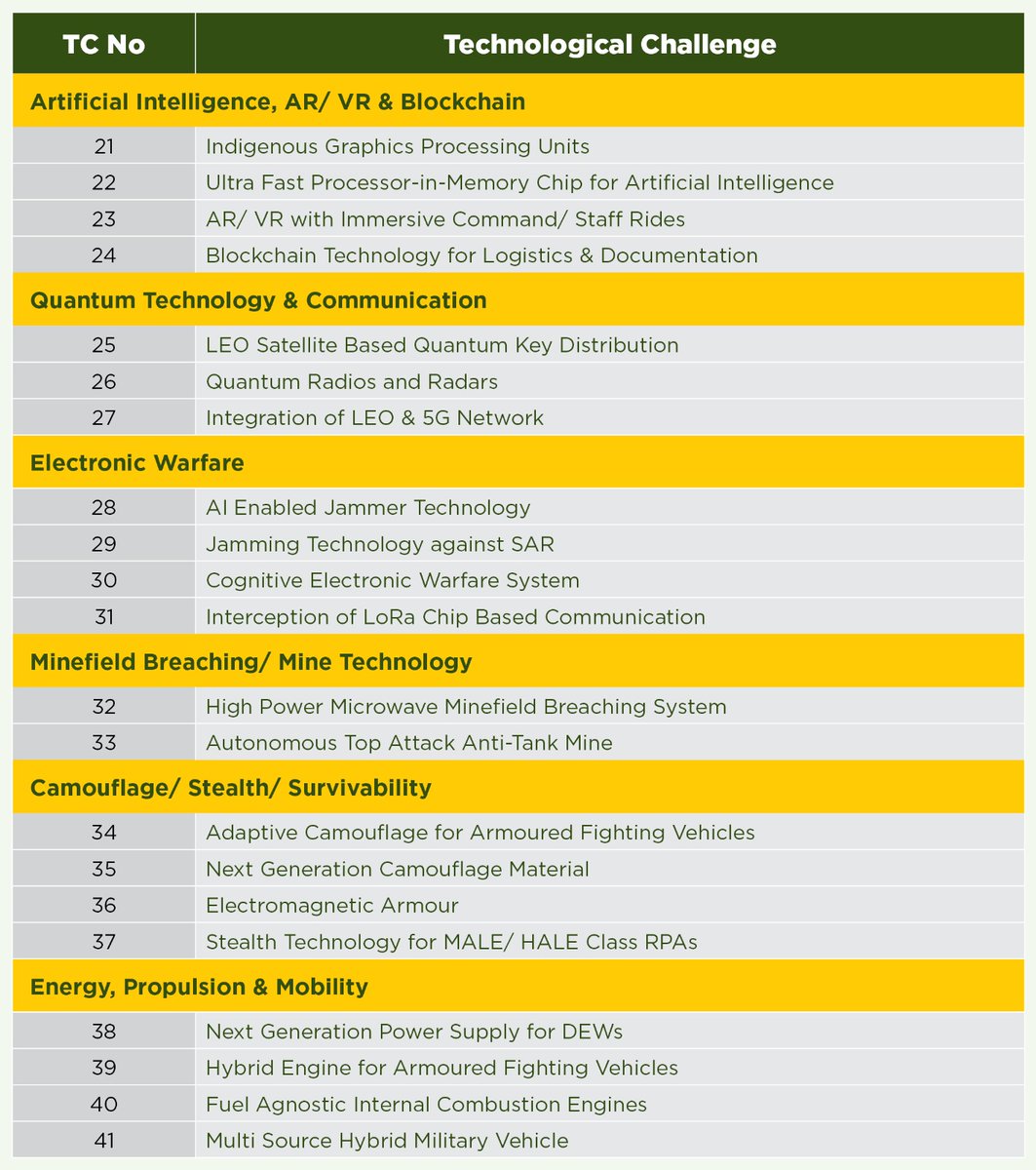
Seeking Solutions for Technological Challenges
The Indian Army had released the Compendium of Technological Challenges (#CTC 2025) on 23 September 2025, outlining 41 futuristic challenges across domains such as Unmanned Systems, AI, Quantum Technologies and Directed Energy Weapons. The index of the compendium is available on the Army Design Bureau (ADB) webpage.
Interested agencies may request detailed information by emailing [email protected] to obtain the relevant sections of the compendium.
The last date to request details is 20 April 2026, and solutions may be submitted by 31 May 2026.
Further updates are available on the ADB webpage.
I'm so mad. Once again, got a paper accepted, but Ref2 wants me to add 4 references all having a single author in common, whereas Ref1 suggests 6 with another common author!
This unethical behavior should be stopped by the editors.
Should I say who those authors are? Thoughts?
📢 Join our team in Hamburg!
The Trustworthy AI lab 🤝 is looking for a Research Associate for a novel DFG-funded project on ethical LLM-based multi-agent systems. 🤖 Full-time | EGR. 13 TV-L | Apply by 8 April 2026
🔗 https://t.co/GZPIvuXh9s
#TrustworthyAI#LLM#AcademicJobs
New episode is out now!
This week I had the privilege of sitting down with @BorisJohnson - former London Mayor, UK Foreign Secretary and Prime Minister.
An hour of total candour - on power, crisis, and what he'd do differently.
Watch now: https://t.co/2HznpiIr1L