I am pleased to share that I have accepted a position @Stanford to start as an assistant professor in the department of statistics, with an affiliation in @StanfordData, this fall!
Our new preprint describes “CROPseq-multi”: a versatile solution for multiplexed perturbation and decoding in pooled CRISPR screens https://t.co/6GeJLkvp7x Reagents on Addgene: https://t.co/lvCMay6Gpb
Kicking off 2024 by sharing a preprint of my PhD work! We report an engineered cytokine therapy that elicits some of the most profound anti-tumor immunity we have seen in our labs' preclinical work.
Preprint and walk-through below:
Excited to share our preprint on metabolic differences in the vaginal #microbiome. We find key differences in fatty acid metabolism among #Lactobacillus species & leverage those findings to identify a potential new therapy for bacterial vaginosis (BV) & #WomensHealth 🧵 (1/n)
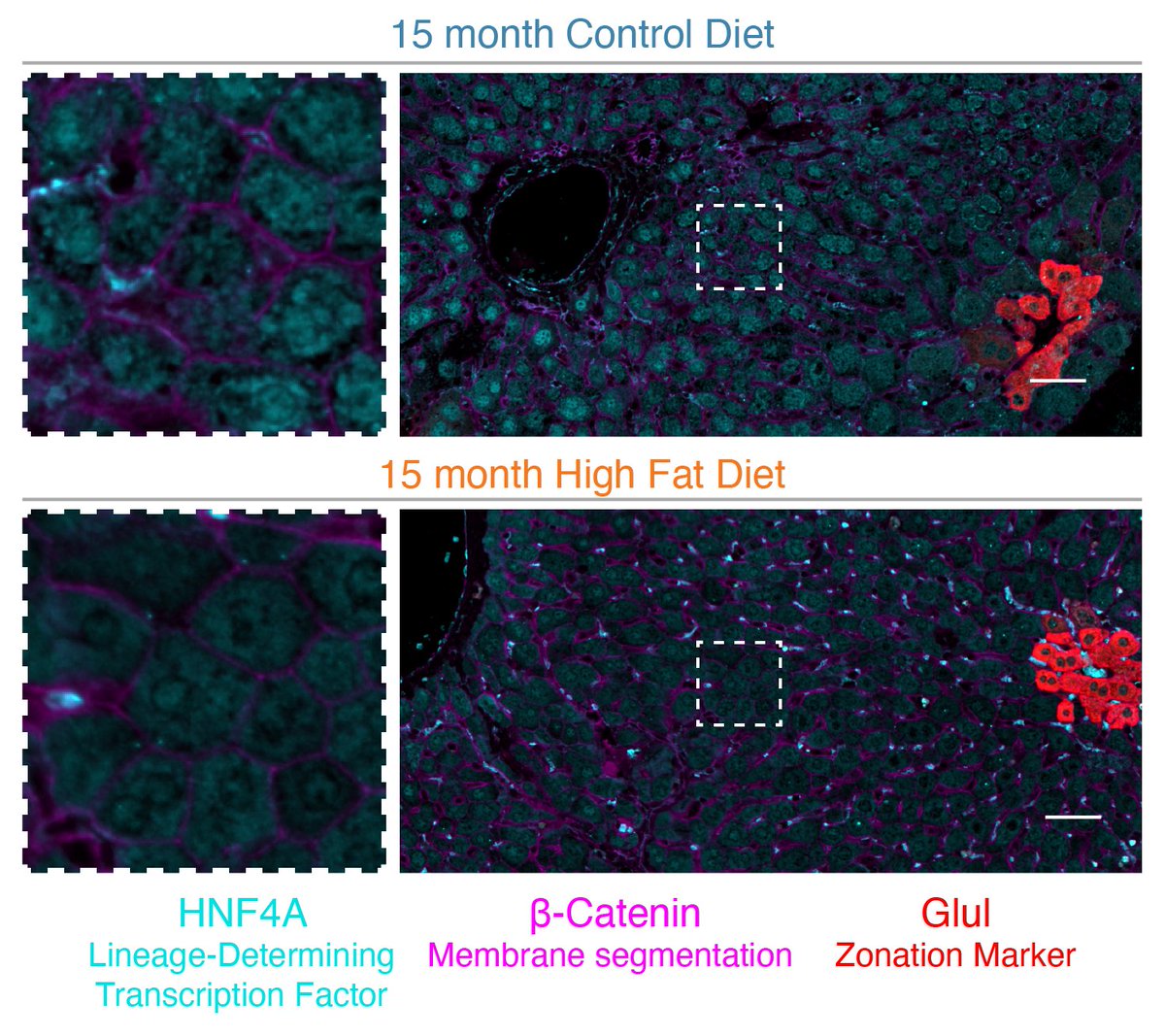
New preprint! In chronic stress, cells must balance their own survival with tissue-level roles. Prior work has emphasized stress-induced drivers of cell death, but what happens to surviving cells? How do they adapt, and how do their changes connect to long-term dysfunction? (1/n)
If last week’s thread on #singlecell foundation models for zero-shot tasks left you asking “what about fine-tuning for few-shot tasks?” -- check out our new preprint! 👇https://t.co/p2Ll8PaMla
ICYMI, here's the zero-shot analysis led by @kzkedzierska 🙂https://t.co/Tj8P6wF2eX
Check out the paper details + evaluations, including on CASMI2022. Lastly, big thanks to co-first author (and undergrad!) @RainaXin, co-author Joules, and my PI @cwcoley.
3/3
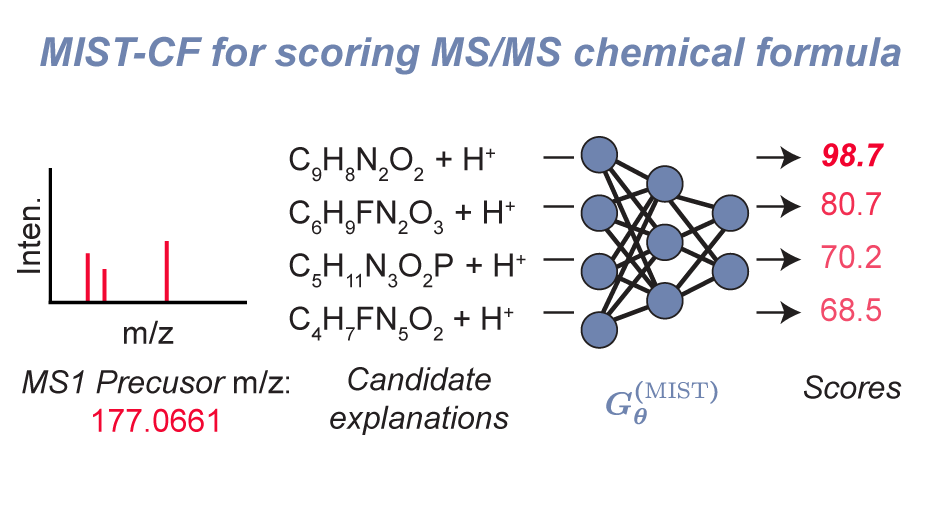
At Metabolomics2023, I outlined our view of untargeted metabolomics tasks to address with AI/ML. Happy to share an extension of our MIST model, MIST-CF, for the prediction of MS1 chemical formula from MS/MS.
Paper: https://t.co/1qAEbuuNRv
Code: https://t.co/XzHkpYp0ps
1/3
MIST-CF learns to score the compatibility b/w a chemical formula (+ adduct) candidate and MS/MS. Especially excited about how we removed dependence on SIRIUS/CSI for subformula labeling. Now updated in MIST v2 code too (https://t.co/mgGeh7QWef).
2/3
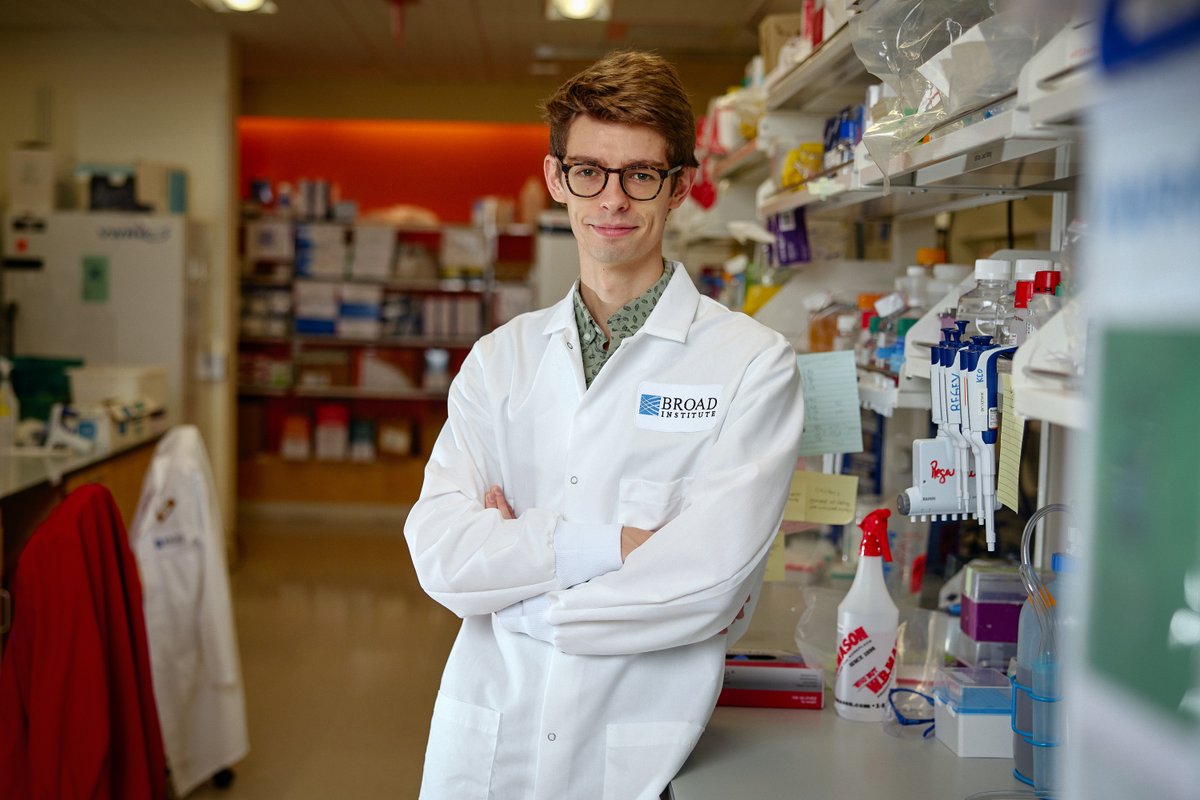
PhD student Constantine Tzouanas studies how processes involving individual cells shape whether pathogens will defeat their hosts — or vice versa. In addition to uncovering leads to new treatments, he seeks to better understand how the body works. https://t.co/TOMvtJnZTH
We are thrilled to announce the launch of ReNAgade Therapeutics with $300M+ in Series A financing. With our comprehensive deliver, code, edit, insert technologies, we’re unlocking the limitless potential for RNA medicines. https://t.co/PKUVGQoyEb
And last but not least, thanks to co-author Janet Li, a talented undergraduate at Harvard who helped drive this work as part of her senior thesis, my PI @cwcoley, and @mingxunwang for feedback on the manuscript & working with us on GNPS integration! 5/5
Happy to share our latest MS/MS prediction model, ICEBERG.
Preprint: https://t.co/ZGVjSrkMqb
Code: https://t.co/qYVIaznhLk
Like our prev. work, ICEBERG is a two step model, but rather than first generating potential subformula, ICEBERG generates chemical substructures. 1/5
We envision ICEBERG model extensions and use in other pipelines (@GNPS_UCSD integration pending). Feedback on the preprint or predictions welcome-- as always, all open source alongside our other forward prediction model SCARF. 4/5
@chopralab@cwcoley@j__bradshaw@RainaXin This seems like interesting work, thank you for flagging! We will make sure to cite in future iterations of SCARF.
SCARF only works for tandem mass spectra prediction (herein ESI, but could be trained for EI), as it uses a decoder neural network custom tailored for this task.
And one more shoutout to two exciting works with different strategies but the same goal of predicting spectra as formula sets: https://t.co/eqxIYp3EGK (MIT colleagues & @envedabio) and https://t.co/BA94gDzKRk (@richardzhu_@stochastician)! 4/4
Today we release our new work on mass spectra prediction, SCARF: https://t.co/HH74QmnfT8
SCARF is a two-step generative model to predict spectra from molecules (inverse of our last paper, MIST) at the level of chemical formulae (panel C) using prefix tree data structures. 1/4
Thankful for great coauthors @j__bradshaw@RainaXin@cwcoley! Also to @cs50 for making me implement a prefix tree ("trie") back in 2015 for a spell checker homework.
Code: https://t.co/qYVIaznPAS 3/4