We stopped everything to write an answer (link below) to Paul Krugman's two posts of today (one informal, one with a simple model) arguing that Europe is broadly not falling behind the United States.
The change measured by the Draghi report, he argues, is mostly due to growth in the technology industry, which has distorted GDP numbers without actually leading to higher standards of living. We should believe our eyes when we walk around France and walk around Mississippi.
Krugman is wrong. The measures he uses understate European stagnation. This matters enormously. Divergence with the United States is the strongest evidence for reform in Europe.
1. The growth numbers
Krugman compares the United States, France, and Germany at purchasing power parity in current prices. On that measure, France's and Germany's position relative to America has been roughly constant since 2000.
But current price comparisons miss productivity gains in sectors where prices fall. If America produces twice as much software while the price of each unit halves, the value of American software output looks unchanged even though the volume has doubled.
Most economists therefore use constant prices, which fix the base-year PPP level and apply each country's real output growth on top of it. American output growth has concentrated in tech, where prices have fallen tremendously as productivity rises. In terms of the volume of things produced, America has pulled away from Europe.
2. Is it all the tech industry?
Krugman concedes this tech divergence but says it is not welfare-relevant. The American growth lead is an accounting artefact of measuring more iPhones at base-year prices, not a sign that Americans are actually richer, because Europeans buy the same iPhones at the same world prices.
This is not the right way to think about the world today, as an earlier Paul Krugman would have argued.
His model assumes tradable goods, interchangeable workers, marginal-cost pricing, and no profits. Each assumption fails.
Most of what households buy is non-tradable: housing, healthcare, childcare, education. When American tech firms bid workers from haircutting to coding, American haircut wages rise. Germany has no growing tech sector to do the bidding, so German wages stay flat.
Technology is not priced at marginal cost. Apple's margins are around 40 percent. Anthropic's inference margins are at 70 percent. The major platforms enjoy network effects, switching costs, and lock-in that hold prices well above what a competitive market would deliver. A large share of the productivity gains in technology stays as profit.
A lot of the value of American technology dominance shows up in equity, not in wages. Apple, Microsoft, Nvidia, Alphabet, Meta, and Amazon together are worth $21 trillion, more than the entire combined stock market value of all European stock markets. Around 60 percent of US equity is held by American households. The median French or Spanish household holds almost no equity.
The median employee at Meta, a company with almost 80,000 employees, earned $388,000 in 2025.
This advantage is not going to go away. Krugman's own 1991 paper, cited in his Nobel prize, showed that comparative advantage in modern industries is produced by increasing returns to scale, specialized labor markets, supplier networks and the agglomeration of suppliers, workers, and ideas in particular places. Once an industry concentrates somewhere, the concentration is self-reinforcing. Europe is being pushed away from the next round of technology industries (AI!).
3. What about inequality?
Another retort is that GDP per capita hides substantial inequality, and so even if America is rich on average, this is mostly due to the super wealthy.
But despite the US's high pre-tax income inequality, it also achieves higher median incomes than Europe, in part because of such a high base, and in part because it actually redistributes more than many European countries.
The cleanest comparison is median equivalised disposable household income: income after cash taxes and transfers, adjusted for household size and purchasing power. According to the OECD's 2021 numbers, the median American earns 30 percent more than the median Dutchman, about 31 percent more than the median German, and about 52 percent more than the median Frenchman.
4. What about hours worked?
Krugman points out that while American GDP per person is higher, most of this is because Americans work more. For this divergence to be an hours worked story, Americans must work more relative to Europeans now than they did in 2000.
The opposite has happened. Birinci, Karabarbounis, and See in a 2026 NBER paper show that about half of the American-European hours gap that existed in the 1990s has reversed by the end of the 2010s. Americans work fewer hours per person than they did in 2000, while most Europeans work more.
5. Is America not a bad place to live?
Walk around Alabama and France: surely the former cannot be substantially richer than the latter?
American cities often have poorer centres and richer suburbs or exurbs. European cities preserve richer and more attractive historic cores. A visit to a city as a tourist in America compared with a city in France will leave one having seen different spots on the income distribution. Americans in Europe go to the nicest and richest European cities.
Rather than a walking around test, do a driving around test. Go to the periphery of any modern American city and see a level of new-built material wealth that is extremely uncommon in Europe, with thousands of enormous four- or five-bedroom homes. In the South, in places like Nashville and Austin, drive around the downtowns to see hundreds of luxury apartment buildings springing from the ground. This construction boom is replicated virtually nowhere in Europe today.
The other question is generational. Housing often costs more in Europe than in the United States, despite the quality of the housing stock generally being much better. Europe has nice city cores but these are inaccessible to young Europeans.
Consider the salaries available to entry-level workers. The starting pay for a London police officer is $57,000. In Washington, DC, $75,000. The entry-level Deloitte consultant job in Madrid pays around €28,000, roughly $33,000 per year. In Charlotte, the entry-level Deloitte job pays $63,000.
There are many things to dislike about life in America. But relative to 25 years ago, the gap in material wealth has shifted dramatically in America's favor.
https://t.co/VOpQ32R5tg
For the last three years, a startup in Bangalore has been obsessed with a pursuit that typically invites raised eyebrows, naked skepticism, and accusations of stealing from sci-fi:
@dognosis is training dogs to detect cancer.
And until you've spent time at their facility - a former pomegranate farm in the outskirts of Bangalore - perhaps skepticism is the rational response.
But Dognosis isn't betting on some pie-in-the-sky idea or some charming novelty act, they're betting on evolution.
@akadogluk and @Itamar_Bitan based their company on the fact that the dog's nose - a product of fifteen millennia of co-evolution with humans - can detect the faint chemical trace of cancer in your breath at a resolution that our machines, algorithms, and laboratory tests have never come close to matching.
We've known this fact for decades. We've consistently failed to do anything meaningful with that knowledge.
The missing link has been figuring out what the dog's nose knows, and applying it in a standardised, scalable, and clinically validated way.
Dognosis is building this missing piece of the equation i.e. the translation layer that allows the dog's nose to speak a language medicine can understand, enabling us to harness an ancient biological intelligence and plug it into our modern medical infrastructure.
Maybe you've read the paragraphs above and retained your skepticism. That's fair. But this past Friday, the Journal of Clinical Oncology - the world's most influential cancer journal - opted to make life much harder for the skeptics.
On Friday, the JCO published Dognosis' landmark study on breath-based multi-cancer detection - the largest of its kind ever conducted - showing that a team of trained dogs, equipped with sensors and AI, could detect multiple cancers from breath alone at 90%+ accuracy - including at Stage I, when it matters most - for $2 a test.
According to Akash, it proved "that everything we’ve known about the dogs is true".
Needless to say, it's a genuine milestone for Indian healthcare, health-tech, deep-tech, and, uh, dog-tech, that deserves far more attention than it's gotten so far.
To help change that, we were lucky to have Akash stop by the Tigerfeathers editorial desk this past week to unpack the Dognosis journey - helping us understand what they're building, how they're doing it, why it matters, and what comes next.
From where we're sitting, Dognosis is an n-of-1 Indian startup with an n-of-1 story that everyone in the Indian tech ecosystem should be aware of. If you've been intrigued by what you've read so far and you're keen to go deeper, dive into our piece here👇
https://t.co/limlGrgxJ1
I laud the government for investing in AI in a post-industrial town. However £500K is a paltry sum and shows the lack of ambition. What does that even get you?
A few consultants for 6 months doing some slides and trainings.
if u say no to pretzels, the flight attendant should give u something called a Coin of Restraint. while worth nothing now, these coins will play a major role in the afterlife
You can now enable Claude to use your computer to complete tasks.
It opens your apps, navigates your browser, fills in spreadsheets—anything you'd do sitting at your desk.
Research preview in Claude Cowork and Claude Code, macOS only.
@AbedAwadEsq@nntaleb@DalrympleWill@RabbiPoupko Doesn’t that suggest that time therefore invalidates connection to a land due to intermixing? If Palestinians were a diaspora for 1000 years and lost genetic connections, would their claim be invalidated?
Yesterday, Anthropic released Claude Opus 4.5 and it delivered strong results across major benchmarks (SOTA on ARC-AGI, SWE-Bench, Computer Use, etc.). The model performed especially well on coding tasks. Gemini 3 had just set high bars in nearly every benchmark but the one that it couldn’t really crack was SOTA performance in coding (worse than Sonnet 4.5 on SWE-Bench Verified).
It feels like Anthropic is a real lesson in the value of focus, the team hasn’t spread its attention across multiple (frankly quite lucrative) opportunities in productizing a leading AI foundation model (or lab that churns them out). The long-term thesis is still this idea that coding prowess will deliver AGI. The clarity there has created a talent magnet, a focused product in a profitable and new (but enormous) market, and staved off attacks from bigger companies with more funding.
They haven’t even launched an AI image generator. Sholto Douglas, a researcher at Anthropic who came on the show yesterday, had a funny quote about it: “We believe there is no shortage of AI images.” Now to be clear, Anthropic does think that image understanding is important. Just as you’d want your human coworker to be able to look at the website they are building and see the results, Claude can look at a screenshot and understand what’s going on.
Also notable is that they didn’t vaguepost about the launch. This strategy was basically created by OpenAI to create buzz around new launches and honestly it’s a lot of fun. I still think it’s funny to read into what Sam meant by posting a Death Star picture before launching GPT-5. DeepMind recently picked up the practice of vague posting and had some fun with it, but Anthropic eschewed the opportunity and ran a pretty by the book launch plan. A blog post with some clear benchmarks, a video explaining some of the results and early findings, etc.
On AI safety, I’ve shifted my thinking a lot over the past year. I’ve come to appreciate safety research because of its applications related to understanding foreign influence that may occur from open-source models and the effects of long chatbot discussions with people who are under psychological stress. Neither of these scenarios was on my list of potential negative side effects years ago, but now they seem very real and worth taking seriously. Yesterday, Sholto highlighted a tradeoff Anthropic has been wrestling with around biology. No one wants a terrorist to build a bioweapon in their garage, but we all want top cancer researchers to be able to accelerate their workflows with helpful AI assistants. It’s very hard to put concrete timelines together for negative scenarios like “AI helps someone create a bioweapon” but I think it’s very good to have companies wrestling with these issues early and often.
It’s clear that all that moral wrestling is a cultural feature, not a bug. The most widely viewed clip from our interview with Sholto was about Anthropic’s writing-focused culture. Apparently Dario is regularly posting essays on Slack threads explaining his full chain of thought on various issues facing the company. Shawn Wang from Cognition said, “this is the single strongest reason to join ant i have ever read.”
Tyler on our team had some extra thoughts on the day, saying “Anthropic still feels very underhyped. Google is just now receiving its flowers in the public markets, and OpenAI has taken up most of the AI mindshare since the original ChatGPT launch. If you are AGI-pilled, Anthropic is probably where you want to work.”
one thing that was immediately palpable in washington is that everyone has incredibly intense and baroque friend-enemy distinctions. there are whole catalogues, subgroups of people who we like and don't like. there is an exhaustive mental list of gossip and calculation about who is getting iced out of which circles and for what reason. there is paranoia about being associated with the wrong crowd. maybe if you are caught hanging out with writer X someone in the white house’s inner circle will deem you insufficiently patriotic and end your career. this all makes sense of course as political influence is a mostly zero sum game and requires all kinds of warfare to wield effectively. I got the distinct sense that the place would exhaust and ruin me very quickly, as someone who needs to meet someone twice before even remembering their name.
this is all very interesting coming from san francisco where commercial interests and market forces rein supreme and even companies who are purportedly competitors today have free movement of services and people between them. good relations must be maintained, you go to parties with your friends at the ‘enemy’ labs, and in general the market forces you to assume the best of everyone. "best" in a limited sense, which means - your counterparties are rational actors looking for nonzerosum profitable exchange, with asymmetric upsides. silicon valley encourages you to be broadly friendly with everyone, and make time for everyone due to the low but real chances of extreme upsides from these interactions. though of course there is some amount of intense strategy and gamesmanship at the highest levels, the rank and file rarely think about this.
both places attract the type of people who are capable of the kind of social interaction that is demanded by the respective environments and likely filters them very quickly. If you are too broadly trusting in washington, i am sure your head will end up on a metaphorical spike shortly thereafter. It also makes sense that everyone in dc seems to be undergoing a religious revival - encouraging extremely specific sectarianisms and beliefs - despite the underlying implication that everyone is having exciting and perhaps sordid personal lives. There is a warmth and spice of life to the ongoings in washington that reminds you of history, and the fukuyama quote:
"The end of history will be a very sad time. The struggle for recognition, the willingness to risk one's life for a purely abstract goal, the worldwide ideological struggle that called forth daring, courage, imagination, and idealism, will be replaced by economic calculation, the endless solving of technical problems, environmental concerns, and the satisfaction of sophisticated consumer demands."
One of the most powerful, lucid and actionable blueprints about how to turn the boat around on the UK economy.
Truly excellent by John and Andrew - if you want to learn how the UK economy dysfunctions, and how it could work better, read this.
https://t.co/vivVGEyQZF
@AaronBastani It’s not just hooliganism. Some Maccabi fans will wave flags, while Birmingham thugs will have a blood lust to react. The average Joe will foot the tax bill, and there’s a high chance of violence.
I agree with the decision, but let’s call a spade a spade.
@CasperDahl9@Ostrov_A@RachelMoiselle The second paragraph is more emotive than the first, but the last paragraph is reasonable. The third paragraph talks about peace and diplomacy. People are getting worked up, as ever, about a (relatively) nuanced statement.
A few thoughts the morning after the fast.
I awake like many Jews all over the world with a strangely sorry feeling. Why is this Day of Atonement not like others? Then I remember.
This, Yom Kippur, is not one that the Jews of Britain will ever forget. As we were fasting on the most solemn day in the Jewish year, the terrible news arrived. I remember as a child the start of the Yom Kippur War when Egypt and Syria attacked Israel on this day 1973 – but that was a battle of states and armies. This was the coldblooded murder of ordinary British people, Melvin Cravitz and the brave security guard Adrian Daulby who gave his life to save many others and this could have been my synagogue. I want to pay tribute to the courageous security guard, the brave rabbi and to the Manchester chief constable and his armed police who acted so fast. I hope the Met would have been as quick ( I saw no police anywhere near my synagogue before the attack.)
I just wanted to thank the many friends who have written to me and other Jews last night and today. Your messages are so appreciated in this unsettling time. It is also entirely fitting that my Muslim friends, here and across the world, have been the kindest, my UK media acquaintances the most silent.
You might have noticed how angry Jewish people are. Usually mostly quiet. But what happened in Manchester was much predicted and entirely predictable and probably preventable. We warned it would end this way but we were ignored or shamed or gaslit. It could have been worse too. Our great security services have foiled many such plots. But let us hope this atrocity is a moment to reset our ways…
This was the inevitable result of two wild years of anti-Jewish racism and radicalism, dehumanizing antiJewish slogans and images, blood libels, calls for killing, support for terror, ‘globalizing intifada’ and ‘decolonize Israel now’, unleashed on the streets and media, barely policed either by actual policeman who have stood by nor by politicians who have swung between crowdpleasing Manichaean hyperbole and sensible, balanced reassurance; nor by the TV media anchors who have disgraced the noble vocation of journalism by rabid hostility, irresponsible exaggerations and actual mistakes that are never corrected; nor by the NHS doctors openly keening to kill Jews who are still working in hospitals despite the comments of Wes Streeting; and I don’t even need to mention the keyboard missionaries whose propagation of factual lies and vicious amplifications now include telling the suffering Gazans not to accept a peace deal that is on the table and will - we pray - bring peace and save many lives.
Today it is not a pretty sight seeing those same politicians, same anchors on Sky / BBC, same twitter missionaries pumping out self serving messages of sympathy, adopting their well-practised multicultural-community-in-danger faces - days after propagating easily-disprovable disinformation and wild Manichaean hyperbole. Of course they are not guilty of killing those people in Manchester; only the murderer and his accomplices are actually guilty.
But that is the point: the inciters congratulate themselves on being good people but take and show no responsibility for promoting bloodcurlding Manichaean credo of good and evil imposed on a faraway real war in which there is guilt and innocence on both sides. Here they have helped incite a whirlpool of hatred and they have contributed to an atmosphere that has of course proved lethal. It is other ordinary people whether here or there who play the price for their exciting transcendent parades of costfree, easy piety.
If one of them had said one thing that recognized that maybe their misuse of a thesaurus of emotive, hyperbolic Manicheanism had contributed to this vortex, I would respect them. But it is one of the distasteful characteristics of our time: many are rigidly convinced of their ironclad virtue, indeed sated and swollen with sanctimony – as they rush out their pro forma denunciations of antisemitism: the very definition of hypocrisy. That is why on X you might notice Jewish people saying ‘not now, thanks’ to the worst humbugs.
The protests started immediately and revealingly on October 7 and the line between acceptable criticism of the Israeli government and Israeli war (and yes there is much to criticise) immediately morphed into bloodcurdling calls for terror and a frenzy of anti-Jewish racism. The government, mayors and police were overwhelmed by a Manichean delirium or terrified of the aggression of these activists (or their electoral power in vulnerable constituencies) before sometimes making reassuring sensible comments. The result has been to say the least mixed messages.
Yesterday the intifada was indeed globalized and Britishized and Mancunianised. Words and bulletins have effects on real people in the street next door and far away too. They bleed, they die.
Last night, demonstrators celebrated the killing of British people in bloodthirsty fiestas in London and Manchester. It was heartening to see the PM, Foreign Secretary and Chancellor in synagogue last night: thank you.
To her credit Home Secretary Mahmood called these ghoulish celebrations “fundamentally unBritish” and recognized the problem ordering the celebrating demonstrators: “show some humanity”. Thank you Home Secretary. Such comments are two years overdue and it has taken murders to get British politicians to save those two phrases. The pro-Palestine demonstrations always contained decent people making just points but their tone was brazenly set by racists bigots and terrorist sympathizers who were indeed fundamentally unBritish in their calls for violence. The Home Secretary also said “I take my lead from the police” but that is the entire problem. You give the orders to the police. Thanks to confused guidance that has created a hierarchy of grievances, the fuddled police especially the Met have lost the ability to make moral decisions on law and order, terror and protest. Hence pro Palestinian demonstrators are permitted extra space to promote killing and antiJudaism that would never be permitted to any other cause and Jews exposed as no other ethnic minority would be. Time to redress that balance.
The government now needs to give explicit orders to the police to enforce laws against terror and hate in the streets that they have ceded to vicious activists. If that means police enforcing control of the streets,– as Italian and Germany police do every day. Everyone has the right to criticise Israeli government and its many faults as I do myself - just as they have the right to criticise Hamas and terrorism but these murders are the sign for responsible people, politicians and media to “dial down the rhetoric” as Conservative leader Badenoch said last night, that created “a climate of fear and aggression” for British Jews. “Get a grip,” demands Chief Rabbi.
Britain is a ship tossed helplessly on a storm partly of its own making, its own captain and crew (i dont just mean politicians but police and media too) often unsure and confused, its course, its British values is being tested. Now we have a chance: steady the ship before more lives are lost.
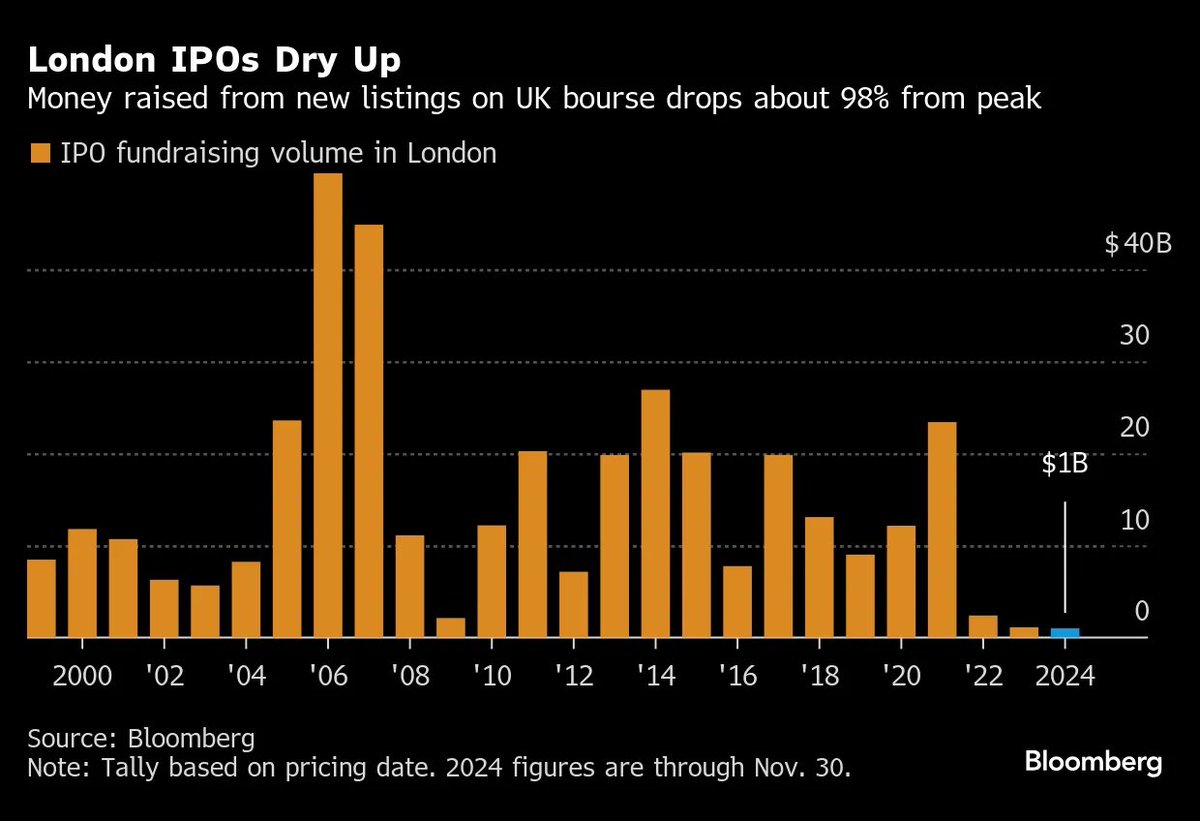
@nathansldennis @jamesd_graham Brexit is one of the many causes here. This has been a downward trend since the financial crisis. We haven’t recovered since 2007, bar a good 2021.