In this conversation with @amanpour@CNN we discuss the escalation between Iran and the US, my view of Iranian domestic politics, the risk of broader war, Israel-Lebanon and the need for persistent and consistent negotiations where I argue that the issues are too intertwined to be segregated. https://t.co/Bctev7zzxz
"Trump said the US doesn’t need a deal with Iran and instructed Vice President JD Vance to focus on domestic issues rather than negotiations with Tehran"
https://t.co/gu5o9zFaR8
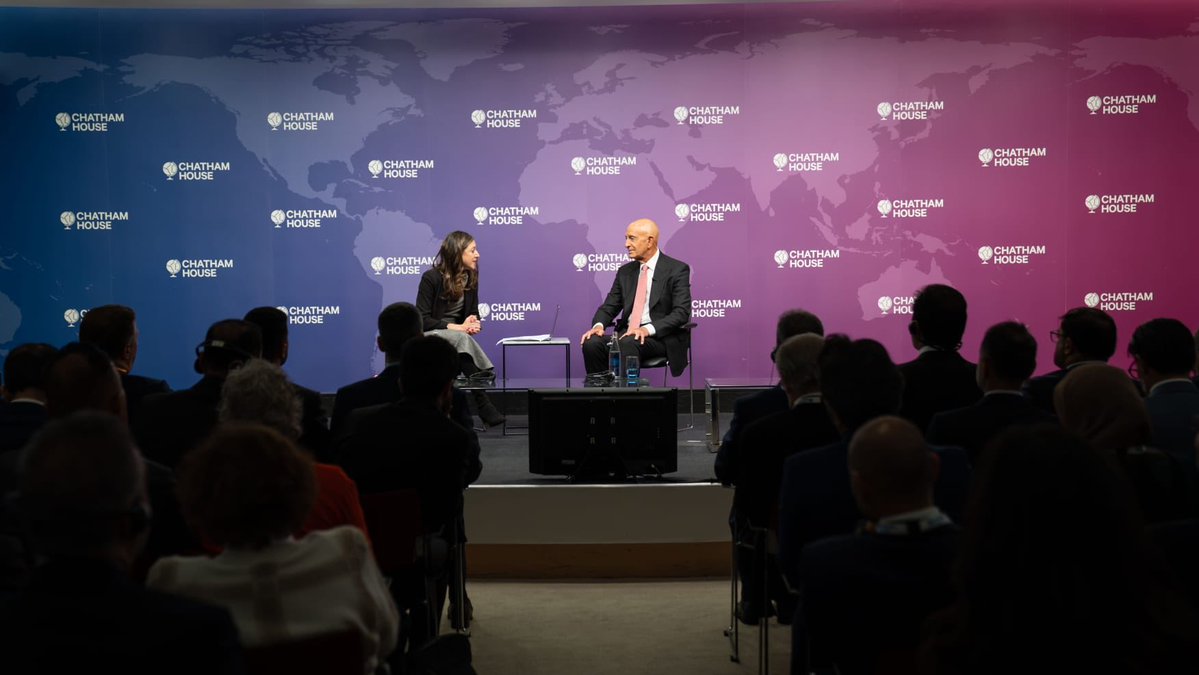
Was a pleasure to moderate this conversation with @USAMBTurkiye@ChathamHouse Iraq Initiative conference where the call for unity inclusivity and prosperity was the Ambassador’s message
Honored to join @ChathamHouse's Iraq Initiative Conference to share @POTUS's message: “let Iraq be Iraq” — united, inclusive, prosperous, at peace with its neighbors, and free of non nation state militias that threaten Americans, our allies, our companies, or our diplomats.
'The policy of the US with Iraq, and the policy of the US with Iran, like it or not, are hand in hand.'
Ambassador Tom Barrack (@USAMBTurkiye) in Spotlight Session 1 of the #IraqInitiative Conference, 'The future of US-Iraq relations.'
Watch the livestream ⤵️
https://t.co/UGgCZSAdjp
One result of the #IranWar: The Gulf Arabs' growing realisation that they now must engage (and contain) #Iran themselves.
We outline how the war has and will change the region in this @ForeignAffairs piece with @becca_wasser and @ZiadMDaoud: https://t.co/itd45uJn8p
Told @AJEnglish that reaching a diplomatic arrangement without securing any nuclear concessions from #Iran would amount to an admission of defeat, and the Americans seem reluctant to accept that.
What regional countries, particularly Qatar, have been trying hard to do is bridge this gap. But there is still no sign of a breakthrough on these issues.
https://t.co/42VhyjKQES
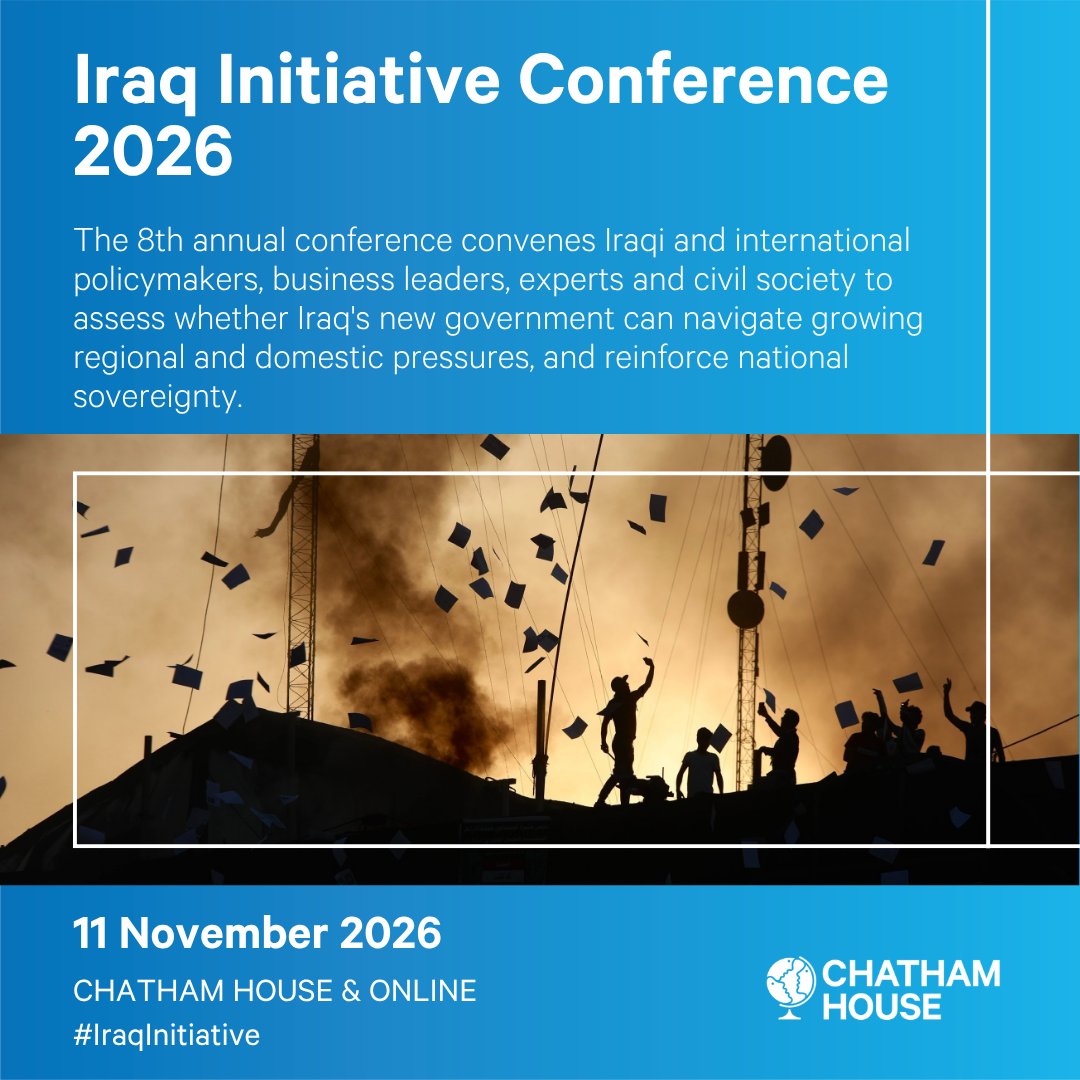
🚨The 2026 #IraqInitiative Conference takes place TOMORROW!
All sessions will be livestreamed via YouTube and the @ChathamHouse website.
View the agenda and watch live from 9.15 GMT ⤵️
https://t.co/9xNExUztWx
Save this post and the critical open-source research by @FDD’s @JanatanSayeh for the next time people say why don’t the Iranian people rise up after they were last slaughtered in January.
Answer: Their butchers were barely targeted. 210 out of 24,000 US and Israeli strikes were dedicated against the “apparatus of repression.”
With renewed US strikes against Iran looking increasingly possible, attention has again turned to Pickaxe Mountain, the deeply buried complex near Natanz. What would another strike actually accomplish?
What speaks for a renewed US war with Iran this weekend
- Trump might feel like it blaming Iran for mid-term failure
- Some in Israel want to "finish the job"
- Patience is running low
- CENTCOM provided illusion of "options"
What speaks against renewed US war with Iran this weekend
- Inner circle around Trump opposes the war
- Gulf states collectively oppose it
- US public vehemently opposes the war
- US military footprint/force structure in the region not peaked yet
- Diplomacy has made progress with Iran more ready to compromise post-mid terms
- Israel security establishment divided over utility of another round of strikes
- Political deadlock in Israel avoided indicating 'regime change'
- ...
Moonlight is really not a major variable here
Greg is absolutely right. What I find remarkable is the “more” camp’s continued conviction that somehow “more” would deliver a fundamentally different outcome. Yet there is little reflection on why ‘more’ of would succeed where previous efforts have failed.
None of this is to suggest that the US has resolved its Iran problem. It clearly hasn’t. But how much ‘more’ military force would be enough? A prolonged war? Boots on the ground?
At some point, the “more” camp needs to explain what further escalation could realistically achieve. Trump has already done ‘more and more’ yet here we are on the brink of another round of ‘more’. Why is a negotiated, verifiable agreement still treated as less credible than another round of escalation?
To those who will argue that the US failed to fight this war for long enough, and could have won had it only contributed more resources, more time, and potentially more lives, I wish them the very best of luck.
Most insightful (because most historically informed) piece I have read on this week's blue wave, by the brilliant Luke Nichter: https://t.co/a8dYGpnsw5
21-year-old Iranian twins Taraneh and Romina Rahimi - one sentenced to death, the other to 25 years in prison for protesting their govt - have had their suit alleging torture and threats of rape dismissed and their lawyer jailed. The cousin who helped raise them tells me they now “look to the world to hear their voice.”
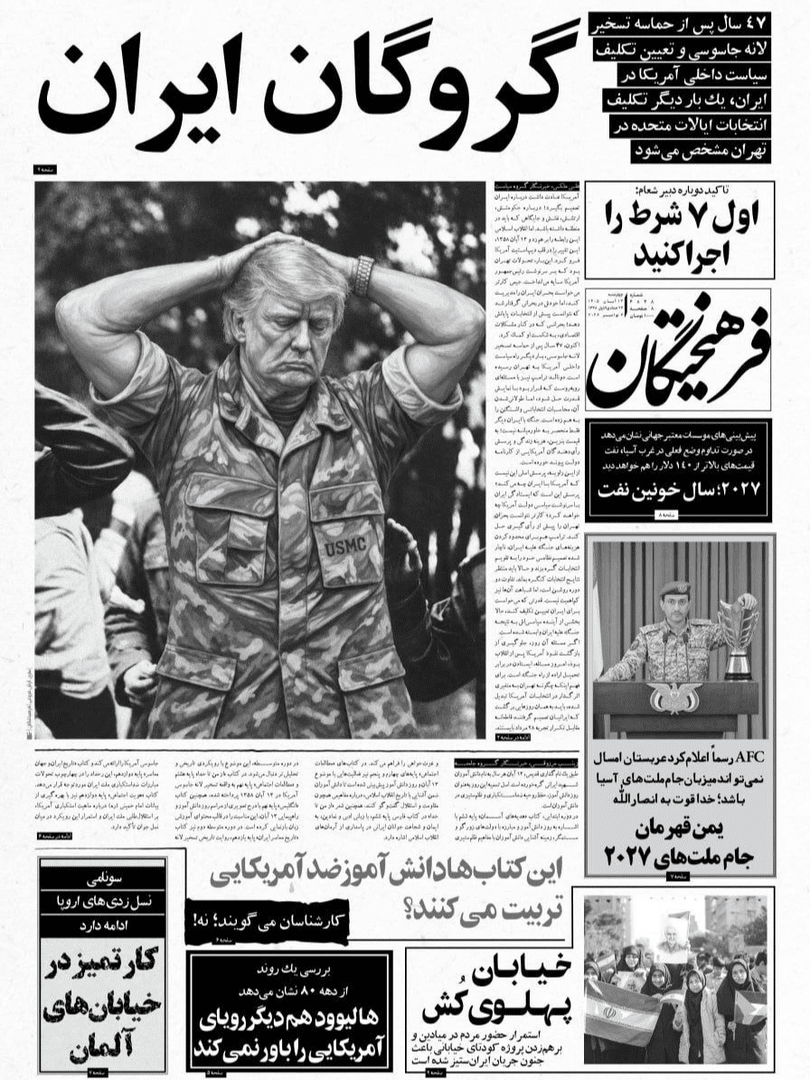
Conservative newspapers in Iran are comparing the 2026 U.S. elections to the 1980 presidential election, when Jimmy Carter lost to Ronald Reagan and became a one-term president largely because he failed to resolve the Iran hostage crisis
The midterms are here. What do they mean for U.S. foreign policy? The final analysis:
1. Looks like we’re in for a blue wave. RealClearPolitics now projects a Democratic Senate majority at 52 against 48 Republicans and a House majority at 241-194. Those are big numbers, if they bear out.
2. With clear Congressional majorities and a lame duck president, Democrats can force big changes in U.S. foreign policy, right? Not so fast.
3. The President remains in the driver’s seat on foreign policy, with an array of institutional and political advantages over Congress. The legislature can and sometimes does play a role, but it has been particularly supine in recent years.
4. On key policy issues, there will be more continuity than change. Democrats could, for instance, use the War Powers Resolution to force an end to the Iran conflict. They could vote to eliminate Trump’s tariffs on Canada. They could rescind the diesel oil deal with Russia. They could provide military assistance to Ukraine.
5. But holding the majority is only part of the story. The key number is 34, the number of Senate votes needed to sustain a presidential veto. If legislation passes both Houses and Trump vetoes it, he will almost certainly have the Rs necessary to avoid an override.
6. But Congress does control the purse strings, and without appropriations any effort – like the war with Iran – would grind to a halt. So Congress could simply defund the conflict.
7. But it won’t. The perceived political price of withholding funding to the troops is very high. Even 20 years ago, while measures to force a withdrawal from Iraq won majorities on the Senate floor, Congress never defunded the war. And it’s not clear even to war skeptics that simply walking away improves the U.S. position.
8. We may see some measures get through, potentially attached to (seemingly) must-pass legislation. Provisions to block deals with Russia, possibly. Maybe conditions on aid or arms sales to Israel. Possibly export controls on technology sales to China.
9. But overall, the midterms’ effect on policy will be limited. Their implications for politics, on the other hand, will be much greater.
10. When Presidents lose Congressional majorities, they tend to forgo ambitious domestic initiatives – no more Big Beautiful Bills – and turn instead to foreign policy, where they have greater control. That often spurs them to take big swings and grand moves. Pursuing Israeli-Palestinian peace is the classic example. That’s especially true in the final two years of a two-term administration.
11. Democrats will hold oversight hearings and aggressively investigate the administration, which tends to consume significant executive branch time and attention. That could, ironically, encourage POTUS to spend more time on the road pursuing big foreign policy wins (as he would define them).
12. In the meantime, more Republicans will break with Trump on key national security issues. This is already happening - witness opposition to the Russian diesel deal and R senate candidates calling for the Iran war to end. Such dissent raises the political price for the administration’s approach and could, here and there, impel it to alter course.
13. The 2028 presidential campaign effectively begins tomorrow. The President is a lame duck and political leaders will begin jockeying for position. Both parties will witness a battle for their foreign policy souls. Progressives and moderates will jostle on the Democratic side and Republicans will look to craft a post-MAGA approach.
14. Foreign governments, for their part, will look beyond the current White House, preparing for the future. In places, they’ll wait out the administration, stalling deals they don’t like. They’ll renew contacts with would-be future officials.
15. “Maybe it’ll change after the midterms” has been a recent mantra. Here and there, foreign policy might change, but more will stay the same. In the meantime, everyone will increasingly look to the future.