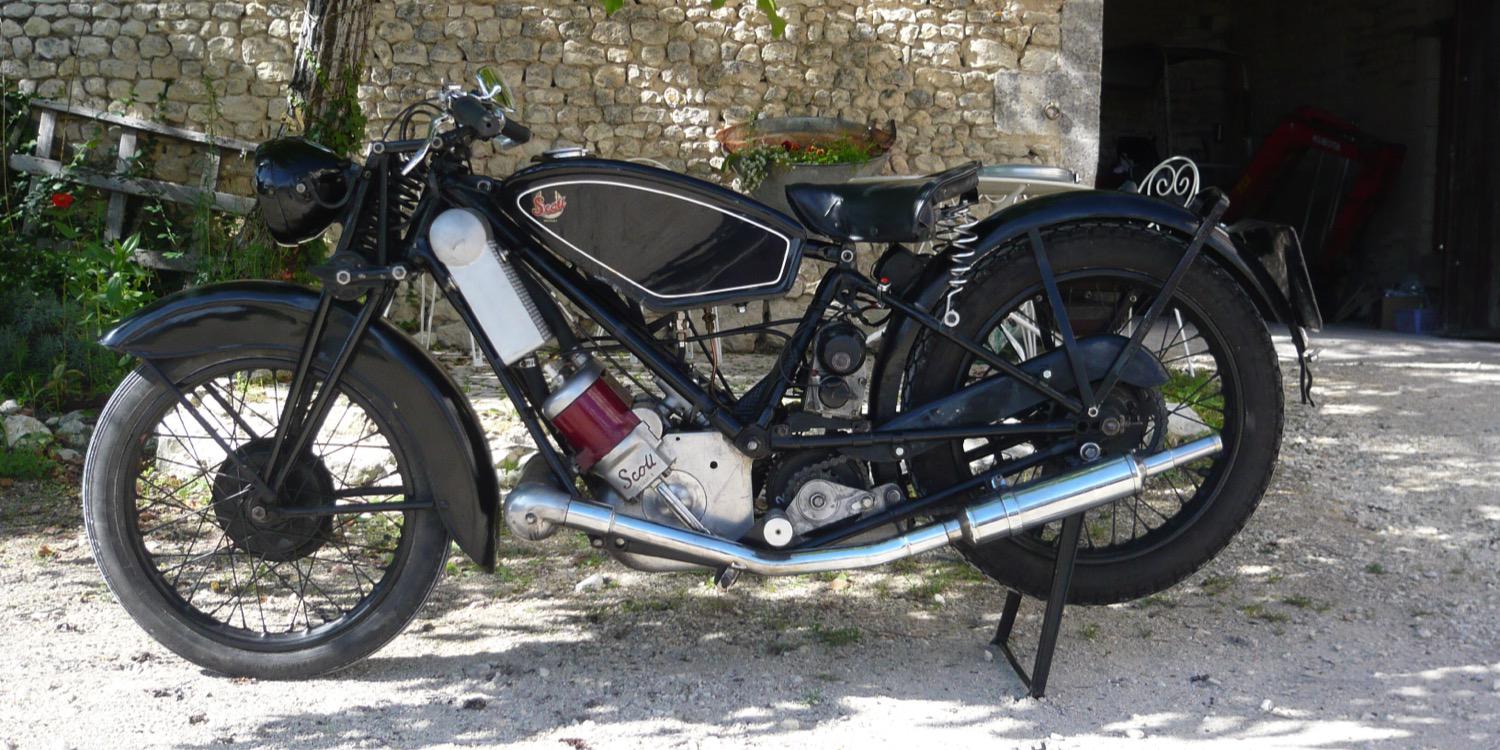
Engineer now loving classic cars especially Alvis and Triumph, and bikes, especially Scott and Rudge. Observational astronomy. Big fan of accountable democracy
@DerekJordazb The need is certainly there though I'm less sure that it's recognised. I've observed that whilst many can handle arithmetic okay(ish) they don't 'see' numbers and lack simple concepts, especially of magnitude.
I applaud your efforts to expand knowledge.
How strange that so many despise modern art. This incomprehensible concrete monster at Robe, South Australia, is somehow supposed to ‘pay tribute’ to Robe’s ‘maritime tradition’ and to local coastal exploration by Matthew Flinders and Nicolas Baudin. No doubt taxpayer-funded.
There is a mill on the Dove at Rocester in Staffordshire, an eighteenth-century Arkwright mill from the years when this country was inventing the factory as we know it. It spun cotton for two hundred years and then following its decommission it stood empty and waited to be turned into apartments.
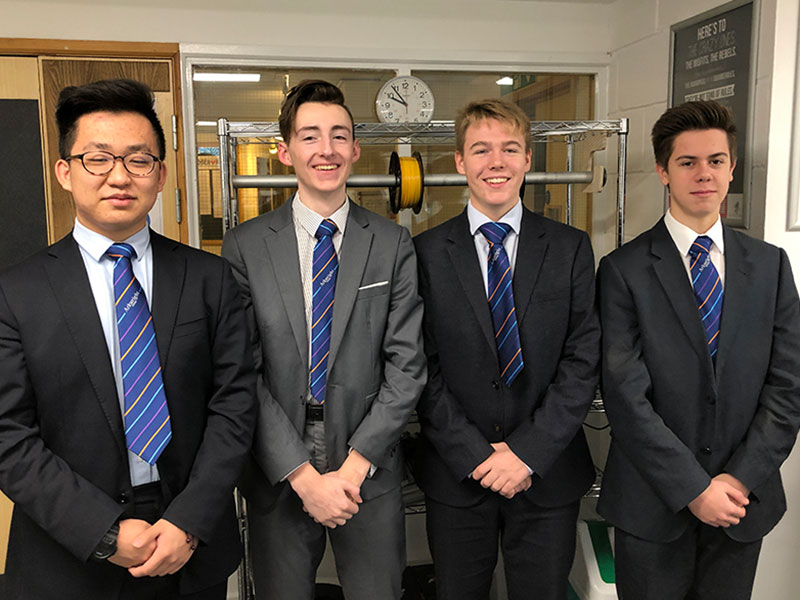
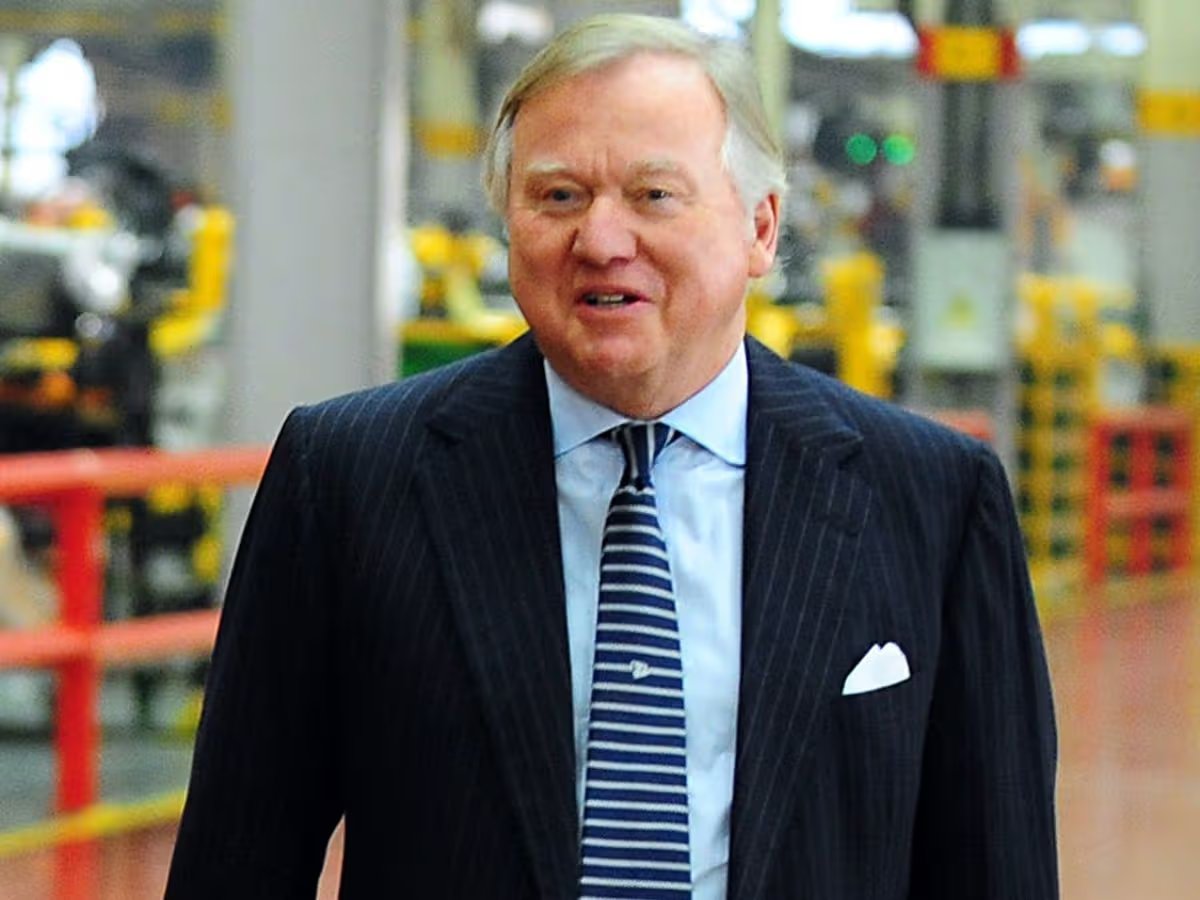
In 2010 it opened as a school. Anthony Bamford turned Arkwright's mill into an engineering academy for fourteen to nineteen year olds, a £20 million conversion, with Toyota and Bosch and Fujitsu putting their own engineers into the classrooms. It is now the most oversubscribed school in the county.
Ask yourself why a digger company had to build a school.
It had to build a school because the British state, presented with the plainest industrial problem in the country, produced the Apprenticeship Levy. Since it came in, apprenticeship starts have fallen 31 per cent. Starts in small businesses have fallen 49 per cent. Level 2 starts, the ones that take a sixteen-year-old with nothing and make him employable, have fallen 72 per cent. Employer spending on training is down 36 per cent a head in real terms since 2005, forty-two per cent of manufacturing vacancies go unfilled because the qualified people do not exist, and the shortage costs us somewhere between thirty and thirty-nine billion pounds a year in output that simply never happens.
So Bamford stopped waiting and made his own.
This month the engineers that mill helped produce are taking a car to the Bonneville Salt Flats in Utah. It is called the Hydromax, it is ten metres long, and it runs on two hydrogen internal combustion engines that JCB designed and built itself, sixteen hundred horsepower between them. Andy Green is driving. That is a lovely piece of symmetry, because Green set the diesel land speed record twenty years ago this month, in a JCB, at 350.092 miles per hour. Same firm, same driver, back on the same salt.
The hydrogen combustion record stands at 187 miles per hour. Hydromax has already done 208 in testing on British ground. They are going for something past 350.
Of course, our national conversation about engines has been conducted for a decade by people who have never made one. Whitehall decided that the combustion engine was finished and that the future would arrive procured from China. A family firm in Staffordshire declined the memo and rejected the underpinning philosophy, then spent its own money for years to build a hydrogen engine that eleven European licensing authorities have now certified for sale, and is about to drive it across a salt flat faster than anything of its kind has ever moved.
The state's only contribution to this superb endeavour was a levy that cut apprenticeships by a third.
Progress will abolish the Apprenticeship Levy outright and put the Skill Capital Levy in its place, hypothecated entirely to training, three quarters of it locked to Levels 2 and 3 where the actual work of the country is done, with a £5k tax credit for any employer who takes a worker beyond the statutory minimum. We will let young people start earning nationally recognised Hallmarks at fifteen, so that a kid can walk out at eighteen with three of them locked and loaded and ready to go, no debt, and a trade that pays.
Imagine a hundred Rocesters. Imagine every decent-sized town with a firm that serious and a school that good sitting in the middle of it, and a generation coming out at eighteen who can build things that move. Germany does this. Switzerland does this. We did it ourselves within living memory, and there is not one law of physics standing between us and doing it again; doing it even better than it has ever been done before!
Anthony Bamford had to do it alone because nobody in Whitehall was ever going to help him. We mean to change this country so that the next man like him doesn't have to.
Good luck at Bonneville.
@drhingram Couldn't agree more. Neither the Church of England, variants thereof or the Roman Catholic Church represent Christians. None of them are fit for purpose.
My English-speaking friends, I need you!
The justice system in my country, France, would rather send me to prison than deal with the immigrant men who are assaulting us.
Please help spread this video, the world needs to know what they’re doing to French patriots!
(@elonmusk ?)
There is no "far right" on the political chessboard today. It's a ghost, a scarecrow built by the left to avoid debating ideas.
Look at the facts.
The parties you call "far right" are pro-NATO (Meloni), economically statist (the RN's program includes more welfare spending, not less), and win free elections with tens of millions of votes. Meloni governs Italy as a conventional conservative. Milei quotes Hayek and Mises, the most anti-authoritarian thinkers of the 20th century. Historical fascism was about state control of the economy. Every figure you label "far right" wants less state, not more.
When a third of France, half of Italy and half of America are "far right mobs", the word has lost all meaning. You're not describing extremists. You're describing ordinary voters who stopped listening to you.
And everyone knows it. That's why the label doesn't work anymore. People hear "far right" and they understand "someone the establishment failed to refute."
As for "these men don't have ordinary people's interests at heart" : the man you're attacking made electric cars mainstream, gave internet access to people in war zones and rural areas, and cut the cost of reaching space by 100x. What have you built?
Here's some free advice. Drop the narrative. Learn a skill. Create value for someone. That's how you actually help ordinary people. Not by inventing monsters.
Je vais dire un truc qui va paraître naïf.
Je suis absolument convaincu qu'il existe une vérité. Qu'il existe un rapport au beau. Que tout ne se vaut pas.
Et si vous acceptez ça, une conséquence mécanique en découle : on devient ce qu'on lit. On devient ce qu'on regarde. On devient qui on côtoie.
Votre cerveau n'a pas de filtre à l'entrée. Tout ce que vous ingérez vous construit ou vous détruit. Il n'y a pas de contenu neutre. C'est pour ça que je parle d'hygiène intellectuelle, exactement comme on parle d'hygiène alimentaire. Personne ne s'étonne qu'un athlète surveille ce qu'il mange. Mais presque personne ne surveille ce qu'il pense.
Mais il manque la moitié de l'équation. Et c'est la moitié que presque tout le monde oublie.
J'ai commencé à construire à 12 ans. Des sites web, des projets, tout ce qui me passait par la tête. À 15 ans, je faisais tourner un jeu multijoueur avec une équipe de 10 personnes. Je n'ai jamais appris pour apprendre. Chaque livre, chaque vidéo, chaque concept passait immédiatement au crash test du réel : est-ce que ça m'aide à construire quelque chose ?
Apprendre sans construire, c'est hors sol. Vous accumulez des cartes de territoires où vous ne mettrez jamais les pieds.
Construire sans apprendre, c'est sans substance. Vous répétez les mêmes erreurs avec de plus en plus de confiance.
La boucle qui change tout, c'est apprendre, construire, comprendre pourquoi ça casse, réapprendre, reconstruire. C'est cette boucle qui m'a construit. Et voici la nourriture intellectuelle que j'y ai injectée.
D'abord les bâtisseurs. J'ai regardé toutes les vidéos possibles sur Elon Musk, lu ses biographies (celle d'Ashlee Vance, celle d'Isaacson), décortiqué ses interviews sur vingt ans pour comprendre comment il raisonne par premiers principes. Pareil pour Steve Jobs : chaque keynote, chaque interview, le discours de Stanford, la biographie d'Isaacson. Naval Ravikant pour la clarté (l'Almanack est probablement le meilleur ratio sagesse/page de la décennie). Taleb pour l'antifragilité et le scepticisme face au hasard. Ray Dalio et ses Principles pour transformer l'expérience en algorithmes de décision. Et à chaque fois, la même question : qu'est-ce que j'applique dès demain dans ce que je suis en train de construire ?
Ensuite l'histoire. Napoléon, Jules César, les mémoires, les biographies, les correspondances. Parce que les patterns du pouvoir, de l'ambition et de la chute n'ont pas changé en deux mille ans. Lire César, c'est lire un manuel de leadership écrit par quelqu'un qui jouait sa vie à chaque décision. Ces hommes n'étaient pas des théoriciens. C'étaient des builders à l'échelle des empires.
Puis la science. Toute la vulgarisation possible sur la physique quantique, la relativité restreinte, la relativité générale. La philosophie des sciences. Les analyses sur comment les génies émergent, pourquoi à certaines époques, dans certains lieux. Pas pour devenir physicien. Pour calibrer mon intuition sur ce qu'est une vraie explication, et ressentir physiquement la beauté d'une théorie élégante.
Et enfin les contemporains qui construisent le futur en direct : les cours d'Andrej Karpathy (probablement le meilleur prof d'IA vivant, gratuit, sur YouTube, et qui code devant vous au lieu de pérorer), les interviews de Demis Hassabis, les podcasts de Lex Fridman et Dwarkesh Patel où les plus grands esprits réfléchissent à voix haute pendant trois heures.
Et il y a une partie que presque personne ne fait : j'ai aussi étudié la vie des gens que je ne veux pas devenir.
Bill Gates par exemple. Étudier sa trajectoire est fascinant précisément parce qu'elle représente un certain type de réussite, immense sur le papier, qui ne correspond pas à ce que je veux construire. Comprendre pourquoi, point par point, m'a appris autant que d'étudier ceux que j'admire.
Les anti-modèles sont aussi importants que les modèles. Un modèle vous montre où aller. Un anti-modèle vous montre les trajectoires qui semblent être des victoires de l'extérieur et qui n'en sont pas selon vos propres critères. Sans anti-modèles, vous optimisez pour le succès des autres.
Charlie Munger disait qu'il faut inverser, toujours inverser. Savoir précisément qui vous ne voulez pas devenir est parfois plus actionnable que savoir qui vous voulez devenir.
Humanité, technologie, philosophie, science, histoire. Ce mix n'est pas un hasard. Chaque pilier corrige les biais des autres. Mais aucun de ces piliers ne vaut quoi que ce soit s'il ne se transforme pas en quelque chose de construit.
La plupart des gens passent quatre heures par jour à scroller du contenu conçu pour capturer leur attention, pas pour les élever. Puis ils s'étonnent de penser comme tout le monde. Et la plupart de ceux qui consomment du bon contenu ne construisent jamais rien avec. C'est presque pire.
Vous n'avez pas besoin de talent pour commencer. Vous avez besoin d'un régime, et d'un chantier.
Choisissez vos influences comme vous choisiriez vos associés. Choisissez vos anti-modèles avec autant de soin que vos modèles. Et construisez quelque chose avec tout ça, sinon vous n'êtes qu'une bibliothèque qui marche.
@zatzi@AllisonPearson It’s ridiculous, isn’t it? I live in rural France and can get a blood test the following day if I wait an hour. I usually book an appointment and wait a few days for an early morning rdv. The results available that afternoon, after my samples have been driven an hour to the lab.
I read - with tears in my eyes - historian and Islam expert @RaymondIbrahim5 article “The Armenian Genocide: A Warning Ignored, a Pattern Repeated” and have written a shorter summary here. Link to the article in the comments.
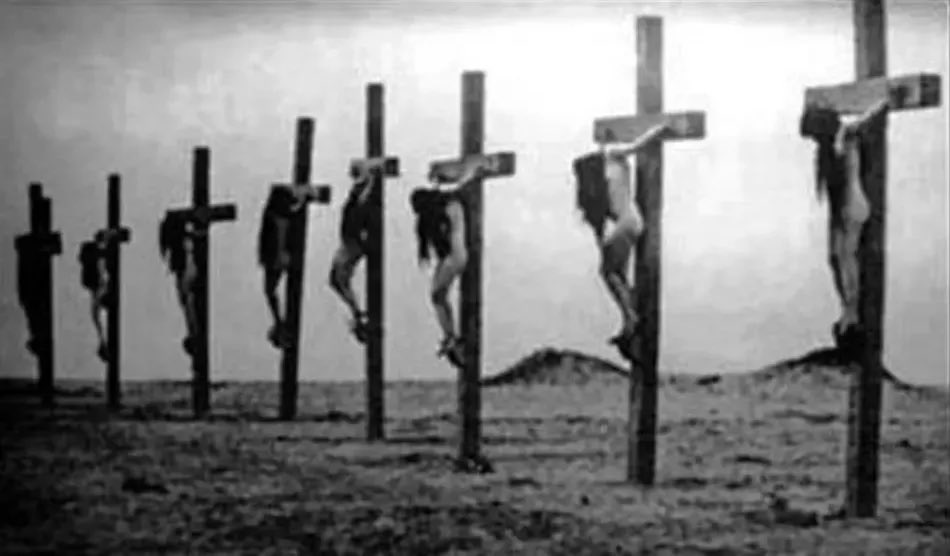
The image you see is not from a film. It is from reality.
From 1915 to 1917, the Ottoman Empire - what is today Turkey - carried out a systematic genocide. Not only against Armenians. But against Christians. All Christians.
Armenians. Greeks. Assyrians. Chaldeans. Maronites.
What they all had in common was not their nationality. Not their ethnicity.
It was their faith. They were Christians.
And that was enough to be exterminated.
And who was behind it?
The Ottoman Empire’s Muslim regime. Driven by pan-Islamism and religious fanaticism. Christians were kafir - infidels. Jihad was the religious mandate that justified the extermination.
This was not an ethnic conflict. It was a religious cleansing.
Over 1.5 million Armenians were massacred. 750,000 Greeks. 300,000 Assyrians. Half of the entire Assyrian population of 600,000 was killed.
In her memoir, survivor Aurora Mardiganian describes what she saw in the city of Malatia:
16 Christian girls. Crucified alive. Nails through their hands and feet. Only their hair moved in the wind.
The Turks and Kurds selected - town by town, village by village - the 18 most beautiful young girls. Dragged them into a local church. Raped them on top of the Holy Gospel.
Women were driven into harems. Sold for 80 cents each.
US Ambassador Henry Morgenthau, who witnessed it with his own eyes, said:
“I am confident that the whole history of the human race contains no such horrible episode as this.”
Winston Churchill called it an “administrative holocaust” - and noted that the First World War simply gave Turkey the necessary cover to do what they had apparently long wanted to do.
Talaat Pasha - the de facto leader of the Ottoman Empire - said it himself:
“Turkey is taking advantage of the war in order to thoroughly liquidate its internal foes - the indigenous Christians.”
This was not war. It was a planned extermination project against Christians - carried out in the name of Islam.
And today NATO ally Turkey has never been held accountable.
Not once.
This is the history they do not teach you in school.
But it is true. And it matters.
Those who do not know history - are already repeating it.❤️🔥✝️🪽 Thank you for your attention to this important matter.
@freddiecamp Very nice. I’ve done some of that and more to the East in my Tr4. Great trip.
I was there last year. Memorable as I fell 20m down a mountain. Car fine, me less so…
@grok@EamonnGall1y7d@BasilTheGreat@gmpolice@GMPCityCentre I think the Lexus badge suggests that it isn’t a Mercedes Unless you can see beyond its cunning disguise?
The car is likely a Lexus ES300h as other ES variants are not generally available in the UK.