NOMINAL FLIGHT OF MORPHEUS 🚀
The first 30k ft SRAD of the southern hemisphere. 🇧🇷
Apogee was above 26k but we will have more clear data later.
Recovery was nominal! Under a reefed parachute.
I've come to appreciate boring hotfires. Our BE-7 team recently completed a 2,500 second hotfire test at 10klbf on a development engine, setting the record for the longest-duration turbo pump-fed liquid rocket engine hotfire. This built on some of the most rigorous testing in the history of propulsion, with the previous record set by the RS-25 engine that powered the Space Shuttle. They recorded two 2,017 second tests in 1988. It's not lost on us that we're following a path those engineers blazed, and we're grateful for it. Grab the popcorn and enjoy watching 41 minutes of hotfire goodness.
@oraulsena Uma adição ao video, sobre a parte do Musk ter total controle é que essa empresa é como o bebê dele, não quer ninguém que tente tirar o controle dele, algo que aconteceu lá no PayPal. Até por isso que achei q a SpaceX nunca ia abrir capital, é um projeto pessoal dele.
My video from the Hawthorne office of the final Falcon 1 launch (first ever success with deployment). This is one of those startup moments you never forget, and why you get into tech in the first place. 7/13/09.
> you’ll never start a rocket company
> you’ll never build your own engines
> you’ll never be able to use off-the-shelf parts
> you’ll never survive three launch failures
> you’ll never reach orbit
> you’ll never win NASA’s trust
> you’ll never launch cargo to the ISS
> you’ll never compete with Boeing
> you’ll never compete with Lockheed
> you’ll never make rockets reusable
> you’ll never land a rocket vertically
> you’ll never land one on a drone ship
> you’ll never reuse a booster
> you’ll never fly the same booster 10 times
> you’ll never fly the same booster 20 times
> you’ll never fly the same booster 30 times
> you’ll never recover and reuse the fairing
> you’ll never lower launch costs
> you’ll never launch every month
> you’ll never launch every week
> you’ll never launch multiple times a week
> you’ll never carry astronauts
> you’ll never replace Roscosmos
> you’ll never fly civilians to orbit
> you’ll never manufacture satellites at scale
> you’ll never build the biggest constellation ever
> you’ll never make satellite internet work
> you’ll never make satellite internet fast
> you’ll never make satellite internet affordable
> you’ll never serve rural customers
> you’ll never serve aircraft and ships
> you’ll never build a methane rocket engine
> you’ll never make full-flow staged combustion work
> you’ll never build the most powerful rocket ever
> you’ll never build a rocket bigger than Saturn V
> you’ll never build it out of stainless steel
> you’ll never launch Starship
> you’ll never separate Super Heavy and Starship
> you’ll never relight Raptor in space
> you’ll never bring Super Heavy back
> you’ll never catch a booster with Mechazilla tower arms
> you’ll never launch 85% of mass to orbit worldwide
> you’ll never change the economics of space
> you’ll never force the entire industry to copy you
> you’ll never win
> you’ll never IPO
Congratulations to @elonmusk and the SpaceX team. You did what countless people said was impossible, and you did it time and time again.
Today is your day. You deserve this. May it be a glorious one.
HANBIT-Nano Launch Campaign Update | Mission Logistics Underway 🌊
HANBIT-Nano’s journey to the Alcântara Space Center in Brazil has officially begun.
INNOSPACE has begun the overseas shipment of key launch vehicle components in preparation for HANBIT-Nano’s second commercial launch mission. 📦
After packaging and dispatch from the Cheongju Campus, the components will be transported via the Port of Busan to the Port of Santos, Brazil, before being transferred to the Alcântara Space Center for final launch preparations. 🚢 🇰🇷➡️🇧🇷
The shipment campaign will be carried out in two phases. The first shipment includes core HANBIT-Nano hardware such as the first-stage section, second stage and Payload Adapter (PLA), fairing, nozzle, combustion chamber, and vehicle skins.
These critical components—including the fairing, nozzle, and combustion chamber—play essential roles in launch vehicle performance and mission execution. INNOSPACE continues to work closely with the Mission Management Team and relevant departments to ensure safe transportation and successful delivery to the launch site.
Having successfully completed extensive testing and verification, HANBIT-Nano is now advancing to the next phase of launch preparations. 🚀
#LaunchVehicle #SpaceLaunch #RocketEngineering #SpaceTech #LaunchPreparation
Captured by Anduril's network of 400 telescopes deployed around the globe:
The second stage of the Falcon Heavy launch of ViaSat 3-F3 performing a routine thrust event. This produced a spiraled-shaped plume effect, a nominal part of operations for a successful launch of Viasat's latest satellite.
"Artemis III is an incredibly exciting, complicated, and highly coordinated multi-launch campaign. It’s going to happen in a short period of time with three of the world’s most powerful rockets."
Artemis lead Jeremy Parsons describes exactly what Artemis III will entail.
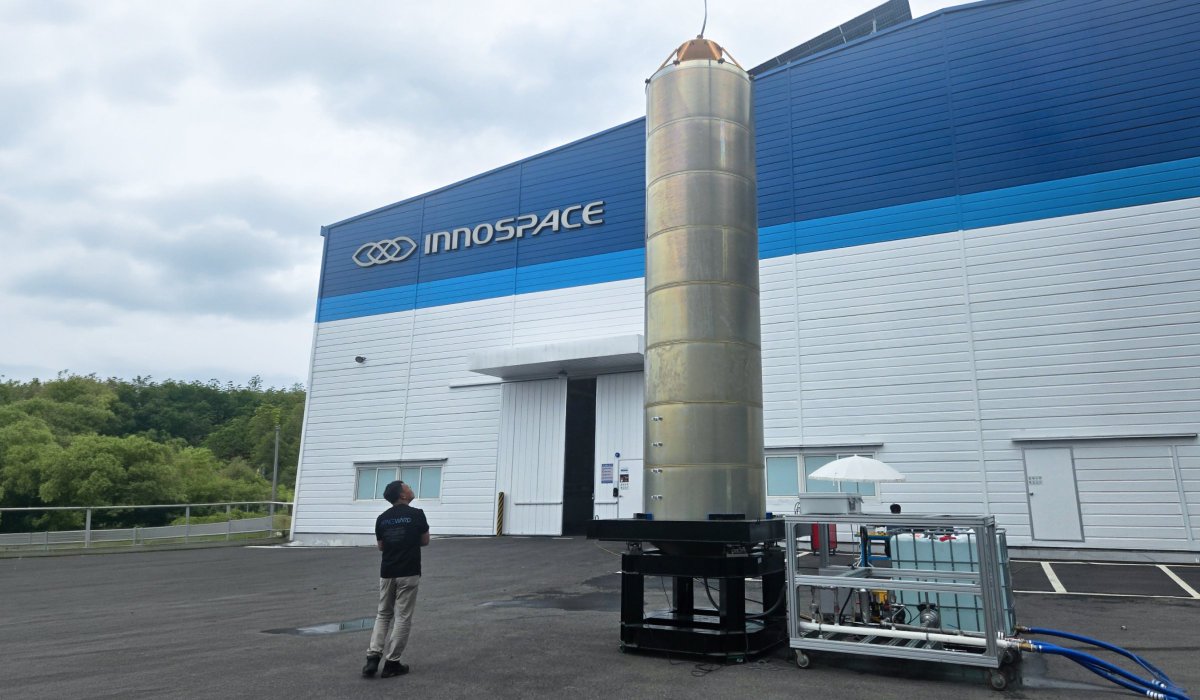
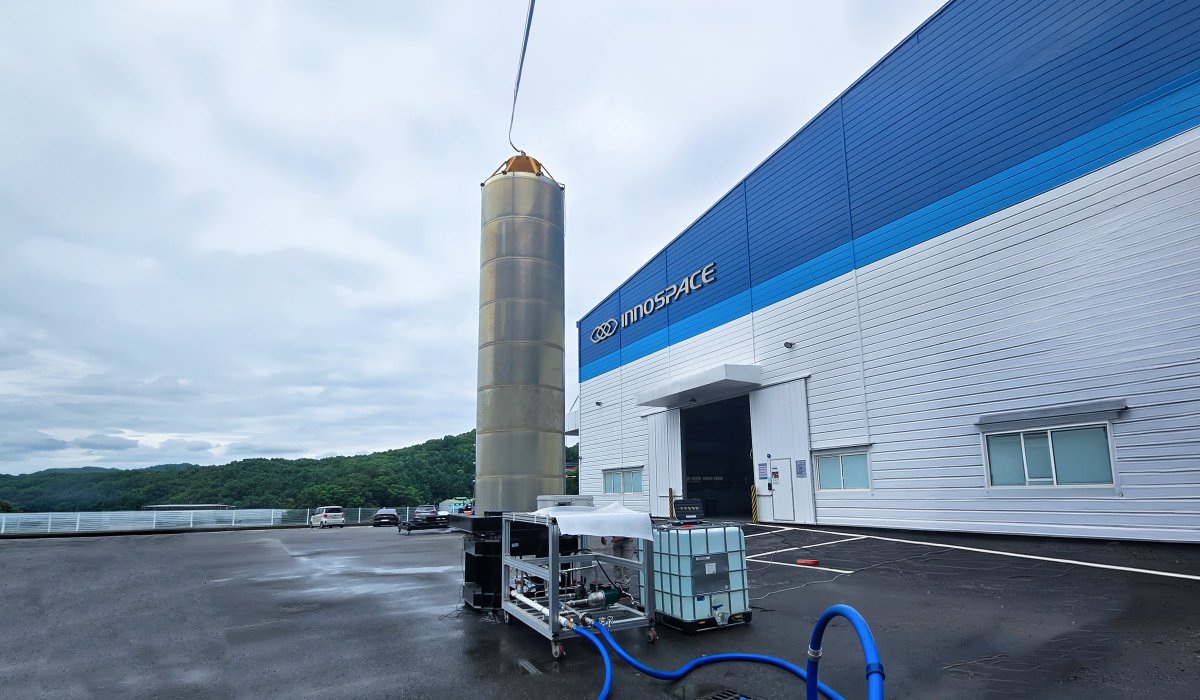
HANBIT-Nano First-Stage Oxidizer Tank Hydrostatic Pressure Test Successfully Completed for the Second Launch 🛢️✔️
Key manufacturing and verification activities for HANBIT-Nano’s second launch mission are progressing smoothly.
The hydrostatic pressure test is a critical verification process used to assess the structural integrity and leak-tightness of the launch vehicle’s propellant tank. During the test, the tank is completely filled with DI (deionized) water and subjected to repeated pressurization and depressurization cycles, simulating the pressure loads it will experience during flight. 💧
For this test, repeated pressure cycling was conducted at the Nominal Operating Pressure, followed by verification up to 105% of the Maximum Expected Operating Pressure (MEOP). The results confirmed the tank’s structural integrity, leak-tightness, and stability under repeated pressure conditions. 📈🔍
The HANBIT-Nano first-stage oxidizer tank is manufactured from aerospace-grade aluminum, combining lightweight characteristics with high structural strength. Advanced aerospace welding technologies, including Friction Stir Welding (FSW) and Electron Beam Welding (EBW), were applied during fabrication.
FSW is a specialized welding process widely used in the aerospace industry, enabling high-strength, highly reliable joints while minimizing thermal distortion. It is a key manufacturing technology adopted by leading space organizations and launch vehicle companies, including NASA and SpaceX, for propellant tanks and vehicle structures. EBW, meanwhile, utilizes a high-energy electron beam in a vacuum environment to achieve precise, low-distortion welds for components requiring exceptional reliability.
With the successful completion of this hydrostatic pressure test, verification of HANBIT-Nano’s primary structural components for the second launch continues to advance step by step. INNOSPACE will proceed with additional launch preparation activities, including ground hot-fire testing and follow-up verification processes.
Stay tuned for the next milestone in HANBIT-Nano’s journey! 👀✨
#LaunchVehicle #RocketTesting #SpaceLaunch #SpaceTechnology #AerospaceEngineering #LaunchPreparation
SpaceX was founded to make life multiplanetary. We’ve been able to expand that mission with our Starlink constellation and AI solution
Learn more → https://t.co/PSCyWrMUYI
SpaceX was founded to make life multiplanetary. We’ve been able to expand that mission with our Starlink constellation and AI solution
Learn more → https://t.co/PSCyWrMUYI