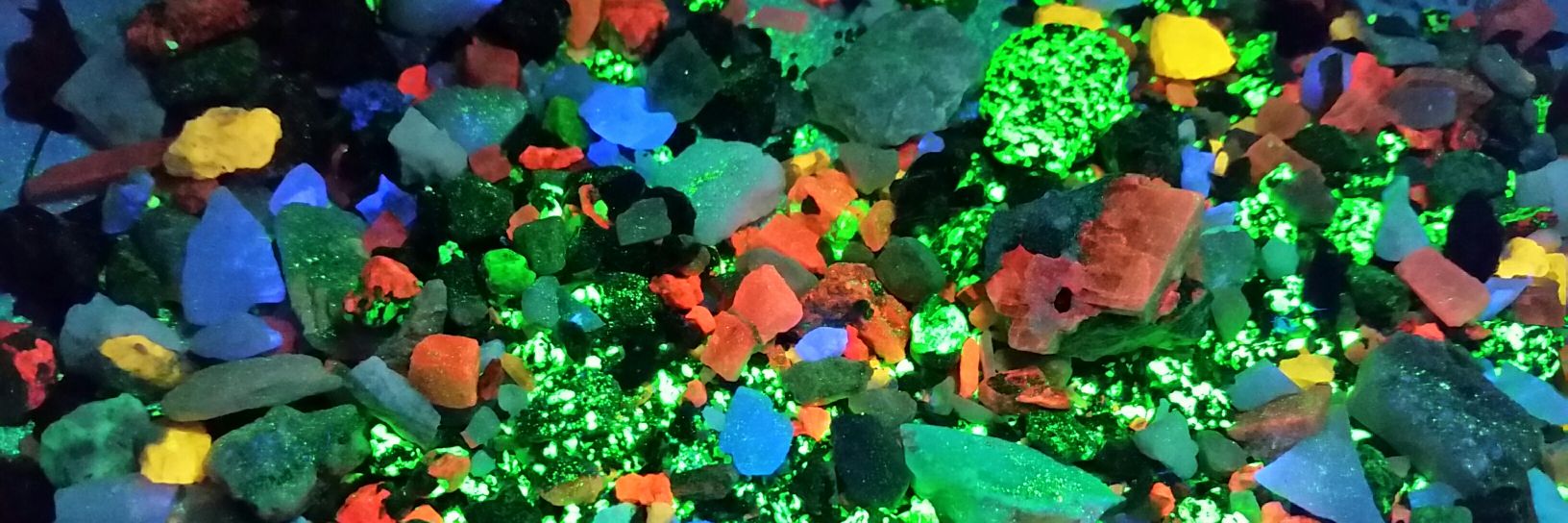
Rocks become more than just your everyday rocks when looking under a petrographic microscope. Videos show how polarized light travels through basalt, schist, marble, and limestone.
Happy #FullDiskFriday! Tomorrow at 2:50 am ET, astronomical #autumn officially begins in the Northern Hemisphere!🥳🍂
To celebrate, here is a time-lapse from @NOAA's #GOESEast 🛰️ showing the change in the angle of the sun from last year’s #equinox through today.
@sarmsci@MicrosoftFlip Hi Stephanie! I'm Ann from the @MicrosoftFlip Team - just wanted to say glad to get connected! I love seeing your tweet -- we are so glad that YOU are part of the #Flipsider family! Give us a shout if we can help in any way... hope you're having a great week! 💗
"How did the Quebec wildfires start all at once?!" is a question we've been receiving quite a bit.
We were curious too so we decided to review the data. Using GOES-16 satellite data for fire hotspots and by overlay lightning data, the answer becomes pretty clear.
Of course, not all fires are caused by lightning. In rare cases, they can be caused by human negligence such as a bonfire that has gotten out of control, improperly disposed ashes, lit cigarette butts and even arson.
Nevertheless, you can review the data yourself at: https://t.co/vlGbS1sofj
#Quebec #Wildfires #onstorm #Ontario #OntarioWeather
No. This is not Mars.
This was taken at the NWS forecast office in Binghamton, NY, where the current air quality due to smoke from wildfires in Canada is in the "Very Unhealthy" category.
We ended Geosystems by creating concept sketches of what we learned this year. There were a lot of "ah-hah" moments as we realized just how much Earth's spheres are connected to one another and to ourselves. A true illustration of Earth as a system! @TJHSST_Official
40 TJ seniors spent their Saturday collecting rock & fossil samples dating back to 500-300 mya in Corridor H. Such an amazing experience thanks to a grant from the NSF and Prof Gilleaudeau of GMU and Prof Kaufman of UMD. Ty for a memorable time! @TJHSST_Official
We did one of my favorite labs that looks at water masses and how they situate themselves in the ocean. This group got one of the best visual results. You can clearly see 4 layers of water.
This is hands-down, one of my favorite labs, it clearly illustrates how water masses will stratify based on density. Students love it, too! I'm planning on sneaking it into the TJ geosystems curriculum.
Why stand & lecture, when students can collaborate on understanding big ideas? TJHSST students loved walking around the room to learn more about & draw connections among an array of topics related to geosystems. The feedback was motivating! @FCPSScience
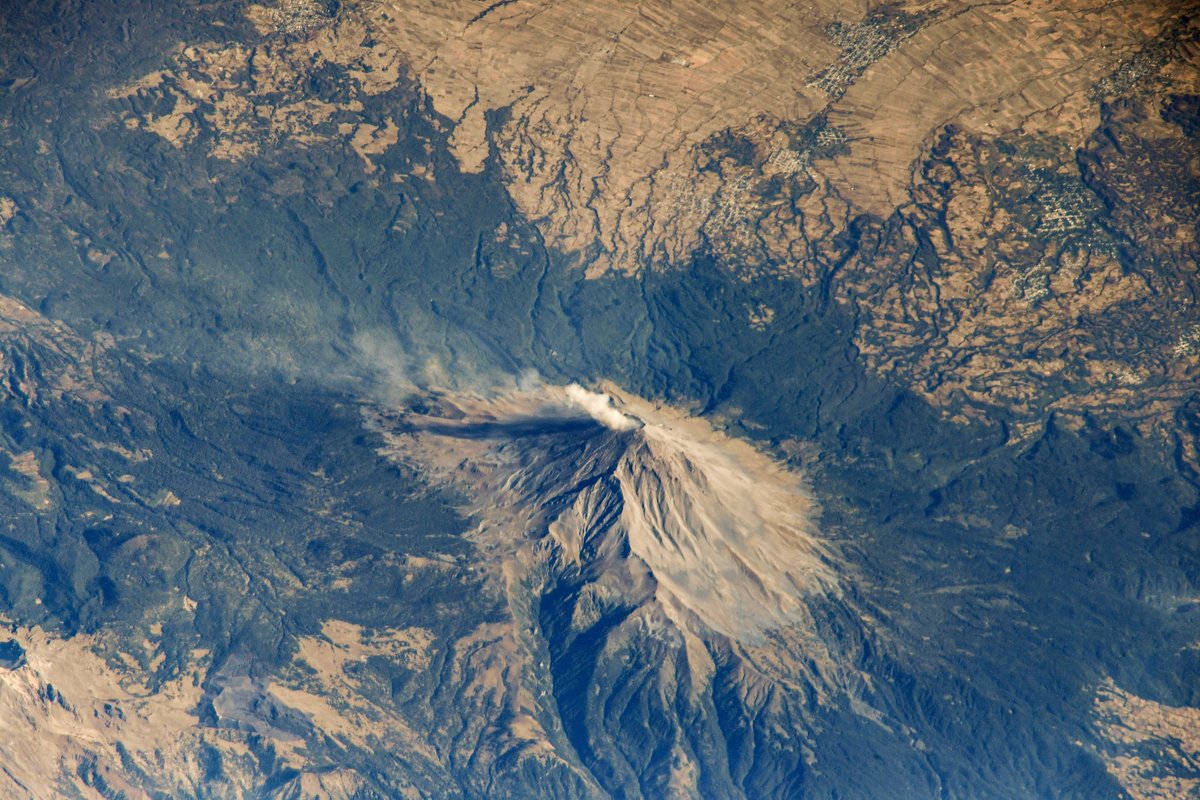
Active volcanoes are easy to spot from the space station and are frequently photographed by astronauts during an orbital flyover. More Earth pix... https://t.co/qcHlvByj8M
Sept 23, 2022
This coming week, Earth passes closer to Jupiter than in six decades.
Rising at sunset & setting at sunrise, look for it overnight — the brightest "star" in the sky.
Jupiter, at its closest, exerts a force of gravity on Earth 5x higher than when at its farthest
Congratulations to Washington-Liberty Science Teacher Lourdes Sotomayor for being an #APSAllStar who does innovative hands-on labs & who decorates her room with posters of scientists of all backgrounds & ethnicities so her students can see themselves as scientists! @GeneralsPride
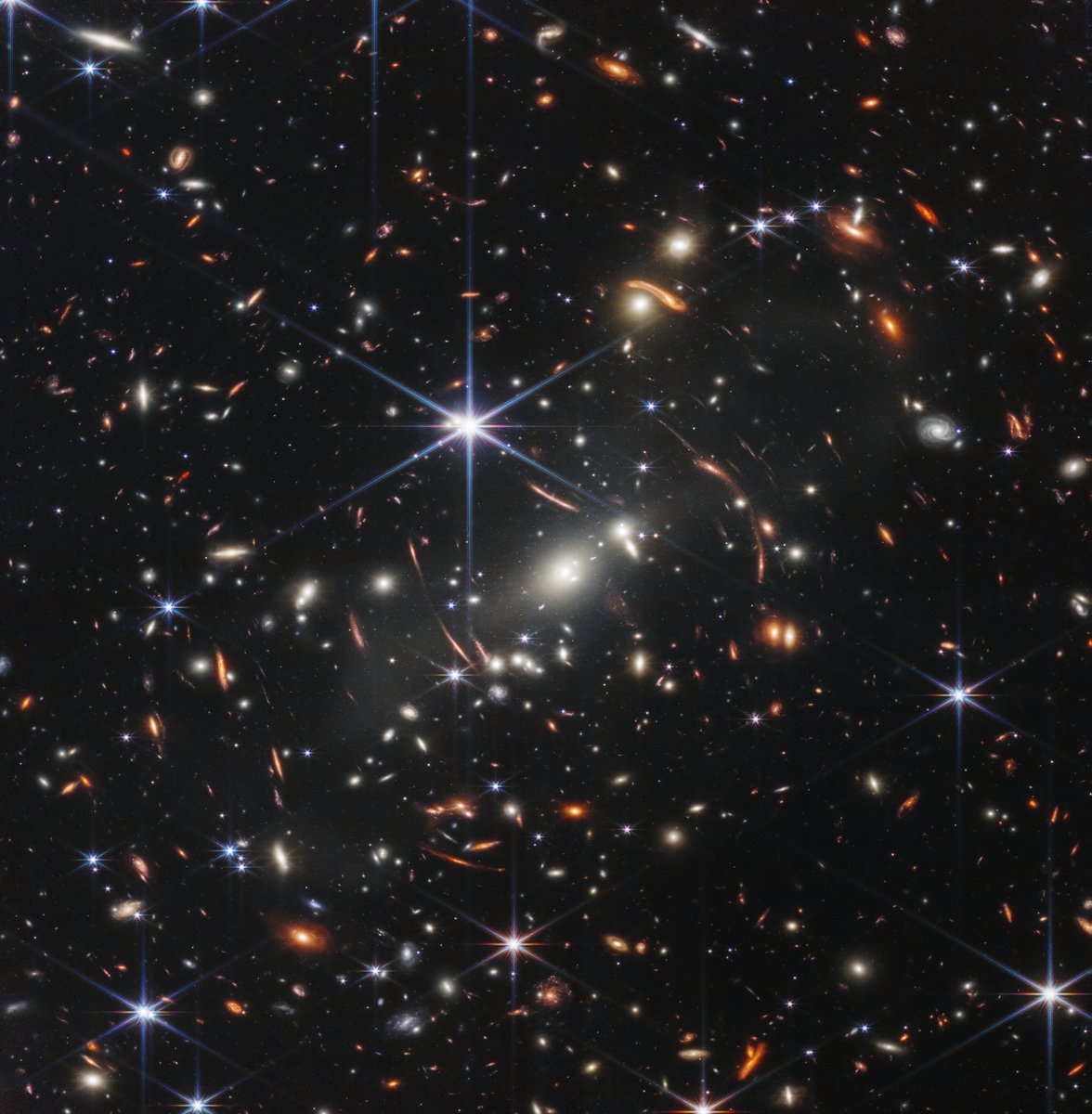
It's here–the deepest, sharpest infrared view of the universe to date: Webb's First Deep Field.
Previewed by @POTUS on July 11, it shows galaxies once invisible to us. The full set of @NASAWebb's first full-color images & data will be revealed July 12: https://t.co/63zxpNDi4I