Attention, all you geniuses with products, but no marketing skills.
Today we’re launching the Founder Starter Kit—4 skills that will help you look and sound like a legit company, including:
> Build-a-Brand
> App Screens
> Product Sizzle
> Founder Video
Available for Claude via the Pika MCP.
Update on this: I've turned it into a Claude Code skill anyone can install.
Tuned to YOUR taste profile (capital, categories, channels, excludes).
What it does: pulls signals from Indian marketplaces (https://t.co/OnsKqWfXvf, Flipkart, Nykaa, Myntra, Lenskart, FirstCry, BigBasket, Blinkit, Zepto, plus ~10 others), Reddit, US D2C trade publications, and Google Trends as a backup confirmation.
Generates 5 ranked product ideas for India.
Built for first-time D2C founders trying to figure out what to launch.
Or operators who want a second opinion on category whitespace.
Or anyone tired of generic "start a candle brand" lists that don't account for your actual capital or what channels you can execute on.
Each idea comes with named Indian competitors, sourcing notes (where to manufacture, what MOQ to expect), unit economics, and a go-to-market playbook.
Capital ceiling and category preferences influence which ideas pass filters versus get flagged with reasons.
Honest disclaimers: extracted from a more complex personal cron-job I'd built for myself. Took longer than expected to make it standalone.
First Claude skill I've shipped, first thing I've open-sourced by myself.
I'm a PM, not an engineer, mostly built this with Claude Code. Expect rough edges. File issues if you find them.
Install:
git clone https://t.co/TQlNTswS52 ~/.claude/skills/india-d2c.
Then in Claude Code, say "find me d2c ideas in India". 3-min taste profile, then ~15-min pipeline.
Costs ~$1-2/run on the Anthropic API (separate from your Claude Pro sub). Exa free tier covers ~15 runs/month.
DM me if you ship something from it.
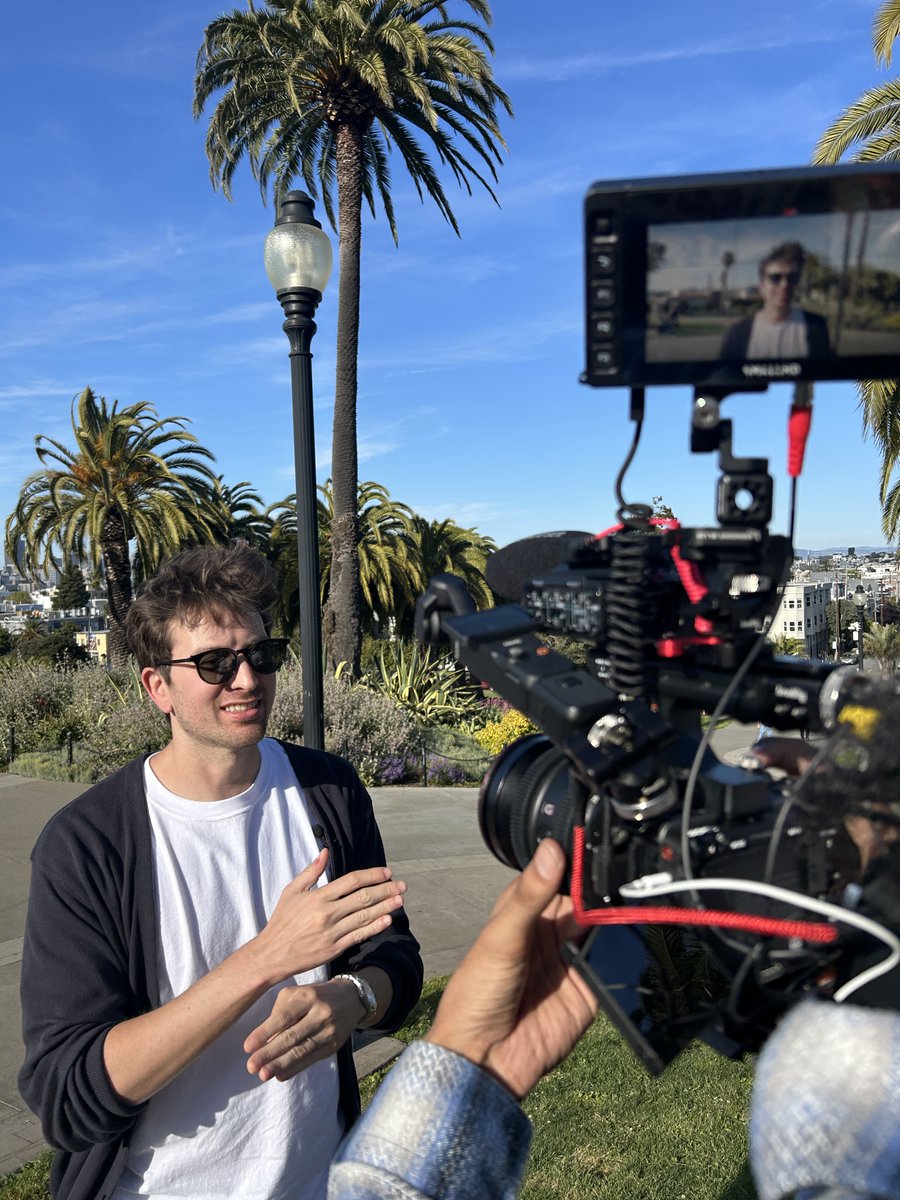
I just got back from SF and I FEEL INSPIRED.
I spent 5 days with frontier AI model teams, AI startup founders, and 3 billionaires.
My takeaways:
1. I had lunch with 3 billionaires. All of them are buying SaaS companies and rebuilding them agent-first. They were deeply inspired by Bending Spoons and Ryan Cohen's eBay deal. Buy the company, cut the headcount, rebuild the tech, add agents, add features, make more valuable experience, raise prices.
2. The frontier model companies are hungry for usage data from the field. They can see API calls and token counts. They can't see the actual workflows. If you're deep in a niche using these models in ways the model companies haven't seen, that understanding is incredibly valuable. Usage intelligence is the new alpha.
3. Consumer AI is massively underbuilt. Every billboard in SF is either B2B inference infrastructure or vertical agent companies. The entire city is optimized for enterprise. Meanwhile you have companies like Cal AI doing $50M ARR in 18 months as a consumer app. I met with a cool few teams doing consumer AI (@paulscherer / @ekuyda)
4. MCP came up in literally every conversation. The companies exposing their product as MCP endpoints are getting pulled into deals they never pitched for. The ones that aren't are becoming invisible to agents. This is the new SEO. If agents can't find you, you don't exist. Building products for agents is the new zeitgeist in general.
5. Not uncommon for hot seed rounds to be $25-50 million valuations. I saw a Series A at $450 million
6. If I had a dollar every time someone mentioned "forward-deployed engineer" this trip I could have funded a seed round. It's the hottest role in SF right now. The person who sits between the agent and the customer, making sure everything actually works.
7. The mood around open source shifted. A year ago it felt like open source was chasing the frontier models. Now founders are telling me Gemma and DeepSeek are good enough for 80% of what they need at a fraction of the cost. The "which model do you use" conversation is being replaced by "which model for which task." Model loyalty kinda feels dead.
8. Voice agents came up more than I expected. Multiple founders told me voice is the interface for the next billion users. The billion people who will never type a prompt will absolutely talk to one.
9. The Obsidian community in SF is weirdly intense. Multiple founders showed me their vaults unprompted. Like showing someone your home gym. It's a flex now. The quality of your knowledge base (second brain?) is becoming a status symbol among builders.
10. Maybe it was just the people I met but the age of the founders is shifting. I met more founders over 40 this trip than any trip before and more founders under age 21 than ever before. Founders getting older and younger at the same time.
11. I spoke to a lot of fast-growing startups, VCs and frontier models who are hiring content creators right now.
12. The restaurant scene in SF is actually better than it's been in years. Founders are going out more. Alcohol is out, not surprisingly.
13. SF doesn't feel like the only place anymore. We all have access to the same frontier models. We all read the same X feed. A founder in NYC or Lagos is calling the same APIs as a founder in SoMa. So in the past it felt like SF was always lightyears ahead, doesn't feel that way anymore. It's okay not to live in SF and have BIG DREAMS.
14. The coworking spaces in SF are half empty but the coffee shops are packed. People want to be around people. I had a few startup ideas here....
15. Walking around the Mission I noticed something: the street-level businesses, the taquerias, the barbershops, the laundromats, none of them use any AI at all.
16. I heard the phrase "agent debt" for the first time. Like technical debt but for agents. When you hack together an agent workflow fast and never clean it up, the system prompts conflict, the memory gets polluted, the tools overlap. 6 months later the agent is doing weird things and nobody knows why lol.
17. Met a few people who carry two phones now. One for personal. One that's basically an agent terminal running Telegram or iMessage connections to their agent fleet.
It's always amazing to get that dose of inspiration in SF. I FEEL INSPIRED.
But I'm so happy to be back home, locked in and building.
We're 12-18 months into a shift that will take 15 years to play out. The urgency in every conversation was real.
What an incredible time to be building.
I had a chance to interview @jack on Long Strange Trip and then sit in on his Q&A with a bunch of Sequoia founders yesterday. Here's my take followed by my takeaways.
Almost all of us are running a derivative of the playbook laid out in Andy Grove's "High Output Management" book that has been lightly edited down through the generations. Jack's set of ideas is a stark departure from that playbook. It reminds me of the shift I went through at the start of my career (pre web - yes, I'm that old!) to "digital transformation," but this is a much bigger, harder shift.
Some of my CEO friends have pushed back on these ideas saying something to the effect that Jack isn't a great CEO so we shouldn't listen to him. First, I'm not sure if that is true, but even if it is true, he is an undeniable innovator and first principles thinker applying that thinking here to org design, not just product design. Second, @brian_armstrong, a consensus great CEO is running something that sounds VERY similar to this playbook as well as almost every startup created in the last 18 months. Third, the first quarter Jack printed after putting this in place was a banger. ...To that end, I think we should all call this new playbook, "Dorsey Mode" after the guy who stuck his neck out.
If you want to run Dorsey Mode, a lot of things fall out of it that fall out of it:
1. Strategy - Planning cycles are out the window because the speed increases too much. All those 1 way doors you were procrastinating now look like 2 way doors.
2. Distribution - Given how much easier it is going to get to build products, competition and customer confusion will reign. In this new world, distribution is king. Companies with truly creative distribution strategies (rare!) will gain advantage. Also, long live ye olde enterprise sales.
3. Interviewing - All of the startups I work with have changed their interviewing process. Many have a case with a hard ai problem to solve embedded in it or at least have the prospective employee open their laptop and show them something interesting they built with ai. 4. Profile - There was a split in my group of CEOs at the Q&A -- some were learning hard into pilled jr engineers and some were leaning hard into very senior engineers. It roughly seems like the older companies with more code like Meta and HubSpot, are leaning harder into the very senior engineering types. ...Everyone seems keen to hire "curious" types not afraid to go very deep down rabbit holes.
5. Org shape - Triangle shaped org charts are like democracy, its the least bad system we've got. The biggest problem with triangles is that they get worse with size. The new org chart, in theory, is circular with the world model in the middle and very small teams surrounding it. Very few pure managers in the middle anymore. This seems "early," but directionally right to me.
6. Compensation - The difference between a middling employee and a top one is getting much wider which will necessitate a net new pay scale with a much higher standard deviation.
7. Titles - Jack got rid of them and is trying to focus everyone on the work as opposed to the level. As someone who tried this earlier in my career at HubSpot, I'm a little skeptical of this one, but the meta point of trying to focus people on what they "lead" versus who they "manage" is a good one that I hope sticks.
8 Decisions - Almost all decisions these days are made by carbon based life forms. Dorsey Mode turns an increasing amount of decisions over to the system.
9. IT - This is will totally change as their primary function will be to building the scaffolding for the world model and enable the company to keep feeding it the context and taste it will need to improve. EVERYTHING needs to be "legible" (I hate that I'm using that overused word, but it works) ...Btw, an early sign that a company is in Dorsey Mode is when they record every meeting, including the one on one's, cleverly stripping out some HR bits and centralizing them for use by the model. Btw, Ray Dalio had it right, but was just too early.
10. Slop - As more non-technical people build more things, there will be more slop. I didn't grok Jack's answer to this and I'm not sure the answer myself, but Dorsey Mode companies will need to figure out a system to reign in the badly designed systems.
11. Agency - This another word I cringe at using b/c it is so overused, but hiring folks with high agency that are self motivated will be key. The tricky part is that the beef with the current generation is that they are less like this than their predecessors.
12. CEO - This isn't something that will bubble up. The CEO needs to run hard at it and push it down hard and expect to get pushback from laggards. Jack spends 3 hours every morning building hard things with the new tools. ...AI isn't something that lends itself well to learning by reading or watching a video, so CEOs are running hackathons, show & tell's, building days, office hours, and token leader boards. ...Btw, lots of companies are doing the leader board thing (including mine) -- I think this works until it doesn't!
13. Budgets - Budgets in a lot of software orgs are basically enumerated in headcount. The denomination goes back to dollars.
As Jack (and my cofounder @Dharmesh) likes to say, in some cases, it is a lot riskier not to take a risk and this is one of those cases.
Hmm, this actually proves the counter-point.
Google, the same company that made the searchbox does not use a text box for Google Cloud, GCP, Workspace Admin, or any of their enterprise tools. Instead, they have hundreds of purpose-built dashboards, monitoring views, config screens.
Search works because you're exploring. You don't know what you want looks like until you type it. The query space is infinite. You visit once, get the answer, leave.
Enterprise SaaS is the opposite. You know exactly what you want. You do it every day. You need to trust that the view is complete without having to construct it yourself.
A purpose-built UI means the product team already decided what a pipeline view or a sprint board or an incident dashboard should show. You didn't ask for at-risk flags, last activity dates, stage distribution. It's all there because experts pre-assembled it.
A prompt-generated UI gives you exactly what you remembered to ask for. Nothing more. And you're not a prompt engineer. You're a sales rep trying to close deals before end of quarter.
Having to prompt UIs creates a new anxiety that I didn't have before as a user: "Did I ask for the right thing?" In a traditional UI, you never had that doubt. The view was the view.
The text box is the right interface for discovery. But a very tricky interface for repeatability and routine.
font pairing is hard. it is one of those problems that sounds simple until you're 45 minutes deep into Google Fonts with 12 tabs open & still stuck with the classic 'inter'. I built typevibe to give you a head start.
tell it what you're building & it recommends unique font pairings along with 32 design templates that instantly show you how those fonts actually look. editorials. posters. menu cards. data dashboards. all updating live as you explore different pairings.
https://t.co/rggsmiuVmq
Claude with zero usage limits as a designer.
Here's the actual workflow nobody's sharing.
Everyone's posting about it but actually gatekeeping all the steps...
I want to show you how it actually works 👇
We, humans, are not as rational as we think. We underestimate how context and situation shapes our behavior because admitting it wounds our ego. We'd rather believe we're logical decision-makers than puppets of circumstance.
UNLIMITED access to ALL BEST MODELS. All users & plans.
ONE HISTORICAL opportunity🏆
WAN | Kling | Seedream | Seedance | Minimax | Nano Banana
You only have one shot. Don't let it pass.
Claim before next Friday 00:00.
For the next 8h: reply & retweet = 100 credits in DM
Holy sh*t… nobody’s talking about JSON prompting
but it’s the cheat code to unlock God-tier outputs from GPT-4, Claude, and Gemini.
Here’s how it works (with copy-paste templates): 👇
These 8 n8n automations can replace your entire marketing team. They handle creative testing, research, copy, reporting - and run 24/7 without asking for a raise.
Built for businesses that need to move fast without bloated teams or overpriced tools.
I use these daily. You can steal them for free.
Every one of them is in the thread below 👇
Okay, let me get this straight...
1. You have 1-click n8n, Zapier, and Lindy AI agent templates to automate your content, outreach, research, reporting, anything.
2. You can clone your voice with 5 seconds of audio.
3. You can run billion-parameter AI models on your laptop for free.
4. You have agents that write, debug, and ship code while you sleep.
5. You can turn scripts into talking head videos with your face and voice.
6. You can spin up AI agents to negotiate bills and cancel subscriptions.
7. You can summarize 300-page PDFs in seconds.
8. You can turn rough Looms into polished blog posts instantly.
9. You can generate personalized landing pages for every visitor.
10. You can talk to your data like it's ChatGPT.
11. You can train a custom GPT on your company docs and have it answer support tickets 24/7.
12. You can A/B test 100 ad creatives before you spend a dollar... all AI-generated.
13. You can scrape the internet, analyze competitors, and generate go-to-market strategies overnight.
14. You can deepfake yourself into any language and accent to localize content globally.
15. You can run AI to audit your finances and suggest tax optimizations (for a pretty much free second opinion)
16. You can generate an entire week of social content with tone, brand, and format baked in.
17. You can create full e-commerce stores from just a CSV and a brand vibe.
18. You can deploy voice agents that call leads, qualify them, and update your CRM... in your voice.
19. TLDR; you can do a lot, my friend
This is the greatest unlock for solo builders since the App Store.
Enjoy it.