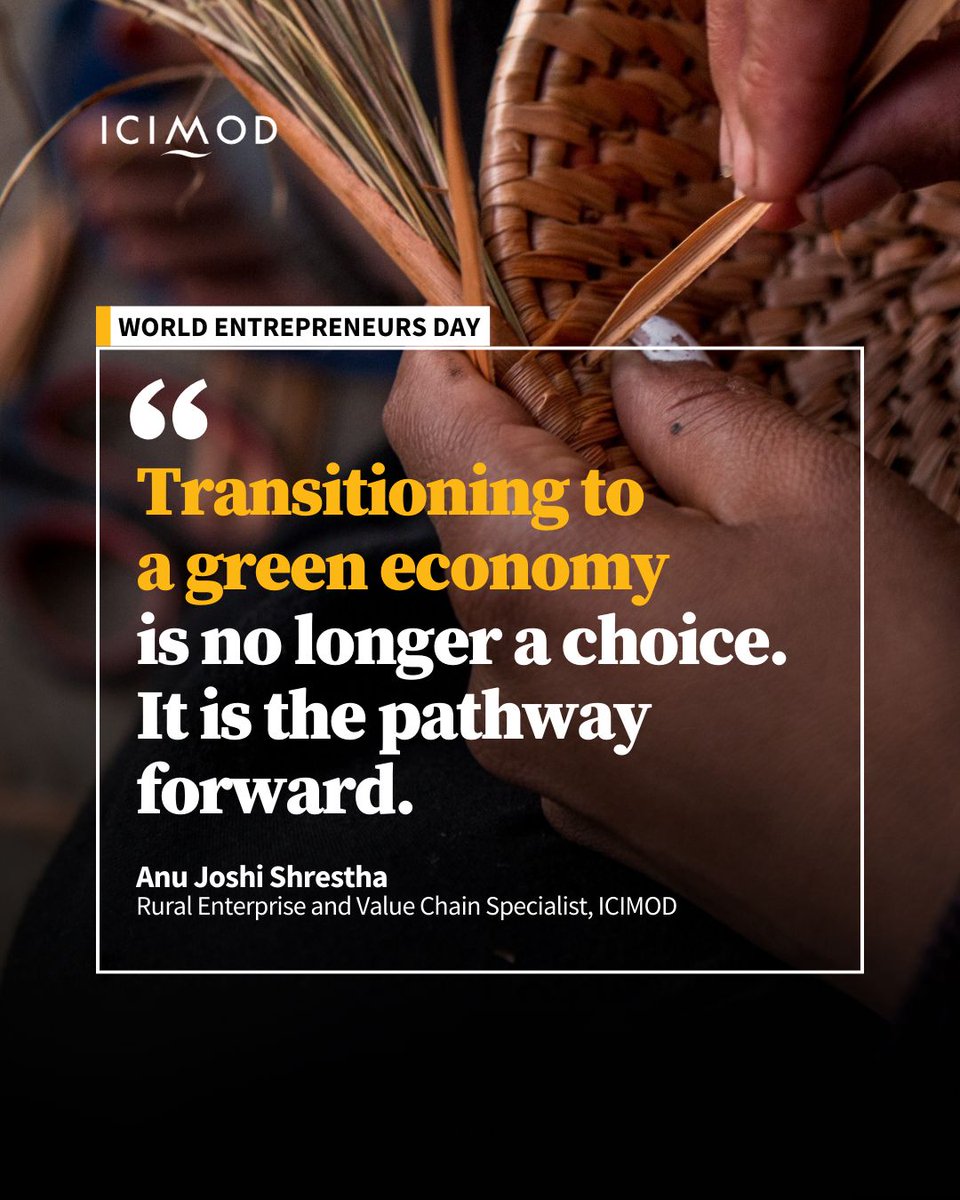
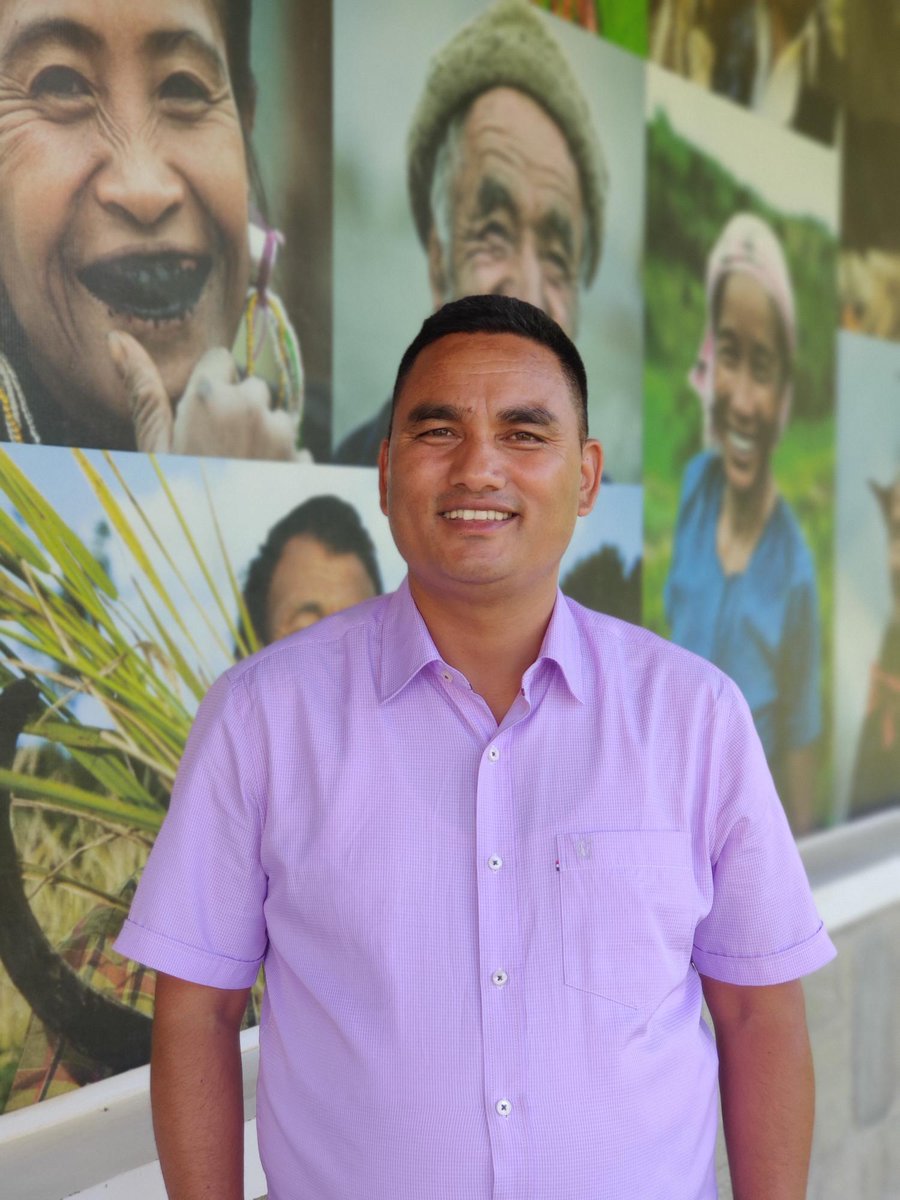
“Transitioning to a green economy is no longer a choice. It is the pathway forward,” states ICIMOD’s Rural Enterprise and Value Chain Specialist, Anu Joshi Shrestha.
On this World Entrepreneurs’ Day, we reaffirm our commitment to build a vibrant entrepreneurship ecosystem, creating a pipeline of green, resilient, and inclusive businesses that turn local innovation into global solutions.
Last month, ICIMOD supported Bhutan in launching nine nature-based products, each backed by targeted research, capacity building, market testing, mentoring, and incubation support. Through our mentorship and business incubation programme, entrepreneurs have learnt to navigate challenges and built confidence to innovate.
Explore Bhutan’s nine nature-based products: https://t.co/cSHPmJqMPV
Beyond Bhutan, we supported 10 entrepreneurs from Nepal through our Nature-based Solutions (NbS) innovation challenge and business incubation programme, funded by the UK’s Foreign, Commonwealth and Development Office (FCDO).
Meet Nepal’s inspiring entrepreneurs driving change: https://t.co/PDSSiJMkzI
#HIREAP #WorldEntrepreneursDay #FCDO #NbS #innovation @AnuJoshiShresth, @FCDOGovUK, @UKinNepal
Community Learning Centres (CLC) in Nepal are gaining recognition as best practices for climate change adaptation in agriculture.
One good example is the Dimmerpani CLC in Bajura, Far Western Nepal, where women are leading the way – blending Indigenous knowledge with climate-resilient farming to build a more sustainable future.
The centres empower communities to take charge of their own development, showing that sustainable agriculture begins with women's leadership and community ownership.
It is a powerful example of how community-led, women-driven initiatives can be effective models for climate adaptation in mountainous regions.
To know more about CLCs in Bajura and women’s leadership roles in agriculture and decision-making click here: https://t.co/X9okn0WcZU
@sbasnet355@lifegate
Agroecology, sometimes defined as the application of ecological principles to agriculture, has long thrived in the countries of the Hindu Kush Himalaya, where farmers have worked with nature for millennia.
Recent decades, however, have seen farmers in the region adopt industrial farming techniques, including the use of pesticides that increase yield or reduce weeds but carry a wide ecological fall-out – harming biodiversity and polluting water sources.
In the teeth of the accelerating climate and nature crisis, there is growing global recognition of the need to return to ecological practices – to boost biodiversity, slash emissions linked to farming, build food sovereignty, enhance soil health and water recharge and boost the nutritional content of yield.
To do this at the requisite pace and scale will require food and farming systems experts to deploy a range of interventions—from planning and policy-making to increasing the incentives—and last week ICIMOD brought together experts from Bangladesh, Bhutan, India and Nepal, to chart the promising ways to bring about change.
Read more about this important session where regional leaders fostered collaboration, shared best practice and discussed the development of national roadmaps for climate-resilient, agroecology-based food systems: https://t.co/s9OYnqTYc0
#HIREAP @FCDOGovUK, @UKinNepal, @FAONepal
📽️Join us at 9 PM (Nepal Time) tonight on @eKantipur Televison as Dr Arun Bhakta Shrestha (@arunbshrestha), ICIMOD Senior Climate Change Specialist, speaks on the pressing issue of Glacial Lake Outburst Floods (#GLOF) and the recent tragic events in the Hindu Kush Himalaya.
He will be speaking alongside Hon. Sonam Geljen Sherpa, Member of Rastriya Sabha and Prema Thapa, District Forest Officer, Rasuwa.
"In our region, continued support is crucial for socio-economic change, and we're delighted that these projects are maintaining momentum. Both communities and the government are hopeful for positive transformation.”- Janak Kumar Bohora, Chairperson, Budhinanda, RM
"Building resilience and sustainability requires long-term commitment. The GRAPE project's interventions are now being upscaled through the RERAS and HIREAP projects at ICIMOD, giving continuity to and building on our work in the region.”- Kamal Aryal, Project Coordinator, ICIMOD
“Climate-resilient agriculture is easing the burden on women in farming by reducing drudgery. With renewable energy solutions, we’re hopeful this will further reduce their workload and empower women in agriculture.” – Raj Kala Sarki, Vice Chairperson, Himali RM @UNDPNepal
"In our region, continued support is crucial for socio-economic change, and we're delighted that these projects are maintaining momentum. Both communities and the government are hopeful for positive transformation.”- Janak Kumar Bohora, Chairperson, Budhinanda, RM
“Climate-resilient agriculture is easing the burden on women in farming by reducing drudgery. With renewable energy solutions, we’re hopeful this will further reduce their workload and empower women in agriculture.” – Raj Kala Sarki, Vice Chairperson, Himali RM @UNDPNepal
"In our region, continued support is crucial for socio-economic change, and we're delighted that these projects are maintaining momentum. Both communities and the government are hopeful for a positive transformation.”- Janak Kumar Bohora, Chairperson, Budhinanda, RM
“Climate-resilient agriculture is easing the burden on women in farming by reducing drudgery. With renewable energy solutions, we’re hopeful this will further reduce their workload and empower women in agriculture.” – Raj Kala Sarki, Vice Chairperson, Himali RM @UNDPNepal
"Indigenous crops are disappearing, but climate resilient agriculture holds immense value in protecting and preserving them."- Bharat Bahadur Rokaya, Swamikartik Khapar, Rural Municipality Chairperson
The Renewable Energy for Resilient-Food Systems (RERAS) project brings together key stakeholders to advance climate-resilient agriculture in Nepal 🌾
@UNDPNepal@libirdnepal@WFP@WaqasAbid_Econ
Farmers on the frontline of climate change in Nepal's mountain regions share their challenges about losing indigenous crops and their efforts to revive local food systems. 🌾 This highlights the urgent need for resilient solutions.
📢APPLY NOW TO BE AMONG ICIMOD’S FIRST YOUTH RIVER-MANAGEMENT RESIDENTIAL
If you are under 35 years of age and a passionate professional working in the management of rivers of the Hindu Kush Himalayas, you could join our fully-funded three-week integrated river basin management course — which this year includes expeditions to Nepal’s Koshi Basin, as well as Thailand’s Chao Phraya watershed.
Learning from top water experts, you’ll learn how to tackle complex challenges and pave the way for a water-secure future for all.
There are just six spaces in this coveted training course on the progressive field of integrated river basin management — an approach which opens up discussions on water to wider stakeholder groups, especially local and Indigenous knowledge holders, and vulnerable communities especially women, disabled people, and lower caste-groups, and also harnesses data about water availability, needs, risks, biodiversity, pollution, and other indicators of ecological health.
With demand for water from Hindu Kush Himalaya set to soar from population growth, the effects of temperature rise, and development needs, current approaches to water management risk destabilisation and crises in some of Earth’s most densely populated, water-stressed, and most marginalised regions.
Scientific collaboration and the harnessing of local and Indigenous knowledge in water governance is vital for sustainable energy strategies, water security, and disaster resilience of up to a billion people.
Sign up to be part of the solution: https://t.co/r8D3mdqpw0
Deadline: 26 August 2024.
Sessions start from 23 September - 9 October 2024.
#IRBM2024 #SG1 @arunbshrestha@Neera_S_P
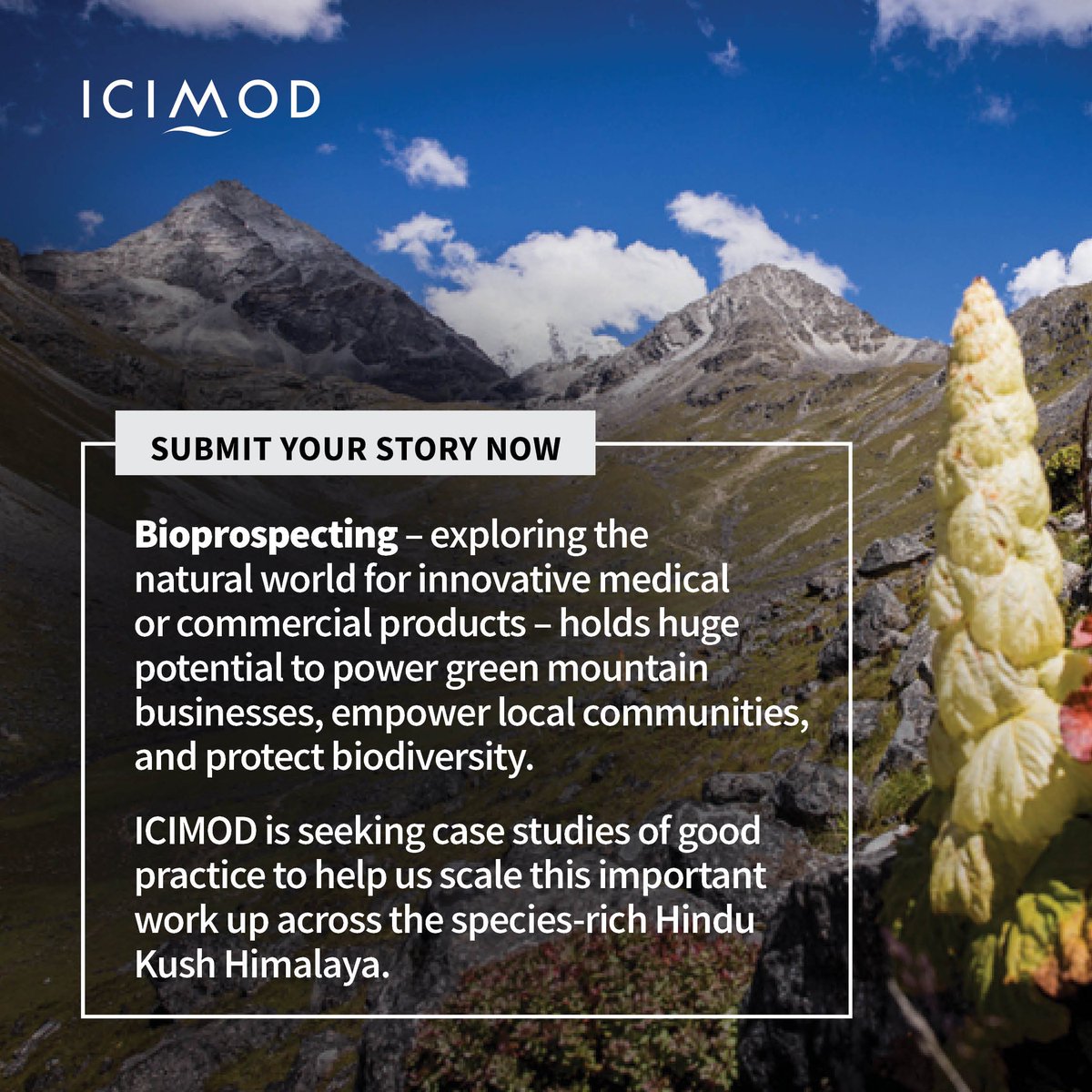
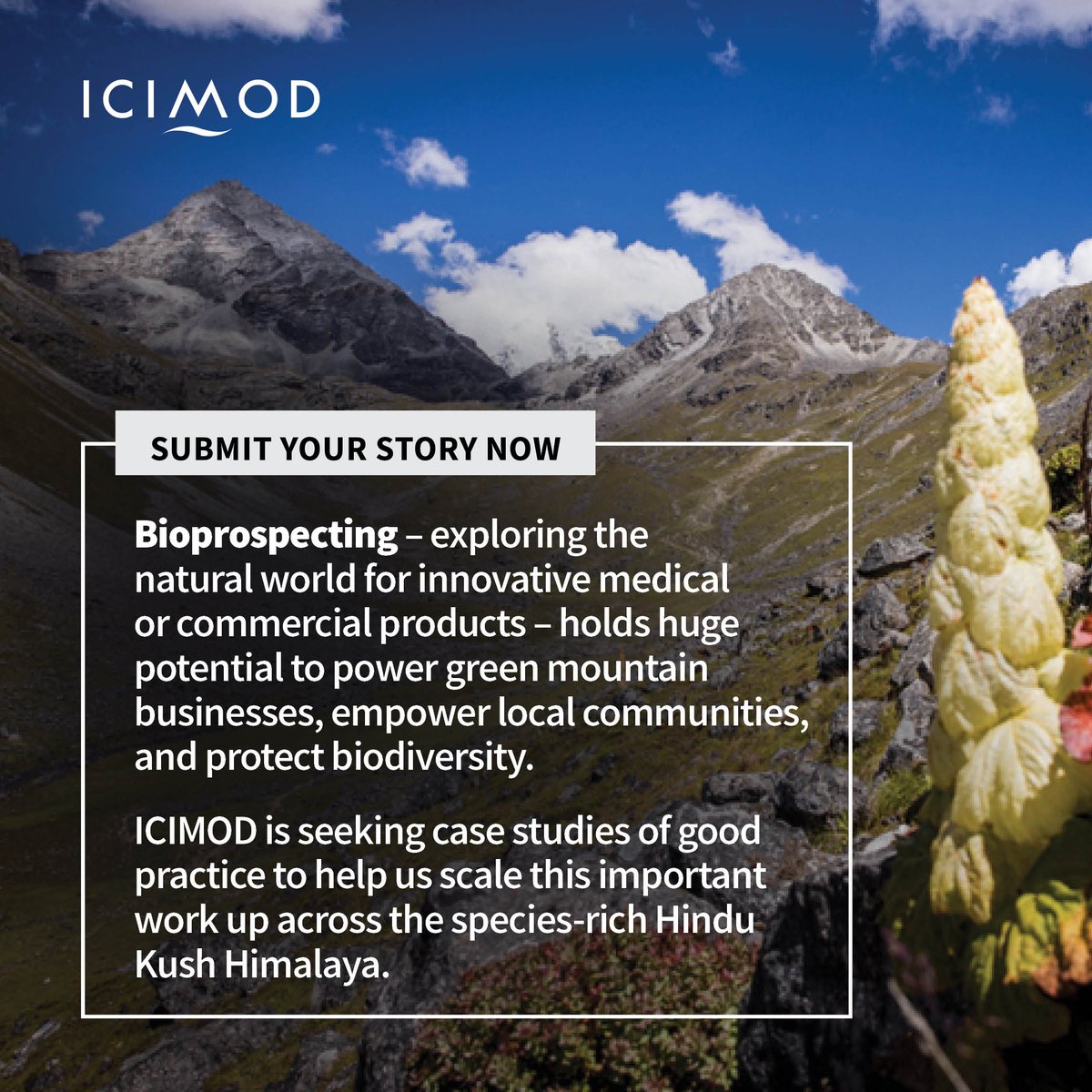
ICIMOD is seeking innovative case studies that showcase best practices in building sustainable bioprospecting businesses and ensuring equitable benefit-sharing from commercial use. If you have a story to share, now's the time to contribute
⏳ Deadline: 23 August Apply now!
📢DEADLINE FAST APPROACHING:
Could a green gold-rush help protect nature, and nature-protectors?
Almost half of all pharmaceuticals we use today were first derived from nature -including aspirin, and treatments for malaria and tuberculosis. Bioprospecting, tapping the plant-world for breakthrough applications in allopathic or herbal medicine, food and beverage industries, cosmetics, therapeutics and more, holds huge potential in the species-rich Hindu Kush Himalaya.
Done well, through a convergence of local and Indigenous knowledge, science, medicine, and chemistry, they might deliver social and economic benefits to local communities and society at large; while also defending biodiversity in the teeth of growing competition for land and resources.
ICIMOD is seeking case studies of good practice to support our work to grow green and resilient bioprospecting businesses and equitable sharing of benefits arising from any commercial use.
Details and submission: https://t.co/4hjMfhCxSU
#NaturebasedSolutions #HIREAP
@FCDOGovUK@AnuJoshiShresth@Surendr73415873@bandanashakya12@WaqasAbid_Econ
🌱🏔️ Apply now for GROW Summer School 2024 to explore how agrobiodiversity can build sustainable and resilient food systems and create innovative rural job opportunities. 🌍🌾
Submit your application by 6 September 2024 ➡️ https://t.co/0aRXFzdyF7
#MountainsMatter
📢DEADLINE EXTENDED:
Could a green gold-rush help protect nature, and nature-protectors?
Almost half of all pharmaceuticals we use today were first derived from nature -including aspirin, and treatments for malaria and tuberculosis. Bioprospecting, tapping the plant-world for breakthrough applications in allopathic or herbal medicine, food and beverage industries, cosmetics, therapeutics and more, holds huge potential in the species-rich Hindu Kush Himalaya.
Done well, through a convergence of local and Indigenous knowledge, science, medicine, and chemistry, they might deliver social and economic benefits to local communities and society at large; while also defending biodiversity in the teeth of growing competition for land and resources.
ICIMOD is seeking case studies of good practice to support our work to grow green and resilient bioprospecting businesses and equitable sharing of benefits arising from any commercial use.
Details and submission: https://t.co/4hjMfhD5Is
#NaturebasedSolutions #HIREAP
@FCDOGovUK@AnuJoshiShresth@Surendr73415873@bandanashakya12@WaqasAbid_Econ