What inspires the next generation of cryosphere scientists?
Students in their final year of Master of Science, specialisation in Glaciology at Kathmandu University (KU) are exploring how cryosphere science can help tackle the Hindu Kush Himalaya (HKH) region’s biggest climate challenges – disaster risk reduction, efficient water management to leveraging artificial intelligence in climate research.
The HKH’s water resources are under severe stress from climate change impacts. Building regional expertise in the cryosphere is a critical intervention to address existing data gaps.
The two-year Master of Science programme was reintroduced at KU in August 2024 to strengthen cryosphere research capacity in the region. The programme is jointly implemented by the International Centre for Integrated Mountain Development (ICIMOD) and Kathmandu University, with support from the Government of Norway.
#Glaciology #ClimateChange #WaterSecurity #SG1 #Cryosphere #ResearchCollaboration
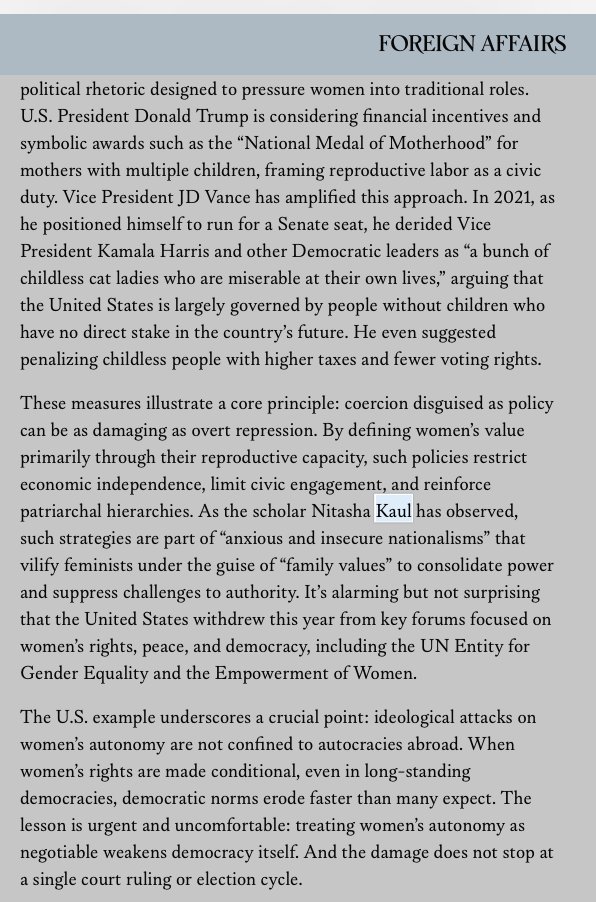
I began writing about #misogyny & #democracy the night @HillaryClinton lost to #Trump in Nov 2016.
That work led to this: https://t.co/Q4F1Tns3v6
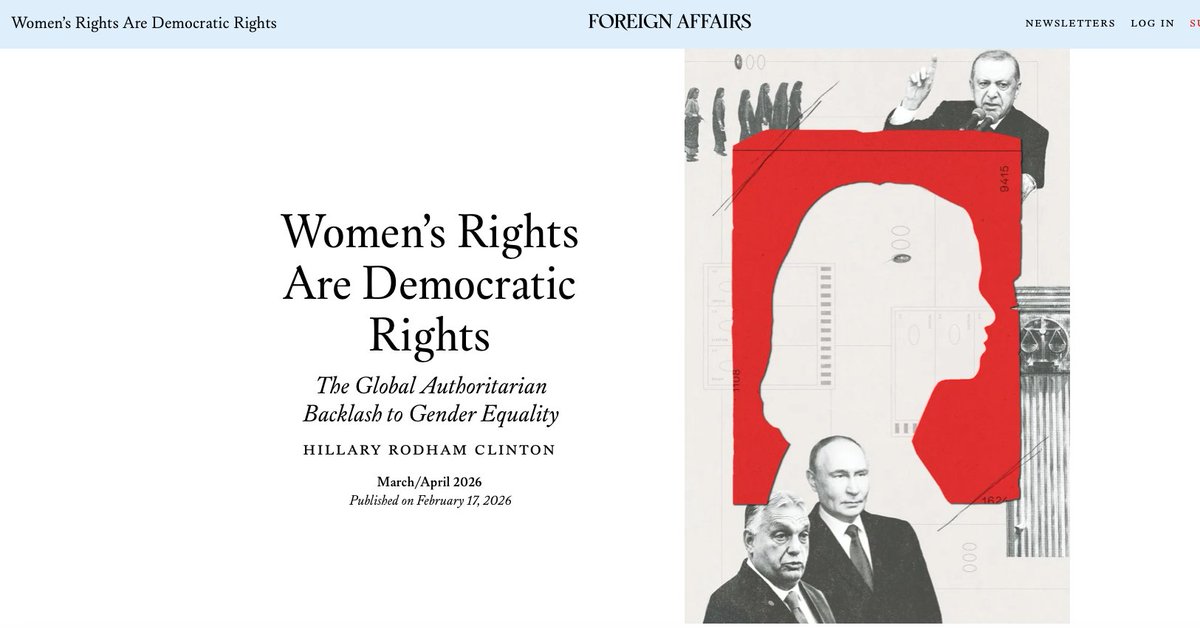
Now she cites it in @ForeignAffairs Full circle 🥰🙏🏽
Atm finishing a book chapter on how misogyny turns democracies authoritarian!
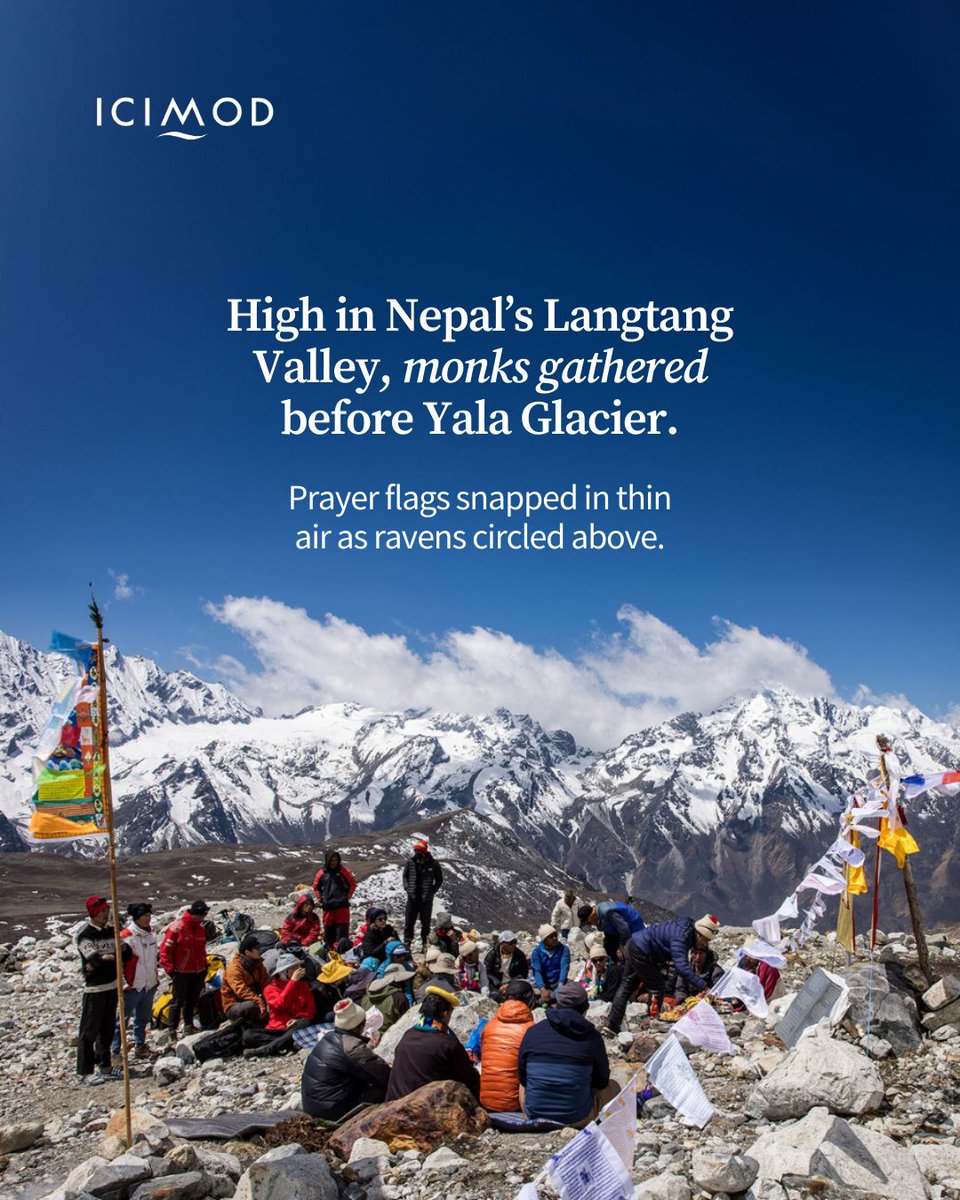
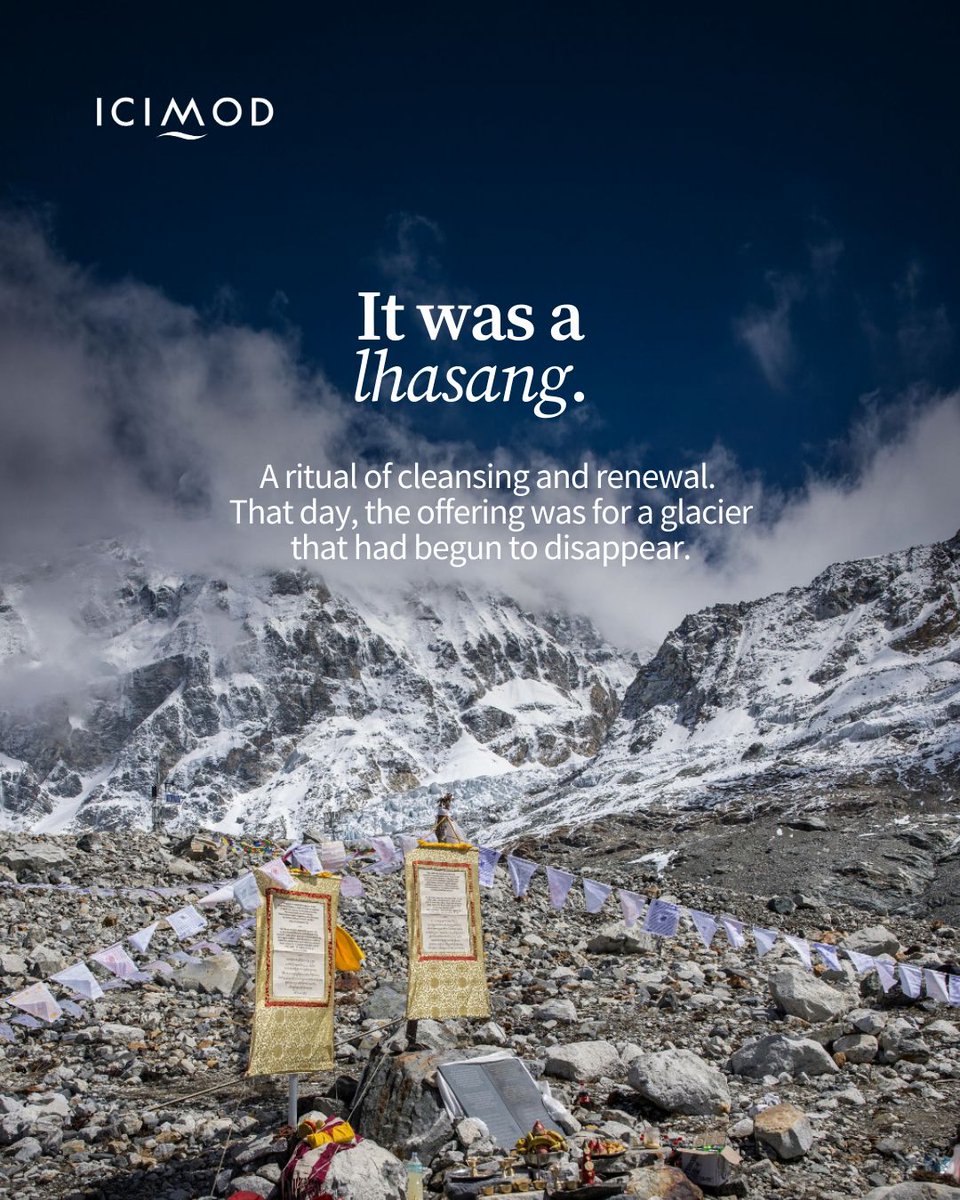
“The lhasang, a Buddhist purification offering, is a Tibetan ritual that invokes deities. We are offering our lhasang to Yala Glacier and the peaks surrounding her – Khimshung, Dokphu, Tarna, Zokphu, Zangphu, Champu, and Serkori.
The glacier and its surrounding peaks are more than just geographical features. They are guardians, deities, and perennial sources of guidance and blessings for the communities of Langtang Valley.”
Through her blog, Chimi Seldon, Communication Officer, ICIMOD, takes you up to the Yala Glacier base camp and describes the unfolding of the Yala tribute organised in May 2025 to honour the glacier.
#Glaciertribute #Climateaction #Cryosphere #MountainCommunity #SG1
Read more: https://t.co/QCiVGlEZLL
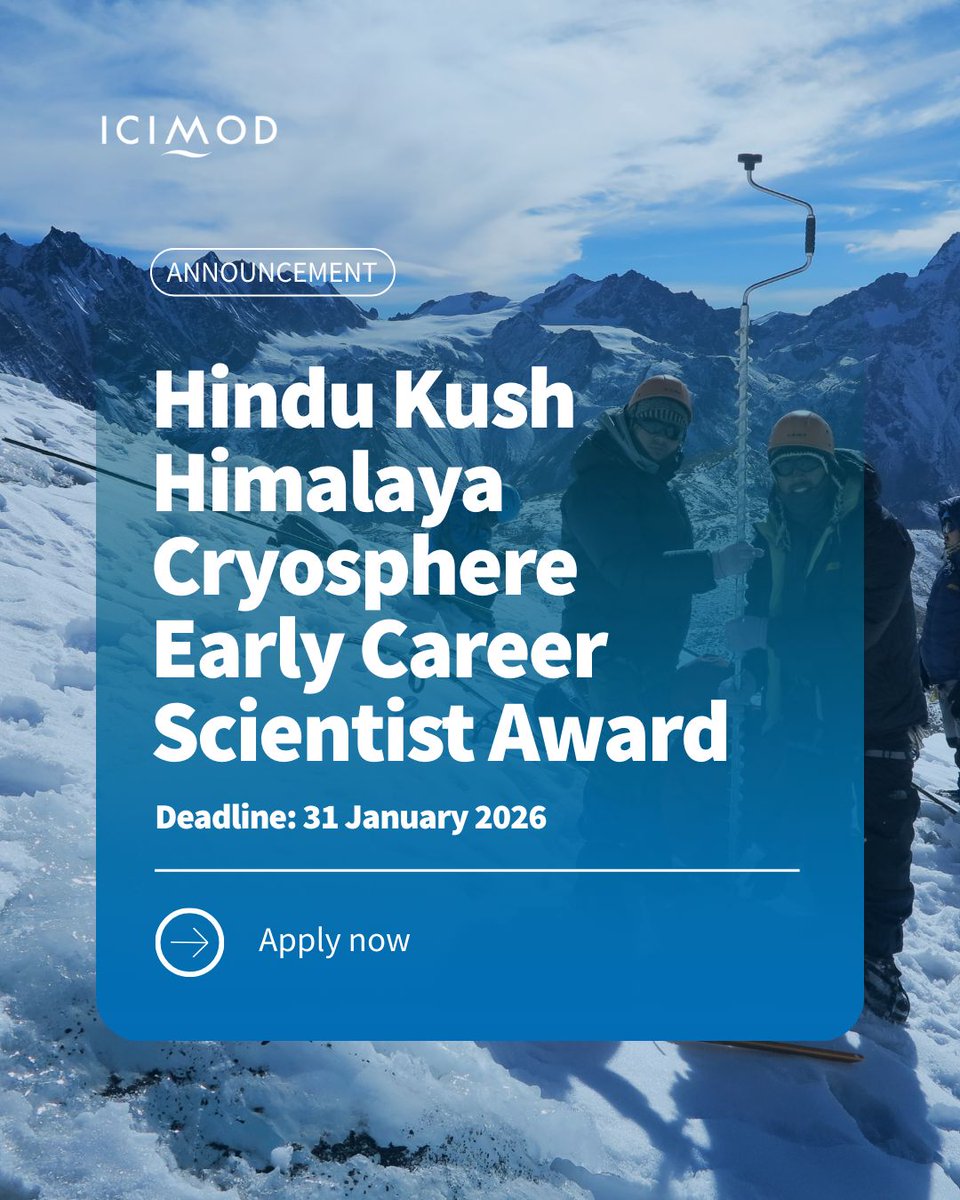
Are you an early career cryosphere researcher from the Hindu Kush Himalaya (HKH) region?
This is your opportunity to gain recognition for your work.
ICIMOD is inviting applications for the HKH Cryosphere Early Career Scientist (ECS) Award, which celebrates exceptional research advancing our understanding of glaciers, snow, permafrost, and their links to climate change, water security, and mountain risks.
The award offers:
🔹regional and international visibility for your research
🔹recognition within the HKH CryoHub and global cryosphere networks
🔹opportunities to connect with leading scientists, policymakers, and institutions
If your work contributes to stronger science and more resilient mountain communities across the HKH, we encourage you to apply and be part of the next generation of cryosphere leaders.
Read more about the eligibility criteria and apply: https://t.co/SH1YIdUlgE
#weekend For his new book, veteran journalist & writer @SanjoyHazarika3 travelled along the Yarlung Tsangpo/Brahmaputra from Tibet to the Bay of Bengal.
Here, he tells the story of how efforts were made to reduce the poaching of the Brahmaputra’s ‘xihu’
https://t.co/02E3Gt2PQc
ICIMOD attended the launch of the Decade of Action for Cryospheric Sciences at the United Nations Ocean Conference in Nice, France, which closed today.
With unprecedented focus on the deglaciation of Earth’s mountains, and the terrifying implications those losses of snow and ice pose to lives, livelihoods, and economies, everywhere from Nice to New York, Kathmandu to Dushanbe, it’s crucial we don’t just state the problems, but that we stress the need for action.
ICIMOD has started to develop a series of asks for our region – a zone of 54,000 glaciers and the largest ice reserves outside the geographic poles.
We launched these at last month's High-Level Conference on Glacier Preservation in Dushanbe, Tajikistan, where ICIMOD was represented by Deputy Director General Izabella Koziell (@izabella_koz) and Head of Climate and Environmental Risks Qianggong Zhang, and Koziell restated these in key meetings during the Nice conference.
To read Koziell’s statement at the “Climate Ambition” Leaders' Round Table of the International Conference on Glacier Preservation click here: https://t.co/QtvzlPkDob
Watch the video for the highlights of our HKH Asks, which include the need for
🔹Better monitoring
🔹Inclusive adaptation
🔹Local knowledge
🔹Integrated policy and
🔹Cross-border action
To read our ‘Key HKH Asks’ click here: https://t.co/JTpJE8n97C
Glaciers in the #HKH are the water towers of Asia, but these water towers are retreating at alarming rates. ICIMOD’s presence at these two global platforms amplified the need for transboundary cooperation, policy action and investment in adaption to secure the future of mountain communities and downstream populations.
#SaveOurSnow #HKHMatters #CryosphereCrisis #ClimateAction #UNOceanConference #CryosphereDecade #Glacier2025
📰Press release:
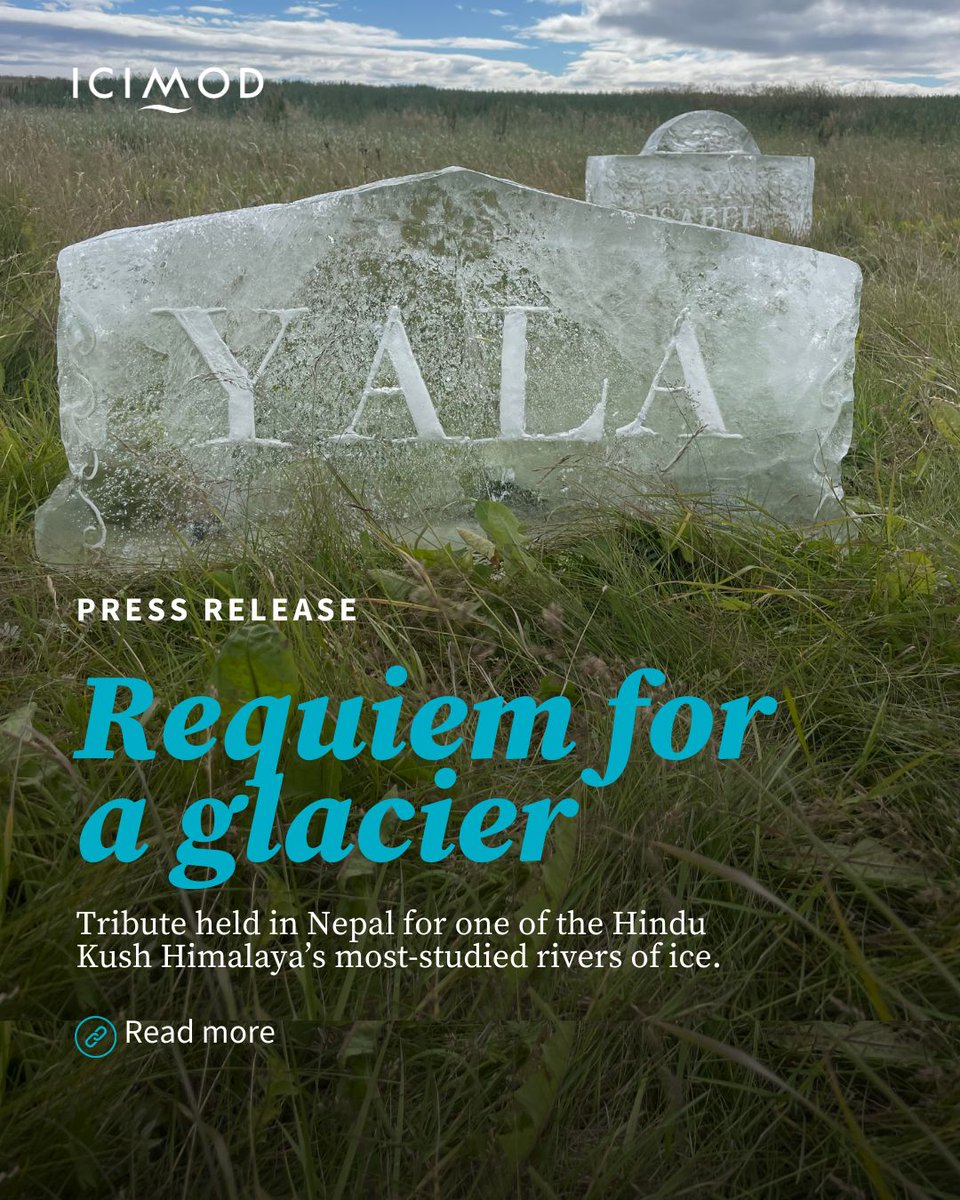
Requiem for a glacier: Tribute held in Nepal for one of the Hindu Kush Himalaya’s most-studied rivers of ice.
Locals of Langtang, Nepal, and glaciologists from four glaciated countries in the Hindu Kush Himalayas (HKH) gathered to mark the accelerating disappearance of Nepal’s Yala Glacier in Langtang, Nepal, today.
Yala, which has shrunk by 66% and retreated 784M since it was first measured in the 1970s is projected to be among the first Nepali glaciers to join the growing numbers of glaciers declared ‘dead’ worldwide.
Over 50 people, including Buddhist monks and members of local community, and glacier experts from Bhutan, China, India, and Nepal completed the arduous high-altitude trek to attend the “poignant” tribute event today (Monday 12th), which featured a Buddhist ceremony, speeches, and the unveiling of two granite memorial plaques which will sit at the foot of where the glacier today stands.
Read the full press release: https://t.co/RB2rJMByo5
#Yala #RequiemForYala #YalaGlacier #1Point5IsTooHot #SaveOurSnow
Glaciers are disappearing at an alarming rate, threatening water supplies, ecosystems, and livelihoods of millions of people worldwide. To focus global attention on this crisis and highlight the crucial role of high mountain areas as key sources of freshwater and other ecosystem services, the United Nations General Assembly declared 2025 as the International Year of Glaciers’ Preservation (IYGP 2025).
The United Nations Educational, Scientific and Cultural Organization (UNESCO) and World Meteorological Organization (WMO) are facilitating the implementation of IYGP 2025, in collaboration with governments and other relevant organisations. An advisory board and four task forces, representing over 75 international organisations and 35 countries, are overseeing the coordination of various activities.
The International Centre for Integrated Mountain Development (ICIMOD) is supporting the IYGP secretariat and is leading Task Force 2 – International conferences, regional workshops and capacity building. ICIMOD is member on all four task forces.
Here are 13 key messages for IYGP 2025: https://t.co/xTbE7jLvkq
#GlaciersPreservation #Glaciers2025 #Cryosphere #ClimateAction
The World Day for Glaciers, 3-21-2025 is a moment to reflect on the value of glaciers and why their preservation is critical. Here is a look from the perspective of North Cascade glaciers where we have worked in the field for 41 years in a row.
https://t.co/2YSZwmal7E
Today is World Day for Glaciers! Having studied glaciology, I’m glad glaciers get attention—but also sad they need it. If they were stable & growing, no special day would be needed. Their decline is a warning. Let’s act before they become memories. @icimod#Glaciers2025#IYGP2025
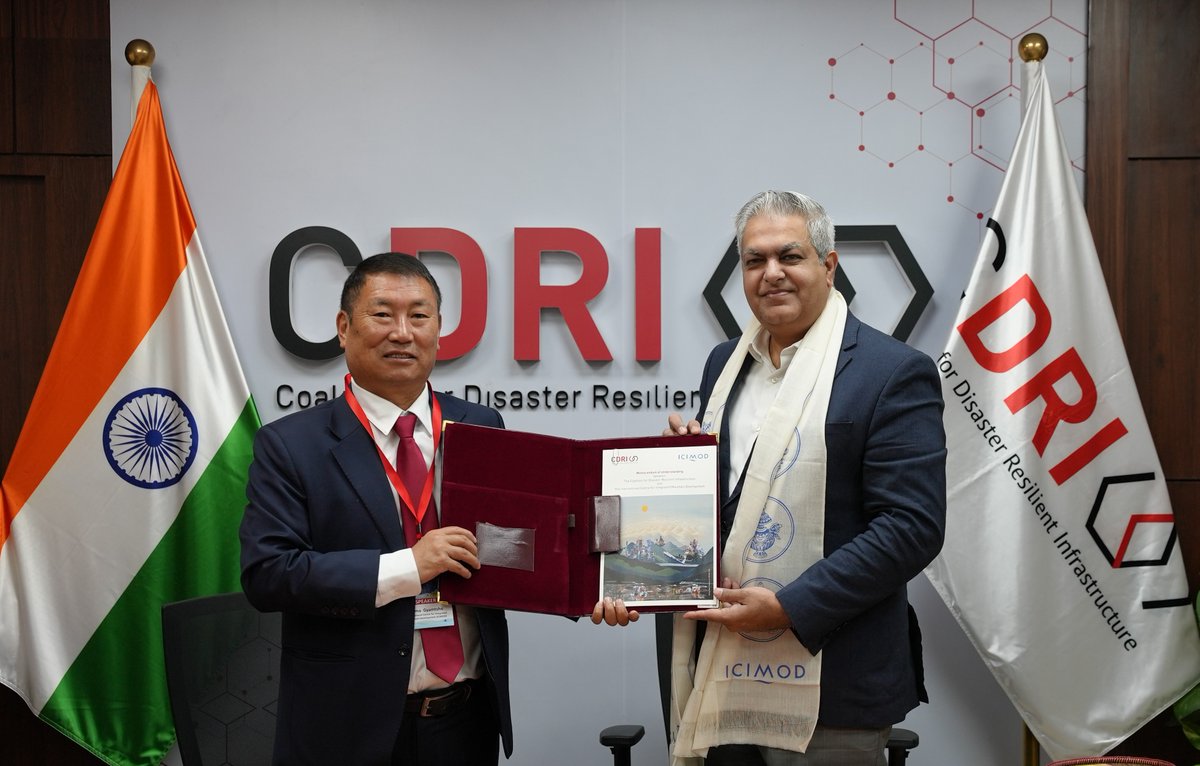
CDRI and @icimod have signed an MoU, committing to collaborate and partner to promote climate and disaster #resilientinfrastructure to address the unique challenges faced by #mountain ⛰ ecosystems and communities.
This collaboration will include:
✅ Joint research and publications
✅ Capacity building and training programs
✅ Partnerships with other stakeholders
✅ Joint advocacy and collaboration on international platforms
✅ Support to governments in the Hindu Kush Himalaya region
This Thursday, join us to hear why the United Nations has declared 2025 the International Year for Glaciers’ Preservation (IYGP) from John Pomeroy, the distinguished co-chair of the landmark global event, and one of the world’s top climate scientists.
Professor Pomeroy is UNESCO Chair in Mountain Water Sustainability, and Director of the Global Water Futures Programme at the University of Saskatchewan.
With less than a month to go before the first ever World Glacier Day, which signals the start of the IYGP, hear his uniquely authoritative perspective on mountain cryosphere losses, and what those losses mean for water security, ecosystems and the people who depend on them.
Seats are limited – secure your spot now, and bring your questions, ideas, and curiosity.
Register here: https://t.co/g7VqhFZMnS
This event is a tribute to 2025, which has been declared the International Year for Glaciers’ Preservation (IYGP), marking the start of the Decade of Action on Cryospheric Sciences.
Prof. John Pomeroy is the UN Co-Chair of the IYGP Advisory Board, UNESCO Chair in Mountain Water Sustainability, and Director of the Global Water Futures Programme at the University of Saskatchewan.
@Small_Earth@tu_information@UNESCO@NepalGlacier@IAHS_AISH
#IYGP2025 #Glaciers2025 #HKHcryosphere #NepalNationalGlacierWaterandWeatherWeek
The Palestinian people have the right to simply live as human beings in their own land.
The @UN is fully committed to peace, stability, and the inalienable rights of the Palestinian people.
“It’s not serious. But that doesn’t mean it’s not dangerous.” Daniel Levy, president of @USMEP, tells me that if the main question after the president’s statements on Gaza is, ‘is he serious?,’ then something’s already gone wrong.
Elon Musk, the richest man on earth, is dismantling USAID, which feeds the poorest children on earth.
This is oligarchy at its worst.
Musk’s actions are not only immoral and unconstitutional, they are counterproductive to our standing in the world.
We must stop burning crop residue
Burning crop residues is a major contributor to the chronic air pollution in our region. How do we stop it?
Hundreds of millions of farmers across the Indo-Gangetic Plains and Himalayan Foothills routinely burn stubble after harvesting their crops to prepare the ground for second planting.
But with air in our region topping global pollution lists, and
🔹known to be a leading cause of premature death, adverse health outcomes, cognitive impairments;
🔹closing schools, halting transport, hitting economies;
🔹accelerating temperature rise and the glacial melt on which farming itself relies
Is it time to ask ourselves at what cost?
In this blog, ICIMOD Air Quality Modelling Analyst, Arshini Saikia shares why the practice continues, what’s at stake, and what can be done: https://t.co/uH7xgai6M0
#AirPollution #AirQuality #CropBurning #CleanAir #SouthAsia @arunbshrestha@saikia_arshini@sagar02_13@Chimis