Perpetual student of bioanalytical sciences, life and everything 🇨🇿🇺🇲 #teamMassSpec and #Proteomics Ideas expressed here are solely mine. Find me on 🟦Sky
🤔 Ever wondered how proteomics thrives in (bio)pharma🚀? How you could provide impact in industry with proteomics background earned in academia?
Please join me and Dorothy Ahlf Wheatcraft for Sunday morning US HUPO 2025 short course 👇
Explore the engaging Sunday morning short course options at US HUPO 2025! Whether you're looking to tackle new subjects or strengthen your current knowledge, there’s plenty to explore. Register today: https://t.co/1MuPsdeeGF #USHUPO2025
Zde info k nasim stipendiim na zahranicnich univerzitach. Uz par let jsem ad hoc nejaky stipendia delal, ted jsme tomu ale konecne dali nejaky ramec. Diky Katce Konradove za to.
https://t.co/eJnDFzlwTo
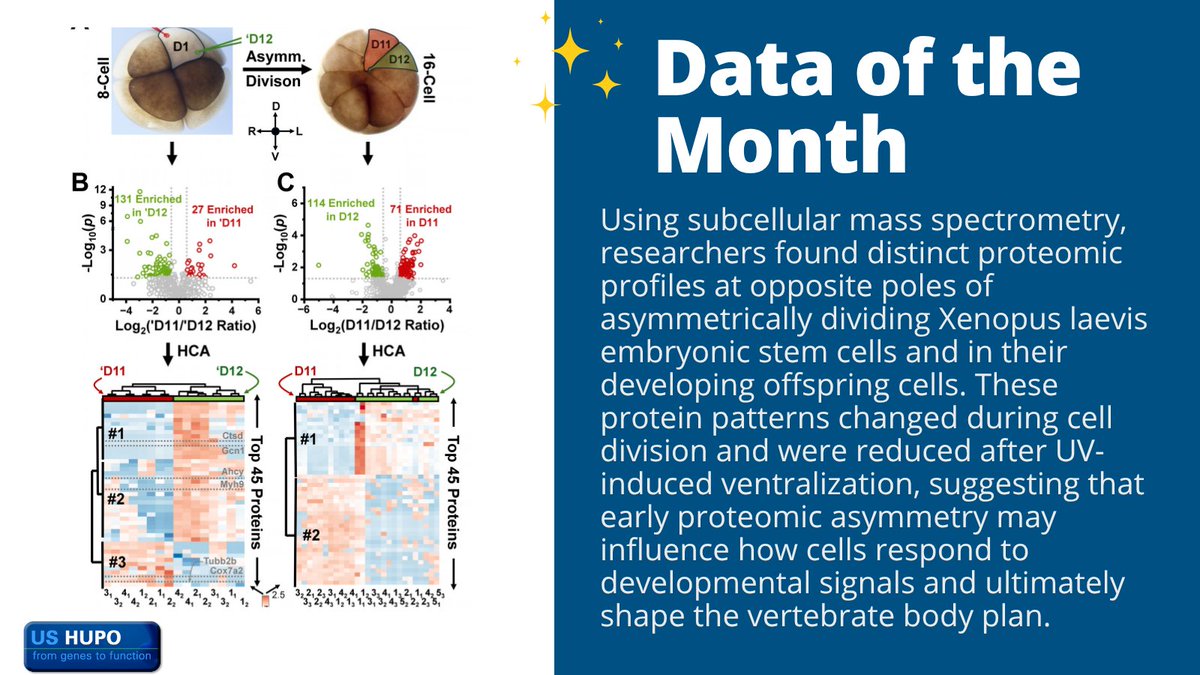
🔬 Data of the Month!
Using subcellular mass spectrometry, researchers found distinct proteomic profiles at opposite poles of dividing Xenopus laevis embryonic stem cells—differences that may help shape how daughter cells respond to developmental signals.
#USHUPO#PROTEOMICS
🏆 Two Weeks Left to Nominate a Proteomics Leader!
There are just two weeks left to submit a nomination for a US HUPO Association Award!
✨ Know someone who deserves recognition? Nominate them today!
📅 Deadline: October 2, 2026
🔗 https://t.co/duZsgCmcHV
@JiDuek15@jiri_nantl Díky za reakci. Když odhlédnu od toho že to chci já, což je vpravdě málo relevantní. Změnu zdanění tímto směrem v různé míře navrhují/podporují strany napříč politickým spektrem: https://t.co/EMmNa5rg2G
@jiri_nantl Jsem rád, že se v zásadě shodneme. V případě postupného navyšování, rozumné progresi, bonusu za využívání a malusu za nevyužívání/chátrání žádný zásadní problém nevidím. Ano, nespasí to rozpočet příští rok, ale za deset let už by to podstatný efekt mít mohlo.
Why do drug makers (biotech, pharma) issue press releases on the outcomes of clinical trials before publication and without including substantive data?
This is a question — more often a complaint — I see a lot. Merck and Moderna with the mRNA cancer “vaccine” and Novartis with the lp(a) study are recent examples. Let me try to explain:
1. These are publicly traded companies, regulated by the SEC. As such, they are required to promptly disclose information to shareholders and the public that is “material” to the business. Bottom line: “Oh shit” news — good and bad — that affects the company and the stock price needs to be publicly disclosed quickly. Management cant sit on it. (And yes, there are exceptions to all rules.)
2. The amount of information about study outcomes disclosed in press releases varies. It’s frustrating when a company says, “Drug X achieved the primary endpoint” without disclosing numbers. Why is this done? Often, it’s to preserve data for presentation at a medical meeting.
Cardiology meetings like ACC and ESC, for instance, have strict rules. If you announce data in a press release, you can’t present at their meetings. Cancer meetings like ASCO are also strict. Once upon a time, even a bland press release would violate medical meetings disclosure rules. It took awhile before they understood drug makers have SEC regulations that must be followed.
3. Study papers in journals take time to compile, write, submit, go through peer review and the get published, etc. Do you really want to wait that long to know how a drug study turned out?
4. Thankfully, the dissemination of study results, like life, is ruled by compromise. In my experience, a majority of press releases announcing material study results contain some top-line data, enough to quantify the outcome. We may have to wait for a medical meeting months later for important details, but the press release gives us enough data to answer basic questions.
5. Who decides which data to disclose promptly and which to withhold for later? The lawyers, of course. Always the lawyers. But also, company scientists and management. It depends on type of study, the indication, potential competition and the venue (medical meetings) where data will be later presented. At a minimum, you like to see data on the primary endpoint, maybe a key secondary endpoint(s) and safety. Rules vary. The rules work and they can also be abused. Some companies are transparent and honest, others not so much. Like life.
5A. I would prefer even a tiny sliver of data in a press release over no data at all. I think we all would. But when the latter happens, there are usually legit reasons for it that go beyond, “[Drug company] is hiding or misleading…”
6. It’s not a perfect system, but in my experience it works well enough to satisfy investors and scientists.
7. If you’ve read all the way down here, thank you! I now welcome all your comments about why I’m an idiot and wrong. 😑
@konvalinka_jan@obradam@DunekObecny Z informací v té otázce není základní/esenciální nic. Jediná relevantní znalost pro současný svět já existence Shakespeara a Kafky a velice hrubá znalost jejich díla. Časová linka je naprosto irelevantní a věc odborníků.
Gloves are off!
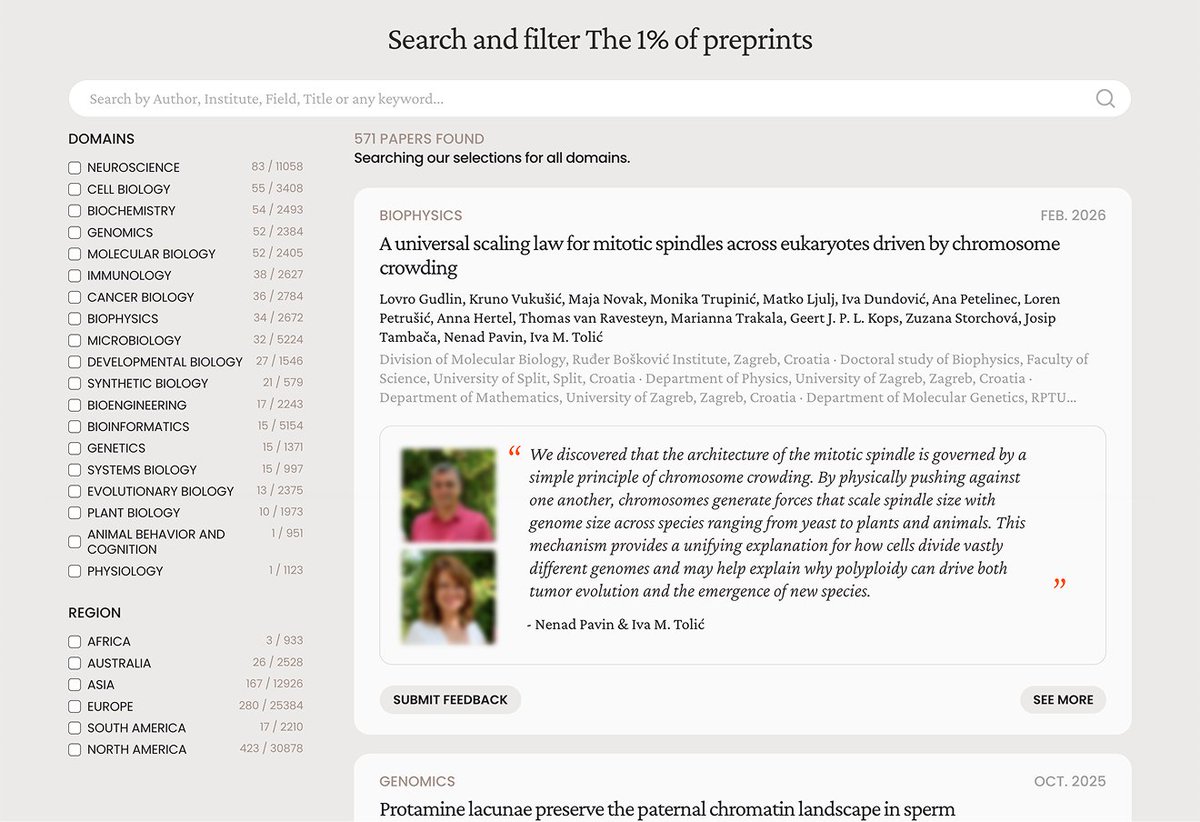
TODAY WE RELEASE THE 1%
A list of the year’s very best papers.
When we launched QED a little over half a year ago, I told you that our mission is to revolutionize scientific publishing. Revolutions don’t happen overnight… or maybe they do? When new technologies enable it? Time to put the power back in the scientists’ hands, not the journals’. Many scientists are depressed, and think journals will stay the same forever, no matter how dysfunctional, but no, it’s happening. Sooner than most people (or committees, or universities) can imagine. Check this out:
When we released our AI review platform, it started a whole debate (and social media storm) on what it is that human reviewers can do that AI review still can’t. There are such things (and I’m happy about it), but the list is getting shorter and shorter. Numerous scientists already use QED to find gaps in their manuscripts and grants and to get constructive feedback that improves their experiments. And now, with your help, we take it to the next level.
Today we release reviews and scores for all the experimental Life Science pre-prints that came out last year: 57,455 manuscripts!! If we are being conservative, and estimate that it takes a minimum of 8 hours to review a paper (it takes longer), and if we agree that 3 reviewers are typically required to review every submission, then reviewing this amount of manuscripts would take human experts >1 MILLION REVIEWER HOURS… Assuming you can find so many experts (not going to happen!), and assuming the experts who agree would have no conflict of interest (ha!!).
QED did it. Then, we chose the best papers in every field (you can browse and search for key words), based on the originality and validity of the claims being made. We benchmarked our reviews not only using eventual journal selections but also by comparing our evaluations to those of human experts. When there were disagreements between the QED score and journal rank, we asked domain experts to judge who’s right (blindly), and they overwhelmingly sided with QED. No need to rely on glam journals anymore. No need to wait for two years to get their stamp of approval. No need to beg the reviewers, or worse, to write less ambitious papers, so no one would be upset. Want to find the most interesting papers in your field? Want to see where your paper stands? (“What’s your QED SCORE?”) Just visit https://t.co/hLxNq9nDMc!
One last thing: We want good science to be seen (you can read the winners’ comments about their selection and the stories behind their discoveries on our website). We plan to organize a conference where the first authors (yes, the first authors, not the PIs) will present their work. We are not here to shame anyone (papers that got low scores). The reviews of the best papers that we selected explain why QED’s AI thought these papers are especially good - what’s unique about them, what their strengths are, which conceptual leaps were made, and what cutting-edge tools were developed. However, on the QED Science site you can analyze any paper in private, it’s fully transparent, and see if there are any gaps and what’s missing. Run your paper to see how it can improve, and maybe next time your paper will reach the top (if it’s not there already).
Whether you’re on the 1% list of just have a good score that you want to share, on our website you can download the report and share it, for example with your tenure, promotion, or hiring committee, or with your university PR department. Forget about journal embargoes and waiting for it to be “accepted”. Improve your work until it’s good enough for YOU. You decide.
🧫 IOCB Prague is launching the first edition of the new international #DreamBiologyAward, a competition organised by @tomas_pluskal & @DMSabatini that offers young scientists the opportunity to present their ambitious scientific visions in the life sciences.
Applications can be submitted until July 31, 2026 at ► https://t.co/DmcONT8axm
#DBA #biology #IOCB #IOCBPrague #visionary #vision
1/6 This November, the Institute of Molecular Genetics, the leader in vertebrate functional genomics in Czechia, open a call for applications for its Director (starting 1.5. 2027). Whoever would seriously think about it, please, contact me. Thanks for RT.
https://t.co/AhtZQMaV3j
Great science can get support in unexpected places 👇 The beauty of #Prague meets #Science excellence in this exceptional award. Don't hesitate and apply 🚀
🧫 IOCB Prague is launching the first edition of the new international #DreamBiologyAward, a competition that offers young scientists from around the world the opportunity to present their ambitious scientific visions in the life sciences.
1/4
2027 US HUPO Association Awards — Nominations Now Open! 🏆
📅 Deadline: October 2, 2026
🔗 Details to nominate: https://t.co/A0r239F9vL
Celebrate excellence in proteomics — nominate a colleague or deserving leader today! 🙌
#USHUPO#2027Awards#Proteomics
@michaelsteidel1 I just don't think the ruler works. What's the application you need this for? Total protein and subsequent peptide injection normalization works the best IMHO. If neither is possible (low input projects) I'd include TIC sum in the data to capture input variability.