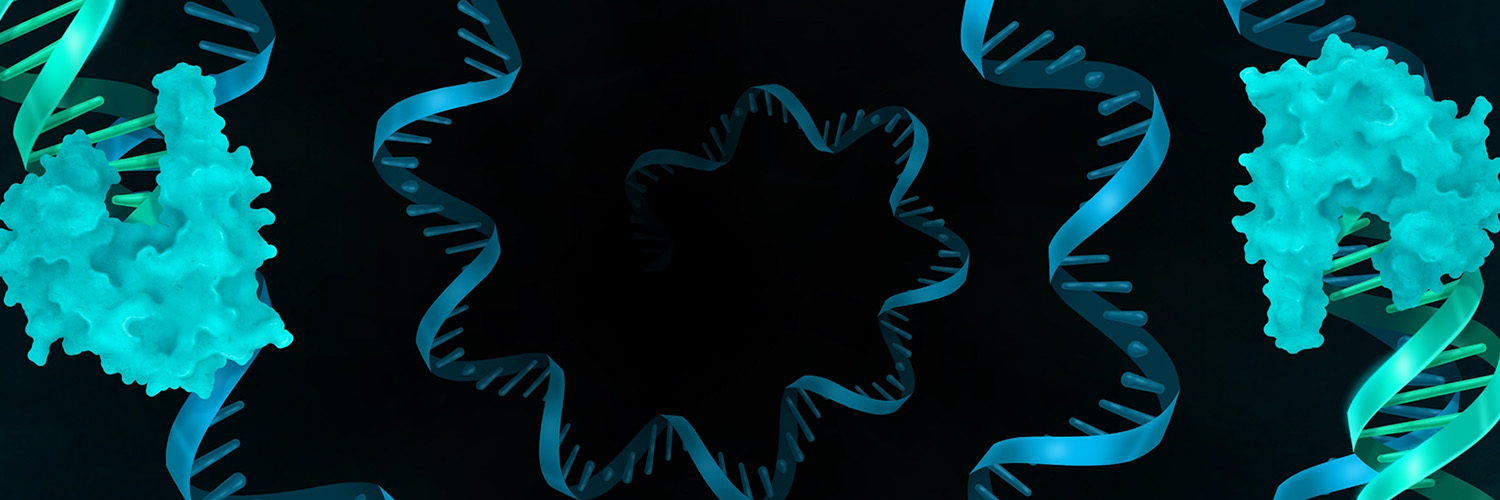
Human daytime color vision is enabled by three photoreceptor proteins called opsins that are each expressed in different cone cells in the retina.
Three studies determined structures and performed complementary modeling and biochemical experiments for human and nonhuman primate opsins, providing molecular insight into how visual pigment absorption and activation kinetics are tuned.
Learn more this week in Science: https://t.co/NOrVC45g5Y
In 2023, researchers in a deep-sea submersible west of Australia came across several whale skeletons 2400 meters deeper than had ever been described.
As the expedition continued, the scientists found an unprecedented abundance of skeletons—the biggest, deepest, and oldest collection ever seen on the sea floor.
Learn more: https://t.co/erashDTYrQ @NewsfromScience
The relevance of the gut microbiome, the community of microorganisms living in the digestive tract, to human health is a topic of intense interest. However, among the numerous benevolent bacteria living in the gut, there are some species that are harmful to humans.
For example, certain strains of Escherichia coli produce the genotoxin colibactin, which causes DNA damage and is linked with colon cancer. However, the colibactin molecule is complex and unstable, which has made it challenging to elucidate its chemical structure and the mechanism by which it damages DNA. In the culmination of years of research from multiple laboratories, researchers in a 2025 Science study revealed the structure of the active form of colibactin bound to DNA.
The findings go a long way toward explaining the mutation signatures associated with colibactin exposure and provide substantial insight into how colibactin contributes to colorectal carcinogenesis.
Learn more on #WorldMicrobiomeDay: https://t.co/G8OjpqSVGy
Neanderthals survived for hundreds of thousands of years in Eurasia, enduring ice ages and eking out a hardscrabble living hunting woolly mammoths and rhinoceroses and harvesting edible grasses, tubers, and legumes. Why they ultimately perished has long been a mystery.
New research appears to strike out a leading hypothesis: that they succumbed to harmful mutations brought on by inbreeding within tiny, isolated populations.
Analyzing 27 high-quality Neanderthal genomes from Western Europe, researchers find that at the tail end of their existence approximately 45,000 years ago, our close evolutionary cousins were genetically healthy and appear to have lived in large, well-connected groups.
Learn more: https://t.co/D7y2cflbAi @NewsfromScience
Although the protein CDH1 usually acts as a tumor suppressor, counterintuitive findings in @SciSignal suggest it also correlates with poorer outcomes in patients with a form of #KidneyCancer and may act as a marker of immune activity. https://t.co/TcaTxoSaw0
Every few minutes, a dragonfly dives into water and takes off again, turning several forward somersaults as it ascends.
The purpose of the behavior? The quick dip cools the insect down, and the loop-the-loops help it dry off by flicking away the water.
Learn more during #InsectWeek: https://t.co/oC1GCIGu6V
Max Planck, a legendary pioneer of quantum mechanics and the 1918 Nobel laureate in physics, had two papers retracted decades after his death for reasons that remain mysterious.
Learn more: https://t.co/ikJ461Chcb @NewsfromScience
Seafaring turtles navigate by moving in one direction at a time during ocean migrations, even when doing so causes them to go off course for a while, new research suggests.
Learn more in @ScienceAdvances: https://t.co/EzZf2h6vDa
Out now in @ScienceMagazine
Ubiquitin-like proteins NEDD8 and SUMO2 control epithelial homeostasis, regeneration, and inflammation | Science https://t.co/xxS14RAXRo
The results of a 2024 study are among a growing number suggesting the heartbeat quietly shapes how the brain processes information.
These findings also raise the uncomfortable possibility that internal rhythms frequently treated as background noise may be subtly skewing results in neuroscience experiments.
Some researchers are now warning about the issue, and a paper published in April lays out guidelines for standardizing how studies should document and account for these internal rhythms.
Learn more: https://t.co/hBQhFEb3KL @NewsfromScience
An enzyme named DGK-zeta is critical for the production of antibodies and the formation of memory B cells, according to new @SciSignal work in vitro and in vivo that suggests the enzyme serves as a linchpin of the #Bcell immune response. https://t.co/tYBcGB9LxU
On the latest #SciencePodcast🎙️, ScienceInsider editor Jocelyn Kaiser breaks down the biggest science policy stories from the past month, including a proposal from President Donald Trump’s administration to increase the involvement of politicians in grantmaking.
🎧 Listen here: https://t.co/jikCWyRPWQ
Like a stadium full of sports fans doing the wave, neurons coordinate their electrical signals in rhythmic patterns that sweep across the cortex, the brain’s outermost layer.
Recent studies in humans and animals have shown these patterns, called traveling waves, can take on complex shapes, among them a rotating spiral that has been observed during deep sleep, memory retrieval, and other brain processes.
A new study has now captured the fast-spinning waves spanning whole brains, offering clues to how they’re organized and what they might do.
Learn more: https://t.co/96amfrLUI5 @NewsfromScience
Iberian harvester ants are the only known organism that propagates two species by itself, according to research from 2025.
Learn more during #InsectWeek: https://t.co/B03IfiywuN
A new @SciImmunology study in mice showcases a vaccine adjuvant that can induce protective immunity against herpes simplex virus 2 (HSV-2) infections without causing excessive local inflammation. https://t.co/GF1STUWvUa
New in Science: Researchers in Ukraine used camera traps to investigate the impact of armed conflict on wildlife, finding that mammal species responded through behavioral adjustments, including reduced activity during the night.
The results provide valuable insights into the immediate responses of wildlife to such events and underscore the potential of camera trapping to quantify the ecological effects of war. https://t.co/kzJ5J3rlY4