I've learned that trust is the currency of any fast-moving and fun startup journey.
So I'm excited to team up again with my good friend and the incredible product mind, @marbemac.
We'll be sharing more as we all reimagine and absorb how software is built and consumed.
Finally. It's time. A decade after starting my first company (wow time flies), I'm working on something new!
The new company is Datanaut, and while it's too early to share specifics, I'm excited to work with @scottfaust43 and our small team to re-imagine how we as humans interface with AI, each other, and the treasure trove of data that is fragmented across the apps we use every day.
I'm not much of a sharer, but this go-around I'm committed to building more in public. Expect to see regular posts from me on things like ui / ux design, agentic patterns, running a lean company, and more in the weeds technical stuff - basically a log of the real-world challenges that we're faced with every day as we build Datanaut.
I can't wait to share more. Most importantly, I can't wait to start shipping again 🚀.
Building is so fun when each person you're working with passes the 2 tests.
First: Do you leave every interaction with more energy than you started with?
Second: Can each person take a thought or piece of work somewhere you may not have seen yourself?
A good day almost always starts here.
No checking phone for 20 minutes. Allow space to see what emerges.
Write everything that needs to get done.
Identify the thing you're dreading most, the one with the highest impact.
Go back through the list and mark everything that overlaps with it.
Do the hard thing and pull everything connected to it along for the ride.
On the days I actually stick to this, the whole day opens up.
An unlock for our remote team has been to have each person have their own 'brain-channel' in Slack.
The whole team can see it. No agenda, no expectations to respond, just unfiltered thoughts posted freely.
A dedicated space removes the hesitation and encourages posting. Thoughts that would have stayed private are now visible to everyone.
In the current moment, when everything is moving so fast, the teams that share openly and build on each other's insights and ideas will have a real edge.
Saw this idea somewhere and can't remember who to credit.
Agents are very good at the summary work. Surfacing the details, synthesizing the outputs, and providing you with an aggregated update.
But there's something that happens when you double-click into the data yourself. Or see how a team member narrates the numbers. Or listen to how somebody prioritizes the work.
You find out if people actually understand what they're looking at. If they understand the most meaningful inputs. You see the gaps in the org that never make it into the Cliff Notes version.
There will be an emergent skill in knowing where to hold back on handing it off to AI.
Met with a buddy who switched his weekly leadership meeting from weekly to monthly.
I asked him, "Would a sports team play a game, and then wait a month to review the game tape?"
Of course not.
The problem is that these weekly meetings are often poorly run.
If objectives exist, they are not updated in advance and commented on by others.
The team is giving status updates vs problem solving.
The loudest person gets the mic.
All objectives are normalized vs. supporting the team member with the clearest objective on fire and most impactful to the company.
A data question leads to a 30-minute discussion that veers off into a rabbit hole.
Transactional, week-to-week tasks are heavily discussed versus a brief 'yes/no' agenda section.
If done right, the weekly meeting is the most important hour of the week and the highest growth lever of the company.
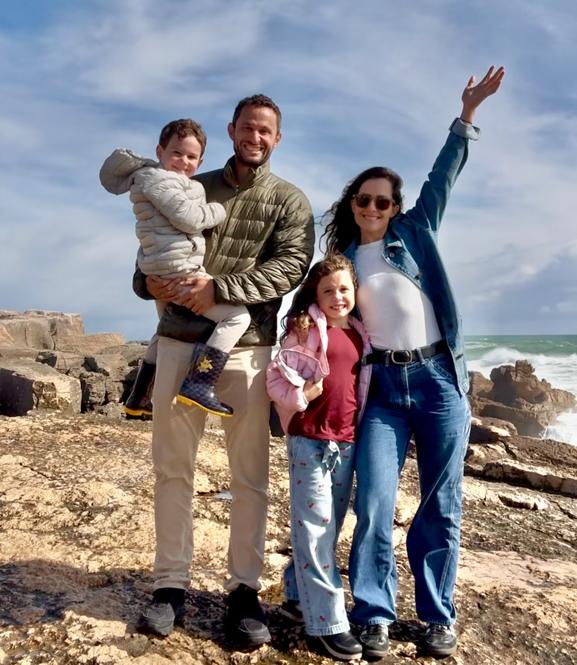
The family is back in Austin after a year on the move — 13 countries, 23 flights, 44 Airbnbs, and 16 hotels.
I pulled together my Top 10 Reflections from the journey (link in comments).
Excited for the shift into product building mode with Datanaut.
There are many amazing nuggets in this conversation, but one stood out, and I see it a bit differently.
@danshipper makes an interesting point: junior folks will enter the workforce with management skills, having grown up managing fleets of AI agents and navigating the nuances among the models and tools.
At first, it landed.
But the more I thought about it, the more it felt off to equate managing agents with managing people.
AI fluency and agent integration are fast becoming essential skills, but that does not mean a twenty-something knows how to manage.
Management will always be deeply human.
It's about recognizing patterns in hiring and retaining the best talent. It’s about getting more out of people than they see in themselves. It’s about navigating priority tradeoffs that will upset key team members. It is built upon thousands of human interactions, resulting in hundreds of lessons learned from successes and failures.
Perhaps better to distinguish this emerging skill as ‘coordination’ vs. ‘management’.
Inside @Every: The AI-native startup with 5 products, 7-figure revenue, and 100% AI-written code
With just 15 people, @Every publishes a daily AI newsletter, ships AI products, and operates a million-dollar-a-year consulting arm—all while their engineers write virtually zero code. It’s the most radical example of an AI-first company, and @danshipper (CEO) is a prolific writer who has become a leading voice on how AI is transforming the way we live and work.
In this conversation, we discuss:
🔸 Why every company needs an “AI operations lead”
🔸 The most underrated AI tool for non-programmers
🔸 Why Dan thinks AI will reshore jobs to the U.S.
🔸 An inside look at Every’s AI-first workflow
🔸 How Dan’s team uses an arsenal of AI agents (Claude, Codex, “Friday,” “Charlie”) in parallel, treating each AI like a specialist with unique strengths
🔸 Why generalists will thrive in an AI-first world, as rigid job titles blur and everyone becomes a “manager” of AI tools
🔸 Dan’s playbook for making any company AI-first—from the CEO setting the example, to hosting internal prompt-sharing sessions, to upskilling teams on AI tools
🔸 Much more
Listen now 👇
• YouTube: https://t.co/to24uRPmI8
• Spotify: https://t.co/Vf1ILfwcz3
• Apple: https://t.co/KMrI4LzbDr
Thank you to our wonderful sponsors for supporting the podcast:
🏆 @coderabbitai—Cut code review time and bugs in half. Instantly: https://t.co/6mf1VbWhq0
🏆 @DeveloperXM—A platform for measuring and improving developer productivity: https://t.co/INhXcJ685b
🏆 @posthog—How developers build successful products: https://t.co/TVhv0LwyBQ
All the talk is about AI boosting productivity, but the reality is that most businesses have become more efficient through increased focus and accountability.
Orgs woke up and realized they could achieve 2-3x results with half the people.
Headcount reduction + AI inaction being indefensible = lots of cash on hand -> primed to invest seriously in AI.
This makes the landscape ripe for startups integrating AI across an organization.
If you're an incumbent SaaS, it's a scary place. You're being consolidated, threatened by a cheaper/better way, and have to innovate away from your historically predictable per-seat pricing growth.
If building something new, you're now always in the foundation model provider's roadmap. BUT, there is freed-up, aggressive budget with decision makers game to chat.
Fun, new times.
@Karthicvasu15 The big surprise I see with lots of companies is not realizing they have a high annual plan cohort about to churn. Would want to easily break down by engagement and plan type.
@ProductRambler It'll be clear in your engagement to word-of-mouth loop. If both are high, you should have PMF. If not, then no, and always have to feed the marketing machine.
@quinnsync Staying lean for as long as possible. Realizing that most of the time, adding that one missing person introduces more coordination and execution risk.