A reminder of what Nigel Farage had to say when a police officer abused his authority to abduct, rape and murder Sarah Everard. My heart goes out to the Nowak family whose wishes have been so disrespected.
🚨🚨🚨Trump on Truth Social: I had a very productive call with Prime Minister Bibi Netanyahu, of Israel, and there will be no Troops going to Beirut, and any Troops that are on their way, have already been turned back. Likewise, through highly placed Representatives, I had a very good call with Hezbollah, and they agreed that all shooting will stop — That Israel will not attack them, and they will not attack Israel
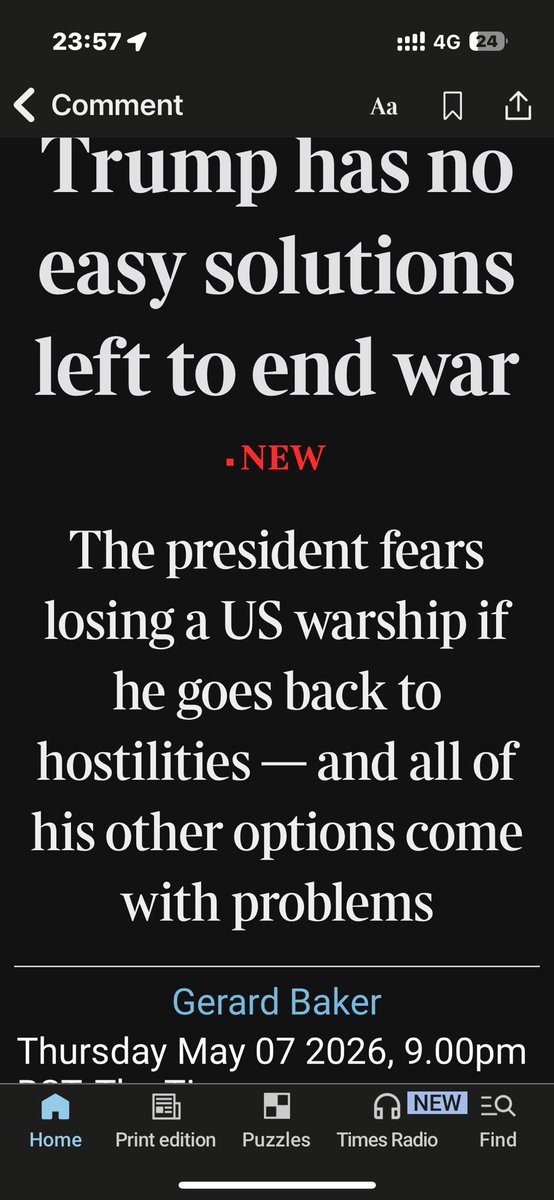
“Never, never, never believe any war will be smooth or easy, or that anyone who embarks on the strange voyage can measure the tides and hurricanes he will encounter. The statesman who yields to war fever must realize that once the signal is given, he is no longer the master of policy but the slave of unforeseeable and uncontrollable events.” Churchill, My Early Life
There were rumours of this from the moment his house was bombed to “jailbreak” him. Most dismissed it as absurd, bc it would have been an absurd plan. That the US was entertaining it is further evidence of the reckless absurdity of a plan that also included an armed rebellion by Kurds. And that regime change was indeed the goal.
The Iran War "strategy" looks even crazier: The @nytimes reports that the US plan was to put Mahmoud Ahmadinejad in as leader -- yes, the same Ahmadinejad who was both extremist and a bit crazy. I interviewed Ahmadinejad when he was Iran's president and can't imagine the why the US would possibly support him. And then in any case, the air strike that was supposed to free him from house arrest ended up injuring him.... https://t.co/3x0ID3fXYQ
“Entranced by their own capacity for violence, they thought their power to effect their will was limitless.”Athens or Washington? Trump and His Advisors Clearly Haven’t Actually Read Thucydides https://t.co/gAZbMl9kGe
@MrhappyWebster@salltweets Radical feminism is not part of "wokeness", that's why they call us Terfs. Look it up if you need to. Radical feminists do not want men in their spaces anymore than any other woman does.
“Miss Grover left the court without making any comment. She later posted on social media saying she was “absolutely devastated” & that women were being discriminated against.
… I also said, “we will all wake up tomorrow & men will still not be women.” An important point.
#Iran elevates its partnership with #China
🔹Mohammad Bagher Ghalibaf, the speaker of Iran’s parliament, has reportedly been appointed as the country’s special representative for China affairs.
🔹According to Iranian reports, the appointment was made at the suggestion of the president and approved by Supreme Leader Mojtaba Khamenei.
🔹The exact procedure is less important than the appointment itself, because Ghalibaf is widely regarded as more influential than the president and is considered part of the Islamic Republic’s core decision-making circle.
🔹The appointment clearly reflects the Islamic Republic’s strategic orientation in the post-war era and its determination to deepen ties with non-Western powers, particularly China.
🔹For years, there has been criticism within Iran’s strategic community that Tehran has failed to fully capitalize on the potential of its relationship with Beijing.
🔹One argument frequently advanced by analysts is that China has been prepared to elevate cooperation, but that it requires a clearly empowered interlocutor capable of managing the relationship at the highest level. In this view, the Foreign Ministry has not been successful in extracting the full strategic potential of ties with China.
🔹Iran has previously appointed special representatives for China affairs. Ali Larijani, for example, played a central role in negotiating and finalizing the 25-year strategic partnership agreement between Tehran and Beijing.
🔹However, given Ghalibaf’s standing within the Islamic Republic’s post-war political structure, this latest appointment carries much greater significance. In effect, a figure from the very top tier of the system is now directly overseeing relations with China.
🔹The timing is also notable, as the appointment comes shortly after Trump’s visit to China, which appears not to have produced any concrete results in terms of convincing Beijing to pressure Iran into altering its broader strategic course. On the Iranian side, China’s criticism of the U.S.-backed draft resolution at the U.N. Security Council was viewed as a particularly positive development.
🔹Overall, there is a growing sense in Tehran that conditions are now favorable for a further expansion of ties with China. At the same time, this development points to the continued marginalization of Iran’s formal diplomatic apparatus – especially the Foreign Ministry – in the management of key strategic relationships.
A non-aggression pact between #Iran and Saudi Arabia?
🔹The Financial Times report on Saudi Arabia’s proposal for a regional “non-aggression pact” between Iran and neighboring states is not merely a temporary diplomatic initiative. Rather, it signals Riyadh’s attempt to redefine the Middle East’s security architecture in the aftermath of the U.S./Israeli war on Iran.
🔹The significance of this idea lies less in the pact itself – after all, this is not the first time such an idea is being discussed – than in the strategic logic behind it. Saudi Arabia appears to have concluded that the perpetual cycle of deterrence, limited strikes, and proxy warfare can no longer be managed solely through reliance on the American security umbrella.
🔹The Saudis’ reference to the 1970s “Helsinki process” is also far from accidental. That model was designed precisely to manage competition between hostile blocs, not to fully resolve ideological and geopolitical disputes. In other words, the objective is not to eliminate tensions, but to contain them.
🔹In effect, Riyadh now seems to be moving toward a form of implicit acceptance of a new regional balance of power, in which Iran, despite the heavy costs of the recent war, remains an indispensable actor in the region’s security equations.
🔹This shift also reflects a broader change in the Saudi conception of “stability.” For years, many Arab states defined regional security in terms of containing or weakening Iran’s regional influence. Now, however, the primary priority appears to be preventing Iran-Israel conflict from escalating into a permanent regional war.
🔹From this perspective, the proposal for a non-aggression pact should be understood as part of the broader trend toward the “regionalization” of Persian Gulf security. This process began with the China-mediated Iran-Saudi rapprochement in 2023 and may now enter a more complex phase, i.e., the establishment of rules of conduct for crisis management.
🔹At the same time, comparisons between the Middle East and Cold War-era Europe have serious limitations. Unlike Europe, the region lacks durable institutional structures, clear deterrence lines, and even a minimal consensus over the foundations of a regional security order. Moreover, the role of non-state actors and multilayered conflicts makes the equation far more complex.
🔹More importantly, any such initiative would remain inherently fragile without some degree of mutual understanding between Iran and Israel regarding the acceptable limits of escalation. Any new direct confrontation could easily destroy the entire process of regional de-escalation.
🔹At the same time, the proposal itself demonstrates that the Arab states of the Persian Gulf are increasingly concerned about the spillover of Iran-Israel rivalry into their energy infrastructure, trade corridors, and economic development projects. This concern has now become a major driver of regional policy.
🔹For this reason, even if the idea of a “non-aggression pact” never materializes into a formal agreement, the very fact that it has been proposed carries an important message, that a significant part of the Arab world is no longer seeking to exclude Iran from the region’s security equations, but rather to make patterns of interaction with Tehran more predictable.
A non-aggression pact between #Iran and Saudi Arabia?
🔹The Financial Times report on Saudi Arabia’s proposal for a regional “non-aggression pact” between Iran and neighboring states is not merely a temporary diplomatic initiative. Rather, it signals Riyadh’s attempt to redefine the Middle East’s security architecture in the aftermath of the U.S./Israeli war on Iran.
🔹The significance of this idea lies less in the pact itself – after all, this is not the first time such an idea is being discussed – than in the strategic logic behind it. Saudi Arabia appears to have concluded that the perpetual cycle of deterrence, limited strikes, and proxy warfare can no longer be managed solely through reliance on the American security umbrella.
🔹The Saudis’ reference to the 1970s “Helsinki process” is also far from accidental. That model was designed precisely to manage competition between hostile blocs, not to fully resolve ideological and geopolitical disputes. In other words, the objective is not to eliminate tensions, but to contain them.
🔹In effect, Riyadh now seems to be moving toward a form of implicit acceptance of a new regional balance of power, in which Iran, despite the heavy costs of the recent war, remains an indispensable actor in the region’s security equations.
🔹This shift also reflects a broader change in the Saudi conception of “stability.” For years, many Arab states defined regional security in terms of containing or weakening Iran’s regional influence. Now, however, the primary priority appears to be preventing Iran-Israel conflict from escalating into a permanent regional war.
🔹From this perspective, the proposal for a non-aggression pact should be understood as part of the broader trend toward the “regionalization” of Persian Gulf security. This process began with the China-mediated Iran-Saudi rapprochement in 2023 and may now enter a more complex phase, i.e., the establishment of rules of conduct for crisis management.
🔹At the same time, comparisons between the Middle East and Cold War-era Europe have serious limitations. Unlike Europe, the region lacks durable institutional structures, clear deterrence lines, and even a minimal consensus over the foundations of a regional security order. Moreover, the role of non-state actors and multilayered conflicts makes the equation far more complex.
🔹More importantly, any such initiative would remain inherently fragile without some degree of mutual understanding between Iran and Israel regarding the acceptable limits of escalation. Any new direct confrontation could easily destroy the entire process of regional de-escalation.
🔹At the same time, the proposal itself demonstrates that the Arab states of the Persian Gulf are increasingly concerned about the spillover of Iran-Israel rivalry into their energy infrastructure, trade corridors, and economic development projects. This concern has now become a major driver of regional policy.
🔹For this reason, even if the idea of a “non-aggression pact” never materializes into a formal agreement, the very fact that it has been proposed carries an important message, that a significant part of the Arab world is no longer seeking to exclude Iran from the region’s security equations, but rather to make patterns of interaction with Tehran more predictable.
There it is at last, the admission that it was Ukraine’s wish to join the EU that led Putin to invade - nothing to do with NATO. Always blindingly obvious but denied for years by anti-European Putin apologists in Europe including Farage and Johnson in Britain
This (https://t.co/vsbyqxllFG) is, by any measure, an extraordinary article: Prince Turki Al-Faisal is a son of King Faisal and ran Saudi intelligence (the GID) for over two decades.
He is writing that the plan of "the US-Israeli war on Iran" was "to ignite war between us [Saudi Arabia] and Iran," so that Israel could "impose its will on the region and remained the only actor in our surroundings."
This further confirms that, contrary to what many have asserted, the notion that the Saudis were quietly backing the war on Iran was a myth (alongside the recent fact the Saudis denied the U.S. access to its bases and airspace: https://t.co/Q5xiUT7rCA).
From the horse's mouth they're literally saying it was as much a war on them as it was on Iran!
Pretty crazy when you think about it: this is Saudi Arabia saying that their real enemy in this war was the U.S. and Israel. Hard to overstate how significant a rupture this represents.
Now of course they could be saying so because, seeing how the war turned out, they're trying to retroactively position themselves on the winning side (at least strategically, by saying they didn't take the bait), or trying to justify domestically why they absorbed hits from Iran without retaliating.
And, of course, it's not like they're presenting Iran as some sort of ally here: Prince Turki explicitly calls them a "neighbor" that caused "pains."
But still, the end result remains: the Saudi establishment is now committing, on the record and in plain language, to a framing in which, while Iran is a "painful neighbor", the U.S. and Israel represent the deeper strategic threat, having tried to engineer their destruction.
If you had any lingering doubt that this war accelerated the collapse of U.S. influence in the region, this should settle it.
The Fantasy That War With Iran Will Bring Saudi-Israeli Normalization
By now, a familiar argument has taken hold in parts of the Israeli and American policy conversation: that a sustained confrontation with Iran, or even the collapse of the Iranian regime, could pave the way for normalization between Israel and Saudi Arabia. That assumption misunderstands today’s Middle East.
Anyone advancing this theory should carefully read the recent remarks and writings of Prince Turki Al-Faisal, the former Saudi intelligence chief and one of the kingdom’s most influential foreign policy voices. His message reflects a broader regional consensus that many in Israel continue to ignore: normalization with Saudi Arabia will not happen without meaningful progress on the Palestinian issue.
For Crown Prince Mohammed bin Salman, regardless whay he thuks about the Palestinian in private, the issue is not merely tactical. As the aspiring leader of the Sunni Arab world, he cannot politically or strategically afford to abandon the Palestinian cause. No regional realignment against Iran can erase that reality. But there is an even deeper shift underway across the Gulf.
Increasingly, many Gulf states view Israel not simply as a potential partner against Iran, but also as a source of regional instability in its own right. Following Israel’s strike in Qatar, concerns about Israeli unpredictability and escalation have intensified in several Gulf capitals. Quietly but unmistakably, the perception is growing that Israel can be as destabilizing to regional order as Iran itself.
This explains why even a dramatic weakening, or collapse, of the Iranian regime would not automatically produce a wave of normalization agreements. Saudi Arabia, Qatar, and Oman each prioritize regional stability above ideological alignment. None is likely to embrace open normalization with Israel while the Palestinian issue remains unresolved and regional tensions continue to escalate.
Israeli policymakers often treat the Palestinian issue as secondary to the broader strategic contest with Iran. But throughout much of the Arab and Muslim world, the opposite remains true. The Palestinian question is still widely viewed as the region’s central unresolved conflict, one that Iran continues to exploit to justify its regional interventions and revolutionary narrative.
Ignoring that reality does not weaken Iran’s narrative; it strengthens it.
More importantly, movement on the Palestinian track would yield strategic benefits far beyond Saudi normalization. It could help repair and stabilize Israel’s increasingly strained relationships with Egypt and Jordan, two countries whose peace agreements with Israel remain pillars of regional security but whose public opinion has grown sharply more hostile in recent years.
The lesson is straightforward: military confrontation with Iran is not a substitute for diplomacy on the Palestinian issue. It’s also worth noting that the UAE’s historic and brave decision to normalize relations with Israel was tied to Israel’s commitment to suspend plans to annex parts of the West Bank, despite claims by some Israeli officials at the time that the agreement represented “peace for peace” alone.
If Israeli leaders genuinely seek long-term regional integration, they must stop chasing the illusion that geopolitics alone can bypass the Palestinian question. The road to normalization still runs through Ramallah far more than through Tehran.
#IranWar
NEW: US military just carried out strikes on Iran’s Qeshm Port and Bandar Abbas: Senior US official tells me, but this is NOT a restarting of the war.
MORE
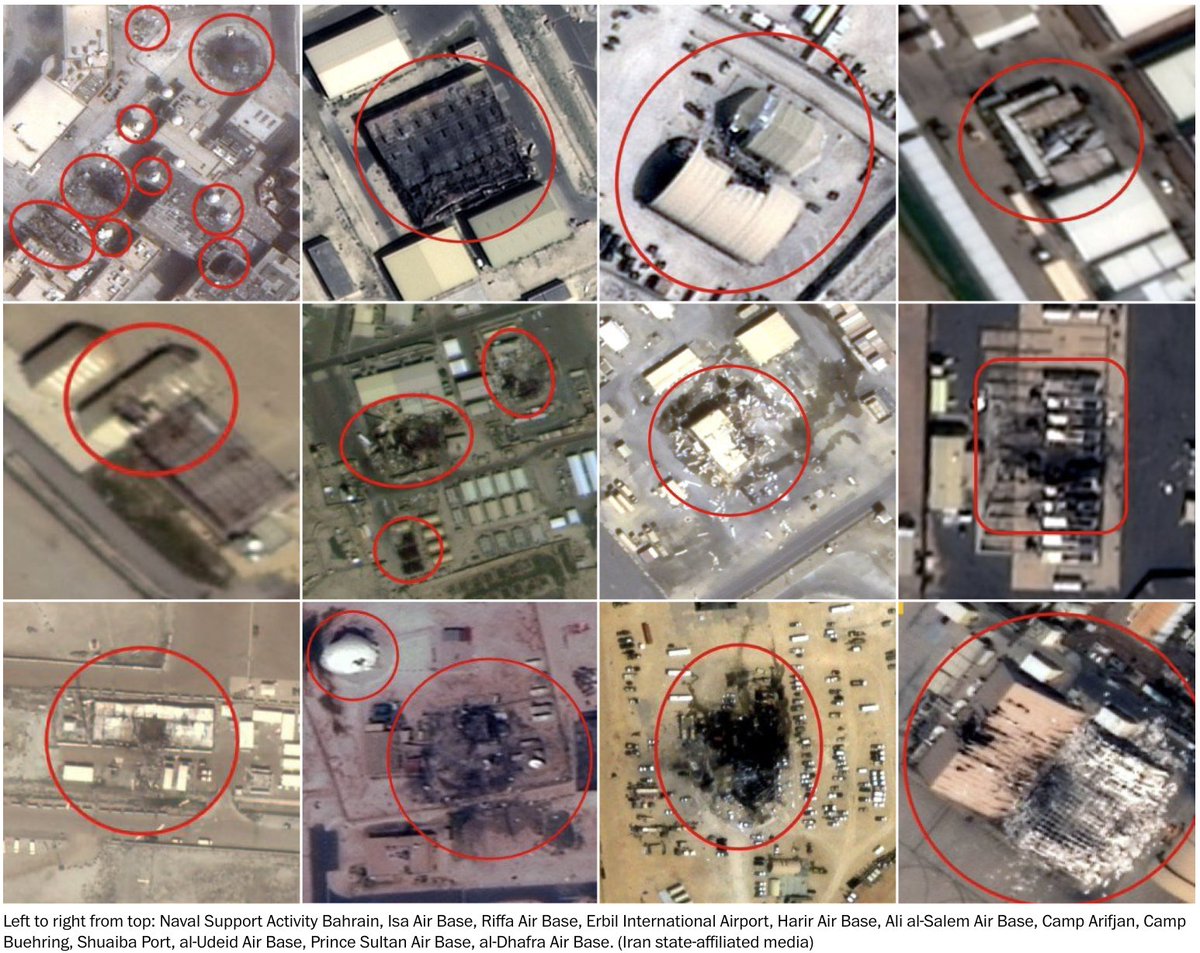
New: A Washington Post satellite imagery review reveals that Iran has caused far more damage to US military sites than previously reported.
Amid a US imagery blackout, Iran has released more than 100 images of strikes on US bases.
We analyzed them: https://t.co/r68Qpki0TG