Links between human and machine vision. System identification from large neurodata via neural networks. #NeuroAI#DeepLearning#Neuroscience. Opinions my own.
1/5 Over a decade of comparing deep neural networks to the human brain—but what have we actually learned? Our new @TrendsCognSci Feature Review synthesizes a decade of brain–DNN comparisons, asking what they reveal about brain function across vision and language.
We have a new postdoc position to work on Neuro AI and human intracranial recording with Pierre Bourdillon and I:
Apply here: https://t.co/chkDzE5WLT
Lab info:
https://t.co/m0rf3OymVK
feel free to RT ;)
Excited to share our new dataset/preprint on JapanEEG. It consists of a 1000-hour multimodal EEG–EMG–audio dataset of Japanese speech production. We hope this open dataset will accelerate research on multimodal speech decoding with non-invasive neurotechnology.
https://t.co/gInwjUFAQ0
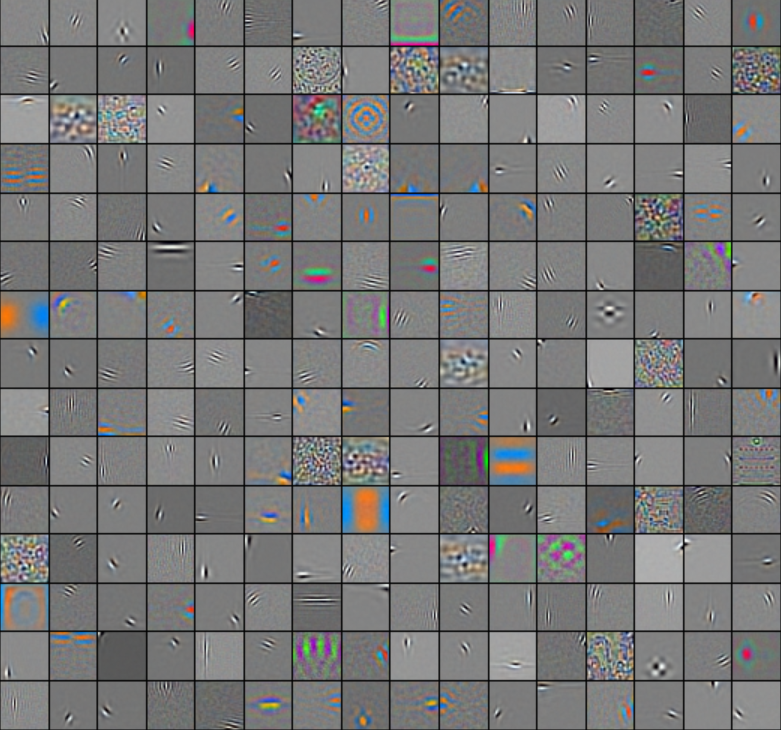
@RolandMemisevic@adampaulcoates Used this in encoding models to compare against video-induced brain activity. Worked quite well and even reached into mid-level visual areas. Interesting bit is that the learning is local and fully unsupervised, without backprop - one DNN part considered biologically implausible.
@RolandMemisevic From 2014, learned on video patches, based on Adam Coates' @adampaulcoates k-means method (i.e. unsupervised, https://t.co/V4pGAM9Tc7 ).
Feature Visualization Recovers Known Cortical Selectivity from TRIBE v2
Stuart Bladon, Brinnae Bent
https://t.co/wlFsNQzaqi [𝚚-𝚋𝚒𝚘.𝙽𝙲 𝚌𝚜.𝙻𝙶]
💬Code: https://t.co/mjVI0nj6LL
@DimitrisPapail About arXiv, even a physicist in my circle was recently surprised by the restrictions, on endorsements in this case. I get that their platform is probably getting flooded after LLMs came up, so this is likely just the painful learning phase.
@DimitrisPapail I‘ve seen some using Zenodo for preprints too lately. Unsure about this myself, but it is CERN-hosted and built as a long-term research archive. They assign DOIs, have very rich machine-readable metadata via OpenAIRE, and can easily be linked with GitHub and ORCID.
Announcing: a new interactive tool for a quick and simple start of encoding or encoding:
🧠 fMRI, EEG, MEG, iEEG, spikes… preprocessing
💬 text 🔊 audio ▶️ video 🏞️ image… embeddings
📦 pip install neuralset
🔍https://t.co/rHOZuvU2tk
#NeuroAI#OpenSource
I just read that some initial estimates based on discussions in the research community indicated that submission IDs for NeurIPS 2026 had surpassed 35,000 shortly before the deadline
@NeurIPSConf
Una implantación quirúrgica en la corteza visual permitió a un hombre ciego percibir la luz, movimientos y hasta letras grandes. La estimulación eléctrica del cerebro está abriendo un sinfín de posibilidades para la comunicación entre cabeza y cuerpo https://t.co/y29NPjaiu3
🔝Un implante en el cerebro permite recuperar la visión a un hombre ciego por una lesión en el nervio óptico
Científicos de la Universidad Miguel Hernández de Elche estimularon la corteza visual de Miguel Terol (que perdió la vista de forma repentina en el ojo derecho en 2018) hasta que logró percibir la luz, movimientos y hasta letras grandes
Vía @el_pais
https://t.co/CGdlr7EUaz
@UniversidadMH@IB_UMH@braincomms@GVAhOrihuela@NeuroEngin_UMH@mbiotingUMH #ceguera