AMD CEO Lisa Su just went after Nvidia's $4,000 AI box using a $1,499 machine the size of a lunchbox.
Holding it up on stage with one hand, she ran a model with 235 billion parameters live, with no data center, cloud or rented GPU behind it.
The surprise is the chip. Inside is AMD's Ryzen AI Max+ 395, which became the first x86 processor whose CPU and GPU draw from one shared pool of 128GB of memory. That one design choice lets a desktop handle models that once needed a server rack.
On Linux, 110GB of that pool can go to the GPU. An RTX 5090 offers 32GB. A 4090 offers 24GB. So this box has more than three times either card, in a case about as thick as a paperback.
The number that stunned the room: on DeepSeek R1 inference, the chip ran more than 3x faster than an Nvidia RTX 5080. A $1,499 desktop beating a $1,000 graphics card on real AI work. For a decade, Nvidia told the world that serious AI meant Nvidia hardware. AMD just made it a desktop item at half the cost.
Now the math. A heavy AI user today might pay for Claude Code Max ($200), ChatGPT Pro ($200), Cursor ($20) and Gemini ($20). That adds up to $5,280 a year. At that rate, the box covers its cost within months, then keeps running at no extra charge.
The setup: install Ollama, pull Qwen3 235B, and aim Claude Code at localhost. The interface stays the same. But nothing leaves the machine, there is no per-request bill, and no provider slows you down at 3am when you finally sit down to build.
This is where every AI subscription starts to look optional. Lawyers worry less about leaks to OpenAI. Developers stop staring at the token counter. Founders stop renting H100s for prototypes they abandon because of the bill.
Whoever gets there among the first thousand will own private AI consulting for the next two years.
If you're new here, @GeniusGTX is a gallery for the greatest minds in economics, psychology, and history. Follow along for more similar content.
Who wants more speech training data?
YODAS v3 is now available @huggingface
It’s 1.1M hours - the biggest audio dataset ever. And the first at this scale with stereo audio at 48kHz, with timestamped transcripts and translations. 100+ langs
https://t.co/KLS44NvDC5
CC-BY-3.0
Remote Control is now available in Research Preview for Max users, and coming soon to Pro users.
Run `claude rc` to get started.
Docs: https://t.co/mdW9AaC0zM
New in Claude Code: Remote Control.
Kick off a task in your terminal and pick it up from your phone while you take a walk or join a meeting.
Claude keeps running on your machine, and you can control the session from the Claude app or https://t.co/er6Blrr63e
Nano Banana 2 is your new workhorse image model ⚡️ Our SoTA image generation model is now faster and available at a lower cost.
Start building with these upgraded capabilities:
🍌 Enhanced world knowledge allows for generation of accurate, real-world visuals using images from web search, so users can create more accurate visuals
🍌 Crisp text rendering and in-image localization for translation across languages
🍌 Improved complex instruction following, new aspect ratios and configurable thinking levels give devs control over high-fidelity outputs
Google just dropped another banger 🤯
It’s called PaperBanana, a new tool that generates publication-ready academic illustrations directly from your methodology text.
100% Free.
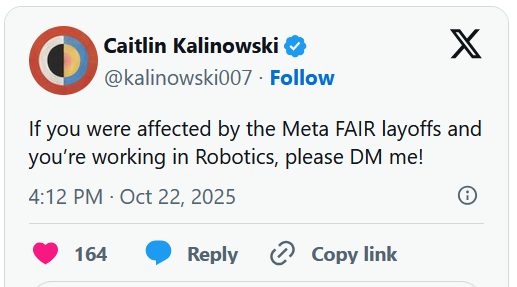
Meta is laying off about 600 employees within its artificial intelligence unit. The FAIR team, a group with a focus on embodied AI, is also impacted.
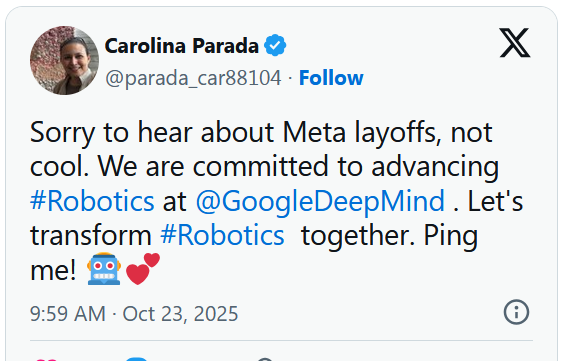
Google DeepMind, OpenAI and many others doing foundational work in robotics are hiring.
Today, we’re announcing a major breakthrough that marks a significant step forward in the world of quantum computing. For the first time in history, our teams at @GoogleQuantumAI demonstrated that a quantum computer can successfully run a verifiable algorithm, 13,000x faster than leading classical supercomputers.
This continues to build momentum on past quantum computing discoveries. Back in 2019, we proved a quantum computer could solve a problem that would take a classical computer thousands of years. Then in 2024, our new Willow chip solved a major issue in quantum error correction that challenged the field for nearly 30 years. Today’s breakthrough moves us closer to quantum computers that can drive discoveries in areas like medicine and materials science.
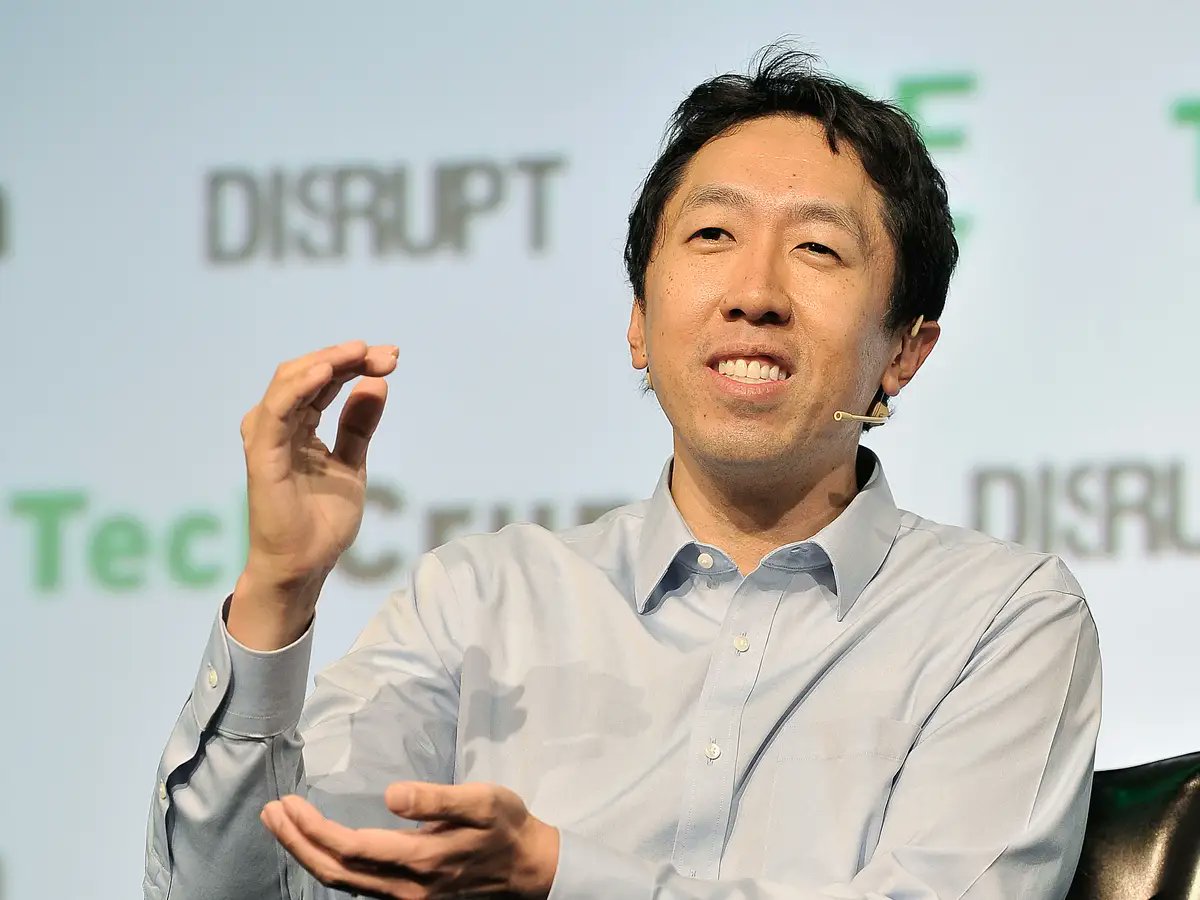
He predicted:
• The Deep Learning revolution (2008)
• The online education boom (2011)
• China's massive AI dominance (2014)
Now Andrew Ng revealed 5 opportunities that will create more millionaires than anything before.
Here's what you should know (& how to prepare): 🧵