A new 🔥 release from @screamingfrog with v24.0, including their official MCP! This is one of those AI + SEO updates that I find genuinely useful, because it can help reduce a lot of the repetitive manual work involved in pulling, exporting, segmenting, and combining crawl data with other sources.
Used alongside other SEO tools MCPs already available, like @Similarweb , @semrush , @seogets , Glippy, @ahrefs , etc. it opens the door to more practical workflows where you can easily integrate crawl, visibility, keyword, traffic, backlink, and competitive data faster.
For example:
✅ Segment crawl data at scale
✅ Compare technical issues with performance signals
✅ Combine different data sources without endless exports/imports
✅ Identify patterns that would otherwise take much longer to spot
✅ Spend more time validating, prioritizing, and deciding what to do next
That’s the part I’m interested in: not replacing the analysis, but making it less painful to get to the useful part of the analysis.
My only wish is that I didn’t have to burn so many credits across some of these tools to get the information I actually need 😅
And of course, the usual caveat: validate everything. The data still needs to be accurate, and the output needs to be checked. Especially when combining multiple sources or asking AI to interpret the results. I have trust issues, sorry.
But overall, this is a very useful direction for SEO workflows: better access to the data we already use, less manual handling, and more time spent on actual SEO thinking.
If you haven't yet tested it, do it now 🙌
Our MCP allows you to set up prioritized content groups & topic clusters using your GSC data so LLMs have better context when you ask that question.
With the content change tracking coming soon, which will provide even better context to the MCP, I'm sure you'll love it.
what's the best SEO MCP/CLI tool?
i don't want to dig through some complex UI. i want to hop in claude/hermes and just say "based on my product at replysocial.co, what are 20 starting keywords i should focus on ranking for?"
@AlexLathery Give @seogets a try. It's definitely one of my go-tos.
Not affiliated with them, just love what they've done, continue to do and the simplicity of their software for my use case.
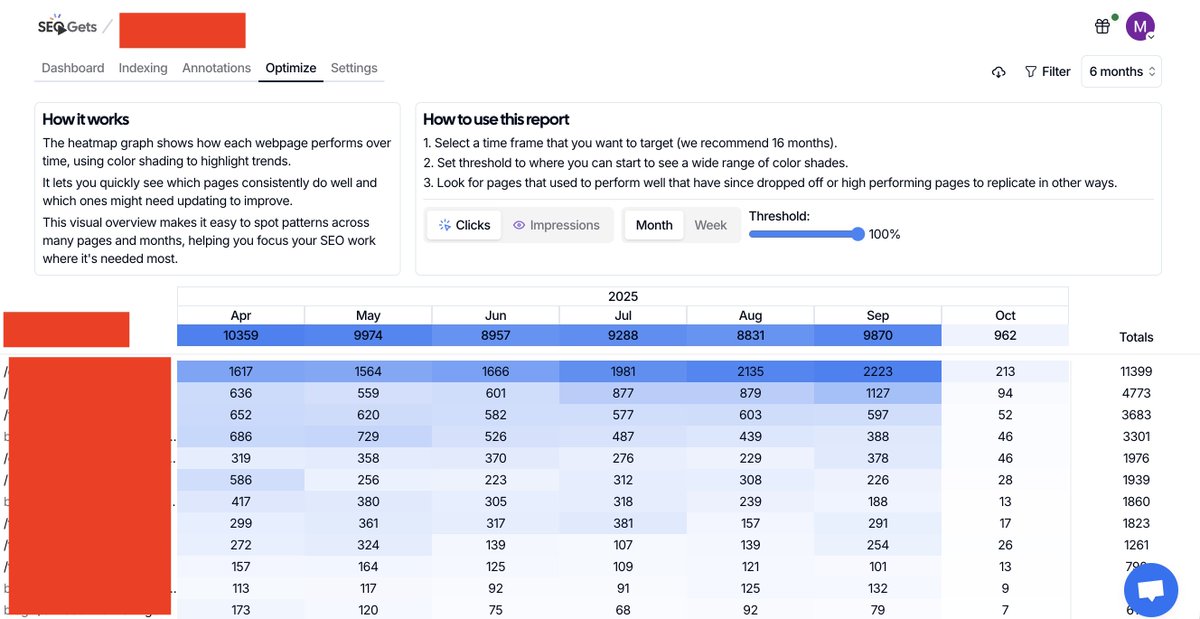
The Content Decay map tool in @seogets is priceless. You can see at a glance all your articles which need to be updated for freshness. Strongly recommended for people running big content operations. Plus there is a free trial you can use to test it out first.
Keep your eyes on @seogets - They just added a filter to show Google discover data on their GSC dashboards and *Spoiler alert* they're working on getting GA data in their killer UX interface
@ZaneElia@chris_nectiv Issue is it's only at the page level. We allow you to track at the page or content group level.
And we are releasing a chrome extension to add annotaitons from anywhere. :)
I use @seogets - I love it. I had used SEOTesting previously - it felt pricier compared to seogets. Ahrefs is in my daily toolkit, but I feel like I'm moving towards using existing Google tools and getting the maximum out of them. However, I want to try a Google Analytics alternative and I'm looking to give https://t.co/NszbMkCozb a try. I have never used paid ga4 alternatives till now.
If anyone has other good tools to share, please let me know. I'm a tools addict 🤣
Gotta say it, @seogets is what Google Search Console would be like if it was made by SEOs, small but mighty tool, I am a fan!
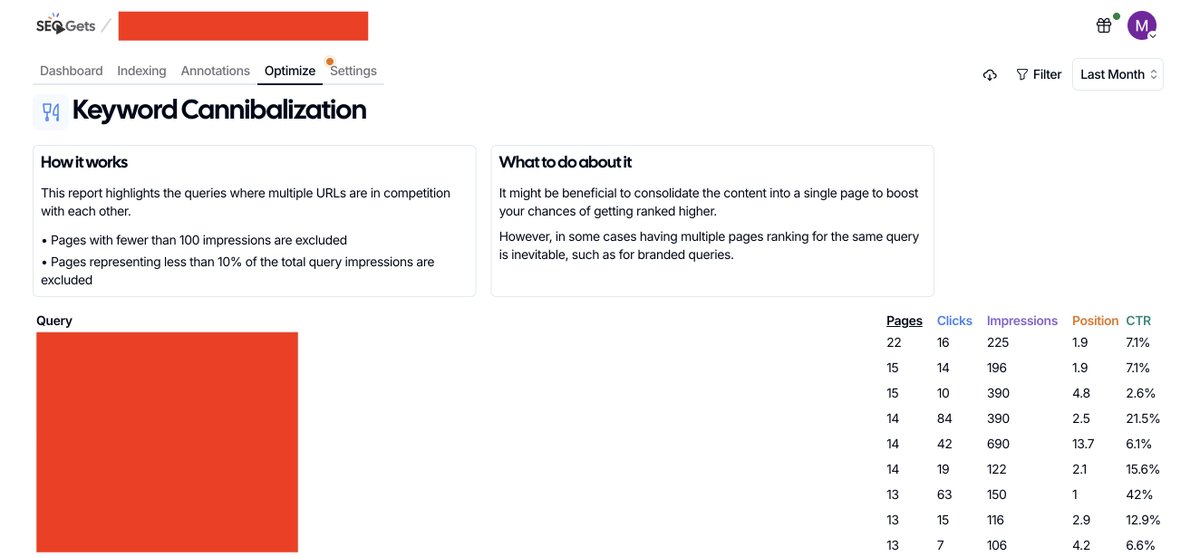
Have been using it for a bit on a few personal websites, super fun to have reports for cannibalization, content decay, etc available with one click!
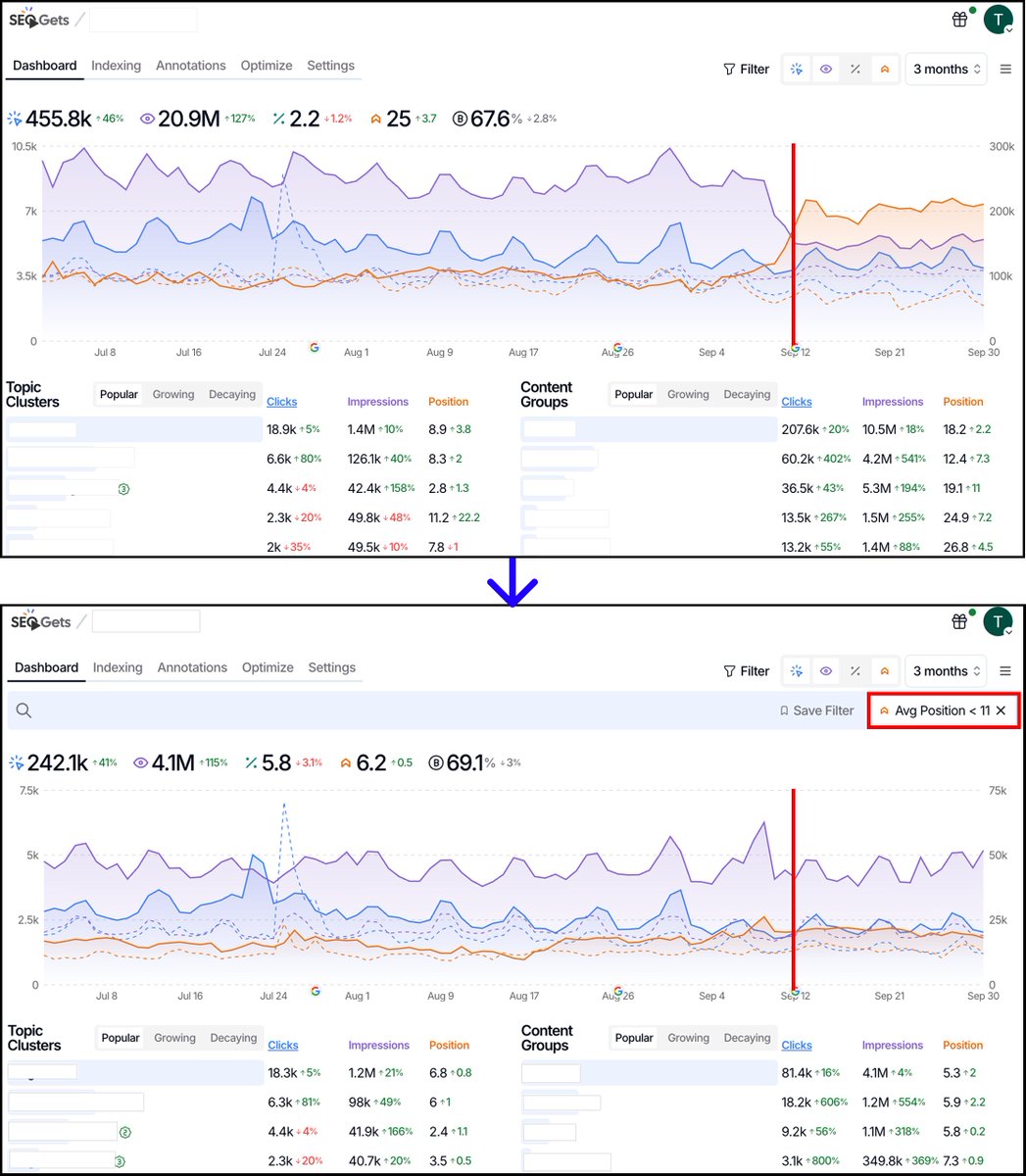
👀 Useful release from @seogets, with new filters that allow us to see the performance of queries in the top 10 or tp 20 positions from Google Search Console! See the difference in fluctuation/shift in impressions / avg position with and without it applied on September 12 👇
A few notes:
* These filters are only available for those domains with Super Sites Integration (because of GSC API restrictions).
* It's only displaying non-anomyzed queries (because that's how they get average ranking).
* It's looking at the average rank on the daily level to determine if it should be counted. If it ranks position 6 on day 1, and position 100 on day 2, it would only include day one's stats, even though the average rank of the two days is 53.
Check it out: https://t.co/JtmAQXdrro
eCom SEO is easy.
1. Open GSC, determine 10-20 highest performing collection pages.
2. Use @seogets to identify queries that each page ranks for but isn't present on the page (or only present once).
3. Add these queries into the copy, preferably in headings or near start of sentences.
4. Build internal links from 4-5 (minimum) of the other top 10-20 collection pages to the page you just updated the copy on.
5. Repeat for the other 10-20 collections.
Then repeat for your product pages (minus the internal links).
Then repeat for your blog posts (if you have some).
Repeat this for as many batches of pages as you have or plan to create.
Build backlinks to power up the entire system.
Drop your brand name all over Reddit.
My favorite @seogets feature is annotations. Not because it's the most useful, but because I use this exact one when we start contracts with new clients. And I love that green, baby.
Oh, and it's even better than this looks: The 9% improvement you see here (just the immediate improvement) is actually +23% if you compare the last 28 days to the 28 days prior to our contract starting.
(This is a recipe site that's been brutally dropping in the last ~2 years after structuring all of their content from lame SEO advice. One of the most satisfying things to see is that better, more user-first content is the RIGHT WAY TO WIN right now.)