If you're using Claude Code for research: stop making it read directly from PDFs
We've introduced a SKILL.md that fetches structured, AI-friendly paper overviews from alphaXiv 👀
🌶️ Some (perhaps) spicy thoughts. It’s been a while since my last tweet, but I wanted to write about how disorienting it has been from academia to an LLM lab 😅
The kind of research I was trained to do during my PhD almost doesn’t exist here. The obsession with mathematical elegance and novelty is mostly gone. Everything is about scaling data and compute. For a while, that really got to me. At my lowest point, I felt like I’d lost interest in building LLMs altogether. I didn’t feel intellectually challenged anymore.
What made this even stranger was that, at a technical level, things worked. If there was a capability I wanted to teach a model, scaling the right data and compute always got me there, no exception (so far).
But recently, I found a way to reconcile with myself..
I realized the real competition isn’t in the ML recipe anymore. Most teams do roughly the same thing. What actually matters is how fast you can iterate, test ideas, and recover from mistakes. And that speed is mostly backed by infrastructure 🏗️ Faster loops, fewer bugs, better tooling.
Seeing this made me excited again! Infra is its own deep, hard, and intellectually fun problem space.
In 2026, I want to become an ML researcher who’s really good at infra. And I'll come back to ML problems with that edge, and will be excited to share what I find 😌
It will soon be PhD application season.
If you are applying for PhD programs in engineering, apply to groups that are building something cool and interesting, and are not just optimizing for the number of papers they publish every year.
CSHL is launching a new PhD program focusing on AI × Bio/Neuro! If you already have a master’s or equivalent and want a faster, more streamlined route to a PhD, check it out! #PhD
https://t.co/VorfVfzXrq
𝗔𝗳𝘁𝗲𝗿 𝟭𝟬+ 𝘆𝗲𝗮𝗿𝘀 𝗶𝗻 𝗿𝗼𝗯𝗼𝘁 𝗹𝗲𝗮𝗿𝗻𝗶𝗻𝗴, from my PhD at Imperial to Berkeley to building the Dyson Robot Learning Lab, one frustration kept hitting me:
𝗪𝗵𝘆 𝗱𝗼 𝗜 𝗵𝗮𝘃𝗲 𝘁𝗼 𝗿𝗲𝗯𝘂𝗶𝗹𝗱 𝘁𝗵𝗲 𝘀𝗮𝗺𝗲 𝗶𝗻𝗳𝗿𝗮𝘀𝘁𝗿𝘂𝗰𝘁𝘂𝗿𝗲 𝗼𝘃𝗲𝗿 𝗮𝗻𝗱 𝗼𝘃𝗲𝗿 𝗮𝗴𝗮𝗶𝗻?
𝗧𝗵𝗲 𝗽𝗮𝘁𝘁𝗲𝗿𝗻 𝗜 𝗸𝗲𝗽𝘁 𝘀𝗲𝗲𝗶𝗻𝗴:
• New robotics team starts
• Spends 6 months building data collection pipeline
• Spends another 3 months debugging synchronization issues
• Finally starts collecting task-specific data
• Realizes their infrastructure choices limit their flexibility
• Starts over
𝗧𝗵𝗶𝘀 𝗶𝘀 𝘁𝗵𝗲 𝘄𝗵𝗼𝗹𝗲 𝗽𝗼𝗶𝗻𝘁 𝗼𝗳 𝗿𝗼𝗯𝗼𝘁 𝗹𝗲𝗮𝗿𝗻𝗶𝗻𝗴: Robot learning is fundamentally data-driven. Whether you're picking strawberries or assembling electronics, the core infrastructure needs are identical. That's actually why I was so interested in pursuing data-driven robotics over a decade ago.
𝗬𝗼𝘂 𝗮𝗹𝘄𝗮𝘆𝘀 𝗻𝗲𝗲𝗱:
• Multi-sensor data synchronization across different frequencies
• Flexible storage that works with future algorithms
• Visualization tools to understand your data
• The ability to experiment with different temporal resolutions
• Robust logging that captures everything you might need later
The trend towards AI in robotics is growing, with robots needing to process and analyze large amounts of sensor data to manage variability and unpredictability in real environments.
𝗕𝘂𝘁 𝗲𝘃𝗲𝗿𝘆 𝘁𝗲𝗮𝗺 𝗯𝘂𝗶𝗹𝗱𝘀 𝘁𝗵𝗶𝘀 𝗳𝗿𝗼𝗺 𝘀𝗰𝗿𝗮𝘁𝗰𝗵. Imagine if every web developer had to build their own database, web server, and deployment pipeline before writing their first line of application code.
𝗧𝗵𝗶𝘀 𝗶𝘀 𝘄𝗵𝘆 𝗜 𝗳𝗼𝘂𝗻𝗱𝗲𝗱 𝗡𝗲𝘂𝗿𝗮𝗰𝗼𝗿𝗲.
Instead of every robotics team spending months on infrastructure, we provide the common tools that let you go from "I have a robot" to "I'm shipping intelligent robot behaviors" in days, not months.
𝗧𝗵𝗲 𝗿𝗲𝗮𝗹 𝗶𝗻𝗻𝗼𝘃𝗮𝘁𝗶𝗼𝗻 𝗶𝗻 𝗿𝗼𝗯𝗼𝘁𝗶𝗰𝘀 𝘄𝗼𝗻'𝘁 𝗰𝗼𝗺𝗲 𝗳𝗿𝗼𝗺 𝗲𝘃𝗲𝗿𝘆𝗼𝗻𝗲 𝗿𝗲𝗯𝘂𝗶𝗹𝗱𝗶𝗻𝗴 𝘁𝗵𝗲 𝘀𝗮𝗺𝗲 𝗽𝗹𝘂𝗺𝗯𝗶𝗻𝗴. 𝗜𝘁'𝗹𝗹 𝗰𝗼𝗺𝗲 𝗳𝗿𝗼𝗺 𝘁𝗲𝗮𝗺𝘀 𝘄𝗵𝗼 𝗰𝗮𝗻 𝗳𝗼𝗰𝘂𝘀 𝗲𝗻𝘁𝗶𝗿𝗲𝗹𝘆 𝗼𝗻 𝘄𝗵𝗮𝘁 𝗺𝗮𝗸𝗲𝘀 𝘁𝗵𝗲𝗶𝗿 𝗮𝗽𝗽𝗹𝗶𝗰𝗮𝘁𝗶𝗼𝗻 𝘂𝗻𝗶𝗾𝘂𝗲.
Robot learning shouldn't be bottlenecked by infrastructure. It should be bottlenecked by creativity.
What's the longest you've spent building infrastructure before getting to the actual robotics problem you wanted to solve?
🚨 Google’s MedGemma & OpenAI’s GPT-4o are impressive, but their openness is limited—either fully closed-source or releasing only weights without data/training code.
🔥 Meet MedVLThinker — a fully open multimodal medical reasoning recipe that matches their performance.
Simple. Transparent. Reproducible.
🔗 Project: https://t.co/DUarGuG7et
📄 Paper: https://t.co/wRcZQoxZPb
"My research group, the Interfaces-Oxides Nexus Electrochemical Laboratory (IONE Lab), at Arizona State University, has one more opening for a graduate student. If you are interested in electrochemical interfaces and epitaxial metal oxides, contact me via email ([email protected]). "-Prof. Sanaz Koohfar
Are you planning to apply for faculty positions in North America this Fall? Our team of researchers have synthesized 3 years of applicant survey data to create a dashboard to allow assistant professor candidates to see where they stand.
https://t.co/zgKXcD0mD1
Prospective MSc and PhD students can find in the link below a list of professors from various departments who recently received research grants, along with their grant titles.
https://t.co/wWFIULZVpH
LLMs for Engineering
Finds that when RL is used, a 7B parameter model outperforms both SoTA foundation models and human experts at high-powered rocketry design.
What a crazy week in AI 🤯
- Kling 2.0 AI video
- Canva Visual Suite 2.0
- Microsoft Copilot Vision
- Grok Studio and Memories
- ChatGPT 4.1, o3, & o4-mini
- OpenAI’s new coding agent
- ByteDance Seaweed AI video
- Claude Autonomous Research
Here’s EVERYTHING you need to know:
I asked o3, “What are the top 10 most important questions or challenges that need to be solved or answered in T cell immunobiology?” This is what I have been studying for the past 35 years.
o3 came up with not one, not two, not three, but 10/10 top-notch questions that I could not improve upon!
Not only that, it explained why each of these questions matters, outlined the roadblocks and leverage points, and offered insights that were simply amazing! At the end it even unified and linked all these 🤯 (shared in the thread).
This is a topic I understand extremely deeply, yet o3 effortlessly identified the best 10 questions in my field-better rate than I could have myself!
Here are the first 5 grand questions; the rest are in the thread. Each one them is so densely packed with knowledge that unpacking them would require PhD-level courses! This is why I called o3 genius-level, it’s just too damn smart!
Top 10 open problems that will decide the next decade of T‑cell immunobiology:
1.Crack the “TCR code” at scale
Grand question: Can we reliably predict which peptide‑MHC (or CD1/MR1) any given T‑cell receptor will recognise—and design new receptors on demand?
Why it matters: Unlocking this would transform cancer neoantigen targeting, infectious‑disease vaccines, autoimmunity screening and truly personalised immunology.
Roadblocks: Astronomical sequence space, cross‑reactivity, sparse ground‑truth data, and context‑dependent recognition rules.
Leverage points: Deep‑learning models trained on multi‑omic single‑cell datasets, high‑throughput yeast/RNA display pMHC libraries, and federated data‑sharing across clinics.
2.Rewire exhaustion and senescence instead of merely blocking checkpoints
Grand question: How do we durably restore proliferative capacity and killing potential in chronically stimulated or aged T cells without triggering cytokine storms?
Why it matters: Exhaustion limits CAR‑T efficacy, chronic infection control, and anti‑tumour immunity; senescence fuels “inflamm‑aging”.
Roadblocks: Layered transcriptional/epigenetic locks, mitochondrial dysfunction, and suppressive metabolites in the TME.
Leverage points: Metabolic rewiring (FAO ↔ glycolysis toggling), chromatin editing, combinatorial cytokine cocktails, and synthetic “reset” circuits.
3.Master tissue‑resident memory (T RM) formation and control
Grand question: What signals decide when effector T cells park long‑term in skin, gut, lung or brain, and how can we amplify or silence them at will?
Why it matters: T RM cells underpin frontline immunity against respiratory and mucosal pathogens, drive relapse in psoriasis/vitiligo, and protect—or aggravate—tumours.
Leverage points: Decoding local cytokine + metabolic niches, microbiome crosstalk, and TRM–stromal cell interactions; epigenetic “TRM locks” as drug targets.
4.Make engineered T cells work in solid tumours
Grand question: How do we ensure CAR/TCR‑T cells infiltrate, persist and kill in hypoxic, cytokine‑hostile, antigen‑heterogeneous solid tumours?
Roadblocks: Physical exclusion, suppressive myeloid nets, on‑target off‑tumour toxicity, and antigen escape.
Leverage points: Logic‑gated multi‑antigen CARs, chemokine‑armoured cells, regional (e.g., intratumoural) delivery, and on‑demand suicide switches.
https://t.co/Hb9fZHaxcb truly universal, off‑the‑shelf T cells
Grand question: Can we generate banked iPSC‑derived or genome‑edited T cells that evade host rejection and GVHD yet retain vigorous function?
Why it matters: Autologous products are expensive, slow and inconsistent; scalable allogeneic cells would democratise cellular therapy and allow rapid pandemic response.
Roadblocks: HLA matching, alloreactivity, residual pluripotent cells, manufacturing QC, and regulatory hurdles.
Leverage points: MHC‑knockout plus HLA‑E/G over‑expression, multiplex base‑editing, orthogonal cytokine receptors, closed‑system robotic production.
We’re opening the doors to DAIR Academy for students.
Students can now get full access to our Academy for free for a month!
Reach out with a .edu email (or equivalent), and start learning how to use AI, build AI Agents, use LLMs for learning and work, and access our community with weekly events hosted by industry professionals building with AI.
The offer runs until the end of April, so reach out soon!
Email us at: [email protected] for access!
Libraries and tools that every deep learning project should use: loguru, tqdm, torchmetrics, einops, python 3.11, black. Optional: prettytable. Good for debugging: lovely_tensors. Any other ones I've missed?
Below a few words on each of them:
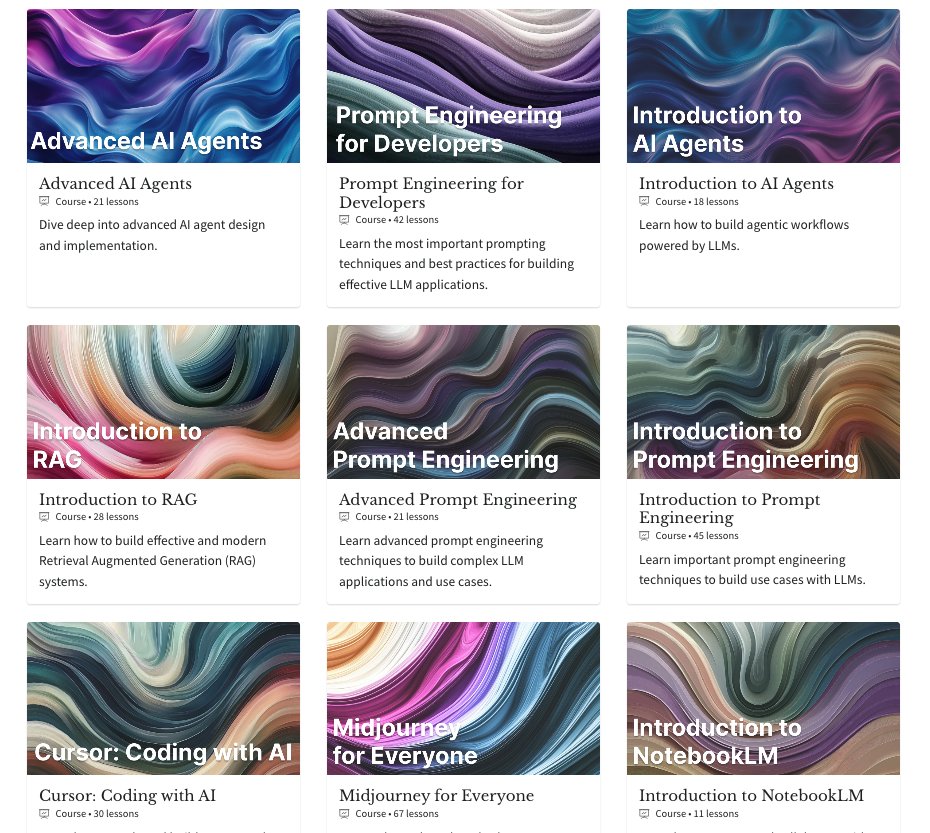
🎉 Excited to launch my new course, Introduction to AI Agents!
Every AI dev and company I’ve worked with this year is keen to build with AI Agents.
I’ve worked hard to put all my learnings into this course so you too can learn how to build agentic AI systems.
Material ranges from fundamentals to practical tips to help you build advanced agentic workflows.
Enroll now: https://t.co/52C6RzuIKc
This course is for you if you are looking to apply AI agents in a professional setting. No programming is required for this course!
Use code AGENTS20 to get an extra 20% discount now. (Prices will increase soon so make sure to take advantage of the current offer)