Working in agri-food/environment sector: Bioinformatics of novel foods and their regulation. Food safety. Plant and soil health. Microbes,pests and biosecurity.
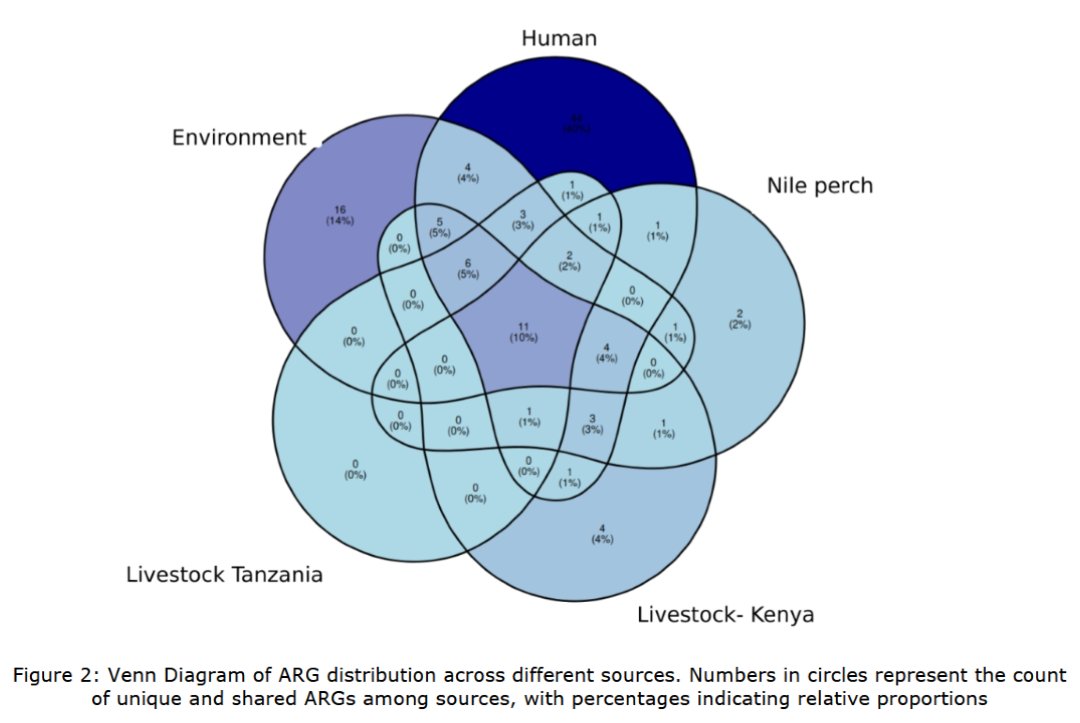
🦠 New research examines "One Health analysis of antimicrobial resistance in Escherichia coli from humans, animals, and the environment"
Read it at https://t.co/ghukkUndyP
Diane Leather, on this day in 1954, became the first ever woman to run a sub-five-minute mile.
She clocked 4:59.6 at the Midland Championships in Birmingham.
The Brit, who retired at 27, broke the record five times in total, taking it to 4:45.0 in September 1955, a mark which stood until 1962.
She was also a double European 800m silver medallist.
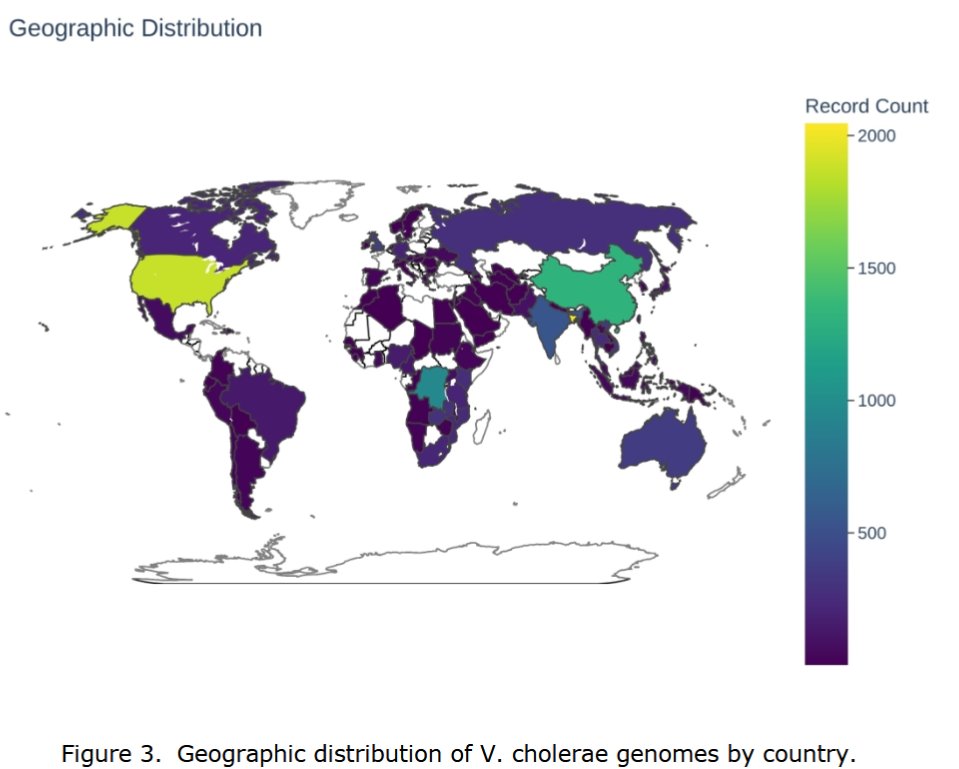
🧫 Latest research in Bioinformatics Advances: "FetchM: Streamlining genome and metadata integration for bacterial comparative genomics"
Read it here: https://t.co/pAbnYqSxdr
In #EnviromentalMicrobiome
Multiple origins of the apple seed microbiome: disentangling sexual and asexual transmission pathways🦠
Read more👉https://t.co/DtRaYhcXJB
🍎Explore 'The Apple Microbiome' collection here:
https://t.co/yRVf65mxlk
#Biochar in #Agriculture: A Review on Sources, Production, and #Composites Related to Soil Fertility, Crop Productivity, and #Environmental#Sustainability
by Md. Muzammal Hoque et al.
C2025, 11(3), 50; https://t.co/CzXHMAYRXn
Current number of paper views/citations: 13384/10
New paper from lab- Functional restructuring of the global soil microbiome under multiple stressors- in @NatureComms
Across global terrestrial ecosystems ~60% of all functional genes significantly shift when microbes experience high multiple stressors.
https://t.co/h7hdzc4ngn
�� Recently published in Bioinformatics Advances: "Impact of sequencing read quality on whole-genome sequencing outcomes for foodborne pathogens using a BacWORK standardized analysis workflow"
Read it here: https://t.co/x5QTmRDCuP
In #Microbiome
🚨High soil phosphorous increases Fusarium wilt
🔍Providing new insights & potential strategies for sustainable disease management in agricultural systems with legacy phosphorus accumulation
👉https://t.co/duIpJyAaEx
"authorised" is bad, but doesn't mean "instigated".
I know TE was the only one named. But is the way this is reported, missing something?
Hard to believe the EFL's wording would be sloppy. They'll surely have had these statements checked by lawyers first.
"the TOP"
#spygate
@AdamBlackmore I don't see that there can be any ambiguity over what "on the part of the Respondent, a contrived and determined plan from the top down" means?
The Respondent is named as SFC Ltd, not the first-team management 🤷🏻♂️
As an hourly active LLM user for the last ~3 years, one important differentiation has become clear.
Claude is built to be a human, while ChatGPT is built to be a tool.
This starts with how they are named - and it's deeply baked into how they interact with the user 👇
Claude is morally opinionated. It wants to know why you are asking a question before it gives an answer. It tells you to go to bed instead of digging on a topic. It seems to be constantly updating its own model on who you are - and then decides if and how to respond to a question based on this broader context, like a human getting to know another human.
This can be helpful! On many topics, Claude will give you a quick take without a long buildup or caveats. The user experience feels more humanlike. And, Claude feels like it emotionally adapts and personalizes to you more over time - it heavily draws on its model of you and what it thinks you need in its responses.
This is why (I think) Anthropic has heavily marketed who created Claude, and how its personality was shaped. Claude is not a neutral canvas - it has ideas about right and wrong, and like a human these will shape its responses. It often does not disclose this upfront - though if you push, it will admit it.
ChatGPT feels very different. Perhaps ironically, I now find it to be significantly less sycophantic than Claude (and 5.5 is a big upgrade in conversationality - past models have occasionally felt unbearable to talk to). It has context on you that it will deploy in responses - but it will (typically) tell you why it is making a recommendation, and walk you through several options.
There are some boundaries. But in general, you, as the user, choose what to talk about and when to end the conversation. ChatGPT always wants to keep talking. It treats you as an adult that can decide which direction to go.
The more I use AI, the more I feel that I want my LLM to behave like a tool and not a human. Many people are concerned about humans being able to "manipulate" AI into assisting with some nefarious aim. I actually think the much bigger threat is that as we utilize and trust AI more, an opinionated model manipulates us - especially if we can't quite see into the model's black box.
This feels obvious to many AI power users, but these users represent about 1% of consumers. As more people come to rely on AI as a near-constant companion, assistant, co-worker, and even therapist, I'm curious to see how opinions evolve on this 🤔
#Monitor: EFSA outlined five key steps to avoid delays in EU novel food approvals, including early regulator engagement, complete data, stability evidence, and nanoparticle analysis. Pre-submission consultations have risen 47%.
#NovelFood#FoodSafety
https://t.co/5fLeykJe7S
A study in Microbiome highlights how soil pH is a critical filter for stink bug-Burkholderia symbiosis and how local environmental conditions can shape the assembly of environmentally acquired insect–microbe symbioses.
https://t.co/IPkmIDpAfH
Our pilot Soil Health Viewer has launched! 🚀 The platform combines AI, earth observation & soil data to provide high-resolution insights into soil condition & change over time: https://t.co/SnzLNf4tgM Let us know what you think! https://t.co/9ShwsDZj2M @opengeohub
If generative AI tools generate inappropriate language, plagiarized content, biased content, errors, mistakes, incorrect references, or misleading content, and that output is included in scientific works, it is the responsibility of the author(s). 2/