600+ feet of crane assembled incredibly fast by the team. We will start pulling down the tower (segment by segment) so we can modify each piece in parallel.
NASA Administrator Jared Isaacman will host a virtual conversation at 2:30 p.m. EDT on Tuesday, June 30, to share updates to NASA’s plans to build a Moon Base on the lunar surface.
Learn more here: https://t.co/6wrzqxVR8B
For @NASA’s next generation of deep space exploration missions, spacecraft may need to refuel in Earth orbit before pushing farther into the solar system.
Engineers from #NASAMarshall and L3Harris are testing a technology vital for in-orbit refueling: https://t.co/oeqGBtvzpj
PROGRESS! Rocket Factory Augsburg has completed the integration of all nine engines on its RFA ONE first stage. One step closer to the launch pad.
Image credit: RFA
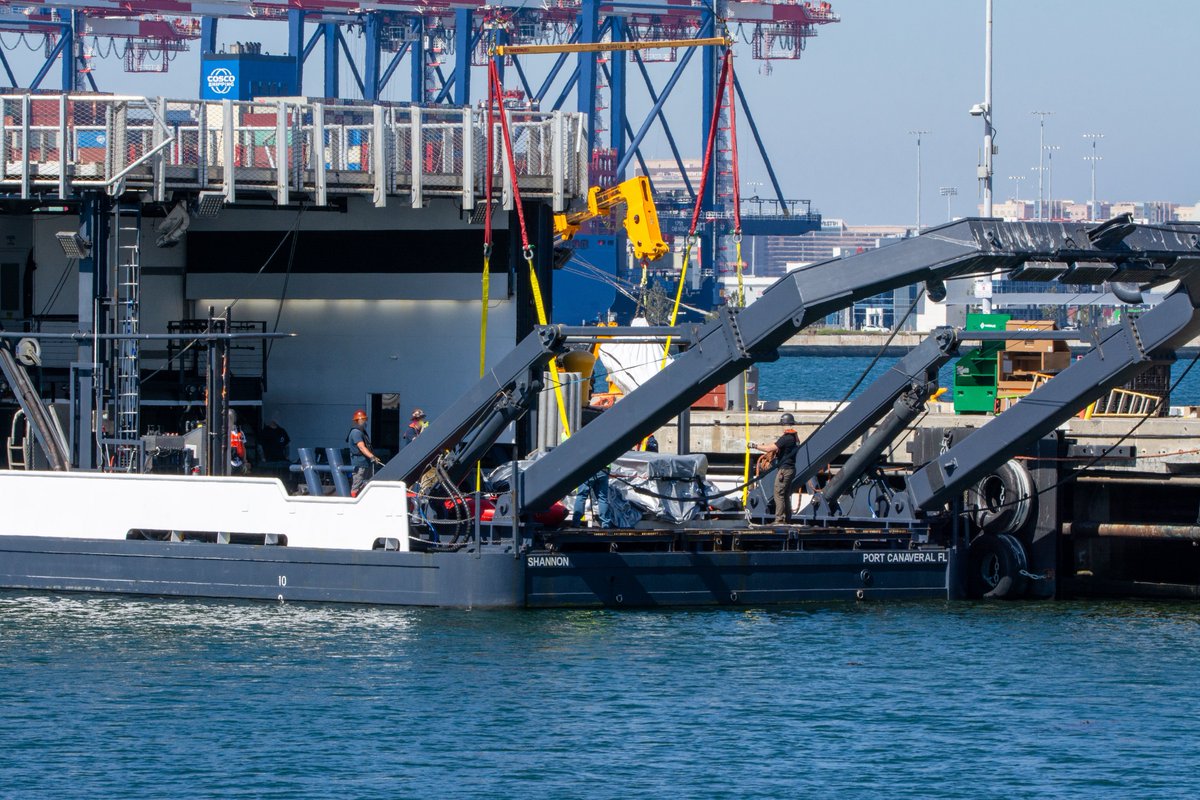
The SpaceX Starfall Demonstration capsule was successfully recovered off the coast of California following its launch Florida. The recovery vessel Shannon brought the capsule into the Port of Long Beach, where it was unloaded and trucked away to for post-flight inspections.
The Space Force called, and we launched. From call up to lift-off in just 16 hours 42 minutes 🎯 Rocket Lab has made history - the fastest response time ever for a @USSF_SSC Tactically Responsive Space mission.
Continuous sunlight is scarce on the Moon unless you know where to look. 🌑
The lunar poles contain "peaks of eternal light," areas bathed in near-continuous sunlight. Power Tower mounts on Blue Moon MK1's top deck and extends solar arrays to 26 meters total height to capture that energy and deliver sustained power for Moon Base operations.
Check out this video of Power Tower during a successful deployment in an analog lunar environment.
The infrastructure era of lunar exploration starts now.
Meet ERNEST: a prototype rover that’s faster, smarter, and showcasing new ways to tackle tough terrain. This tech could be infused into future Moon and Mars missions.
We're going to conduct science at Mars.🔴 Yesterday we announced the Interplanetary Sciences Program. Today, let’s take a closer look at the ground-breaking technology we're developing and launching to the Red Planet:
📡 A shallow radar sounder built by us to map subsurface ice and geology, revealing climate and geologic history, habitability conditions, and high-value landing sites
🖥️A Relay Data Center built by us to deliver networked optical and RF communication, run advanced algorithms and AI models, support autonomous responsive science operations, and return massive data volumes to Earth.
🔬 An atmospheric profiling suite built by @NASAAmes to measure winds, temperatures, clouds, dust and planetary energy balance.
Honorable mentions for some less talked about pads that are changing our skyline. @stoke_space at LC-14 painted their tower in what is a beautiful nod to the Mercury Era pad that John Glenn launched from.
The lightning towers have begun to rise at @relativityspace LC-16. Those are going to be massive compared to their neighbor! The watertower is mid paint and, at the moment, is giving sky jellyfish vibes in the afternoon haze.
📷 @NASASpaceflight
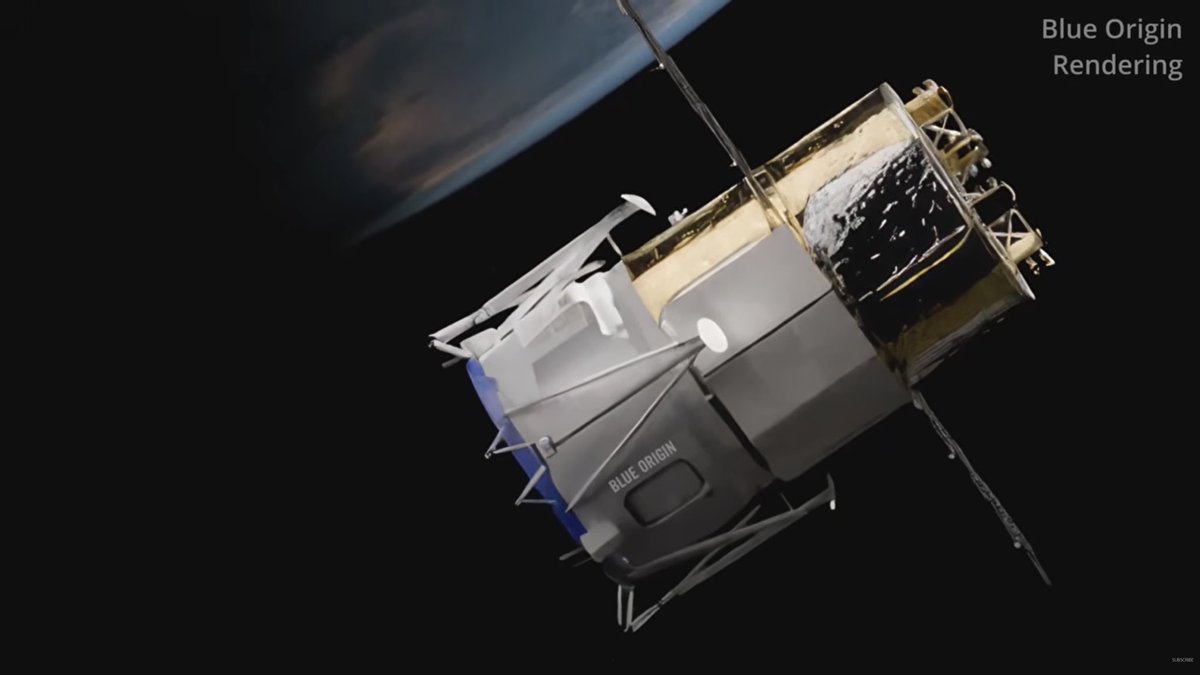
New Blue Moon rendering for Artemis III dropped! It was featured in @SpaceflightNow’s new video!
Honestly it’s a really interesting design. I wonder how the true MK2 will look since the cabin’s are supposed to be the same.
💫 More missions. More science. More discovery. Today, we're launching the Interplanetary Sciences Program to advance deep space science missions through foundational technologies and payloads.
Proud to partner with @NASA , industry, and academic institutions on a science orbiter mission to Mars in 2028 for philanthropic customer.
What we discover belongs to everyone. All scientific data will be released to the world, fostering open collaboration.
Learn more: https://t.co/91Z2s2rogC
I've come to appreciate boring hotfires. Our BE-7 team recently completed a 2,500 second hotfire test at 10klbf on a development engine, setting the record for the longest-duration turbo pump-fed liquid rocket engine hotfire. This built on some of the most rigorous testing in the history of propulsion, with the previous record set by the RS-25 engine that powered the Space Shuttle. They recorded two 2,017 second tests in 1988. It's not lost on us that we're following a path those engineers blazed, and we're grateful for it. Grab the popcorn and enjoy watching 41 minutes of hotfire goodness.
36 satellites. One precise deployment. 🚀Beyond Gravity’s dispenser system, developed in Linköping, Sweden, will deploy all 36 @Amazonleo satellites during the upcoming Ariane 6 mission. Precision in orbit starts here.
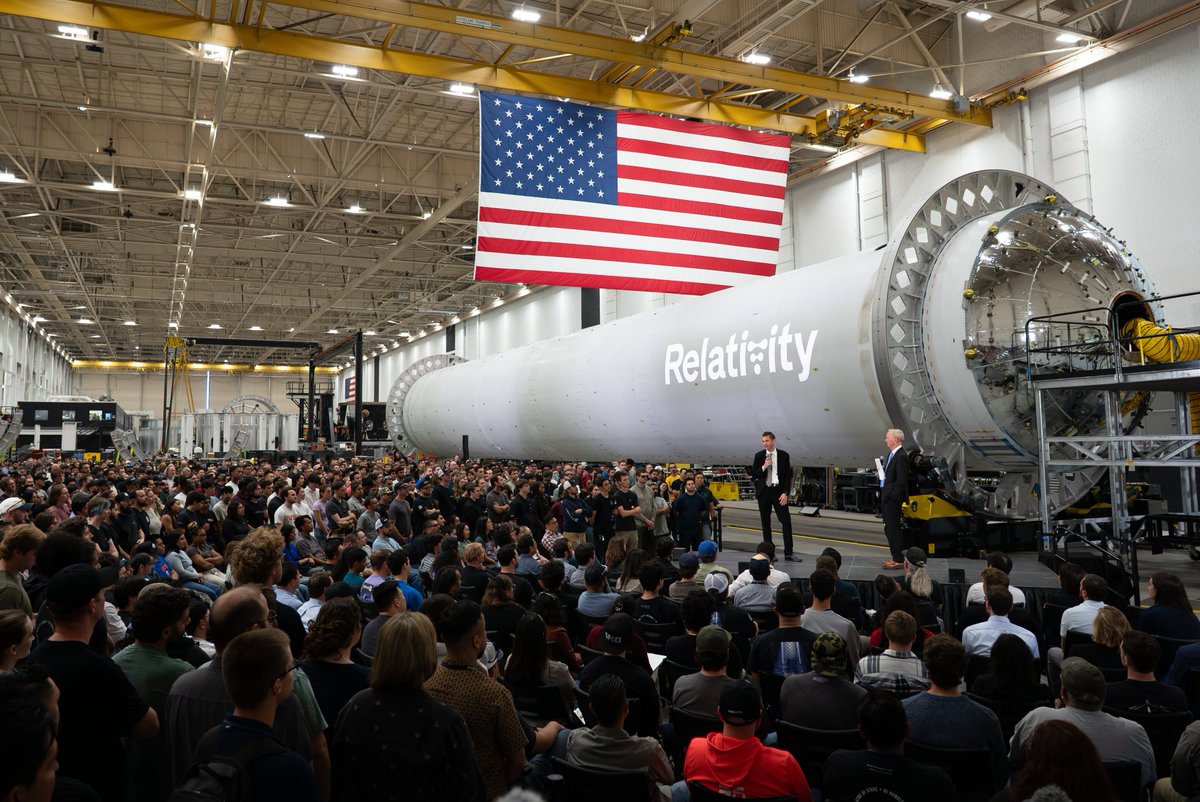
Relativity Space is starting their own planetary science program (whole bunch of job postings), which I guess makes sense given Schmidt's inclinations.
First mission aims to be a Mars orbiter focusing on enhancing Mars atmospheric modeling and weather forecasting.
Separation confirmed! Dragon is performing four departure burns to move away from the @Space_Station. Splashdown in ~20 hours off the coast of California
A Moon Base lander is one step closer to the lunar South Pole.
@astrobotic recently unveiled the Griffin-1 lunar lander, now ready for environmental testing at @nasajpl ahead of its late-2026 launch. Griffin-1 will deliver payloads supporting Moon Base Phase One.