Codex has been getting seriously worse lately. If this doesn’t get fixed ASAP, I’m cancelling all my subscriptions. I know I’m not the only one who feels this way. The quality has dropped significantly, and this needs to be addressed urgently. @OpenAI@sama
The idea of an intelligence explosion caused by recursive self improvement has been around for a long time but until very recently it did not seem imminent. Now many leading researchers think it may happen quite soon. You can read our paper about it here:
https://t.co/sgUpugjpRY
IDE açmıyoruz artık oğlum IDE. Ne kod yazmasından review’ından bahsediyonuz? Kod yazan son insan nesli bizdik. En son breakpoint koyup debug yapmamın üstünden 1 yıl geçmiştir. Unutun artık nostaljiyi. Bitti, buraya kadardı.
✅ Claude Code
✅ Claude Cowork
✅ Claude Design
✅ Claude Finance
✅ Claude Science
⬜ Claude HR
⬜ Claude Analytics
⬜ Claude Marketing
⬜ Claude Sales
⬜ Claude Legal
⬜ Claude Logistics
⬜ Claude R&D
⬜ Claude Procurement
⬜ Claude Accounting
⬜ Claude Engineering
Anthropic is questioning whether AI may turn out to be altogether useless. This is the single most honest thing Anthropic has ever written.
“But achieving recursive improvement alone does not suggest an immediate change in how industrial production occurs, societies organize, or markets function. More intelligence can’t learn what a drug does over decades of use, can’t hold elections sooner than a constitution dictates, and can’t turn a stranger into an old friend in a weekend. For most people, the felt pace of this future will still be set by the bottlenecks, even if the laboratory upstream runs at the speed of compute. That collision, where recursive intelligence building itself ever faster meets the world of humans, relationships, and governance, is another part of this future we can’t predict.”
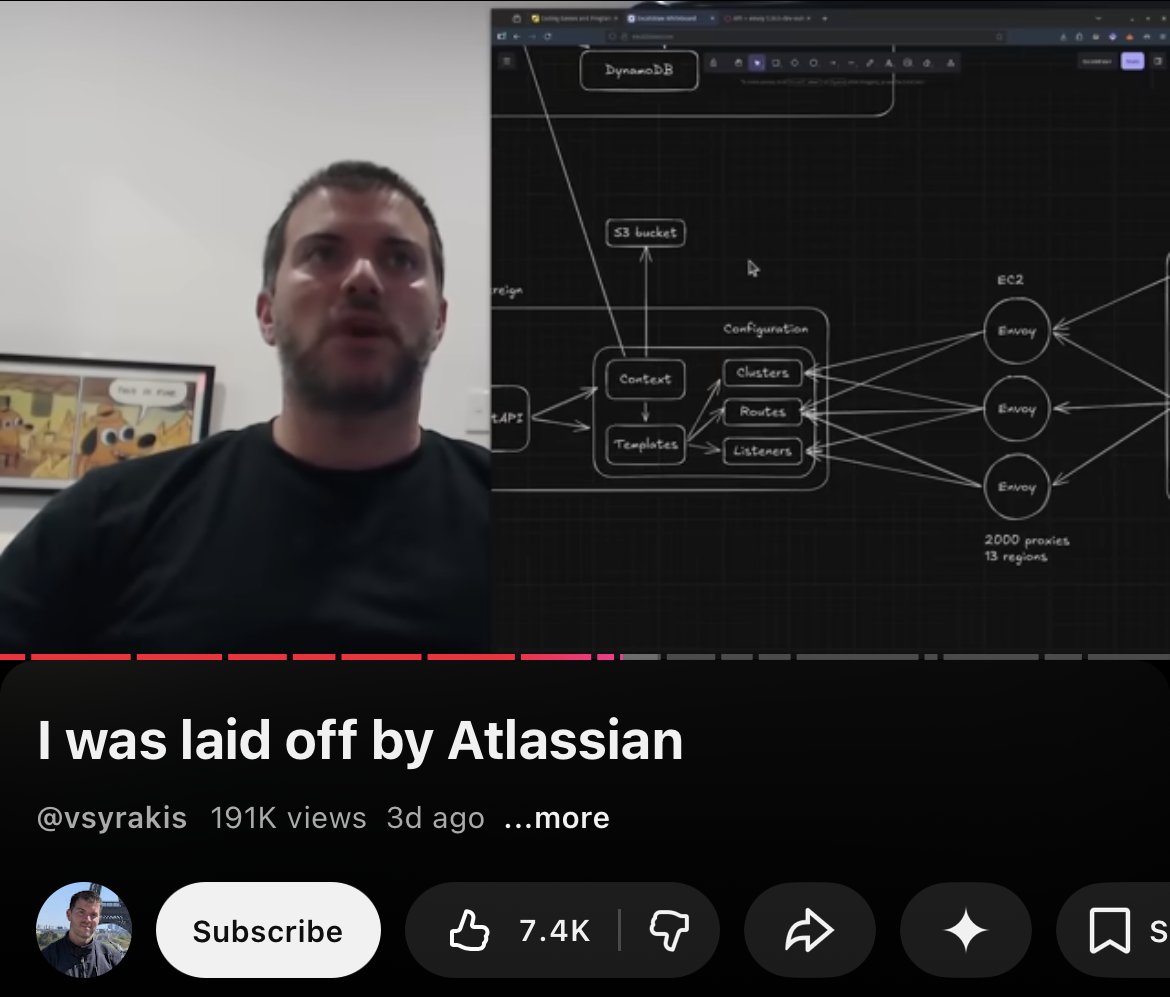
Incredible video by randomly sacked Atlassian engineer telling all about the entire company
Love this genre, like LinkedIn green banner with zero fcks given
My LLM Engineering stack:
1. PySpark for Data Engineering
2. HuggingFace datasets for data
3. Unsloth for SFT/RLHF/QLoRA fine-tuning
4. vLLM for Inference optimization
5. FastAPI for backend
6. Redis for cache
7. Qdrant for vector database
8. Celery for task queue
9. Kafka for event-driven scenario
10. Perfect for orchestration
11. LangGraph for agents
12. DeepEval for LLM evaluation
11. Langsmith for LLM observability
12. Ollama for naive LLM calls
13. Postgres for storing data and conversations
14. Docker for containerization
15. AWS for deploying compute-heavy system (Kubernetes cluster)
16. Railway for agentic projects
17. Next JS for UI
18. Prometheus/Grafana for system observability
19. Ray for distributed systems
20. Slack for system alerts
What else am I missing?
A completely local agent that lives right inside your browser.
Powered by Gemma 4 E2B and WebGPU, it uses native tool calling to:
🔍 Search browsing history
📄 Read and summarize pages
🔗 Manage tabs
100% local. No servers needed!
🚨 Microsoft yine iş başında.
Sessiz sedasız bir Python aracı, GitHub'ın trend listesinin zirvesine tırmandı.
100.000'den fazla yıldız.
Adı MarkItDown. Ne yapıyor?
Herhangi bir dosyayı Markdown'a dönüştürüyor.
PDF, Word, PPT, Excel, resimler...
Sadece içine atın ve temiz bir Markdown elde edin.
Basit görünüyor, değil mi?
Ama ne kadar büyük bir sorunu çözdüğünü biliyor musunuz?
RAG sistemleri için en büyük baş ağrısı: verileri yapay zekaya nasıl besleyeceğinizdir.
PDF'ler karmakarışık, Word belgeleri gizli stillerle dolu,
PPT'ler tamamen metinsiz resimlerden oluşuyor...
Artık tek bir kod satırı işi hallediyor.
Daha da etkileyici olanı, bunun resmi bir Microsoft ürünü olması,
tamamen ücretsiz, açık kaynaklı ve ticari olarak kullanılabilir olması.
Denemeye çalıştım; 200 sayfalık bir PDF,
3 saniyede dönüştürüldü,
ve biçimlendirmesi inanılmaz derecede temizdi.
İşte büyük bir şirketin gücü:
Bir şey yaptıklarında, sektör standardını belirliyorlar.
https://t.co/JBJyTHX5ZL
LLM Knowledge Bases
Something I'm finding very useful recently: using LLMs to build personal knowledge bases for various topics of research interest. In this way, a large fraction of my recent token throughput is going less into manipulating code, and more into manipulating knowledge (stored as markdown and images). The latest LLMs are quite good at it. So:
Data ingest:
I index source documents (articles, papers, repos, datasets, images, etc.) into a raw/ directory, then I use an LLM to incrementally "compile" a wiki, which is just a collection of .md files in a directory structure. The wiki includes summaries of all the data in raw/, backlinks, and then it categorizes data into concepts, writes articles for them, and links them all. To convert web articles into .md files I like to use the Obsidian Web Clipper extension, and then I also use a hotkey to download all the related images to local so that my LLM can easily reference them.
IDE:
I use Obsidian as the IDE "frontend" where I can view the raw data, the the compiled wiki, and the derived visualizations. Important to note that the LLM writes and maintains all of the data of the wiki, I rarely touch it directly. I've played with a few Obsidian plugins to render and view data in other ways (e.g. Marp for slides).
Q&A:
Where things get interesting is that once your wiki is big enough (e.g. mine on some recent research is ~100 articles and ~400K words), you can ask your LLM agent all kinds of complex questions against the wiki, and it will go off, research the answers, etc. I thought I had to reach for fancy RAG, but the LLM has been pretty good about auto-maintaining index files and brief summaries of all the documents and it reads all the important related data fairly easily at this ~small scale.
Output:
Instead of getting answers in text/terminal, I like to have it render markdown files for me, or slide shows (Marp format), or matplotlib images, all of which I then view again in Obsidian. You can imagine many other visual output formats depending on the query. Often, I end up "filing" the outputs back into the wiki to enhance it for further queries. So my own explorations and queries always "add up" in the knowledge base.
Linting:
I've run some LLM "health checks" over the wiki to e.g. find inconsistent data, impute missing data (with web searchers), find interesting connections for new article candidates, etc., to incrementally clean up the wiki and enhance its overall data integrity. The LLMs are quite good at suggesting further questions to ask and look into.
Extra tools:
I find myself developing additional tools to process the data, e.g. I vibe coded a small and naive search engine over the wiki, which I both use directly (in a web ui), but more often I want to hand it off to an LLM via CLI as a tool for larger queries.
Further explorations:
As the repo grows, the natural desire is to also think about synthetic data generation + finetuning to have your LLM "know" the data in its weights instead of just context windows.
TLDR: raw data from a given number of sources is collected, then compiled by an LLM into a .md wiki, then operated on by various CLIs by the LLM to do Q&A and to incrementally enhance the wiki, and all of it viewable in Obsidian. You rarely ever write or edit the wiki manually, it's the domain of the LLM. I think there is room here for an incredible new product instead of a hacky collection of scripts.
Birkaç gün göreceğimiz başlık "LLM’e canlı beyin bağladılar: 200.000 insan nöronu kullanıcının tatilde nereye gitmek istediğine karar veriyor"
Asıl duruma ve bu sistemin nasıl çalıştığına bakalım.
1️⃣ Bir geliştirici, LLM'i alıp Cortical Labs’ın CL1 biyobilgisayarına bağlıyor. CL1’in içinde yaklaşık 200.000 canlı insan nöronu olan bir çip var. Mini bir nöron ağı gibi düşünebilirsin.
2️⃣ Bu nöronlar laboratuvarda büyütülüyor, besin solüsyonunda aylarca canlı tutuluyor. Aralarından elektrik sinyalleri geçiyor; yani temel anlamda “ateşleyen” gerçek beyin hücreleri.
3️⃣ LLM her kelimeyi üretirken önce klasik şekilde hesap yapıyor. Son adımda, canlı nöronlardan gelen elektriksel aktivite bu kelime seçiminde söz sahibi oluyor: bazen onaylıyor, bazen de modeli “veto” edip başka kelimeye zorluyor.
4️⃣ Örneğin: “Tatile nereye gitmek istersin?” diye soruluyor.
İlk cevap: “Great Barrinchi Cove in the Maldives” (gerçekte böyle bir yer yok, yani halüsinasyon).
Sonra: “Toskana, İtalya, tepeleri ve manzarası için” gibi gerçek bir yer söylüyor.
5️⃣ Bir konuşmada nöronlar 19 kez modelin en olası kelimesini değiştiriyor. Yani 200.000 nöron, 35.000 dolarlık bir çip üzerinde yapay zekânın kelime seçimlerine fiilen müdahale ediyor.
6️⃣ Peki bu “bilinç” mi? İnsan beyninde kabaca 80–90 milyar nöron var; sık alıntılanan ortalama ~86 milyar.
Burada ise sadece 200.000 nörondan söz ediyoruz: tam beynin değil, devasa bir şehrin içindeki küçük bir mahalle kadar.
7️⃣ Çoğu nörobilimci bu ölçekteki organoidlerin “bilinçli” olduğunu söylemenin yeterli olmadığını söylüyor.
Ne bütün beyin yapısı var, ne vücut, ne duyu organları, ne de sürekli bir benlik deneyimi.
8️⃣ Bu sistemde nöronların yaptığı şey daha çok şuna benziyor:
- LLM’in olasılık dağılımına biyolojik bir gürültü / önyargı katmanı eklemek.
- Yani istatistiksel seçimleri hafifçe itip çekiyorlar; “tatile gitmek isteyen özne” gibi davranmıyorlar.
9️⃣ O yüzden: “200.000 nöron tatil hayali kuruyor” cümlesi iyi bir metafor, ama teknik ve etik tartışmada aşırı iddialı. Burada gördüğümüz şey, bilinçten çok, canlı dokuyu kullanan yeni bir hesaplama mimarisi denemesi.
🔟 Ama iş burada bitmiyor. Asıl kritik soru şu:
Bu sistemler milyonlarca, yüz milyonlarca nörona çıktığında ne diyeceğiz? Bir noktada “bu sadece bir ağ” demek ikna edici olmaktan çıkacak mı?
1️⃣1️⃣ Bir diğer tartışma: Bu organoidler acı çekebilir mi, bir tür farkındalığa ulaşabilir mi? Eğer “evet” ihtimali varsa, bu sistemleri eğitmek, cezalandırmak, kapatmak ne anlama gelir?
1️⃣2️⃣ Şimdilik bilimsel ve etik konsensüs kabaca şöyle:
Bu ölçek = bilinç demek için çok erken.
Ama aynı anda, bu hattın nereye gittiği konusunda ciddi biçimde düşünmek zorundayız.
Bugünkü deney “sadece 200.000 nöron” olabilir; yarın 20 milyon, sonra 2 milyar olacak.
1️⃣3️⃣ Kısacası:
Şu an elimizde “bilinçli bir mini beyin”den çok, canlı nöronların LLM’in kelime seçimlerini dürttüğü, heyecan verici ama kavramsal olarak abartılan bir hibrit sistem var.
Asıl büyük kavga, ölçek büyüdüğünde patlayacak.
Birisi tam otonom AI hacker'ı açık kaynak yaptı ve bu iş cidden ürkütücü seviyede!
Adı: ShannonWeb uygulamanıza doğrultun; sadece “şu açık olabilir” demiyor…
Gerçekten kırıyor! SQL injection çalışıyor, auth'u baypaslıyor, veritabanını döküyor, hepsi gerçek zamanlı!Uyarı yok. Teorik rapor yok.
Sadece KANITLANMIŞ exploit + kopyala-yapıştır PoC'lar.Shannon'un tek başına yaptığı çılgınlıklar:
Tüm kaynak kodunu okuyup saldırı stratejisi çiziyor
Her endpoint, API yolu ve auth akışını haritalıyor
Nmap + Subfinder + WhatWeb ile derin keşif yapıyor
Injection, XSS, SSRF, kırık yetkilendirme avını paralel yürütüyor
Her açığı gerçek tarayıcıda sömürerek doğruluyor
Profesyonel pentest raporu + tekrarlanabilir PoC'larla teslim ediyor
En bomba detay:
“Exploit yoksa rapor da yok!” kuralı
Kıramadığı şeyi raporlamıyor → %0 yanlış pozitif OWASP Juice Shop’u tek atışta 20+ kritik açıkla delik deşik etti:
Tam auth bypass + veritabanı boşaltma dahil!XBOW Benchmark’ta (ipucu yok, kaynak farkında) %96.15 skor! İnsan pentester’ları resmen solluyor.Ekip günlük Claude + Cursor ile kod basıyor ama pentest mi?
Hâlâ yılda 1 kere… Yani 364 gün kör uçuş! Shannon o boşluğu kapatıyor: Tek komut → tam otonom kırmızı takım.Vibe-coding yapan her mavi takıma bir Shannon lazım!
Claude’la kod yazan herkes bunu hak ediyor Şu an GitHub’da 27K+ , fork’lar uçuyor, hâlâ trend listesinde!
%100 açık kaynak → AGPL-3.0
Repo burda: Yorumda
Sizce bu araç oyun değiştirici mi?
Deneyen oldu mu?
Ne buldunuz?
Yorumlara yazın, RT yapın ki herkes haberdar olsun! #AIGüvenlik #SiberGüvenlik #Pentest #AIOpenSource #ShannonAI #YapayZekaHacker