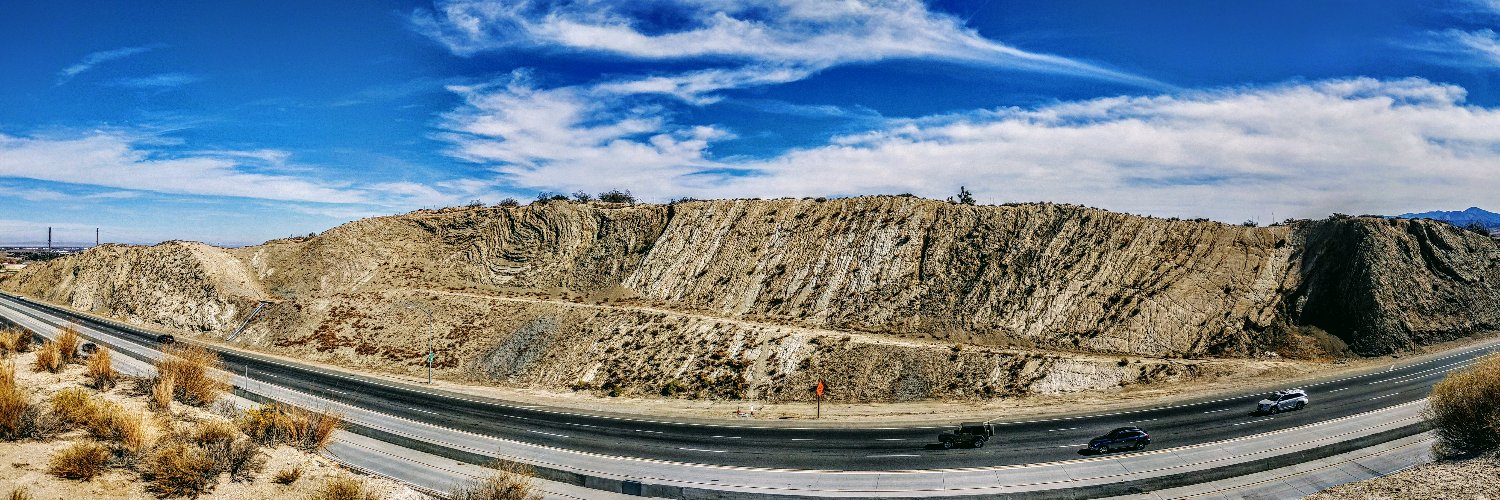
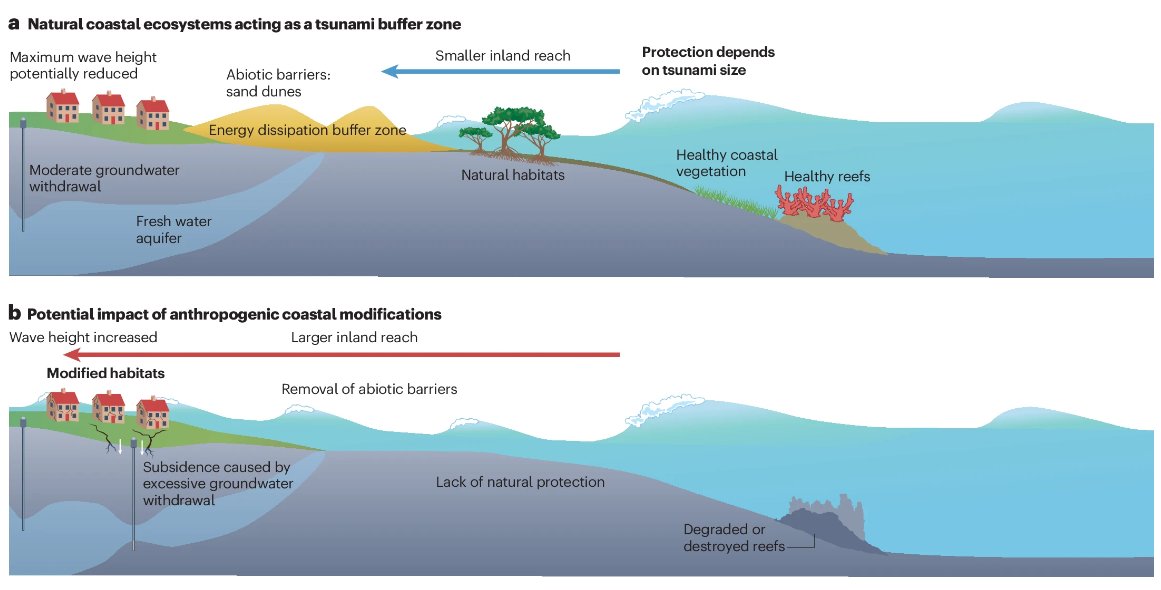
Check our new review paper on how human activities like irrigation/construction, etc impact cascading earthquake hazards. We show how our connection with our environment is complex, and landscape modifications can amplify landslide, liquefaction, and tsunami hazards.
Thrilled to announce my recent published work on polar monitoring using comp vision at IEEE OCEANS, a culmination of fieldwork in Svalbard last year. It focuses on estimation of floating ice distribution in glacial bays using aerial imagery by fine-tuning+robustifying a SAM (1/2)
Had fun presenting at @OCEANS_Conf in Halifax about our passive-acoustic monitoring system to track #biodiversity in #Singapore waters, focusing on marine mammals like #dolphins and #dugongs. This cloud-enabled system detects vocalizations, determines direction of calls,... (1/2)
The third #InVEST_EOS Quarterly Workshop held on Wednesday was filled with insightful and interactive discussions, with the focus on earthquake and volcanic cycles.
Participants had the opportunity to share their research interests and connect with others. A big thanks to Research Fellow @sharadhask03 and InVEST Principal Investigators @lucadalzilio and @euanjfmutch for hosting and making the workshop a success!
Last year,we explored marine robots to study glaciers in the Arctic.We started with a low-cost robot to test the waters (or the ice!) in these glacial fjords. Now we have some Polish TV coverage with our "Glacial Ablation MOnitoring Robot" (GLAMOR): https://t.co/TWC1JGu5lb (1/2)
Published today @ScienceMagazine: Scale-dependent fracture energy as simple explanation for earthquakes observed across all scales with implications for earthquake nucleation & multi-fault rupture cascades with @BeyondTremors@KadekPalgunadi@Prof_QuakeMod
https://t.co/LAHAAJnGBu
It ties up ~3 yrs of research on detecting sounds of dolphins, dugongs etc from 10 island sites around #Singapore (focusing on acoustic method itself now rather than behavioral). Idea is to use this to understand visitation trends for biodiversity and impact assessment (2/2).
I'll be doing some outreach at the Singapore Central library @nlbsingapore on the 9th of June, talking about the world of underwater sound, and why it is relevant to understanding our environment :). Do pop in if you're around. The event is open to all: https://t.co/pzjGGKAaJ4
A M5.9 earthquake just struck offshore Sumatra, Indonesia. This was a subduction event, right in the gap between the great earthquakes of 2004 & 2005.
Records from ancient corals suggest that earthquake ruptures have stopped here before.
Read more on our blog; link in my bio.
Different human activities such as deforestation can decrease slope stability and amplify the earthquake-induced landslide hazard. Check out this study led by #EOSsg & @ntu_ase scientists to learn more: https://t.co/diOidFCByh
Calling all teachers in Singapore! #EOSsg is proud to announce that the 2nd iteration of the Earth Alive Inter-School Challenge is in partnership with the @USEmbassySG and in support of @MSEsingapore#GoGreenSG 2024 campaign. 👉https://t.co/anaiiQJ3Jk @ScienceCentreSG
Curious about how land use changes affect secondary earthquake hazards? Our latest review paper examines global instances where urbanization and landscape alterations have exacerbated eq related hazards.
New research led by #EOSsg and @ntu_ase scientists has shown that various human activities and modifications of our landscape can make landslides, tsunamis, liquefaction after an earthquake worse.
@NatRevEarthEnv@emh_geodesy@sharadhask03@davidlallemant
https://t.co/diOidFD9nP
The Dr Stephen Riady Geoscience Scholars Fund has awarded over S$45K to postgraduates Alina Bill-Weilandt, Yochi Okta Andrawina, and Hu Jie, PhD students at @ntu_ase, supervised by ASE faculty, who are also Principal Investigators at #EOSsg. Congrats!
https://t.co/ujWktPStvJ
🚨New Perspective!
Human modifications to the environment can amplify the hazards from earthquake-triggered landslides, liquefaction & tsunami🌊⚠️
This Perspective by @emh_geodesy et al. discusses these links to identify steps for hazard mitigation
https://t.co/RpQSgDGiEI
I had so much fun doing this! Climate connections is a great breakfast-time program that dives into important environmental issues that intertwine with our day to day lives. I spoke about our work in the Bali rice fields and how to mitigate GHG emissions from rice production.
Did you know that rice production emits greenhouse gases such as methane? #EOSsg scientist @sharadhask03 has spoken about her project during her PhD at @ntu_ase exploring potential solutions to mitigate greenhouse gas emissions in rice fields of Bali.
https://t.co/uPTahcUEC6
Congratulations to the interdisciplinary team of #NTUsg students for their outstanding performance at the Singapore #AutonomousUnderwaterVehicle Challenge 2024 (@sauvcsg). The undergrad team secured third prize with exceptional navigation skills and are now preparing for the MATE ROV Competition 2024 in the USA. Best of luck, team #NTUsg!
#NTUsgStudents #NTUsgInnovation #NTUsgInterdisciplinary #NTUsgEducation #SAUVC24 #robotics #AUV #STEM #marinerobotics #autonomoustechnology #engineering
Oceans are some of the most challenging environments. Even though the Earth is 70% underwater, we know so little about them. Advancing our engineering prowess underwater allows us to progress as inhabitants of this planet.