Garvan's Dr Ksenia Skvortsova is investigating why women are more susceptible to autoimmune disease, research that could open new pathways to earlier diagnosis and better treatments. 🔗
https://t.co/tqBcE10cky
#AutoimmuneResearch#AutoimmuneDisease#MedicalResearch
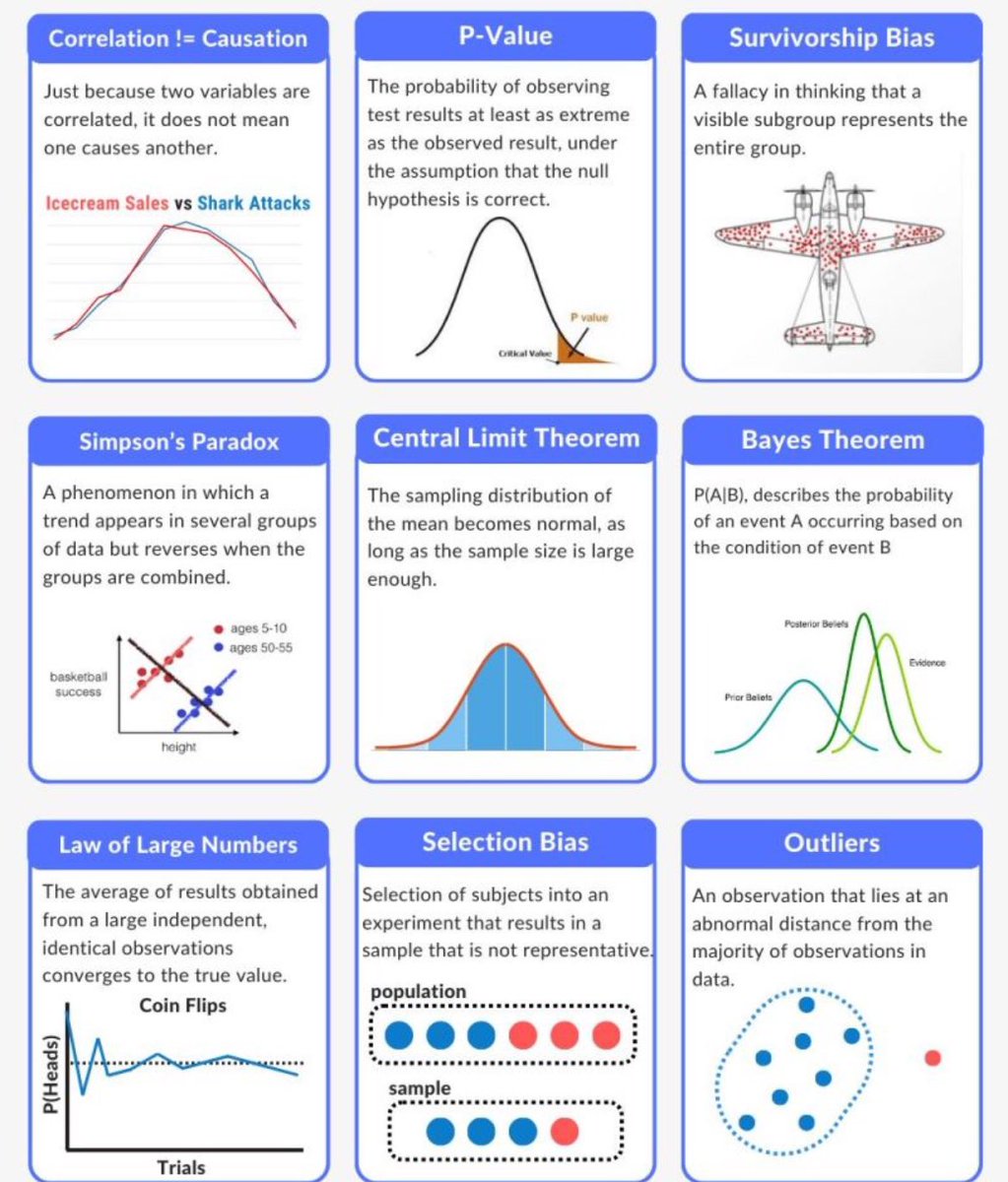
This quick guide to data visualization will save your life.
(I learned this after messing up 100+ charts)
Ever stared at your data and thought:
"Bar chart? Line graph? Scatter plot?"
After reviewing 1000+ visualizations,
here's what nobody tells you:
Don't mistake solitude for loneliness. Deciding to be alone is different from being isolated.
New evidence: When people think it's harmful to be by themselves, time alone is more likely to make them lonely.
Isolation is unpleasant seclusion. Solitude is often a peaceful choice.
Most genetic studies test associations with disease incidence — there are few genome-wide explorations for disease progression📈🧬
This preprint uses a new method (snpnet-Cox) to test time-to-event genetic associations with cardiometabolic disease progression.
Our first multi-national GWAS on income is out in @NatureHumBehav 🧬💰
- 162 loci (88 novel)
- significant heterogeneity between countries
- significant heterogeneity between men and women
- unique non-education income effects
Open Access Link: https://t.co/hV7ZrIok1G
POP-GWAS led by @Jiacheng_Miao is published today in @NatureGenet. This work showcases modern data science leveraging the power of machine learning while maintaining statistical validity. It also provides a GWAS solution when the outcome is ML-predicted https://t.co/XBrZ7MBpcd
New preprint examining associations between impulsive personality trait, alcohol consumption, and alcohol use disorder polygenic scores (PGSs) and binge drinking trajectories from adolescence into early adulthood in three independent longitudinal samples. https://t.co/XYJ0KVrIa2
@shannon_durso and I wrote a piece for the @ConversationEDU 👇
Does drinking coffee while pregnant cause ADHD? Our study shows there’s no strong link https://t.co/IovyI5BYF5
Our new paper is accessible here: https://t.co/7uwVR41zY6. Thanks to all our study participants (across 6 cohorts) and all our co-authors for their hard work, especially Julia Sidorenko and Peter Visscher.