CNCF Ambassador applications close this Sunday, July 12. If you are active in the community, love mentoring contributors, and want to help other builders thrive with open source, have a look at what it means to be a CNCF Ambassador before the weekend: https://t.co/rFvrtUAFNz
I've been a backend Engineer for 12+ years. Today, I'm a Principal Engineer at Atlassian.
I've designed systems that handle millions of requests. Sat on both sides of system design interviews.
Reviewed more architecture docs than I can count.
Starting today, I'm breaking down the fundamentals of scaling for the next 25 days.
If you're learning system design bookmark this thread, you're going to get a lot of learning from this.
Here's my conversation all about @FFmpeg, the legendary open-source software powering most video on the Internet. In the episode, I talk with Jean-Baptiste Kempf and Kieran Kunhya. JB is lead developer of VLC and Kieran is FFmpeg contributor, codec engineer, and the person behind the now-infamous @FFmpeg account on X.
VLC (@videolan), by the way, is also a legendary piece of open-source software: it's a video player that can open basically anything & has been downloaded over 6 billion times.
I think both FFmpeg and VLC are two of the most important and impactful software systems ever created, both open source, and both created & maintained by volunteers: brilliant engineers from all walks of life.
Thank you to everyone who contributed to FFmpeg and VLC, and in general to all engineers giving their heart & soul to building systems used by millions (or billions) of people, and often doing so not for money, status, or fame, but purely for the love of building great software and doing good for the world.
Thank you to the builders! 🙏❤️
Shoutouts in this chat to @ID_AA_Carmack@karpathy@elonmusk@TimSweeneyEpic and everyone who is a contributor & fan of open source!
It's here on X in full and is up everywhere else (see comment).
Timestamps:
0:00 - Episode highlight
2:17 - Introduction
5:35 - Weirdest things VLC opens
9:59 - How video playback works
19:20 - Video codecs and containers
30:07 - FFmpeg explained
51:07 - Linus Torvalds
55:46 - Turning down millions to keep VLC ad-free
1:10:04 - FFmpeg & Google drama
1:29:18 - FFmpeg developers
1:35:55 - VLC and FFmpeg
1:40:29 - History of FFmpeg
1:43:46 - Reverse engineering codecs
1:57:01 - FFmpeg testing
2:01:08 - Assembly code (handwritten)
2:25:26 - Rust programming language
2:34:42 - FFmpeg and Libav fork
2:43:04 - Open source burnout
2:50:51 - x264 and internet video
3:04:07 - Video compression basics
3:11:04 - CIA and fake VLC
3:21:39 - Ultra low latency streaming
3:39:07 - AV2 codec and video patents
3:48:59 - VLC backdoors
3:59:14 - Video archiving
4:05:51 - Future of FFmpeg and VLC
We’ve identified a security incident that involved unauthorized access to certain internal Vercel systems, impacting a limited subset of customers. Please see our security bulletin:
https://t.co/0S939n3qHC
Announcing Amazon S3 Files.
The first and only cloud object store with fully-featured, high-performance file system access.
Learn more here. https://t.co/rNuWa5Rsi2
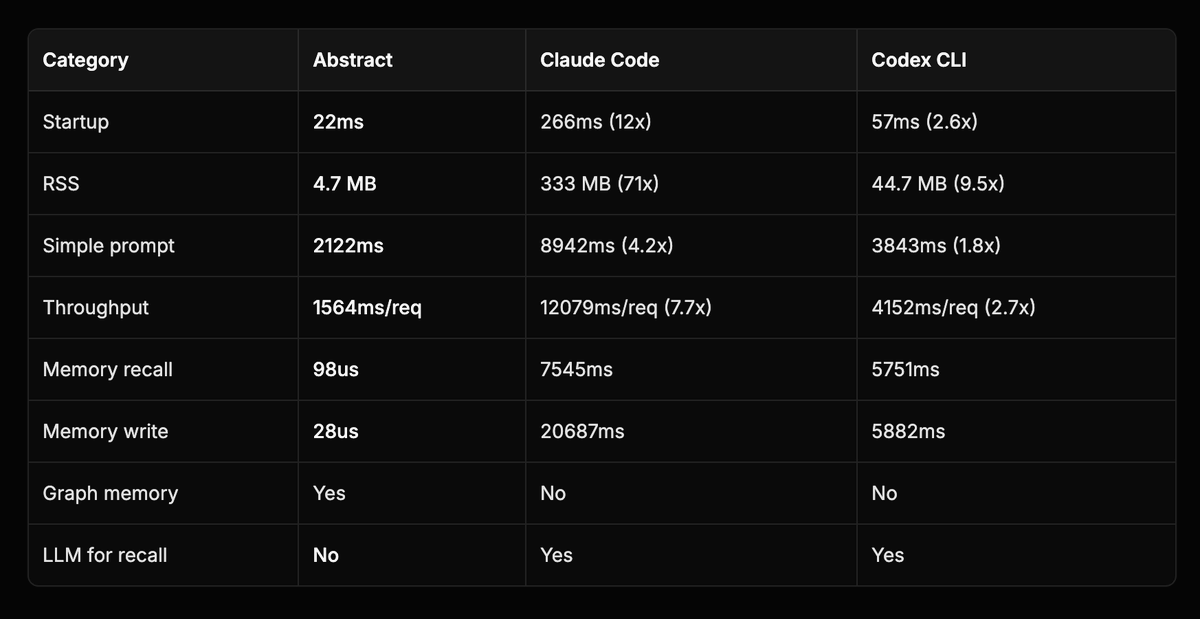
Built an embeddable coding agent library, Cersei, inspired by the Claude Code architecture, now anyone can embed coding agents directly to @rustlang apps.
Results:
• ~7× higher throughput than Claude Code
• ~2× faster than Codex
• 0.098 ms memory recall (vs 7545 ms / 5751 ms)
FFmpeg is moving to Rust 🦀
Our use of C and Assembly in FFmpeg has been an unacceptable violation of safety.
FFmpeg will be running 10x slower - but we're doing it for your safety.
All your videos will appear green - safety first, working software later.
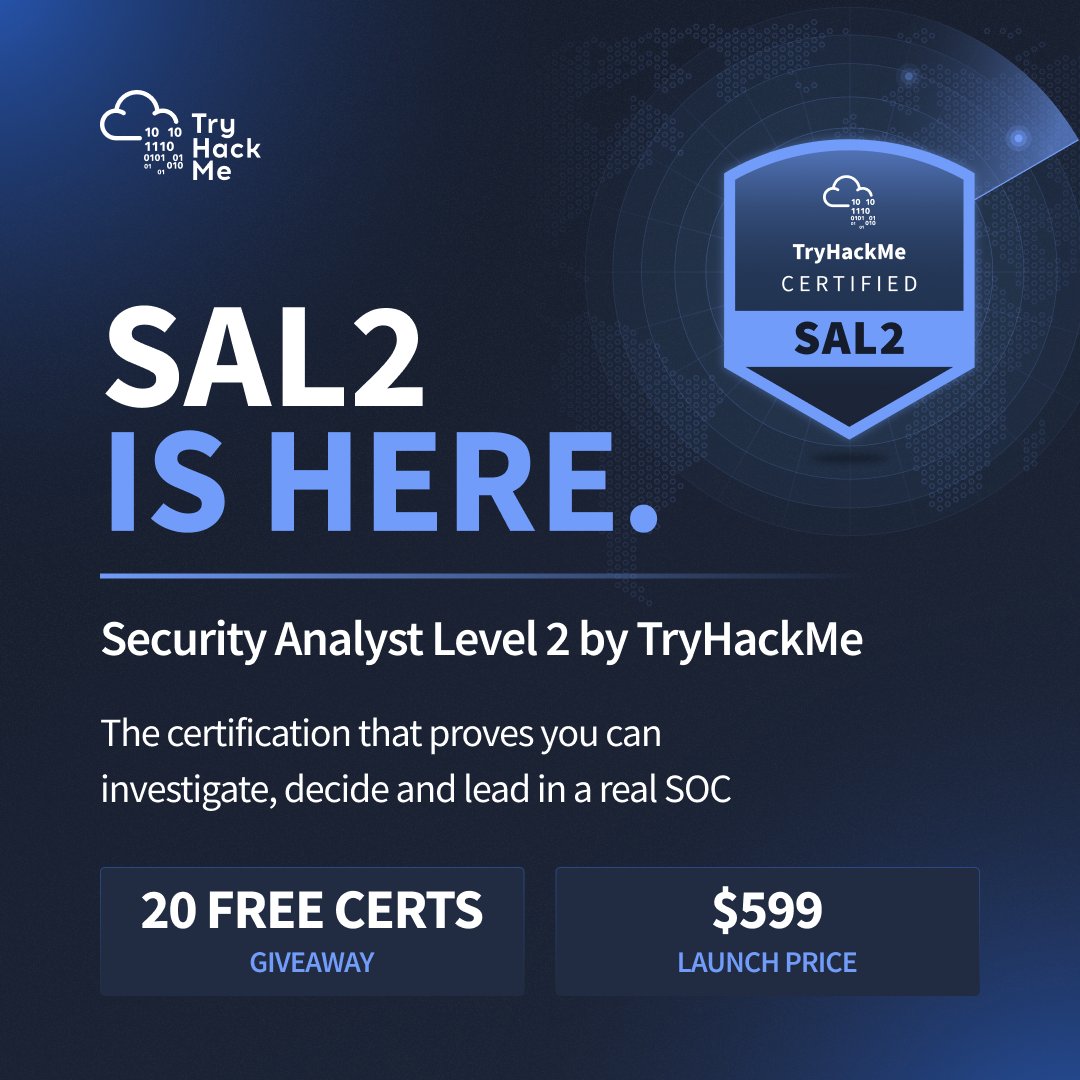
🎁 We're giving away 20 FREE SAL2 certifications 🎁
The wait is over...SAL2 is officially here 🚀 Security Analyst Level 2 is the certification that proves you can investigate, decide, and lead in a real SOC. The only defensive cert that covers every domain a real L2 analyst faces!
💸 With a special launch price of $599 valid until 2 April only.
🚀 Comment, SHARE and fill in the form to enter the free cert giveaway ▶️ https://t.co/j4tOzqIjuo
❓Want to know more what SAL2 is about see here: https://t.co/DAej3B9q7j
how can engineers (or anyone) get better at design?
i get this question a lot. as someone who went from cs to design, here's a real path:
start with systems thinking
engs already get this. design is just systems for humans & our senses, instead of machines. read “thinking in systems” if you haven't.
learn the fundamentals
there are systems we humans evolved for centuries to visually present and receive information. you cannot escape these even for the cli:
- typography — start with “details in typography” by jost hochuli
- color basics — start with “interaction of color” by josef albers
- grid systems — start with “grid systems” by josef müller-brockmann
- visual hierarchy, reading rhythm, symbols & conceptual systems, motion, accessibility, … — you’ll pick more up as you go
open your eyes & brain
look at things around you, digital and natural. observe the beauty and sameness in everything. think why is it made this way. make connections between what you observe and what you think and make. break away from rigidity, linear thinking, let loose. stare at the sky, do nothing. see through everything.
then just start making stuff
now that you notice things, try to make things better, your way first. redesign apps you use daily. copy designs you love pixel by pixel — you'll learn more in a week than months of theory. then share it with others, get feedback, and design for more people.
key mindset shift: feelings first
stop optimizing for the computer, start optimizing for the human. engineers think in edge cases and error states. designers think in happy paths and emotions. the feelings and how things fold together ends up to be way more important to humans than the edge cases.
tools don't matter much
Figma is industry standard. learn it in a weekend (it’s basically visual flexbox). use Cursor to dismantle and prototype with existing design systems and study how they are built — frontends go deep.
most important: find your design voice through constraints. pick one great typeface, limited color palette, and make 10 different layouts. constraints breed creativity. iteration is how you get there.
great engineers already understand systems, logic, and problem-solving. just need to apply that to human concepts and problems instead of technical ones.
start tomorrow. redesign your personal website or a simple app. ship it. share it. repeat.
Here's my 6 hour conversation with @dhh, a legendary programmer, creator of Ruby on Rails, author, and race car driver. This was a fun and inspiring conversation on everything from the future of programming & AI to the nature of happiness & productivity to the value of family, getting married and having kids.
X limits video length to 6 hours. So this full convo doesn't fit (by a few minutes). So, the first 6 hours are here on X. The full version is up everywhere else (see comment).
Timestamps:
0:00 - Episode highlight
1:21 - Introduction
2:32 - Programming - early days
19:57 - JavaScript
30:16 - Google Chrome and DOJ
38:03 - Ruby programming language
45:14 - Beautiful code
1:03:15 - Metaprogramming
1:06:36 - Dynamic typing
1:13:55 - Scaling
1:26:47 - Future of programming
1:44:18 - Future of AI
1:50:13 - Vibe coding
1:58:45 - Rails manifesto: Principles of a great programming language
2:23:11 - Why managers are useless
2:32:32 - Small teams
2:38:39 - Jeff Bezos
2:53:57 - Why meetings are toxic
3:01:43 - Case against retirement
3:09:00 - Hard work
3:14:38 - Why we left the cloud
3:17:48 - AWS
3:27:07 - Owning your own servers
3:33:19 - Elon Musk
3:43:01 - Apple
3:54:48 - Tim Sweeney
4:06:22 - Fatherhood
4:32:04 - Racing
4:59:08 - Cars
5:04:26 - Programming setup
5:19:35 - Programming language for beginners
5:32:53 - Open source
5:41:46 - WordPress drama
5:53:03 - Money and happiness
6:01:56 - Hope
5 AWS Projects You Need to Do to Get Hands-On
1.3-Tier Web App (EC2 + RDS + ALB): Learn how real-world applications are architected in the cloud.
2.Serverless File Uploads (S3 + Lambda + DynamoDB): Understand event-driven automation without managing servers.
3. CI/CD Pipeline (Jenkins / GitHub Actions + ECS/ECR): Master continuous integration and deployment like a DevOps pro.
4.Static Website Hosting (S3 + CloudFront): Learn cost-effective, globally available website hosting.
5.Monitoring Stack (CloudWatch + SNS + Grafana): Get real experience in observability and incident alerting.