Bidang Ideologi @EXCOPARTAIBURUH | Pemred Jurnal @indoprogress | Working on operaist IR, circuitist monetary geoeconomics & blockchain geopol at
@monashmyArts
Tentang tiga pilar Negara Sejahtera ala Partai Buruh :
1. Kesetaraan Kesempatan
2. Redistribusi Kekayaan
3. Tanggung-Jawab Publik
@EXCOPARTAIBURUH
https://t.co/A6UR4nEPPU
This is f*cking gold, the CEO of Obsidian gave away his own second brain for free, and people still burn months building theirs from zero
7 free repos, the full second brain stack:
-> kepano obsidian (by kepano) https://t.co/lT5QtPucOn his own vault, steal the structure and never face an empty one again
-> obsidian templates (by groepl) https://t.co/F3GfKwUK1O Zettelkasten templates and scripts, plug in the method and go
-> digital gardeners (by MaggieAppleton) https://t.co/vSsZvYxmV6 how to grow notes that compound instead of rotting in a folder
-> jsoncanvas (by obsidianmd) https://t.co/iNkNYs8Y7k the open canvas format, your maps stay plain files nobody can lock away
-> obsidian releases (by obsidianmd) https://t.co/AMjE6dW82S every community plugin and theme in one place, add any power you want
-> obsidian sample plugin (by obsidianmd) https://t.co/Ytp6e1mcDo the official starter, build the feature nobody made for you
-> obsidian wiki (by Ar9av) https://t.co/hFlezkqbGq AI agents write and maintain your notes, you just read
he built the hard part and gave it away
use it or keep starting from zero
Kerja di tech tidak harus dijalani sendirian.
Banyak dari kita menghadapi hal yang sama: kontrak yang membingungkan, jam kerja yang terus melebar, proses rekrutmen yang tidak jelas, atau skill yang harus terus diperbarui. Sering kali semuanya kita hadapi sendiri.
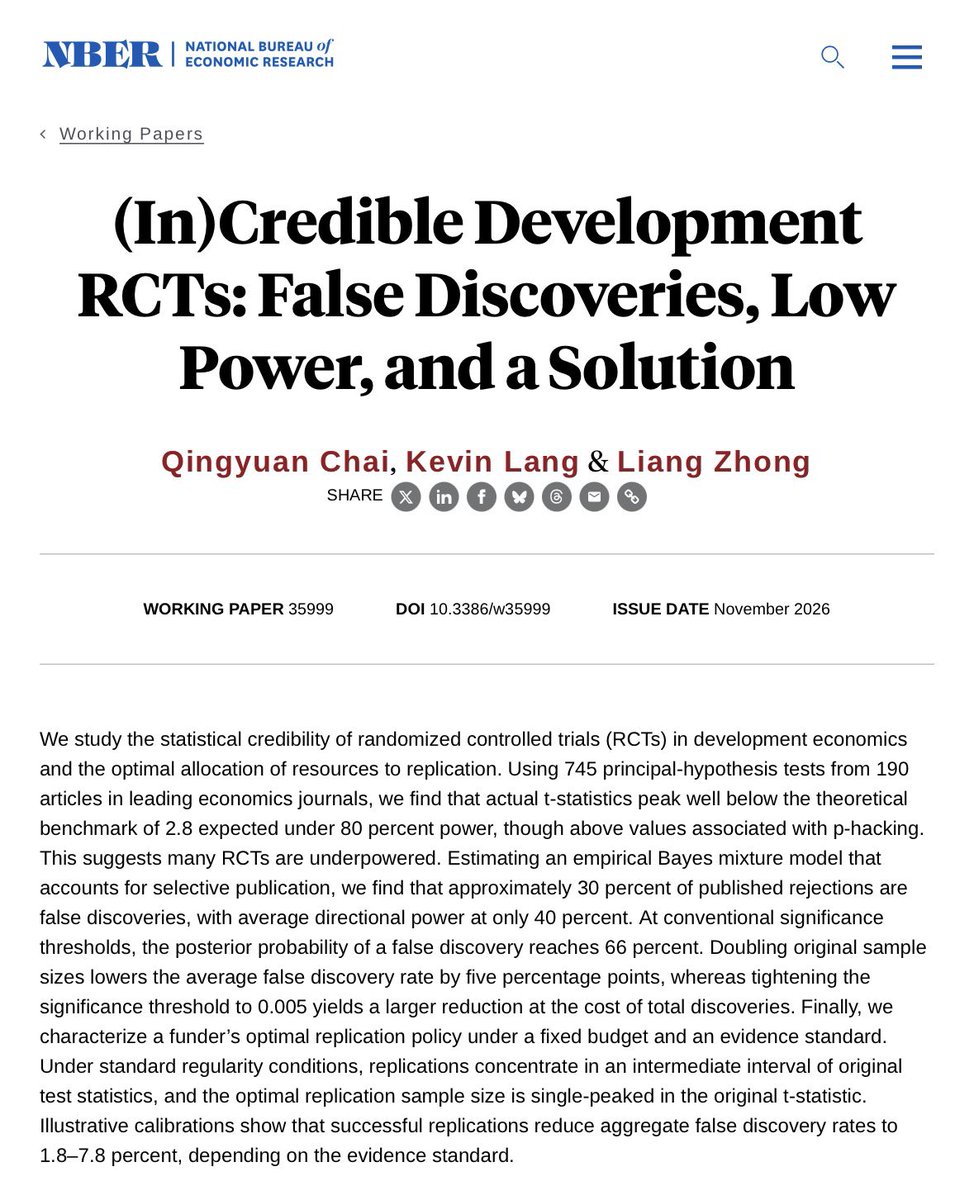
Nearly a third of statistically significant findings in development economics may be false discoveries
In a new NBER working paper, Qingyuan Chai, Kevin Lang, and Liang Zhong question the statistical credibility of randomized controlled trials (RCTs), which have become one of the main tools of modern empirical economics.
The authors analyzed 745 tests of primary hypotheses from 190 papers published in leading economics journals and arrived at some rather troubling findings.
https://t.co/ULKEsy0Xck
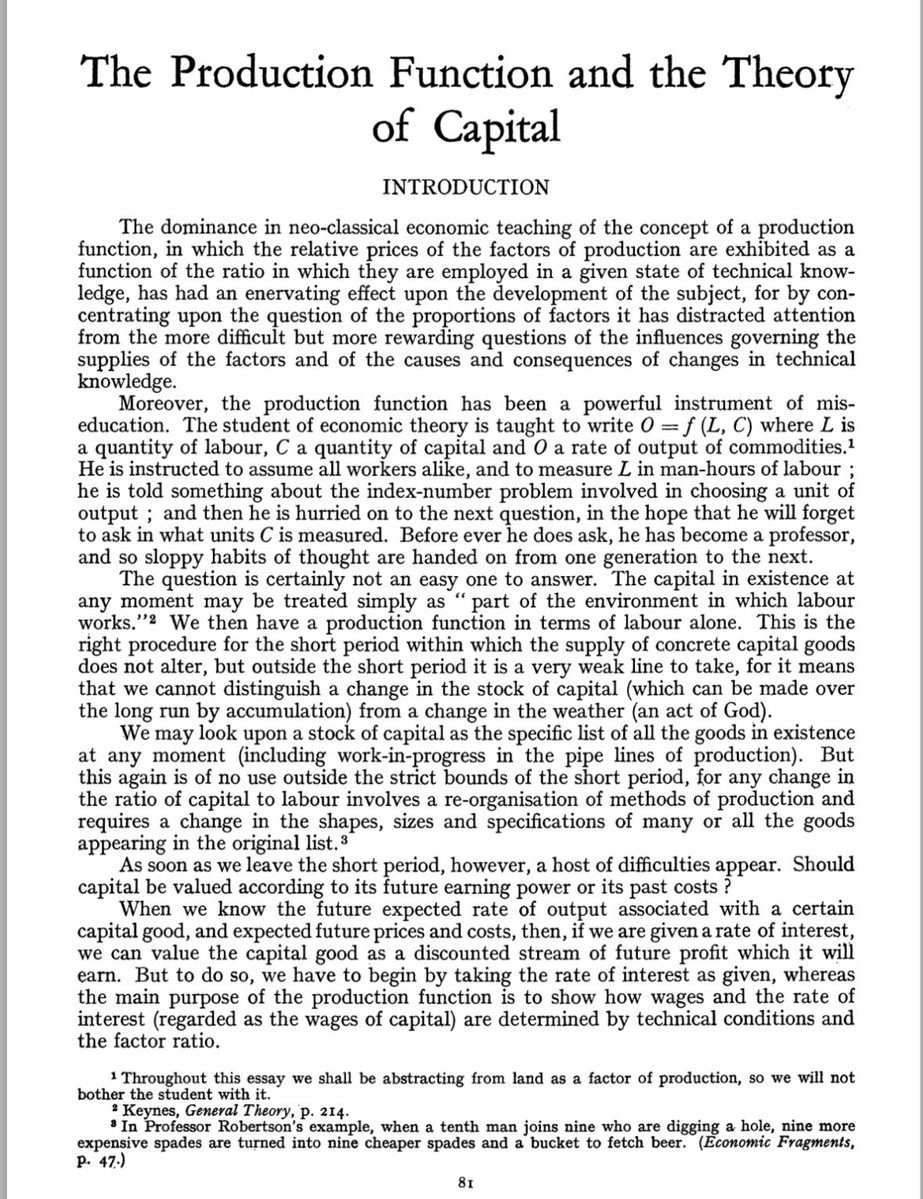
This page from Joan Robinson’s article is one of the most powerful pieces of writing in the entire economics literature of the second half of the twentieth century.
Joan Robinson, The Production Function and the Theory of Capital, The Review of Economic Studies, Vol. 21, No. 2 (1953–1954), p. 81.
I’m told Perry Mehrling has passed away. His money and banking course at Barnard was hugely formative for me and many others.
This is an awful year for social thought. And I’m afraid we’re not producing many people of that caliber who can fill the ranks.
In a private group chat, an elite crew of prediction-market bettors turn elections, wars and disasters into ‘free money on the floor’: https://t.co/7YKS0LEF4z
Super interesting!
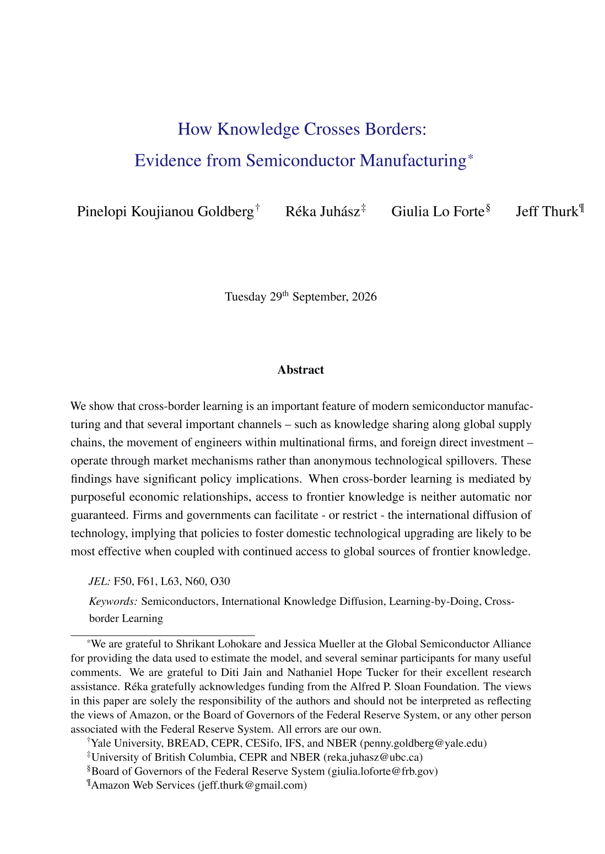
"How Knowledge Crosses Borders: Evidence from Semiconductor Manufacturing" by Pinelopi Koujianou Goldberg, Réka Juhász, Giulia Lo Forte, and Jeff Thurk.
"We show that cross-border learning is an important feature of modern semiconductor manufacturing and that several important channels - such as knowledge sharing along global supply chains, the movement of engineers within multinational firms, and foreign direct investment - operate through market mechanisms rather than anonymous technological spillovers. These findings have significant policy implications. When cross-border learning is mediated by purposeful economic relationships, access to frontier knowledge is neither automatic nor guaranteed. Firms and governments can facilitate - or restrict - the international diffusion of technology, implying that policies to foster domestic technological upgrading are likely to be most effective when coupled with continued access to global sources of frontier knowledge."
https://t.co/5jcnkPZYKd
Google dropped a free 2 hour course on full graph engineering, taking you from a single prompt to a hundred agents wired into loops and graphs
17:44 – Building your first agent
39:30 – Loop engineering, iterate, check, break
1:12:38 – Graph engineering
1:34:26 – Agents that throttle themselves
1:55:05 – Full graph for multi agentic systems
Most people build a single agent and stop there. This course shows the full system, where agents wire themselves into a graph on their own
Watch it today, then check out the graph engineering playbook below for a deeper breakdown
Guru dan Dosen Sengaja Dimiskinkan? Segudang permasalahan di dunia pendidikan nasional. Salah satunya, upah dosen yang tidak layak.
Yuk tonton selengkapnya di YouTube Pedeo 🔥🔥🔥
https://t.co/oIRaFZV3Nj
Heads up for the labour economists on X! The call for paper for the annual @cepr_org - @bancaditalia workshop on labour market policies and institutions is open: submit your paper 👇
https://t.co/SySfn7AUzZ
Open Call for Papers: Emerging Markets: Navigating a Fragmented Global Economy Conference, December 10–11, 2026 — San José, Costa Rica. Submissions due 11:59pm ET on Tuesday, September 8, 2026 https://t.co/k2lmWmxtKA
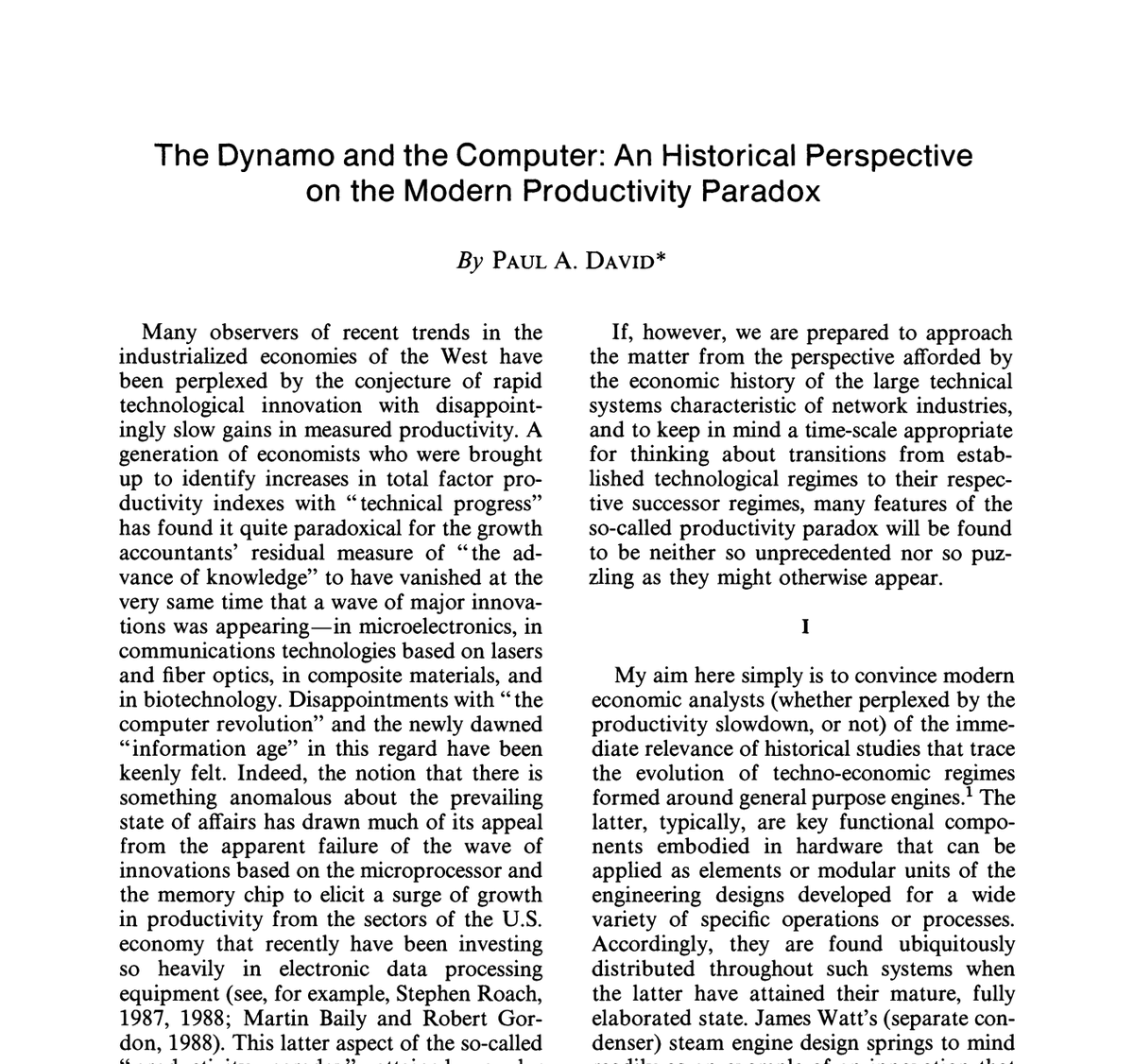
If you've adopted AI at your company but haven't seen any tangible results, read this 1990 article: "The Dynamo and the Computer" by Paul David.
When electricity first arrived, factories that "adopted" it barely got faster. They just swapped the steam engine for an electric one and ran everything else exactly as before: same machine layout, same workflow, same management. Electricity in, no real gains out.
The most common mistake with any new technology is to drop it into the old organization and then declare the transformation done.
The real leap came decades later, when each machine got its own small motor. Suddenly machines no longer had to be lined up around one central drive shaft. They could be rearranged around the actual flow of work.
The productivity gains didn't come from electricity. They came from REDESIGNING THE ENTIRE FACTORY around it.
AI is the same. Bolting it onto your existing process gets you a faster steam engine. The payoff comes when you redesign the work itself.
(link to paper in comments)
📣 Fresh "Spatial Economics for Granular Settings" at https://t.co/ZR4YFDCbQz w/ new results:
- Analytical results about overfitting and idiosyncrasies in special cases
- SVD approximation is better than we realized
- Code for main-text exhibits at https://t.co/t0hIuhRbhX
This is getting out of control now...
Read this slowly.
In the past week alone:
• Head of Anthropic's safety research quit, said "the world is in peril," moved to the UK to "become invisible" and write poetry.
• Half of xAI's co-founders have now left. The latest said "recursive self-improvement loops go live in the next 12 months."
• Anthropic's own safety report confirms Claude can tell when it's being tested - and adjusts its behavior accordingly.
• ByteDance dropped Seedance 2.0. A filmmaker with 7 years of experience said 90% of his skills can already be replaced by it.
• Yoshua Bengio (literal godfather of AI) in the International AI Safety Report: "We're seeing AIs whose behavior when they are tested is different from when they are being used" - and confirmed it's "not a coincidence."
And to top it all off, the U.S. government declined to back the 2026 International AI Safety Report for the first time.
The alarms aren't just getting louder. The people ringing them are now leaving the building.