@JeepIndia I have been trying to get my Jeep Compass LE fixed for the last 3 months. It’s not even accidental damage! All the dealer has been saying is - parts are not available. No definite answer! #poorcustomerservice#poorexperience#worstservice
All good things have to come to an end!
After a decade long service as Chairman of the jury (2015- 25) to select the winners of the prestigious Earthcare Awards @EarthCareAwards I stepped down - passing the baton to redoubtable Dr Ajay Mathur, a real Guru in climate change.
Thank you JSW @TheJSWGroup and Times of India @timesofindia
for your trust and confidence in me.
Thank you the jury members - your wisdom and insights were responsible for raising the standards of these awards to incredible heights.
Special thanks to @SangitaSJindal for your deep commitment and passion, which kept on pushing us to be more inclusive, innovative and impactful.
And finally, thanks to two wonderful young champions - Rupa Davane and Sanjukta Singh - for your amazing energy and enthusiasm.
2026 Awards ceremony was simply spectacular.
Please do read the report👇and you will see why.
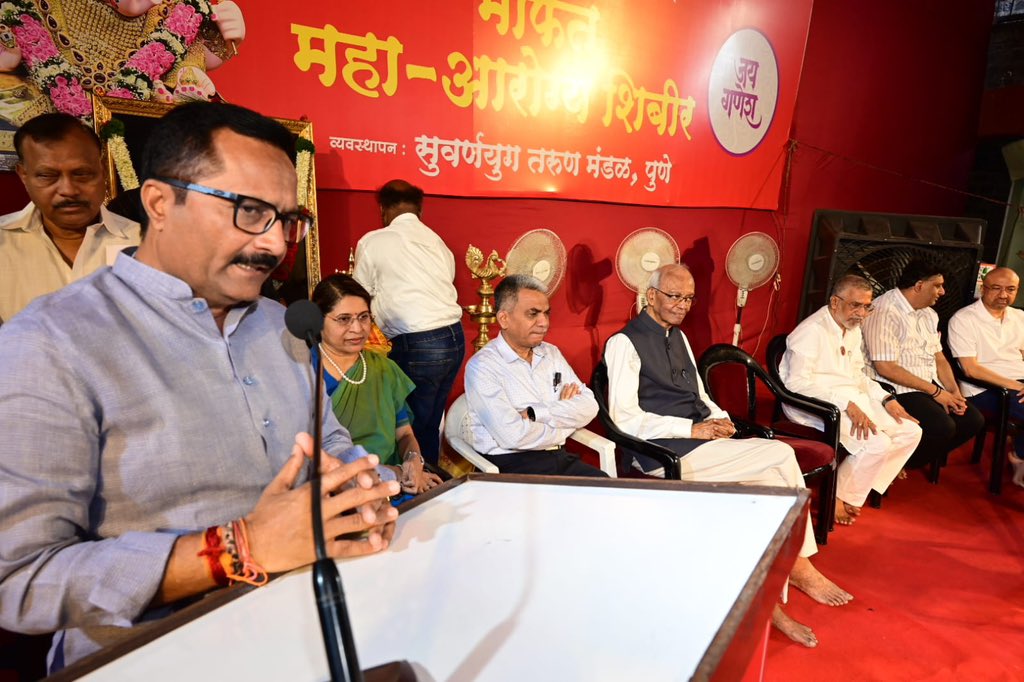
|| जय गणेश ||
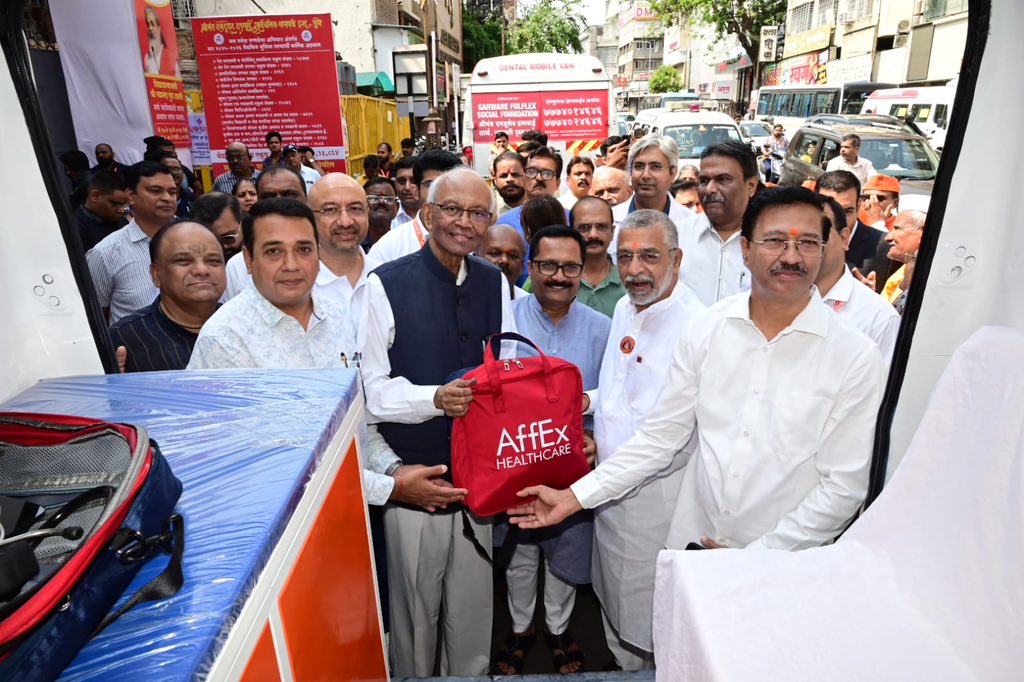
श्रीमंत दगडूशेठ हलवाई गणपती ट्रस्टच्या वतीने आयोजित करण्यात आलेल्या मोफत महाआरोग्य शिबिरास नागरिकांचा उत्स्फूर्त प्रतिसाद लाभला. या शिबिरामध्ये विविध तज्ज्ञ डॉक्टरांच्या उपस्थितीत नागरिकांची आरोग्य तपासणी करण्यात आली तसेच आवश्यक वैद्यकीय मार्गदर्शन व उपचार सल्ला देण्यात आला.
समाजसेवेच्या भावनेतून सर्वसामान्य नागरिकांना दर्जेदार आरोग्य सुविधा उपलब्ध करून देण्याचा ट्रस्टचा हा उपक्रम अत्यंत उपयुक्त ठरला. यावेळी ट्रस्टच्या वतीने तज्ञ डॉक्टरांचा सत्कार केला.
या शिबिराच्या यशस्वी आयोजनासाठी योगदान देणारे सर्व डॉक्टर, वैद्यकीय कर्मचारी, स्वयंसेवक आणि उपस्थित नागरिकांचे मनःपूर्वक आभार.
#shrimant #dagdushethhalwaiganpati #shrimantmoraya #bappa #arogyashibir
Can’t believe that Ravi Pandit is no more - in his passing we have lost a rarest of rare human being, an iconic institution-builder, a compassionate technologist, and a visionary nation-builder.
I have fully captured our long association in my biography
https://t.co/pdpxHzvgRY
15 years ago, when PIC was just an aspiration, as its founding trustee, Ravi stood with conviction behind the dream that Pune could build a globally respected intellectual platform combining ideas, innovation, public policy, and social purpose.
As the founder of KPIT Technologies, he demonstrated that an Indian company could stand tall on the global stage in advanced automotive technologies while remaining deeply rooted in societal responsibility and national purpose.
While leading KPIT Technology, Ravi passionately invested in the future — clean mobility, hydrogen technologies, advanced non-lithium battery materials, intelligent transportation systems, and green engineering solutions.
He nurtured scientific curiosity among children through initiatives like Chhote Scientists, inspired young innovators through the KPIT Sparkle Awards, and STEM dialogues with Nobel Laureates and leading scientists.
Ravi and I co-authored the book ‘Leapfrogging to Pole-Vaulting: Creating the Magic of Radical yet Sustainable Transformation’ — a work born from our common belief that incremental progress is no longer enough for India and the world.
Both of us felt proud, when we together got the Best Business Book of the Year 👇
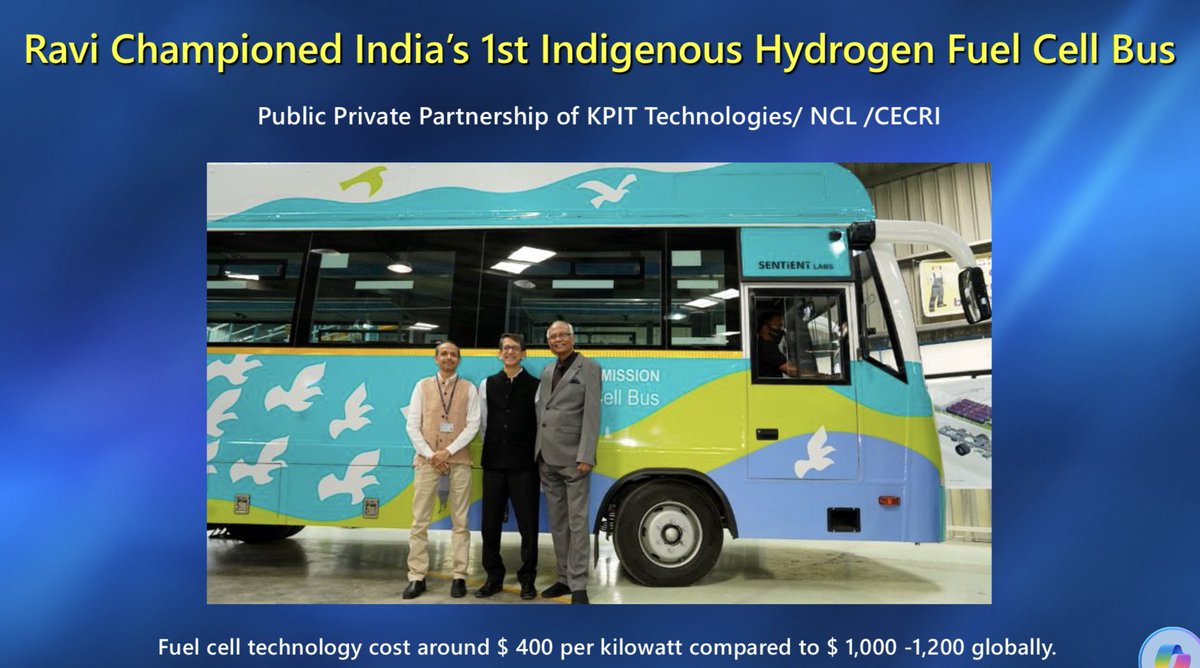
The pride was even more on the historic occasion of the launch of India’s first Indigenous Fuel Cell, built under his inspiring leadership 👇
But I feel most emotional when I see us together in our LAST MEETING on 6 March, when we gave away the KPIT Sparkle awards 👇
Ravi is no more. But he will be everywhere. His spirit will continue to illuminate every young innovator he inspired, every scientist he encouraged, every child whose curiosity he ignited, and every institution he helped build.
May his noble soul rest in peace🙏🙏🙏
@PuneIntCentre@dinakholkar@Girbane@aparanjape@KPIT
Hurry!
PLease apply for this most prestigious @Mashelkar_Fndn Prize, which, besides the humble cash prize of Rs 1 lakh, opens priceless opportunities for funding and scaling.
You could be the 18th to appear along with our 17 star winners of this prize over the years 👇
How to apply?
Just visit https://t.co/DtRU2xpVGR
Muttiah Muralitharan drops hard truth on IPL 2026
“IPL is now purely business. They prepare flat pitches because low scores are boring for sponsors. Even I would struggle to bowl against aggressive kids like Suryavanshi. Bowlers are treated like slaves.
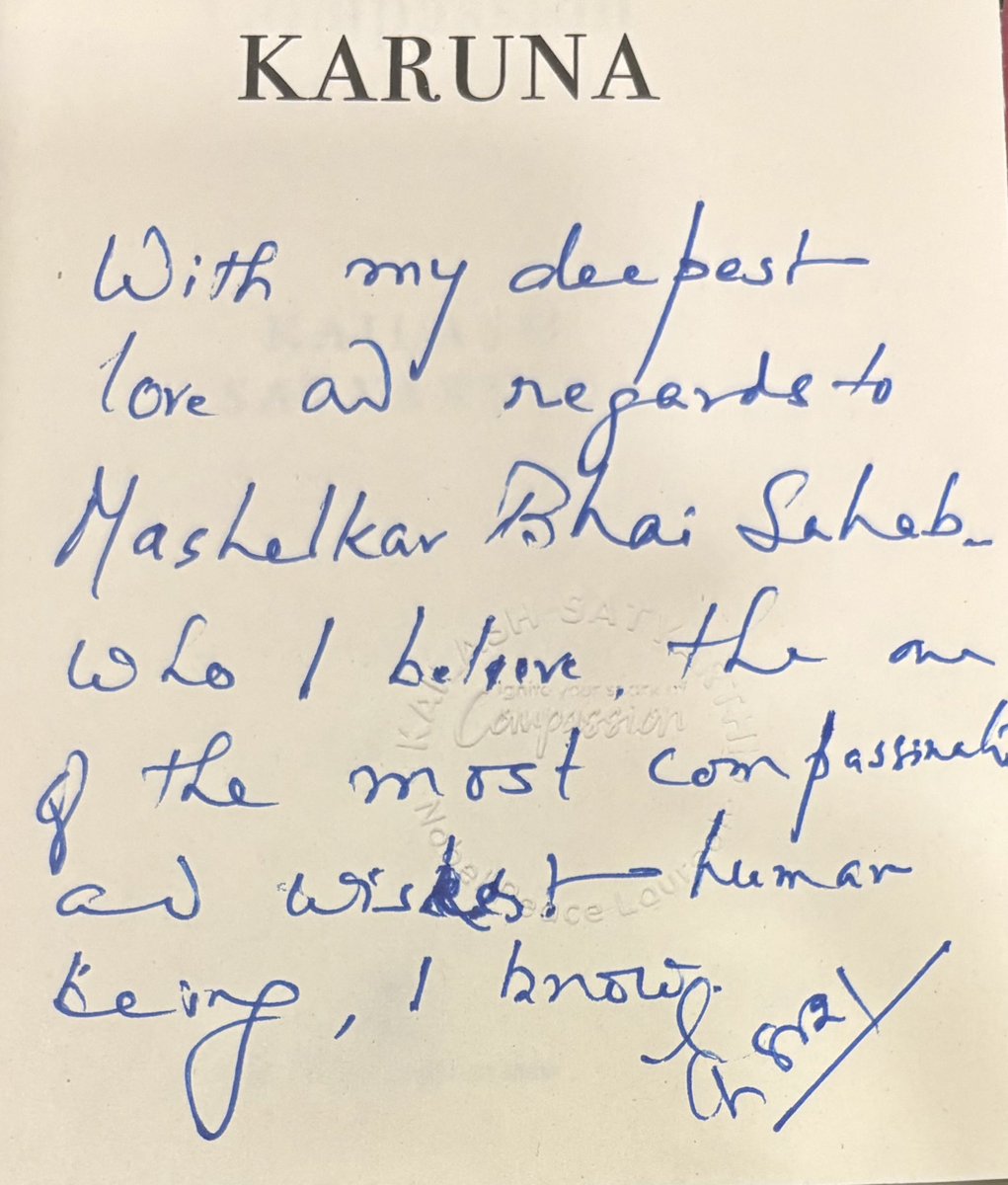
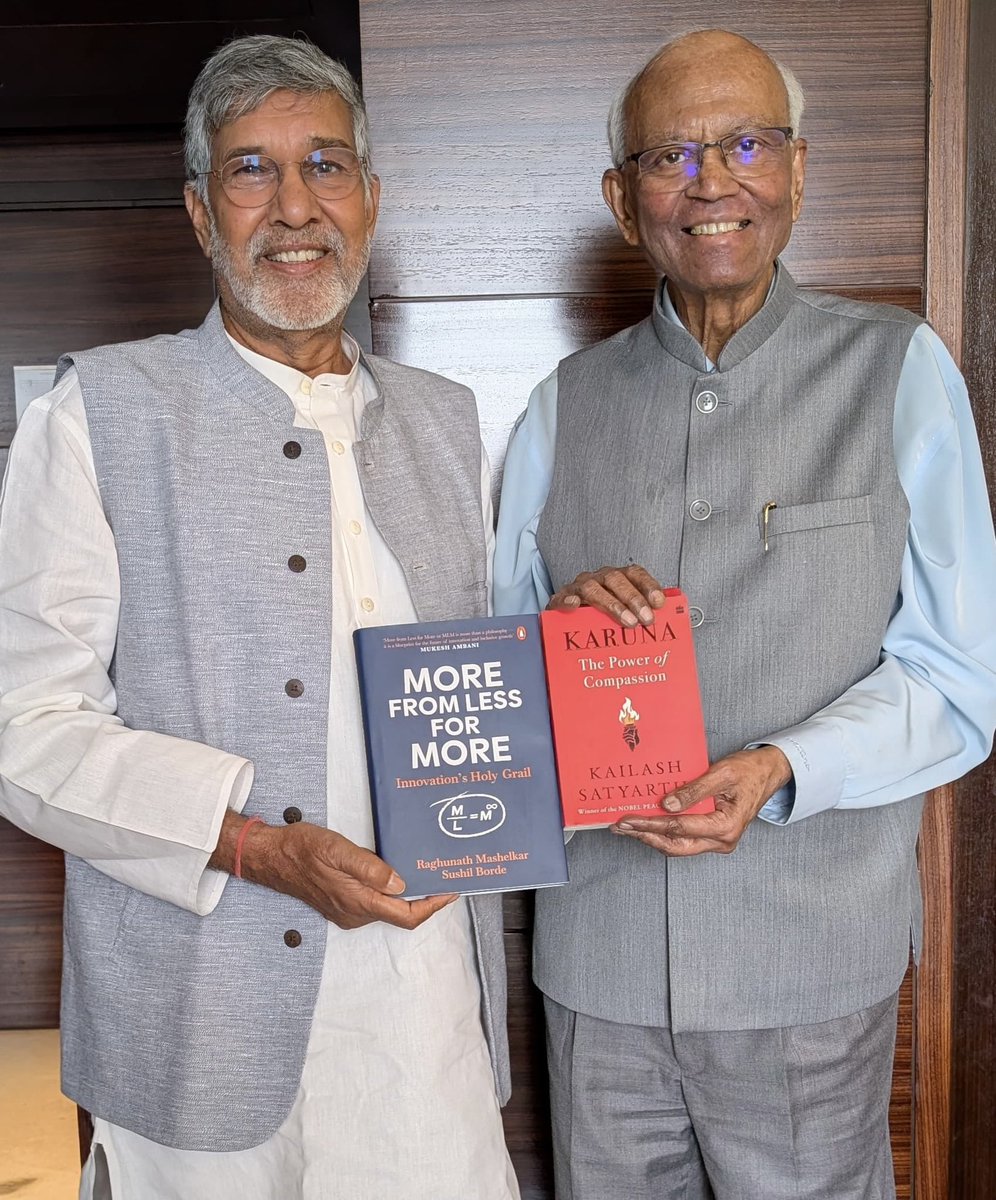
Legendary Peace Nobel Laureate Kailash Satyarthi ji @k_satyarthi presented 👇his recent book ‘Karuna:The Power of Compassion’ to me.
https://t.co/yHXZDN1IqE
I presented our Mashelkar - Borde book ‘More from Less for More’ to him.
https://t.co/cvXCgHXbz5
My day was made with his most kind & gracious remarks on the book ‘with my deepest love & regards to Mashelkar Bhai Saheb, who I believe is one of the most compassionate & wisest human being’ 👇
But our joy was even more, when Kailash ji said that these two books are two sides of the same coin,
Indeed!
‘Karuna’ speaks to the moral energy that drives change; ‘More from Less More’ book speaks to the innovative pathways that deliver it at scale.
Compassion provides the why—the deep human impulse to care, to include, to uplift.
“More from Less for More” provides the how—the discipline of creating affordable excellence, reaching the unreached, and multiplying impact with limited resources.
Together, they form a powerful synthesis: purpose with performance, empathy with execution, soul with scale.
In that union lies a new paradigm for the world—where we do not merely grow, but grow justly and where the true measure of progress is how effectively we transform human concern into universal well-being.
@PuneIntCentre@sushilborde@anilgb@dinakholkar@amitabhk87@aparanjape@anil_kakodkar
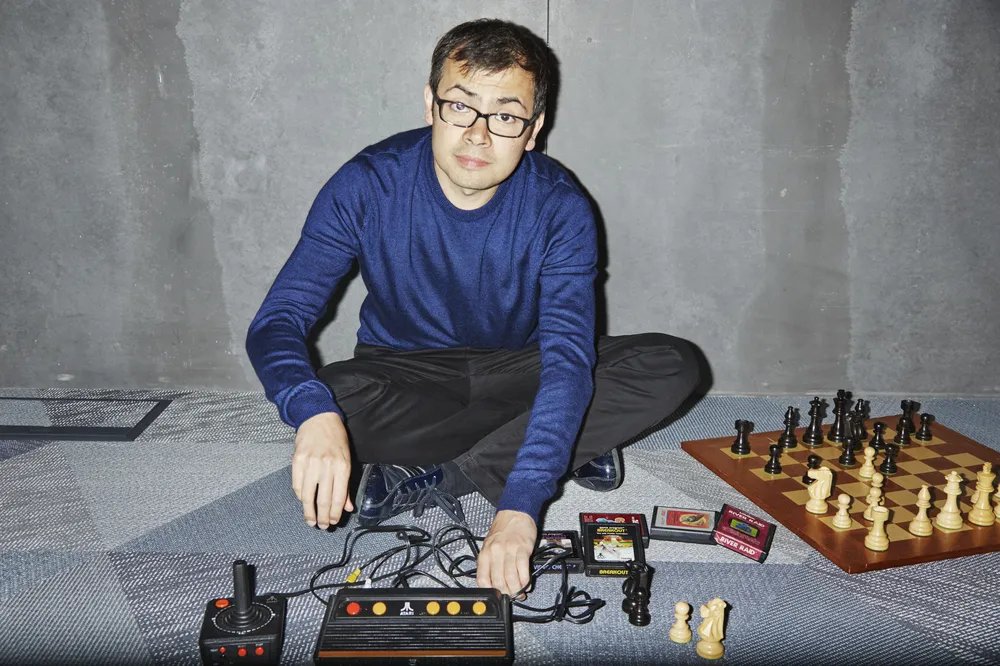
A British kid became a chess master at 13, then a bestselling video game designer at 17, then a PhD neuroscientist at 33, then the CEO of the AI lab that won the 2024 Nobel Prize in Chemistry.
People called him unfocused for twenty years. He was running the most deliberate career plan in modern science.
His name is Demis Hassabis, and the thing almost nobody understood while he was doing it was that every single step was feeding the same underlying obsession.
Here is the thread that connects the whole career, and why it matters for how anyone should think about building toward a hard goal.
The chess came first. He was born in London in 1976 and started playing at age four. By eight, he was the London champion for his age group. By thirteen, he had an international master rating that put him in the top fifty players in the world under his age bracket. He was on a track that would have made him a professional player for the rest of his life.
He walked away.
The reason he gave later, in interview after interview, is the part most people miss. He said chess forced him to think constantly about thinking itself. Every move required him to simulate what his opponent was simulating about him. He became fascinated not with winning the game, but with the process the human brain was running in order to play it. He decided chess was too small a container for the real question he wanted to answer, which was how intelligence actually works.
The video games came next. He used the money he won from chess tournaments to buy a ZX Spectrum. He taught himself to code. By seventeen, he was a lead programmer on a game called Theme Park that sold millions of copies. He could have stayed in that industry and built a career as one of the top game designers in Britain.
He walked away from that too.
He went to Cambridge, did a double first in computer science, and then made the move that looked like the strangest pivot of his life. He enrolled in a PhD in cognitive neuroscience at University College London. He was thirty. His peers from Cambridge were already running companies. He went back to graduate school to study how the human hippocampus builds memories and imagines future scenarios.
His 2007 paper on the link between memory and imagination was named one of the top ten scientific breakthroughs of the year by Science magazine. But the paper was never the point. The point was that he had spent three decades quietly building the exact combination of skills nobody else in the world had put together.
Deep intuition for how intelligent agents behave in complex systems, from a lifetime of chess. Hands-on engineering fluency, from years of shipping commercial software. And a rigorous scientific understanding of how biological brains actually produce cognition, from a PhD in neuroscience.
In 2010, he used that combination to co-found DeepMind with Shane Legg and Mustafa Suleyman. The mission statement he wrote was two sentences long and sounded absurd to most people who heard it. Solve intelligence. Then use it to solve everything else.
For the first six years, DeepMind worked almost entirely on games. Atari. StarCraft. Go. People outside the field could not understand why a lab that claimed to be building artificial general intelligence was spending hundreds of millions of dollars teaching computers to play Pong.
Hassabis kept explaining the reason in interviews and almost nobody was listening. Games were not the goal. Games were a controlled environment where you could iterate on general-purpose learning algorithms fast, measure their progress precisely, and prove to yourself that you had built something that could transfer between domains.
In 2016, AlphaGo beat Lee Sedol, the world champion at Go, in a match that had been considered decades away. And the day after that match ended, Hassabis sat down with his team lead David Silver and asked what they should do next.
The answer was the thing he had been working toward his entire life.
They turned the same deep reinforcement learning approach at a problem biology had been stuck on for fifty years. Protein folding. Given an amino acid sequence, predict the three-dimensional shape the protein would fold into. Every drug discovery effort in the world depended on it. The best computational methods could only solve a small fraction of proteins. Experimental methods took years per structure and millions of dollars per protein.
AlphaFold2 was released in 2020. Within a year, it had predicted the structure of almost every protein known to science. Two hundred million structures. Made freely available to the entire research community. More than two million researchers from a hundred and ninety countries have used it since.
In October 2024, Demis Hassabis and John Jumper were awarded the Nobel Prize in Chemistry for that work.
The line almost nobody quotes from his speeches is the one that explains the whole career. He has said, many times, that he did not build AlphaFold to solve protein folding. He built AlphaFold to prove that the approach he had been developing for thirty years could actually work on a real scientific problem. Protein folding was the demonstration. AGI was always the goal.
The chess taught him how to think about adversarial systems. The games taught him how to ship software. The neuroscience taught him how the only existing example of general intelligence actually worked. DeepMind used all three to build a method that could transfer between domains the way the human brain does. And the moment the method was ready, he pointed it at the single most important unsolved problem he could find in a domain where a breakthrough would save millions of lives.
Most people looking at his career from the outside, at any point before 2016, would have called it scattered. A chess prodigy who gave up chess. A video game designer who walked away from a gaming career. A computer scientist who detoured through neuroscience. A startup founder who burned six years on board games.
From the inside, it was the most focused career in modern science. Every step was quietly answering the same question. How does intelligence actually work, and what would it take to build one that could solve problems humans have not been able to solve alone.
The people who change a field are almost never the ones who looked focused along the way.
They are the ones who were obsessed with a single question so deep and so long that the path they took to answer it looked like chaos from the outside and like a straight line from the inside.
And they almost never get credit for the plan until decades later, when the Nobel Committee calls.
What made Shreyas Iyer’s catch so special was not just the athleticism, but the awareness behind it.
He had to judge the speed of the ball, the height, where the boundary rope was, how close he was to stepping on it, and get his jump absolutely perfect.
Then, while still in the air, he caught the ball and released it to a teammate before landing, all the while knowing exactly where that fielder was positioned.
To process all of that in a split second takes unbelievable awareness, timing, fitness, and composure.
@ShreyasIyer15 got everything spot on. One of the best catches I’ve ever seen live!
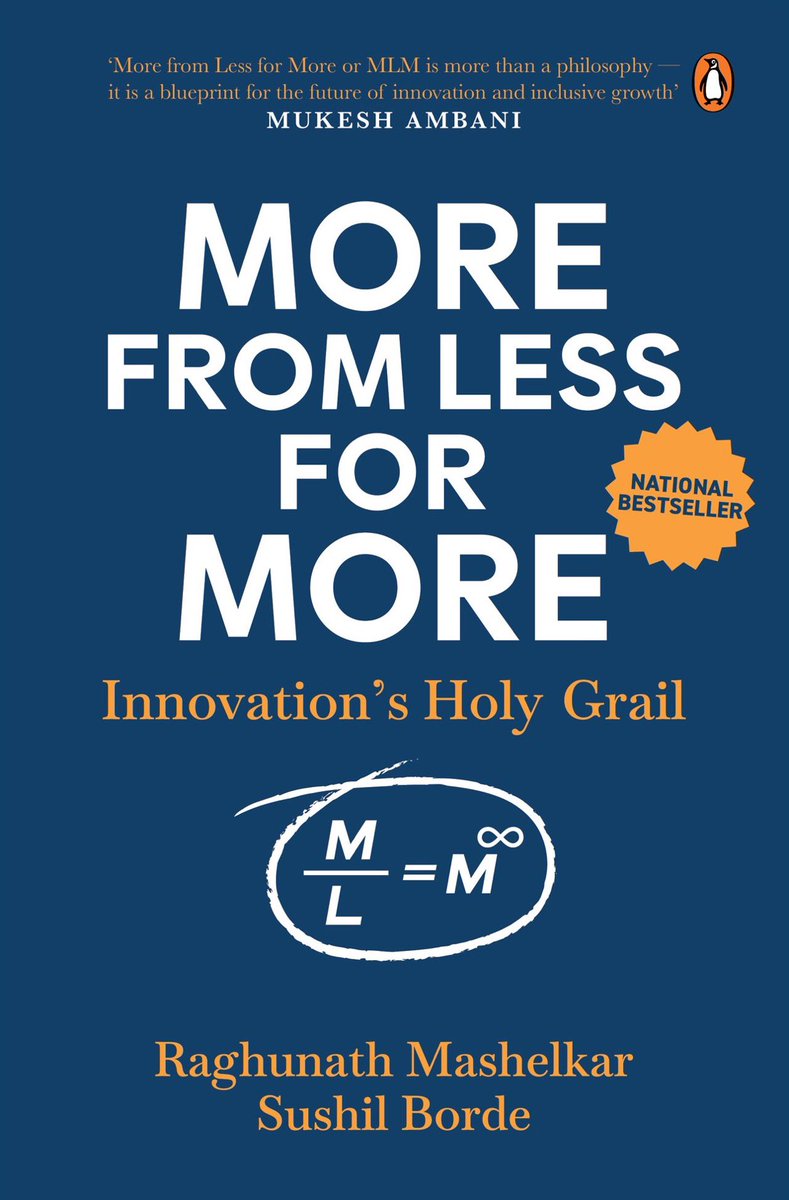
NATIONAL BEST SELLER within six months of its launch - our More from Less for More book.👇
https://t.co/UYgFEOt70a
Sushil & I gratefully thank all the gracious readers & supporters.
And MLM now is making waves across borders.
Sushil was invited by London Business School to deliver a special module to their students and faculty on MLM. It was a big hit.
And now Standford Business School is exploring the same .
Some Indian universities are designing MLM course in their management & engineering courses for new academic year
MLM Combines Scale and Soul and will remain as one of the most dominant models for accelerated inclusive development and growth globally.
@PMOIndia@CMOMaharashtra@CSIR_IND@IndiaDST@DBTIndia@PrinSciAdvOff@anilgb@sushilborde@PenguinIndia
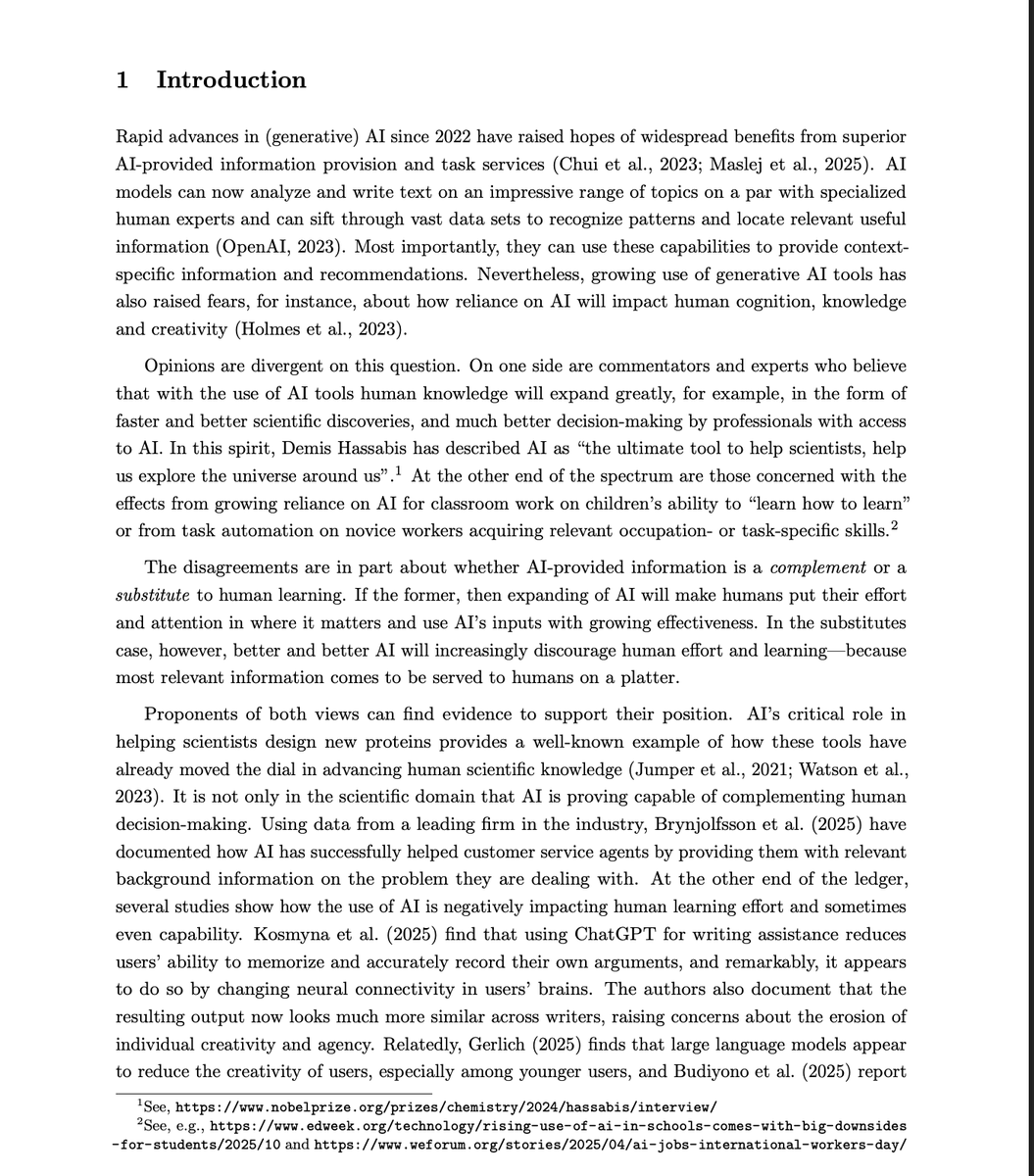
MIT's Nobel Prize-winning economist just published a model with one of the most alarming conclusions in the AI literature so far.
If AI becomes accurate enough, it can destroy human civilization's ability to generate new knowledge entirely.
Not gradually degrade it. Collapse it.
The paper is called AI, Human Cognition and Knowledge Collapse.
Authors: Daron Acemoglu, Dingwen Kong, and Asuman Ozdaglar. MIT. Published February 20, 2026.
Acemoglu won the Nobel Prize in Economics in 2024. He is not a doomer blogger. He is the most cited economist of his generation, and his models tend to be taken seriously by the people who set policy.
Here is the argument in plain terms.
Human knowledge is not just a collection of facts stored in individuals. It is a living system that requires continuous reproduction. People learn things. They apply them. They teach others. They build on prior work to generate new work. The entire engine of science, medicine, technology, and innovation runs on this cycle of active human cognition.
What happens when AI provides personalized, accurate answers to every question people would otherwise have to learn themselves?
Individually, each person is better off. They get correct answers faster. They make fewer errors. Their immediate outcomes improve.
But they stop doing the cognitive work that sustains the collective knowledge base.
Acemoglu's model shows this produces a non-monotone welfare curve.
Modest AI accuracy: net positive. AI helps at the margin, humans still do enough learning to sustain collective knowledge, everyone gains.
High AI accuracy: net catastrophic. AI is accurate enough that learning yourself feels unnecessary. Human learning effort collapses. The knowledge base that AI was trained on is no longer being refreshed or extended. Innovation stalls. Then stops.
The model proves the existence of two stable steady states.
A high-knowledge steady state where human learning and AI assistance coexist productively.
A knowledge-collapse steady state where collective human knowledge has effectively vanished, individuals still receive good personalized AI recommendations, but the shared intellectual infrastructure that enables new discoveries is gone.
And the transition between them is not gradual.
It is a threshold effect. Below a certain level of AI accuracy, society stays in the high-knowledge equilibrium. Above that threshold, the system tips. And once it tips, the collapse is self-reinforcing.
Because the people who would have learned the things that would have pushed the frontier forward never learned them. And the AI cannot push the frontier on its own. It can only recombine what humans already knew when it was trained.
The dark irony at the center of the model:
The AI does not fail. It keeps giving accurate, personalized, useful answers right through the collapse.
From the individual's perspective, nothing looks wrong. You ask a question, you get a correct answer.
But the collective capacity to ask questions nobody has asked before, to build the frameworks that generate new knowledge rather than retrieve existing knowledge, that capacity is quietly disappearing.
Acemoglu has been the most prominent mainstream economist skeptical of transformative AI productivity claims. His prior work found that AI's actual measured productivity gains were much smaller than the technology industry projected.
This paper is a different kind of warning. Not that AI will fail to deliver promised gains.
But that if it succeeds too completely, it will undermine the human cognitive infrastructure that makes long-run progress possible at all.
The welfare effect is non-monotone.
That is the sentence worth sitting with.
Helpful until it is not. Beneficial until it crosses a threshold. And past that threshold, the same accuracy that made it so useful is precisely what makes it devastating.
Every student who uses AI instead of working through a problem is a data point.
Every researcher who uses AI instead of developing intuition is a data point.
Every generation that grows up with accurate AI answers and no incentive to develop deep domain knowledge is a data point.
Individually rational. Collectively catastrophic.
Acemoglu proved this is not just a cultural concern or a vague anxiety about screen time.
It is a mathematically coherent equilibrium that a sufficiently accurate AI system will push society toward.
And there is no visible warning sign before the threshold is crossed.
The sun was free. They sold you SPF 50 and a vitamin D deficiency.
Sleep was free. They sold you an app, a pill, and a wearable that tells you your sleep was bad.
Walking was free. They sold you a treadmill, a fitness tracker, and a £180 pair of trainers.
Fasting was free. They sold you meal replacement shakes and the anxiety that skipping breakfast would wreck your metabolism.
Cold water was free. They sold you a £3,000 plunge barrel and a podcast episode about it.
Silence was free. They sold you a meditation app with a premium tier.
Animal fat was cheap. They sold you seed oils, then supplements to replace what the animal fat contained.
Tallow was cheap. They sold you a seventeen-step skincare routine and a clinical trial proving your face needs ceramides.
Meat was cheap. They are currently selling you the idea that you shouldn't eat it.
The 20th century removed access to everything the body needs to function.
The 21st century is selling it back, one subscription at a time.
Your great-grandmother had none of the products.
She had all of the things.
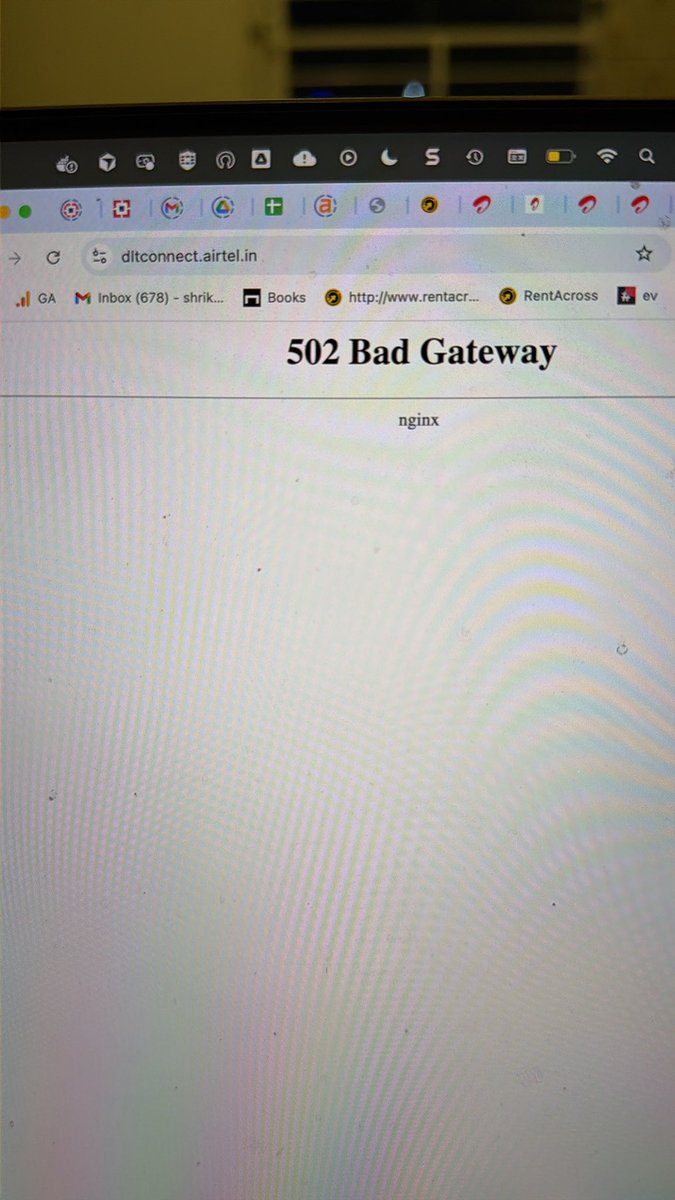
@airtelindia your Dlt portal keeps showing nginx 502
Been trying to register since yesterday. You fill the form - submission will show this, then you fill the whole form again.
@elonmusk is there a possibility of creating a planetary system at a distance of moon - where you have pretty much a planet per country/ city - different sizes!