We quit our jobs.
There were six of us — Shiv Nadar, Arjun Malhotra, Yogesh Vaidya, Subhash Arora, D.S. Puri and me.
It was 1976. Startups were not really a thing in India. Venture capital did not exist. Banks were not exactly lining up to lend money to six young men with an idea and no collateral.
And computers? Most people had barely heard of them.
But we believed the microprocessor was going to change the world.
So we took the plunge.
Between the six of us, we managed to put together ₹1.87 lakh. We borrowed, pooled our savings and, in one case, even sold a car.
Our first office was a small barsati in Golf Links, Delhi.
We called ourselves Microcomp. We wanted to build an Indian computer.
There was just one problem.
We didn’t have a manufacturing licence.
That eventually led us to UP Electronics Corporation. They had the licence. We had the technology. And that partnership gave birth to Hindustan Computers Limited — HCL.
But perhaps the most audacious part of the story was what happened next.
We started selling a computer that was still being designed.
We had a brochure and a mock-up of the machine. That was it.
Our sales teams went across India, knocking on doors and convincing businesses to buy into a technology they had never used before.
The first orders came from IIT Kharagpur and IIT Madras.
Then came the harder part — convincing businesses.
In Coimbatore, we were up against DCM DP, a much bigger and more established name. I still remember sitting in the reception area of Premier Mills while the DCM team made its pitch.
We went in second.
And we won.
That one order gave us five more. Then ten.
That was HCL in those early years: not having the biggest balance sheet, the biggest brand or the easiest path — but finding a way.
We were restless.
We looked for gaps. We hired people who had what we called a “cowboy” spirit. We believed that technology had to be made useful and accessible, not intimidating.
And we kept moving.
From building India’s early indigenous computers to taking our business to Singapore when HCL was just four years old. From a small room in Delhi to a global technology company.
When I look back at 50 years, I think about six people sitting together in 1976, wondering if this crazy idea could actually work.
I think about a barsati.
A brochure for a computer that did not yet exist.
And the courage to knock on the next door.
That, to me, is the real HCL story.
50 years later, the technology has changed beyond anything we could have imagined.
But the spirit remains the same:
Dream big. Take the risk. And above all, Just Aspire.
Happy 50th, HCL.
What a journey it has been.
#AjaiChowdhry #JustAspire #HCL #50yearsofHCL #Nostalgic #Founders
For my first post, I’m sharing a letter @NVIDIA signed on why open models matter.
AI will transform every industry, power every company, and be built by every country.
Open models strengthen safety and cybersecurity, accelerate innovation and diffusion, and enable sovereignty.
The world needs both frontier closed models and frontier open models.
https://t.co/AUKzoQ5Ikb
🇮🇳 India Tops the World at the 56th International Physics Olympiad 2026!
🥇🥇🥇🥇🥇India's young physicists deliver an extraordinary performance at #IPhO2026 in Colombia. All five members of the Indian team win Gold Medals. 1/3
@PMOIndia@DrJitendraSingh@HBCSE_TIFR@TIFRScience
Prepare for takeoff. ✈️ Flight simulator is now available globally on web to all users. https://t.co/hQP0No142P
We've recently added many our most powerful professional desktop features to web. Elevation profiles, new import types, but there's always been one other feature you've been asking us to add to the web version of Google Earth, just for fun...
Where will you fly? Share your best maneuvers, views, and flyovers with us!
@NASAMoonBase As part of @NASAArtemis, the @NASAMoonBase will serve as a lunar habitat for long‑duration exploration and science. Robotic missions will work alongside astronauts to study the Moon and help prepare us for future Mars missions.
The trouble with @svembu's appeal to NRIs is that it continues to demand more sacrifices from Indians while demanding no change from India's governments. Resident Indians have more than enough talent in every domain but they are already choked. He makes no attempt to demand removal of existing bottlenecks. It's not TALENT that India is starved of, it is ACCOUNTABILITY.
Some reform ideas which I'd like to see implemented in India:
- (0) Improve nutrition and environmental safety. Safe air, water and food is the bare minimum expectation.
- (1) Encourage skin-in-the-game for political and administrative leaders (for eg: require an exit tax for them and their kids).
- (2) Radical transparency in govt systems. Anonymized files should be digital and public by default, unless marked confidential for valid reasons.
- (3) Increase actual Ease of Doing Business (eg: improve contract enforcement).
- (4) Discourage young talented people from wasting away their most precious years into civil services exam prep, or pseudo-scientific professions like degrees in AYUSH.
- (5) Do not allow the world to dump inferior hardware and software products on Indians. Insist on interoperability, technology transfer and repairability by third-parties.
- (6) Prepare the workforce for the future: For eg: Decrease the number of specializations by bundling subjects in Engg, achieving a better balance of employability and national interest.
- (7) Reduce the need for affirmative action in later years by improving access in earlier years.
- (8) Create conditions for healthy competition among states so that we can have more experiments in governance.
Open letter to Indians in America.
--
Dear brothers and sisters from Bharat:
Like I did 37 years ago, you arrived in America with no money but with a good education and cultural heritage from Bharat. You achieved outstanding success. America was good to us. For that we must remain grateful - gratitude is our Bharatiya way.
Yet today, a significant number of Americans, may be not the majority but not too far from it either, believe that Indians "take away" American jobs and our success in America was unfairly earned.
You may think the next election will fix this, but your choice would be between people who hate our Bharatiya civilisation and people who hate civilisation itself. That is the "hard right" vs "woke left" battle. You are mere bystanders to that conflict.
Meanwhile there is one thing that is true now and will be true in the future: the respect Indians command world-wide will substantially depend on the fortunes of India herself. If India remains poor, the woke left will give us moral lectures with pity and the hard right, different moral lectures with scorn ("hellhole") and we must not confuse either with respect.
Respect in today's world, along with prosperity and security, comes from one source: a nation's technological prowess. India produces sufficient brain power to achieve that prowess but alas we exported so much of that talent, particularly to America. As we develop that prowess in India, our civilisational strength will assert itself.
As difficult as it is for many of you to contemplate this, please come back home. Bharat Mata needs your talent. Our vast youthful population needs the technology leadership you gained over the years to guide them towards prosperity. Let's do it with a missionary zeal.
Respectfully
Sridhar Vembu
Only one chance in this lifetime…
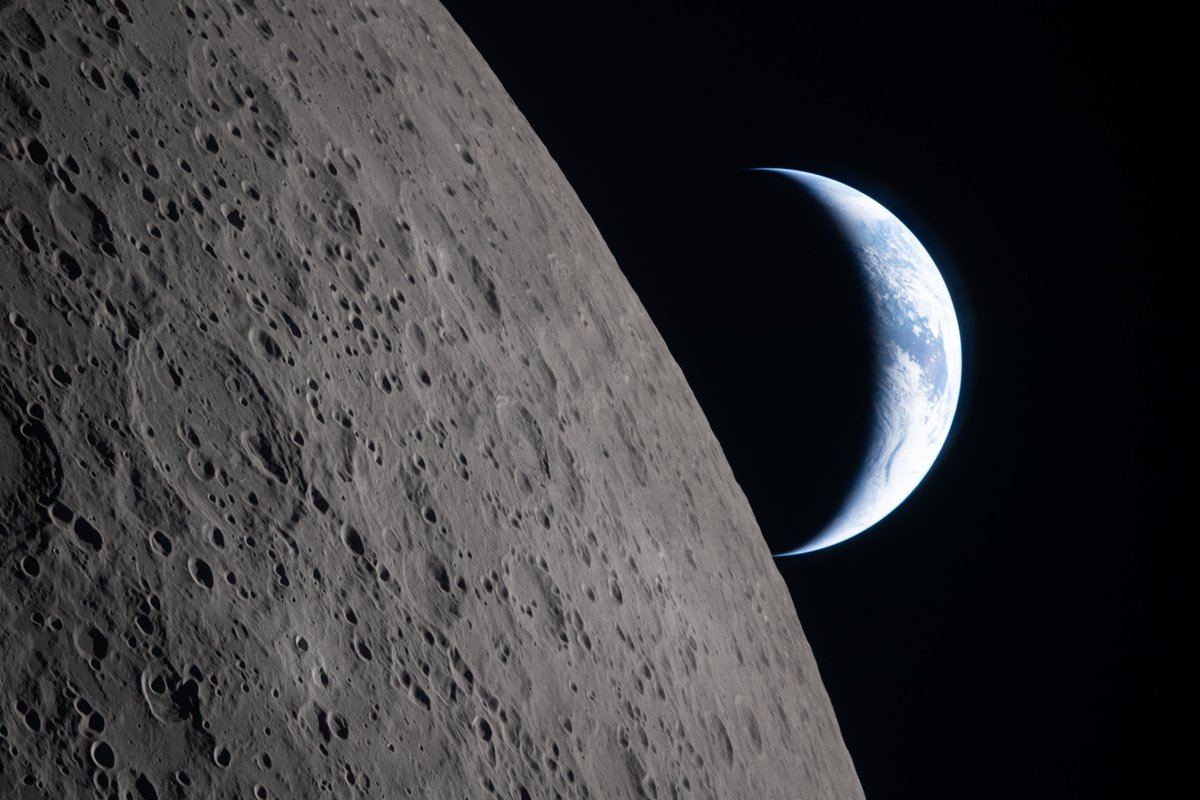
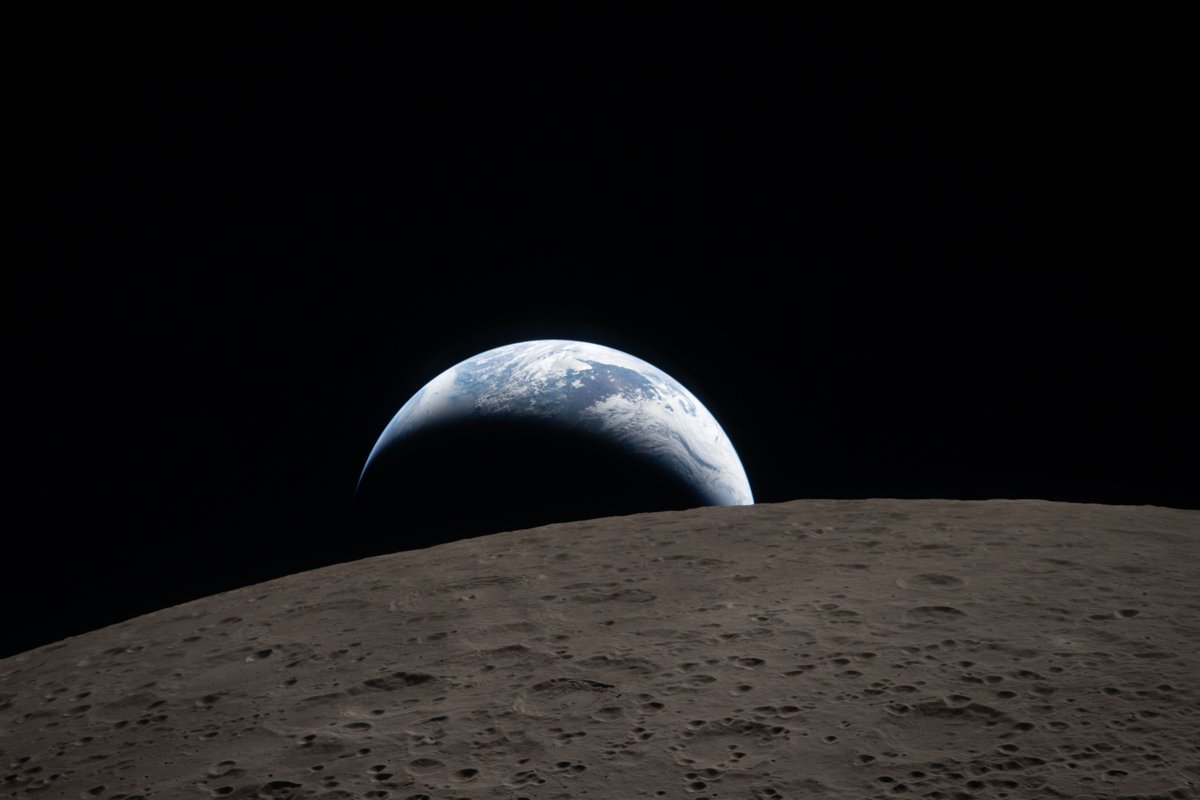
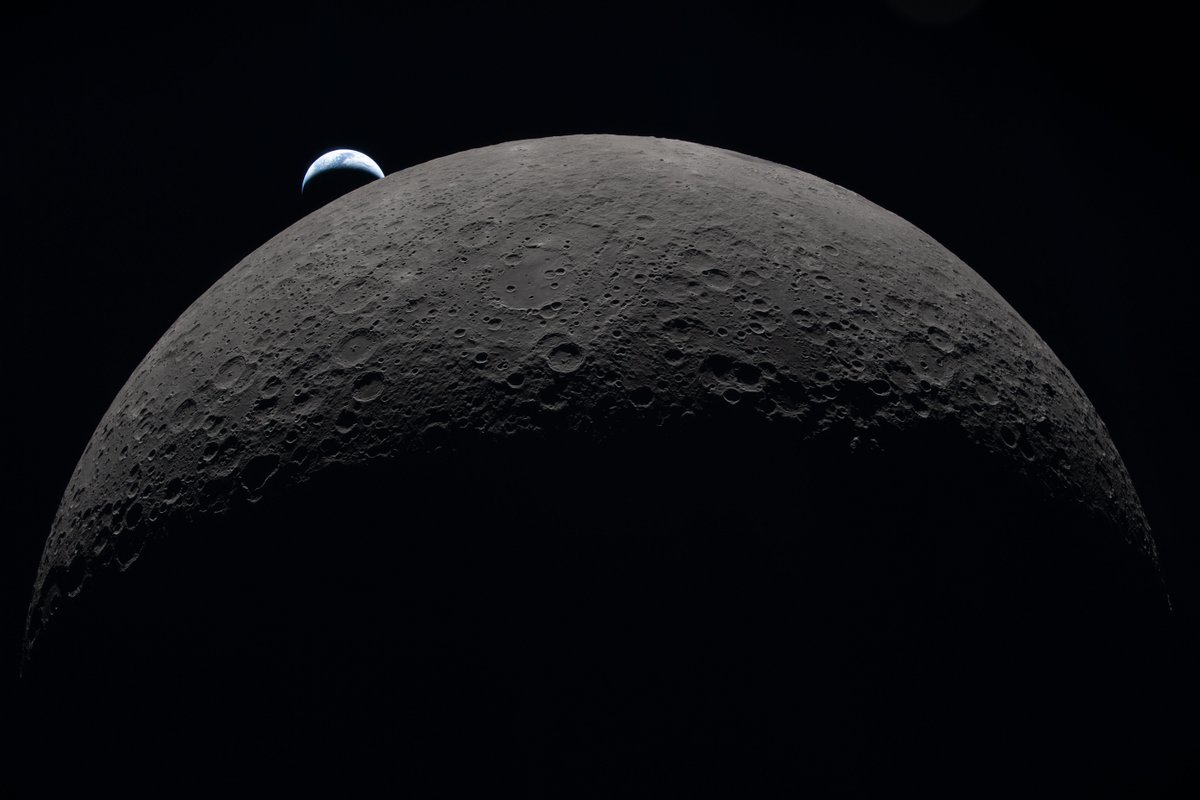
Like watching sunset at the beach from the most foreign seat in the cosmos, I couldn’t resist a cell phone video of Earthset. You can hear the shutter on the Nikon as @Astro_Christina is hammering away on 3-shot brackets and capturing those exceptional Earthset photos through the 400mm lens. @AstroVicGlover was in window 3 watching with @Astro_Jeremy next to him.
I could barely see the Moon through the docking hatch window but the iPhone was the perfect size to catch the view…this is uncropped, uncut with 8x zoom which is quite comparable to the view of the human eye. Enjoy.
A bold new scientific proposal suggests that consciousness may not just emerge from the brain—it could be a fundamental feature woven into the fabric of the entire universe. This idea challenges traditional views, hinting that awareness might be a core aspect of reality itself.
Researchers argue that instead of arising solely from neurons and complex brains, consciousness could exist at a basic level in matter and energy, influencing how the universe behaves. This perspective opens fascinating possibilities for understanding perception, intelligence, and even the nature of existence.
While still theoretical, this groundbreaking concept pushes the boundaries of science and philosophy, encouraging us to rethink what it means to be conscious. If consciousness is universal, every particle, star, and galaxy could, in some sense, be aware, a discovery that could transform science, spirituality, and our place in the cosmos.
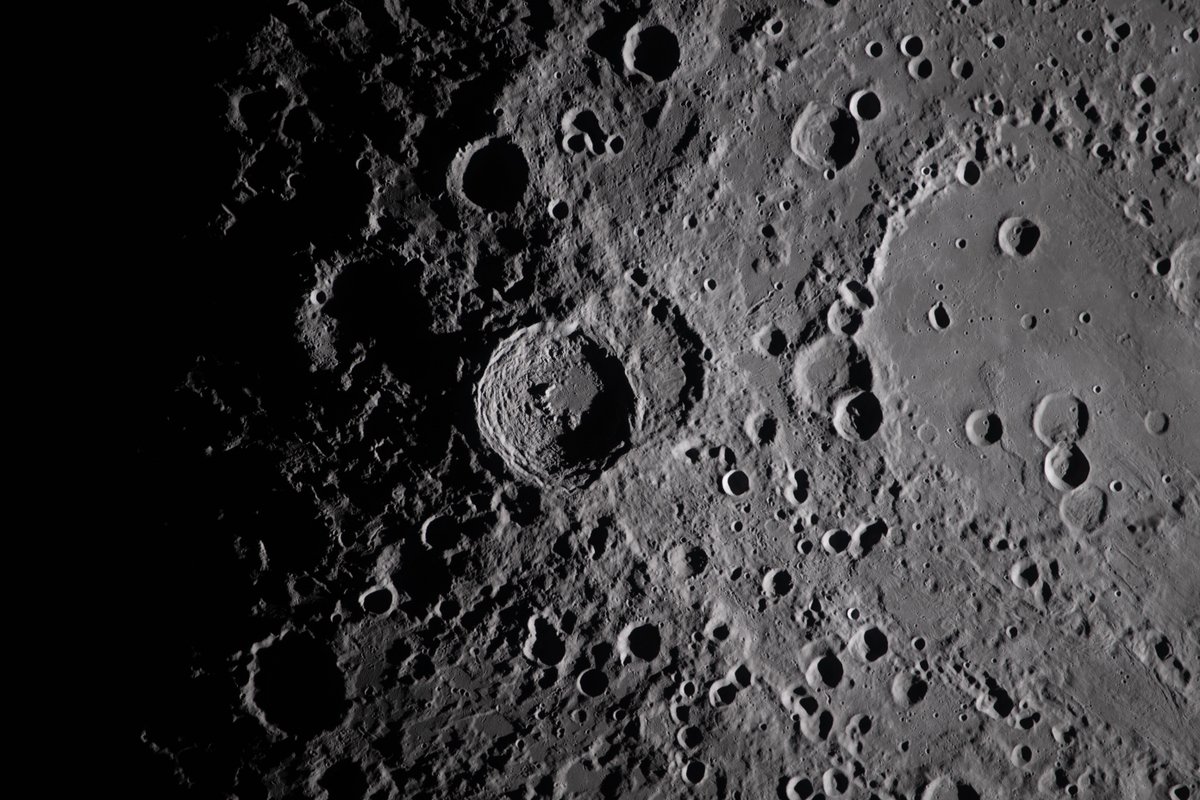
Hello, Moon. It’s great to be back.
Here’s a taste of what the Artemis II astronauts photographed during their flight around the Moon. Check out more photos from the mission: https://t.co/rzM1P0QbOl
Make new friends, but keep the old.
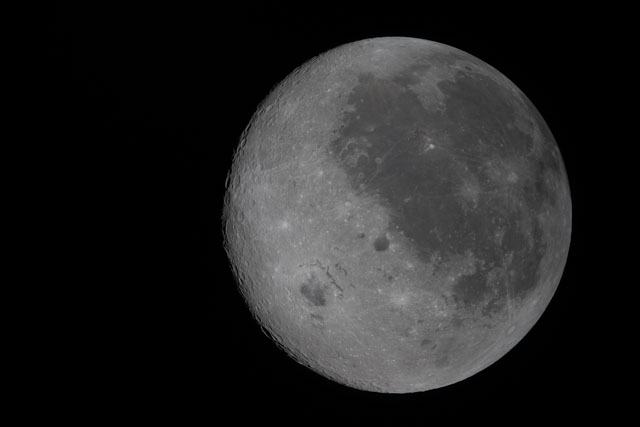
A new photo captures the Moon's near side on the right (the side we see from Earth, identifiable by its dark splotches) and its far side on the left. The Artemis II crew are the first to see the far side with human eyes.
Now that I've been through being a kid, growing up, and then having kids, it's clear that the main thing that differentiates people is simply whether they make an effort. Whether they're content to drift along with the current, or whether they try to swim.