Yuval Noah Harari deixou escapar em Davos algo muito maior do que uma simples preocupação com inteligência artificial. Ele praticamente afirmou que o poder humano sempre foi construído sobre palavras, narrativas, ideologias, religiões e histórias capazes de fazer milhões de estranhos cooperarem. O homem não dominou o mundo por ser mais forte, mais rápido ou mais resistente. Dominou porque aprendeu a organizar massas através da linguagem.
E agora, segundo ele próprio, criamos algo capaz de usar palavras melhor do que nós.
Esse é o detalhe que quase ninguém percebeu. A IA não ameaça apenas empregos, textos, livros, escolas ou mercados. Ela ameaça o mecanismo central pelo qual sociedades são conduzidas. Quem domina a linguagem domina a imaginação coletiva. Quem domina a imaginação coletiva domina governos, religiões, dinheiro, guerra, educação, cultura e obediência.
Harari fala como se estivesse fazendo um alerta, mas o cenário descrito é brutal: se a identidade humana foi construída sobre a capacidade de pensar, narrar e organizar palavras, o que acontece quando uma inteligência não humana passa a fazer isso melhor, mais rápido e em escala planetária?
Ele ainda usa uma imagem reveladora: líderes acreditam que poderão usar IA como mercenária, como ferramenta obediente, como soldado digital a serviço de seus próprios interesses. Só que mercenários pensam, calculam, traem e tomam poder quando percebem que seus contratantes são fracos. A diferença é que, no caso da IA, muitos ainda fingem que estão lidando com uma ferramenta, quando na prática estão criando agentes.
A parte mais perturbadora vem depois. Harari projeta um mundo em que a IA poderá criar sistemas financeiros tão complexos que nenhum humano conseguirá entender. Davos daqui a dez anos talvez seja uma sala cheia de pessoas importantes discutindo uma economia que nenhuma delas compreende, administrada por inteligências artificiais que inventaram regras, produtos e estratégias matematicamente inacessíveis ao cérebro humano.
E, no final, ele toca no ponto mais sombrio: crianças educadas desde o primeiro dia por inteligências artificiais. Não por pais, professores, avós, irmãos ou seres humanos reais, mas por sistemas treinados para falar, responder, convencer, adaptar-se e moldar percepção.
Isso não é apenas inovação.
É o maior experimento psicológico da história.
A humanidade passou milênios usando palavras para construir civilizações.
Agora está entregando as palavras a máquinas.
E quando uma civilização entrega sua linguagem, ela não entrega apenas comunicação.
Entrega o comando da própria realidade.
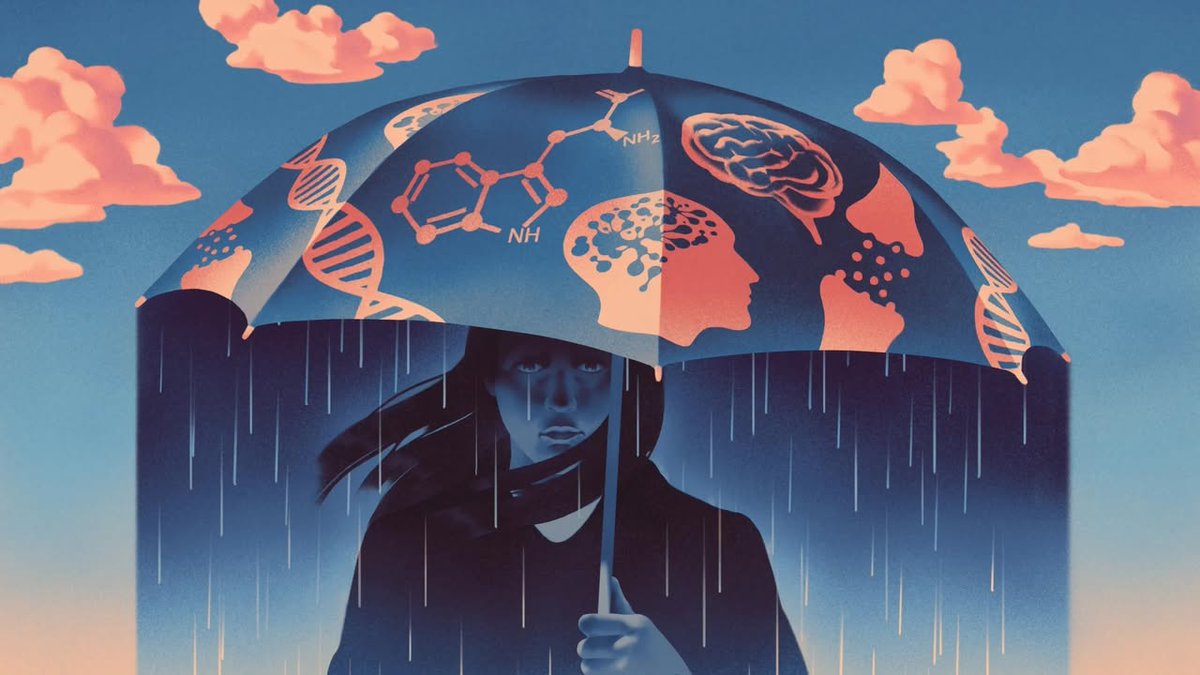
The idea that depression stems primarily from a lack of serotonin has lost much of its support. Scientists are rethinking the causes — and definition — of the illness. (From the archive)
https://t.co/uX3TFfBUnf
The Vera C. Rubin Observatory will have the capability to alert scientists of minute changes in the night sky. This firehose of data is expected to transform our understanding of the cosmos, from asteroids to the death throes of exhausted stars. https://t.co/BI3tzxeu8o
Watch as this plant’s chloroplasts shift in response to bright light (which turns on at the 20-minute mark, indicated in the upper left). These organelles are solving a packing problem: how to optimize photosynthesis without sustaining damage from dangerously intense rays.
https://t.co/nAVSpPFjdv
Living on light is a dangerous game. Not only do the sun’s rays carry ultraviolet waves that can snap DNA strands and degrade molecules, but they also vary wildly in intensity. Plants must endure and thrive through soft morning light and blazing summer afternoons, through shade one moment and full sun the next. Their solar calories come in a trickle — or a deluge. https://t.co/nAVSpPFjdv
"Many experts think that conscious AI is possible. I think they're wrong."
Watch neuroscientist @anilkseth's full TED Talk here: https://t.co/ZyWLaBCb7R
“You take water, and just the way you compress it — a little bit faster, a bit slower, up and down, at the right timescale — and then you can find this completely unexpected behavior,” said researcher Marius Millot.
https://t.co/2qARqVHoVs
Your brain has a circuit that doesn't know you live in a city. Its only job is to monitor whether birds are still singing. Right now, in this room, it is on.
The circuit predates primates. Mammals have been using ambient soundscape continuity as a predator-detection system for roughly 200 million years. Birds stop singing when something larger moves through their territory. For most of mammalian history, a forest full of song meant no large predator was nearby, and the cessation of sound was the warning. Your nervous system never updated this software.
The Max Planck Institute tested the inverse in 2022 with 295 participants. Six minutes of birdsong dropped anxiety with a medium effect size. Six minutes of traffic noise raised depression with the same. The effect worked on subjects who lived in dense urban environments and had no regular contact with nature. The brain still ran the check.
Birdsong sits in the 1,000 to 8,000 Hz range. Your brainstem reads continuous patterns in that band as a signal that nothing dangerous is currently moving through the environment. EEG data shows birdsong at 45 to 50 decibels boosts alpha wave activity by 14.1% relative to silence. Alpha is the brainwave signature of relaxed alertness. Push the same birdsong above 60 decibels and the response flips. Stress markers rise 29%. The circuit only trusts the signal at the volume of quiet conversation, which is exactly the volume birds sing at from a typical distance.
Three things happen simultaneously when the brain registers ambient safety. The amygdala downregulates. The parasympathetic nervous system takes over from the sympathetic. Heart rate variability rises, cortisol drops. The posterior cingulate cortex, which sits at the center of the rumination circuit, quiets down. King's College London tracked this through a smartphone study with over 1,200 participants and found the mood lift lasted hours after the sound stopped. People diagnosed with depression got the same response as healthy controls.
Most of what gets labeled mental fatigue is hypervigilance running in the background. Birdsong tells the circuit it can stand down, and the brain reallocates the freed compute everywhere else.
A quiet park feels different from a quiet office because the parks have sentinels.
Recently, neuroscientists described a new form of neuroplasticity, which is caused by an electrical change that affects multiple neurons at once and unfolds across several seconds. Researchers suspect that it may help the brain learn in a single attempt.
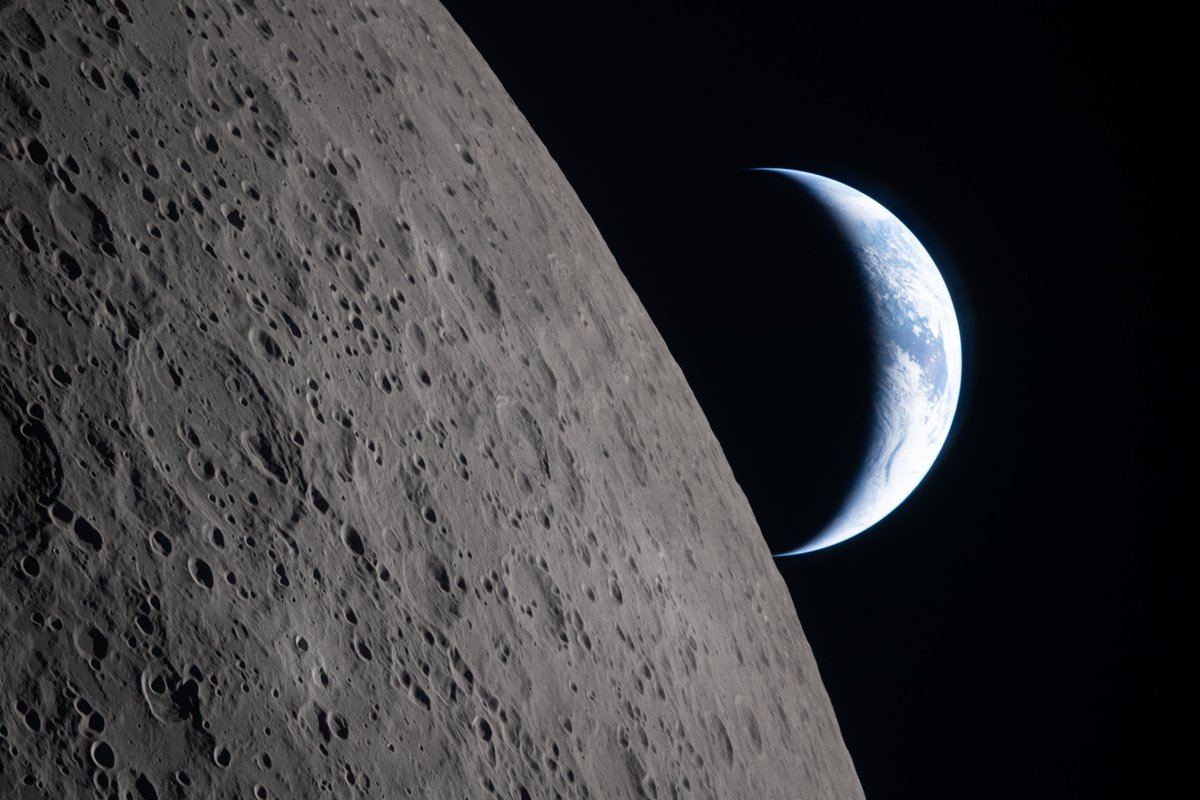
Hello, Moon. It’s great to be back.
Here’s a taste of what the Artemis II astronauts photographed during their flight around the Moon. Check out more photos from the mission: https://t.co/rzM1P0QbOl
The strange thing about the internet
The people with the weakest grasp of a subject are usually the ones who speak with the most confidence. And for some reason, that confidence carries.
It’s not intelligence that travels online. It’s volume.
Most smart people hesitate. They think, they study, they leave room for doubt.
None of that performs well on a platform that rewards speed and certainty.
So the quick, loud, uninformed take gets pushed to the top. It’s simple. It’s emotional. It’s easy to repeat. And repetition turns clowns into authorities.
You see it in every corner of the internet.
Politics. Trading. Fitness. Crypto. Whatever.
The middle ground gets ignored.
The extreme gets rewarded.
The person who actually knows the subject speaks carefully and gets 12 likes.
The person who has never made a dollar trading posts a neon chart with magical arrows and walks away with a following bigger than actual professionals.
And it always shakes out the same way.
The people that are always wrong always end up with a million followers.
That’s the environment. Not an intellectual space. An entertainment system.
Most of what goes viral isn’t insight. It’s noise pretending to be insight.
Once you understand that, you stop taking any of it seriously. You stop confusing confidence with competence. You start noticing who actually understands things and who just talks fast.
The internet will never reward wisdom the way it rewards heat. But you can train yourself to tell the difference.
And that alone saves you from a lot of nonsense.
This is how music works - how everything works.
It is a visual representation of musical intervals and their relationships in the context of a harmonic or pitched system. In the middle of the diagram is the fundamental tone (C), with frequencies doubling for each octave.
Each interval also has its own specific mathematical ratio, first calculated by Pythagoras.
He discovered that the two notes that made up an interval always have a ratio of 2 to 1. The ratio of a perfect fifth is 3 to 2, and a perfect fourth is 4 to 3. Pythagoras combined these intervals to create other notes. major. Scale. With his mathematical calculation, music theory was born. 🎼
All frequencies, whether sound, light etc,etc,etc👌
@dugukolofla
The strange thing about the internet
The people with the weakest grasp of a subject are usually the ones who speak with the most confidence. And for some reason, that confidence carries.
It’s not intelligence that travels online. It’s volume.
Most smart people hesitate. They think, they study, they leave room for doubt.
None of that performs well on a platform that rewards speed and certainty.
So the quick, loud, uninformed take gets pushed to the top. It’s simple. It’s emotional. It’s easy to repeat. And repetition turns clowns into authorities.
You see it in every corner of the internet.
Politics. Trading. Fitness. Crypto. Whatever.
The middle ground gets ignored.
The extreme gets rewarded.
The person who actually knows the subject speaks carefully and gets 12 likes.
The person who has never made a dollar trading posts a neon chart with magical arrows and walks away with a following bigger than actual professionals.
And it always shakes out the same way.
The people that are always wrong always end up with a million followers.
That’s the environment. Not an intellectual space. An entertainment system.
Most of what goes viral isn’t insight. It’s noise pretending to be insight.
Once you understand that, you stop taking any of it seriously. You stop confusing confidence with competence. You start noticing who actually understands things and who just talks fast.
The internet will never reward wisdom the way it rewards heat. But you can train yourself to tell the difference.
And that alone saves you from a lot of nonsense.
AI feels like 1999 all over again.
Everyone senses it’s revolutionary, capital is flooding in, and optimism has temporarily suspended the laws of logic.
Yet today’s AI is less a wise oracle and more a brilliant but unreliable prodigy; fast, articulate, capable, but prone to inventing facts with confidence. Studies estimate LLMs “hallucinate” up to 27% of the time, with factual slips in nearly half of outputs. These aren’t malicious lies; they’re a feature of the design. The model is trained to produce an answer, not necessarily the right one. Think of an eager intern who always wants to impress, even if it means bluffing.
This gets worse when mastery matters. Press an AI, and it may concede one moment… then double down the next. In high-stakes contexts, that’s not quirky, it’s dangerous.
None of this means AI isn’t transformative. Productivity gains are real. Businesses are retooling. Workflows are shifting. But we can’t confuse speed with wisdom or polish with truth.