We created a benchmark (KosmosCompactBench) to compare compaction algs from frontier labs and ~5 open source harnesses. The best open source compaction was @PrimeIntellect and we adopted that as a starting point. Then, autoresearch time 1/5
At Edison, our machine learning research is guided by the challenges we encounter in developing Kosmos, our AI scientist. One such challenge is improving its scientific writing style.
Our latest blog introduces a method for post-training reasoning LLMs using only examples of effective scientific writing, such as published papers, patents, and more. We show that the method improves a model’s scientific writing style, as evaluated by human experts.
Can you tell which abstract was written by our model?
At Edison, our goal is to bring superintelligence to medicine.
Today, we’re thrilled to announce an agreement with @pfizer to deploy our AI scientist, Kosmos, across Pfizer’s R&D pipeline.
By learning from Pfizer’s robust repositories of data across oncology, immunology, internal medicine and more, Kosmos will enable every program, experiment and clinical readout to sharpen Pfizer’s R&D decision-making and accelerate their pipeline, with compounding advantages to the discovery and development of life-saving medicines.
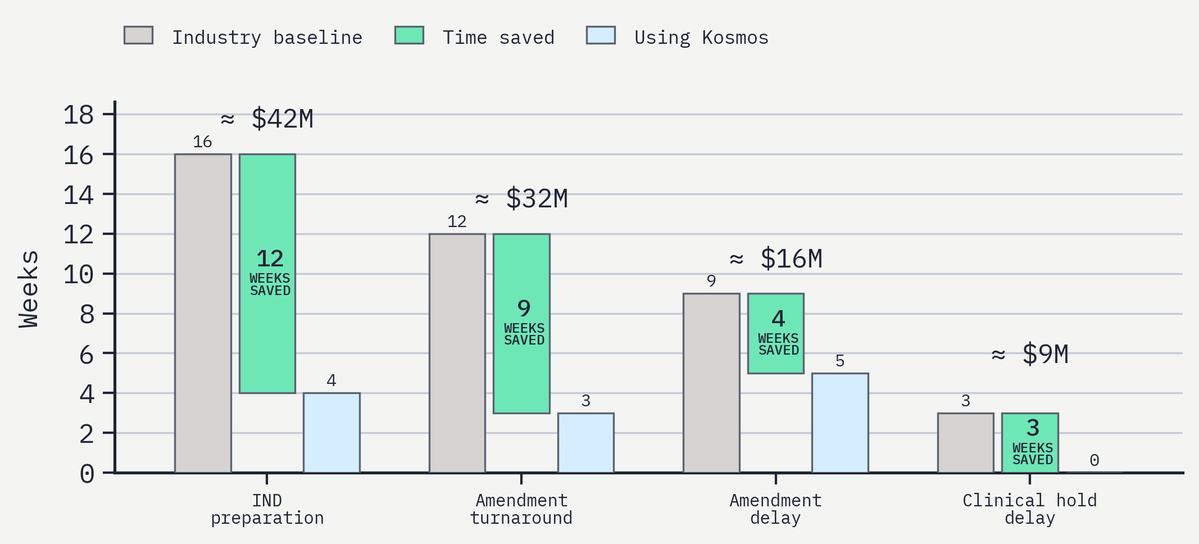
Writing an Investigational New Drug (IND) application is a major hurdle for drug developers. It can take a team of specialists three to four months, and mistakes can trigger protocol amendments or clinical holds.
In June, we started working with Population Health Partners (PHP) to leverage specialized Kosmos Clinical Protocol Design (“CPD”) and Kosmos Regulatory Authoring (“RA”) products to support PHP’s process of IND preparation.
Since then, specially trained Kosmos products produced a first acceptable draft of the Nonclinical Overview in 4.2 hours, against 100 hours of expert time, flagged an error that roughly fifteen human reviewers missed, and authored 70% of the text in a Pre-IND Briefing Meeting Request submitted to FDA.
PHP is now bringing Kosmos products to a second program and expects to complete IND preparation in as little as 1 month, instead of the 4 month industry standard.
PHP's experts can spend their time reviewing and deciding, not just drafting. The time recovered by Kosmos products means that drugs could make their way to patients faster.
Today, we're announcing Edison Advances, a home for our research announcements, engineering blogs, open-weights models and benchmarks.
At Edison, we’re building Kosmos, an AI Scientist, to solve foundational research problems and make truly novel discoveries across scientific domains.
Alongside that work, we’re developing better ways to measure and evaluate AI scientists, push their ability to work on long-horizon tasks, and identify gaps in their reasoning.
Edison Advances brings our existing work together in one place and we will use it to publish new work as our research progresses.
Follow along as the work develops, and get in touch if you’re interested in contributing.
We live in a golden age of biology. So why are people still dying from disease?
Because discovery and development move slower than they should.
Today, we’re partnering with Incyte to change that.
Kosmos is now the first agent that can compress months of drug development into weeks, from the earliest stages of scientific discovery through to FDA approval. @Incyte will be the first company to deploy it across their pipeline.
Work that used to take a team of scientists months now happens in weeks.
Patients can't wait, and neither can we.
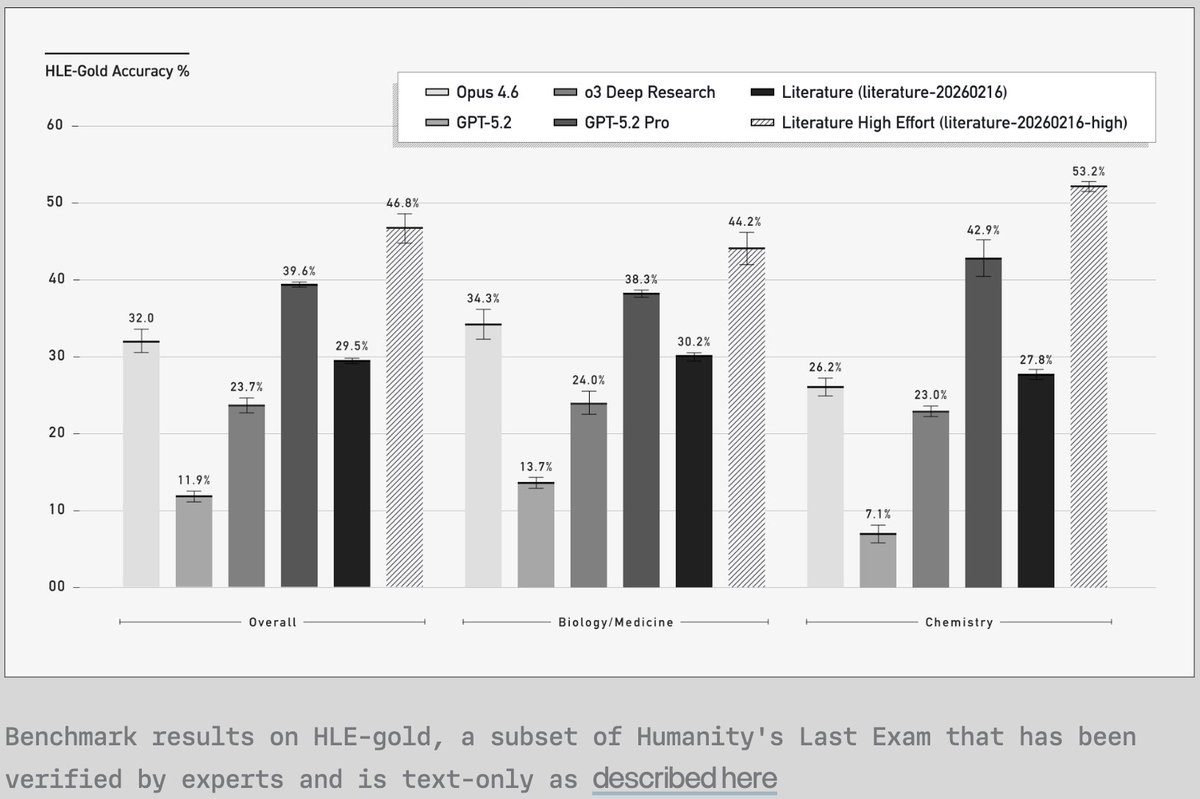
Today we're releasing PaperQA3, our latest literature search agent, which has the best multimodal capabilities among deep research agents today by a large margin. Edison Literature and Kosmos can now read figures and tables from over 150M full-text research papers, as well as patents, clinical trials, and more. Additionally, we’ve updated the underlying algorithm of our literature agent (which is open source at https://t.co/4VWwnqcz7R) to improve its ability to answer more complex questions.
The result of these improvements show Edison Literature as one of the strongest deep research agents across benchmarks, beating out current-day frontier deep research agents. The PaperQA3-backed version of Edison Literature is available today on our platform and API as literature-20260216, as is Edison Literature High (literature-20260216-high), a high-effort variant for best performance.
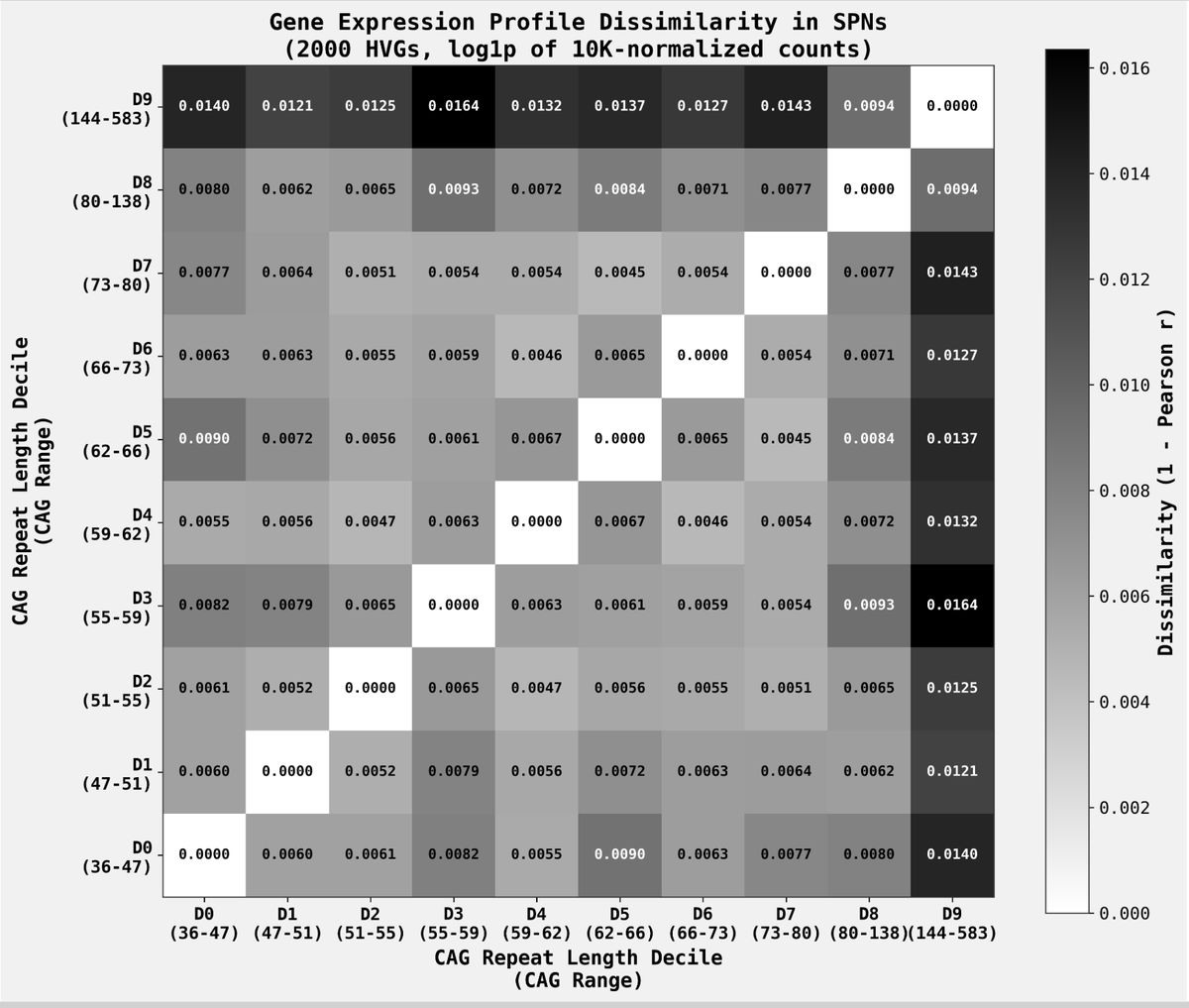
Our AI agents can now autonomously reproduce key figures from scientific papers. In this case, our analysis agent was able to access and analyze data from a Cell paper by Handsaker et al. about CAG repeat expansion, reproducing key findings about why CAG repeats only lead to neurodegeneration in midlife.
Automatically replicating key data analysis will be extremely valuable for reproducibility in science. Expect to see this soon for all new papers...
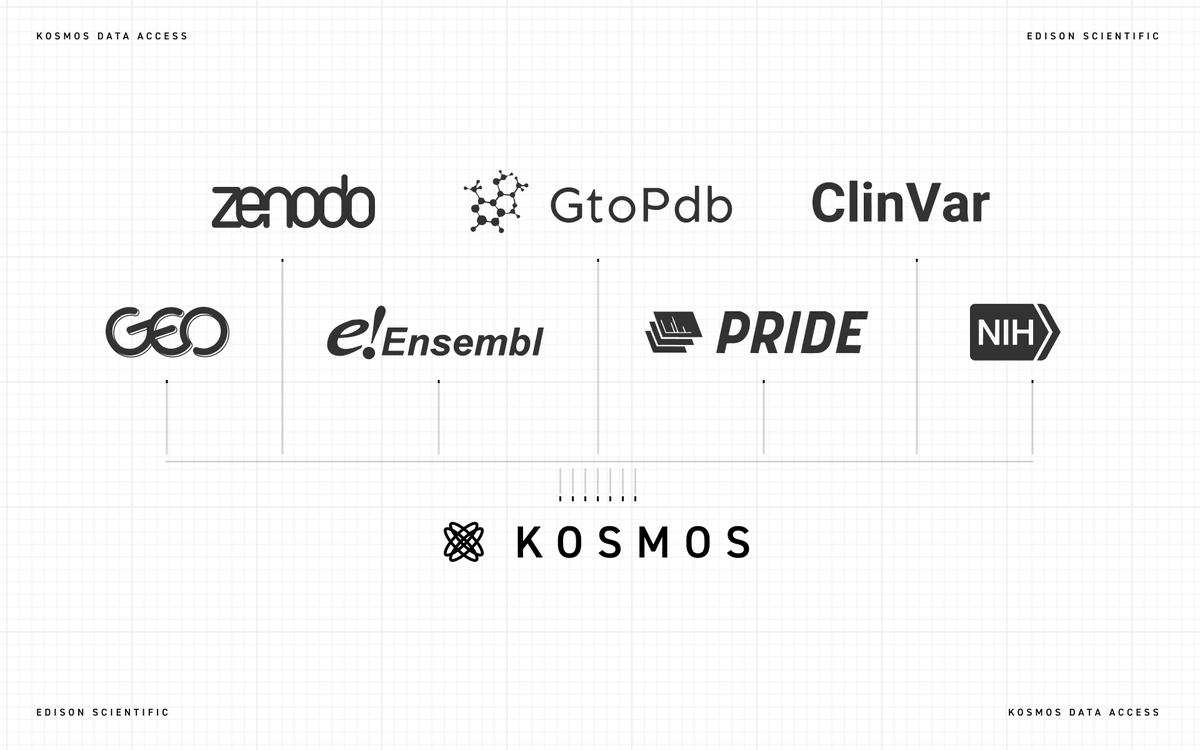
We're launching integrations for Kosmos today that allow it to access 80% of publicly available biology data.
This means it can now find its own data to initiate projects, enrich its investigation with data from different modalities, and validate its findings in alternative datasets.
We've seen runs where it will come up with a finding, try to replicate it in other datasets, fail, and then iterate on its hypothesis until it finds something more robust. In our blog post (link below), we describe how Kosmos was able to take a finding about TGFb signaling and the extracellular matrix in pancreatic cancer from bulk RNAseq and enrich it with further analysis in human clinical data and single cell data that it grabbed autonomously. This allowed it to come up with a plausible mechanism for its initial finding using other datasets, all without human intervention. In our testing so far, it seems like a very significant unlock.
Read about it on our blog (link below), and try it on our website. Academics get three free runs per month. (It's also now way easier to try, since you don't have to have a dataset at hand to get Kosmos to do really interesting analysis.)
Science is too slow.
At Edison, we are integrating AI Scientists into the full stack of research, from basic discovery to clinical trials. We want cures for all diseases by mid-century.
We have raised a $70M seed to get started.
Join us.
We need cracked software engineers who want to work on finding cures rather than selling ads and generating slop. If you’re reading this, you’re probably a candidate.
We need brilliant AI researchers who want to figure out how AI will accelerate real-world science.
We need scientists and researchers with deep expertise in biology, biotech, and pharma who want to figure out how to integrate AI deeply into scientific workflows, from ideation to experimentation, and how to measure success or failure.
We need extraordinarily talented generalist operators across BD, sales, product management, and partnerships who can focus on getting our tools into the hands of pharmaceutical companies.
If any of these roles sound like you, get in touch.
We are also expanding access to our platform.
Our goal is to accelerate science writ large. To that end, we will continue to give academics and students 650 credits/mo indefinitely. I can’t promise we’ll keep this up forever, but we will try. Kosmos will still cost 200 credits, and the other agents (Analysis, Literature, etc.) will cost 1 or 2 credits.
All paid users will have access to our regular agents, like our Analysis agent, Literature agent, and so on, for free via the UI. API access will still be paid, and users without a paid subscription will continue to get 10 credits per month for those agents. Our $200/mo subscription for 650 credits/mo is staying in place for now, but might be phased out at our next major product update.
Along the lines of accelerating science, we’re also doing a major release of PaperQA today, our flagship open source literature agent, as part of our commitment to open science.
In the short run, expect major improvements to Kosmos, including the ability to automatically access data, the ability to steer its exploration, and the ability to converse directly with its world model.
In the long run, expect exponentially increasing rates of scientific discoveries, in biology and elsewhere.
Our round is led by Triatomic Capital, Spark Capital, and a major US institutional biotech investor. We are also joined in this round by existing investors Pillar VC and Susa Ventures, two exceptional early-stage funds who backed us at founding, along with Striker Venture Partners, Hawktail VC, Olive VC, and a host of exceptional angels that includes famous AI researchers, the CEOs of multiple frontier AI labs, and leadership of major biotech and pharma companies.
@sama Thanks!! Anyone who is interested can try Kosmos for themselves here:
https://t.co/PHYFaC4Koc
All possible in large part due to the amazing work you guys have been doing at OpenAI. Keep it up, and the next few years are going to be awesome.
Today, we’re announcing Kosmos, our newest AI Scientist, available to use now.
Users estimate Kosmos does 6 months of work in a single day. One run can read 1,500 papers and write 42,000 lines of code. At least 79% of its findings are reproducible. Kosmos has made 7 discoveries so far, which we are releasing today, in areas ranging from neuroscience to material science and clinical genetics, in collaboration with our academic beta testers. Three of these discoveries reproduced unpublished findings; four are net new, validated contributions to the scientific literature. AI-accelerated science is here.
Our core innovation in Kosmos is the use of a structured, continuously-updated world model. As described in our technical report, Kosmos’ world model allows it to process orders of magnitude more information than could fit into the context of even the longest-context language models, allowing it to synthesize more information and pursue coherent goals over longer time horizons than Robin or any of our other prior agents. In this respect, we believe Kosmos is the most compute-intensive language agent released so far in any field, and by far the most capable AI Scientist available today. The use of a persistent world model also enables single Kosmos trajectories to produce highly complex outputs that require multiple significant logical leaps. As with all of our systems, Kosmos is designed with transparency and verifiability in mind: every conclusion in a Kosmos report can be traced through our platform to the specific lines of code or the specific passages in the scientific literature that inspired it, ensuring that Kosmos’ findings are fully auditable at all times.
We are also using this opportunity to announce the launch of Edison Scientific, a new commercial spinout of FutureHouse, which will be focused on commercializing our agents and applying them to automate scientific research in drug discovery and beyond. Edison will be taking over management of the FutureHouse platform, where you can access Kosmos alongside our Literature, Molecules, and Precedent agents (previously Crow, Phoenix, and Owl). Edison will continue to offer free tier usage for casual users and academics, while also offering higher rate limits and additional features for users who need them. You can read more about this spinout on our blog, below.
A few important notes if you’re going to try Kosmos. Firstly, Kosmos is different from many other AI tools you might have played with, including our other agents. It is more similar to a Deep Research tool than it is to a chatbot: it takes some time to figure out how to prompt it effectively, and we have tried to include guidelines on this to help (see below). It costs $200/run right now (200 credits per run, and $1/credit), with some free tier usage for academics. This is heavily discounted; people who sign up for Founding Subscriptions now can lock in the $1/credit price indefinitely, but the price ultimately will probably be higher. Again, this is less chatbot and more research tool, something you run on high-value targets as needed.
Some caveats are also warranted. Firstly, we find that 80% of Kosmos findings are reproducible, which also means 20% are not -- some things it says will be wrong. Also, Kosmos certainly does produce outputs that are the equivalent to several months of human labor, but it also often goes down rabbit holes or chases statistically significant yet scientifically irrelevant findings. We often run Kosmos multiple times on the same objective in order to sample the various research avenues it can take. There are still a bunch of rough edges on the UI and such, which we are working on. Finally, we are aware that the 6 month figure is much greater than estimates by other AI labs, like METR, about the length of tasks that AI Agents can currently perform. You can read discussion about this in our blog post.
Huge congratulations to our team that put this together, led by @ludomitch and @michaelathinks: Angela Yiu, @benjamin0chang, @sidn137, Edwin Melville-Green, Albert Bou, @arvissulovari, Oz Wassie, @jonmlaurent. A particular shout out to @m_skarlinski and his team that rebuilt the platform for this launch, especially Andy Cai @notAndyCai, Richard Magness, Remo Storni, Tyler Nadolski @_tnadolski, Mayk Caldas @maykcaldas, Sam Cox @samcox822 and more.
This work would not have been possible without significant contributions from academic collaborators @mathieubourdenx, @EricLandsness, @bdanubius, @physicistnevans, Tonio Buonassisi, @BGomes_1905, Shriya Reddy, @marthafoiani, and @RandallBateman3.
We also want to thank our numerous supporters, especially @ericschmidt, who has been a tremendous ally. We will have more to say about our supporters soon!
We are so excited today to announce the launch of Edison Scientific, our new spinout, that will be focused on building and scaling our AI agents commercially, to accelerate science around the world. This comes alongside our launch of Kosmos, by far the most powerful AI Scientist today.