Excited to see our paper featured on the cover of the December issue of @NatureBiotech! A big thanks to the editorial team for recognizing our work on genetically-encoded, multiplexable EM labels.
The December issue is live https://t.co/AB51a7HbAp
On our cover, Sigmund et al. combine heavy metal binders with proteins self-assembling into spherical shapes to generate six different concentric barcodes that are readable by standard EM techniques https://t.co/ADG9AJFp2z
Thrilled to receive an #ERCStG for BIO-CACHE! We’re engineering cellular flight recorders to log transient biological events in living cells over time. 🙏 to
@ERC_Research, reviewers and panel members, mentors and students! Want to build cellular black boxes? DMs are open! 🧬✈️
Engineering Smart Delivery for Gene Editors 🧬
👉https://t.co/4kiYAqoIQT
A research team from #HelmholtzMunich and @TU_Muenchen has developed an advanced delivery system that transports gene editing tools based on the CRISPR/Cas9 gene-editing system into living cells with significantly greater efficiency than before.
💡 Their technology, ENVLPE, uses engineered non-infectious virus-like particles to precisely correct defective genes – demonstrated successfully in living mouse models that are blind due to a mutation.
🌟 Precisely corrects defective genes
🌟 Promising for cancer therapy & inherited diseases
🌟 Enables creation of universal, off-the-shelf immune cells
@Earthnut89
#GeneEditing #CRISPR #CancerTherapy #Biomedicine #TranslationalResearch
https://t.co/8Cwm3nmUzS
ENVLPE, our system for VLP-based delivery of gene editors, is now published in @CellCellPress. We showed efficient delivery of base- and prime-editors in primary T cells & in vivo retinal models.
Congrats co-first-authors @geilinho & @niggles293T!
Excited to share our new preprint "Dynamic nanoscale architecture of synaptic vesicle fusion in mouse hippocampal neurons" https://t.co/JiPta0kDGg
We combine optogenetic stimulation of neurons with in situ cryo-ET to characterize membrane dynamics during vesicle fusion ❄️🔬⏱️
Schroeder Lab website is now live! 🔥 Check it out 🤩 to learn about who we are, what we do to study how the brain gives rise to internal states that drive adaptive behavior 🧠, and how you can join the team 👇 Spread the word! https://t.co/K66Wp6MVXq
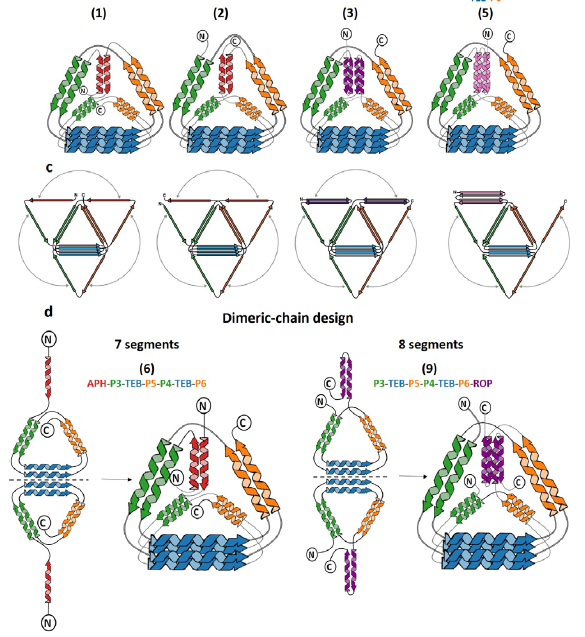
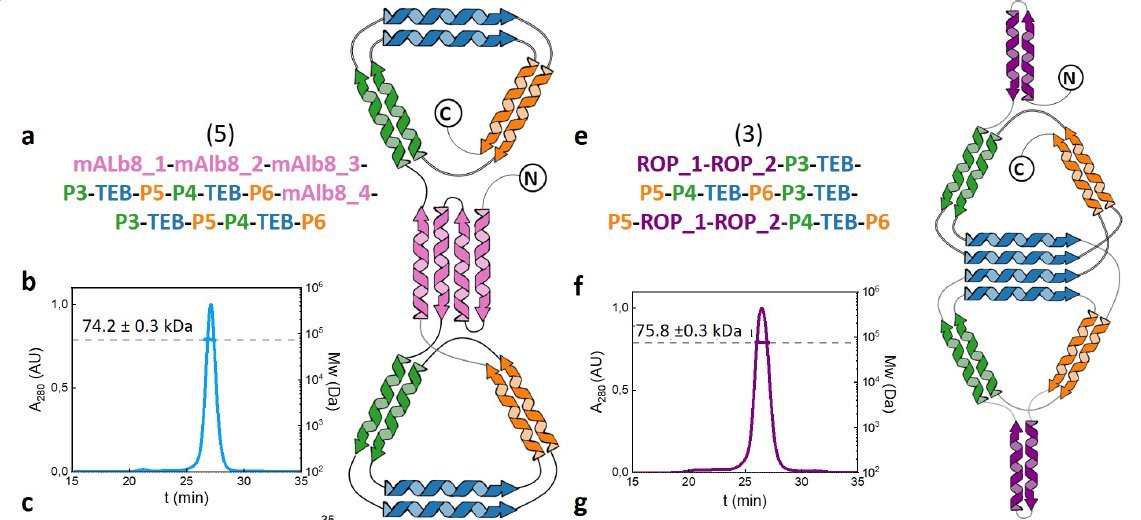
In our new paper we extended modules for building protein polyhedral cages from coiled-coil (CC) dimers to tetrameric CCs. This introduced many new topological possibilities and allowed assembly of dimeric cages.
https://t.co/xtpYzKTawC 🧵
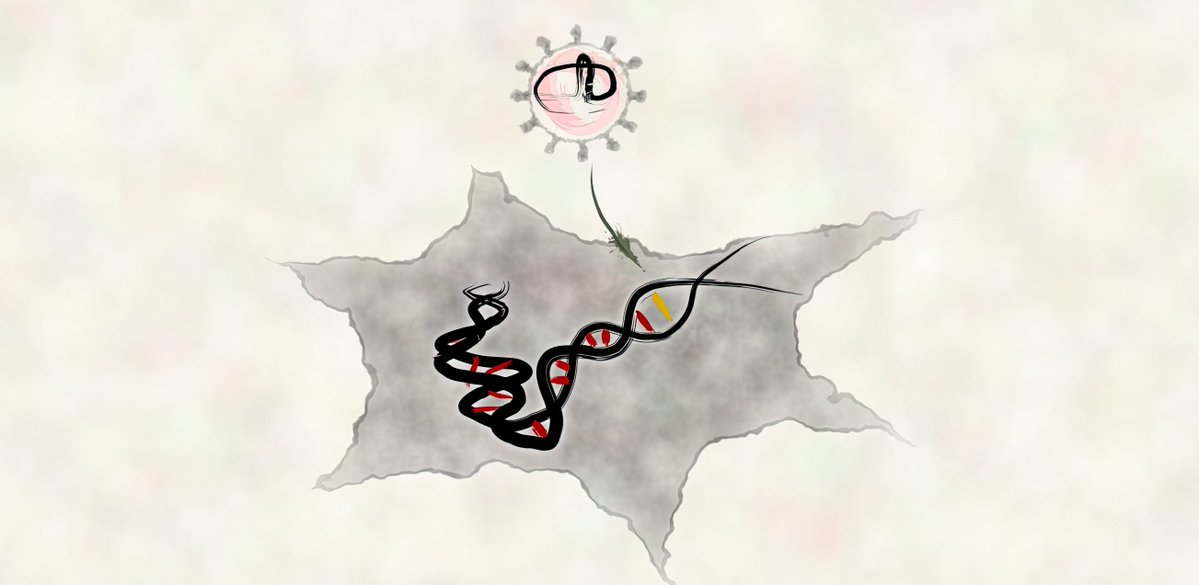
Excited to share 'non-destructive transcriptomics via vesicular export' (NTVE). We use HIV-1 virus-like particles, to export 'snapshots' of a cell’s transcriptome, which allows to follow gene expression changes over time by sampling from the supernatant. https://t.co/bOIQdHpxMB
Check out our approach on "non-destructive transcriptomics via vesicular export" (NTVE)! We have benchmarked NTVE exclusively in stably integrated cell lines, where transcript alterations by perturbations were truthfully reflected in the supernatant. ,https://t.co/17BhLA9mJp
APEX peroxidase is a versatile tool for proximity labeling and electron microscopy (EM) but its requirement for toxic H2O2 is a liability. We now report LaccID, a multicopper oxidase evolved from an ancestral fungal laccase that oxidizes aromatic substrates using non-toxic O2 instead of H2O2. We use LaccID for EM imaging of cultured cells and fly brains, and for proteomic mapping of the changing surface composition of T cells that engage with tumor cells via antigen-specific T cell receptors.
So happy to announce the next Helmholtz Pioneer Campus (HPC) Principal Investigator (f/m/x) recruitment round to promote wonderful young talent in Bioengineering and Biomedicine. https://t.co/P2yRMYFYHR
Controlling the absorption of certain molecules imparts new opportunities for high-resolution #optoacoustic biological imaging, much deeper than what is possible by optical microscopy. We argue that such absorption-switchable labels may play for optoacoustic imaging the same role that fluorescent proteins play for optical imaging and microscopy.
Wow, huge scale electrophysiological screen in iPSC neurons. 30,000 compounds screened to rescue a TSC2 loss of function phenotype (all optical!)
They found the phenotype w CRISPR & patient cell lines, in ephys, morphology, and mRNA.
(I’m on Quiver SAB)
https://t.co/N5kl5e2iwT
🙋🏻🔬 #EMBOinsitu is open for registrations!
From cryo-EM to multi-scale modelling - what types of biological questions can be addressed using in situ structural biology?
📜 Submit abstract by 12 Nov
📅 4 – 7 Feb 2025
📍 EMBL Heidelberg and Virtual
➡️ https://t.co/zO2QG19gpX