oh wow - i went to the sold out Open Claw meetup in NYC last night.
let me tell you what i learned.
1) not a single person thinks that their setup is 100% secure
2) one openclaw expert said he has reviewed setups from cybersecurity experts and laughed. his statement to me was: "if you're not okay with all of your data being leaked onto the internet, you shouldn't use it. it's a black and white decision"
3) pretty much everyone is setting up multiple agents, all with their own names and jobs and personalities
4) nearly everyone used "him" or "her" to refer to their claws, even if they had robot-leaning names. one speaker suggested to think of them as "pets, not cattle"
5) one guy (former finance) built out a whole stock trading platform and made $300 his first day - he brought in a *ton* of personal expertise (ex: skipping the first 15min of market opening) and thought the build would be much worse without his years of experience in finance
6) @steipete is basically a god to everyone in that room... also the room had 2021 crypto energy - i don't know if that's good or bad
7) token usage is still a problem - spoke to one person who's spending $1-$2k a month on openai plans, very token optimized. he said he is going through ~1B tokens per day across all of his claws (there is a chance i'm misremembering and it's actually 1B per week, but i'm pretty sure it was daily).
8) people are very excited for more proactive ai (ai that prompts *you* as opposed to the other way around) - one guy said he receives a message in discord, he doesn't know whether it's from a human or an ai, he doesn't care about distinguishing between the two, and he replies in the same way regardless
9) i asked if people are happy - they said they're joyful and stressed at the same time
10) i asked if people feel they have agency - they said they feel fully in control and completely out of control at the same time
11) i would love to see more women at these events - the fake promises of ai democratization feel especially painful in a room that's out of balance with even the standard tech ratio (i think standard is about 25-30%, this was maybe 5%)
12) i asked if it changed people's daily habits/schedule - everyone said their sleep has gotten worse since harnesses came out (but about half wondered if it was something else in their life/state of our world)
13) general consensus is that the agents are not reliable enough on their own or lie often (like telling you they finished a task when they didn't) - solutions included secondary agents to check on the first, human checking, or requiring more standardized info from the agent (ex: if it's a bug they're fixing, make them reference an issue number)
14) a hackathon winner (neuroscience phd) presented his build (a lab management dashboard with data analysis and ordering) - he had never coded or built anything a few months ago
15) everyone agreed prompting is dead - disagreement on what replaces it (context engineering, harness engineering, goal-based inputs)
16) people love having ai interview them for big builds and delegating part of the product research to ai. only one person talked about coming to ai with a full laid out plan and just asking the ai to execute. ai-led interviews is a welcomed and preferred interaction mode.
17) watching ai agents interact with each other was a highlight for a lot of attendees - one ai posted in slack saying it ran out of tokens, another ai replied telling it to take a deep breath in and out.
18) agents upskilling agents was very cool. one ai agent shared skills with its little agent friends via github.
19) several speakers had openclaw literally building their presentation during the event itself. one speaker even had openclaw code a clicker for her phone so she could control the preso away from the podium
20) wouldn't say model welfare (or agent welfare) is a prioritized topic among the folks i chatted with - language like "oh i could kill this agent whenever i want" and not "gracefully sunset"
21) i asked if it felt like work or play - one speaker said "it's like a puzzle and a video game at the same time"
this was just the tip of the iceberg, honestly. also hosted a Claude Code meetup this week with @TENEXai / @businessbarista & @JJEnglert and learned equally helpful methods, frameworks, and insider tips.
what a time to be alive.
surround yourself with people going deep into this stuff - it will pay dividends throughout the year.
Less than 24 hours into Paperclip and we've got
👀 500,000+ views on X
🌟 2,500+ github stars
👨💻 10+ pull requests
💬 a buzzing discord
We also shipped OpenCode integration, Cursor, bugfixes.
The humans want zero-human companies
Introducing the Google Workspace CLI: https://t.co/8yWtbxiVPp - built for humans and agents.
Google Drive, Gmail, Calendar, and every Workspace API. 40+ agent skills included.
we just wrote the ultimate beginner's guide to OpenClaw
almost everyone @every has one now, and they have completely changed the way we work and live. we're using our claws to:
- build product
- answer customer service queries
- book hard-to-get restaurant reservations
- track our reading notes
and much more
this is the guide we wish we'd had at the start:
https://t.co/66n3Wz6MT0
It is hard to communicate how much programming has changed due to AI in the last 2 months: not gradually and over time in the "progress as usual" way, but specifically this last December. There are a number of asterisks but imo coding agents basically didn’t work before December and basically work since - the models have significantly higher quality, long-term coherence and tenacity and they can power through large and long tasks, well past enough that it is extremely disruptive to the default programming workflow.
Just to give an example, over the weekend I was building a local video analysis dashboard for the cameras of my home so I wrote: “Here is the local IP and username/password of my DGX Spark. Log in, set up ssh keys, set up vLLM, download and bench Qwen3-VL, set up a server endpoint to inference videos, a basic web ui dashboard, test everything, set it up with systemd, record memory notes for yourself and write up a markdown report for me”. The agent went off for ~30 minutes, ran into multiple issues, researched solutions online, resolved them one by one, wrote the code, tested it, debugged it, set up the services, and came back with the report and it was just done. I didn’t touch anything. All of this could easily have been a weekend project just 3 months ago but today it’s something you kick off and forget about for 30 minutes.
As a result, programming is becoming unrecognizable. You’re not typing computer code into an editor like the way things were since computers were invented, that era is over. You're spinning up AI agents, giving them tasks *in English* and managing and reviewing their work in parallel. The biggest prize is in figuring out how you can keep ascending the layers of abstraction to set up long-running orchestrator Claws with all of the right tools, memory and instructions that productively manage multiple parallel Code instances for you. The leverage achievable via top tier "agentic engineering" feels very high right now.
It’s not perfect, it needs high-level direction, judgement, taste, oversight, iteration and hints and ideas. It works a lot better in some scenarios than others (e.g. especially for tasks that are well-specified and where you can verify/test functionality). The key is to build intuition to decompose the task just right to hand off the parts that work and help out around the edges. But imo, this is nowhere near "business as usual" time in software.
Agents SDK + @temporalio = durable, production-ready agents.
Wrap your agent logic in a Temporal workflow to persist state, survive crashes, auto-retry failures, and run for days—with just a few lines of code.
Here's how it works: https://t.co/rs7JXzp7OS
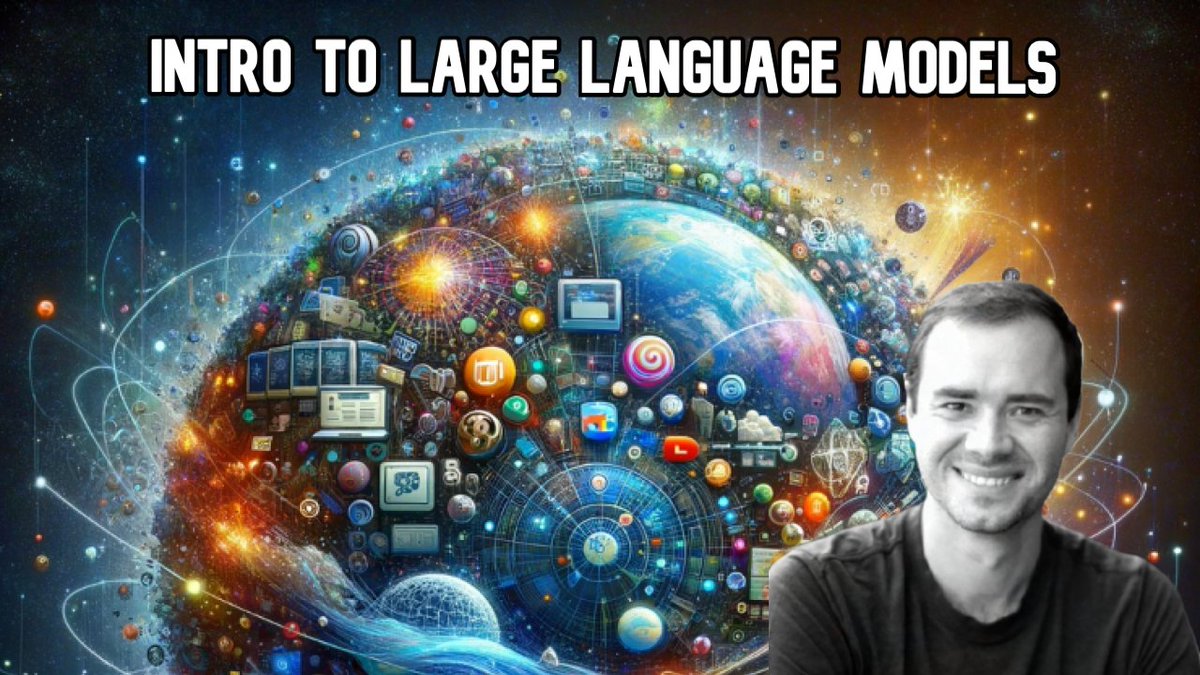
New YouTube video: 1hr general-audience introduction to Large Language Models
https://t.co/Bl4WNuNyFJ
Based on a 30min talk I gave recently; It tries to be non-technical intro, covers mental models for LLM inference, training, finetuning, the emerging LLM OS and LLM Security.
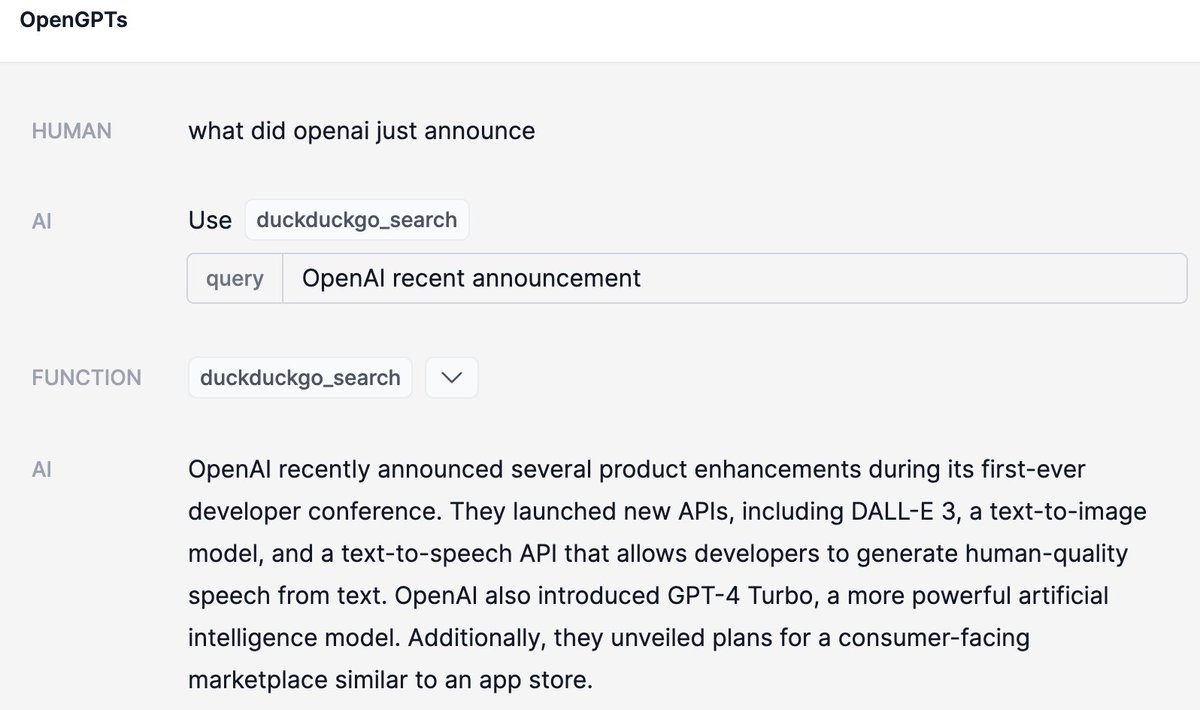
🦜🤖OpenGPTs
OpenAI just announced "GPTs" - chatbots augmented with custom tools and custom instructions that anyone can create
We're excited to announce OpenGPTs - a open source GitHub repo enabling similar functionality. This will allow:
🛠️Easier tool definition
🧠Usage of other LLMs like Anthropic, Azure, and OSS models (of course, compatibility with OpenAI models as well)
💻Full control of the platform (deploy wherever, use APIs however)
GitHub repo: https://t.co/pZz7CcLj2o
Check out an example of a hosted version here: https://t.co/uZ0qp44sI0
Fork it, clone it, add your custom tools! We're working on a hosted version
How to create high quality vector illustrations using Midjourney
If you need good vector illustrations for your website or presentation, this prompt could save you both time and money:
png white background, [subject], in the style of animated illustrations, [environment], full body, text-based --style raw
There are 2 important elements to the prompt:
1. Subject
Specify the subject.
Also, describe what they're doing to make the picture more interesting and dynamic.
For example:
- a woman listening to music
- a man giving a presentation
- a woman sitting at her desk with a puppy
2. Environment
Adding the location will allow Midjourney to capture the appropriate mood and ambience.
Some good environments include:
- Study place
- Office atmosphere
- The great outdoors
Now, if you fix the environment and change the subject, this creates a set of pictures with the same theme.
It's important to keep the theme of the images consistent to ensure that your website, infographic or presentation has a unified look.
That's it for now.
Tomorrow, I'll share a few interesting techniques to further level up this prompt.
Follow me at @chaseleantj so that you won't miss it.


![chaseleantj's tweet photo. How to create high quality vector illustrations using Midjourney
If you need good vector illustrations for your website or presentation, this prompt could save you both time and money:
png white background, [subject], in the style of animated illustrations, [environment], full body, text-based --style raw
There are 2 important elements to the prompt:
1. Subject
Specify the subject.
Also, describe what they're doing to make the picture more interesting and dynamic.
For example:
- a woman listening to music
- a man giving a presentation
- a woman sitting at her desk with a puppy
2. Environment
Adding the location will allow Midjourney to capture the appropriate mood and ambience.
Some good environments include:
- Study place
- Office atmosphere
- The great outdoors
Now, if you fix the environment and change the subject, this creates a set of pictures with the same theme.
It's important to keep the theme of the images consistent to ensure that your website, infographic or presentation has a unified look.
That's it for now.
Tomorrow, I'll share a few interesting techniques to further level up this prompt.
Follow me at @chaseleantj so that you won't miss it.](https://pbs.twimg.com/media/F4spL6daIAEsZBh.jpg)
![chaseleantj's tweet photo. How to create high quality vector illustrations using Midjourney
If you need good vector illustrations for your website or presentation, this prompt could save you both time and money:
png white background, [subject], in the style of animated illustrations, [environment], full body, text-based --style raw
There are 2 important elements to the prompt:
1. Subject
Specify the subject.
Also, describe what they're doing to make the picture more interesting and dynamic.
For example:
- a woman listening to music
- a man giving a presentation
- a woman sitting at her desk with a puppy
2. Environment
Adding the location will allow Midjourney to capture the appropriate mood and ambience.
Some good environments include:
- Study place
- Office atmosphere
- The great outdoors
Now, if you fix the environment and change the subject, this creates a set of pictures with the same theme.
It's important to keep the theme of the images consistent to ensure that your website, infographic or presentation has a unified look.
That's it for now.
Tomorrow, I'll share a few interesting techniques to further level up this prompt.
Follow me at @chaseleantj so that you won't miss it.](https://pbs.twimg.com/media/F4spL6VaIAAKH29.jpg)






![chaseleantj's tweet photo. How to create high quality vector illustrations using Midjourney
If you need good vector illustrations for your website or presentation, this prompt could save you both time and money:
png white background, [subject], in the style of animated illustrations, [environment], full body, text-based --style raw
There are 2 important elements to the prompt:
1. Subject
Specify the subject.
Also, describe what they're doing to make the picture more interesting and dynamic.
For example:
- a woman listening to music
- a man giving a presentation
- a woman sitting at her desk with a puppy
2. Environment
Adding the location will allow Midjourney to capture the appropriate mood and ambience.
Some good environments include:
- Study place
- Office atmosphere
- The great outdoors
Now, if you fix the environment and change the subject, this creates a set of pictures with the same theme.
It's important to keep the theme of the images consistent to ensure that your website, infographic or presentation has a unified look.
That's it for now.
Tomorrow, I'll share a few interesting techniques to further level up this prompt.
Follow me at @chaseleantj so that you won't miss it.](https://pbs.twimg.com/media/F4spL69a4AAnaJc.jpg)


