Every generation leaves behind a legacy. What that legacy will be is determined by the people of that generation. What legacy do you want to leave behind? -JL
🔥 BLACK MALE VOTERS: THE NARRATIVE vs. THE NUMBERS.
Michael Bland, Executive Director of Black Men Vote, responds to the misrepresentation of Black male voters 👀
🔴 We’re STILL LIVE | 5–7 PM ET
📺 Native Land Pod YouTube
#NativeLandPod#WelcomeHomeYall#CBCFALC
They assassinated an entire generation of revolutionary Black leaders and replaced them with a class of tap dancing “Black capitalists”
That’s why we’re having these conversations now & folks have the gall to defend Black billionaires who profit from selling us out
Colin Kaepernick once believed Jay-Z could be an ally. But by the time the two finally spoke, Jay-Z’s deal with the NFL was already done.
A leaked recording from a 2017 owners meeting captured Bills owner Terry Pegula saying the league needed a Black figure to help address the protests. @kaepernick7 believes Jay-Z ultimately became that figure—using his enormous cultural influence to help the NFL move beyond the protest without addressing its core demands.
@Thepivot on @Netflix
#ThePivot #Kaepernick #JayZ #NFL
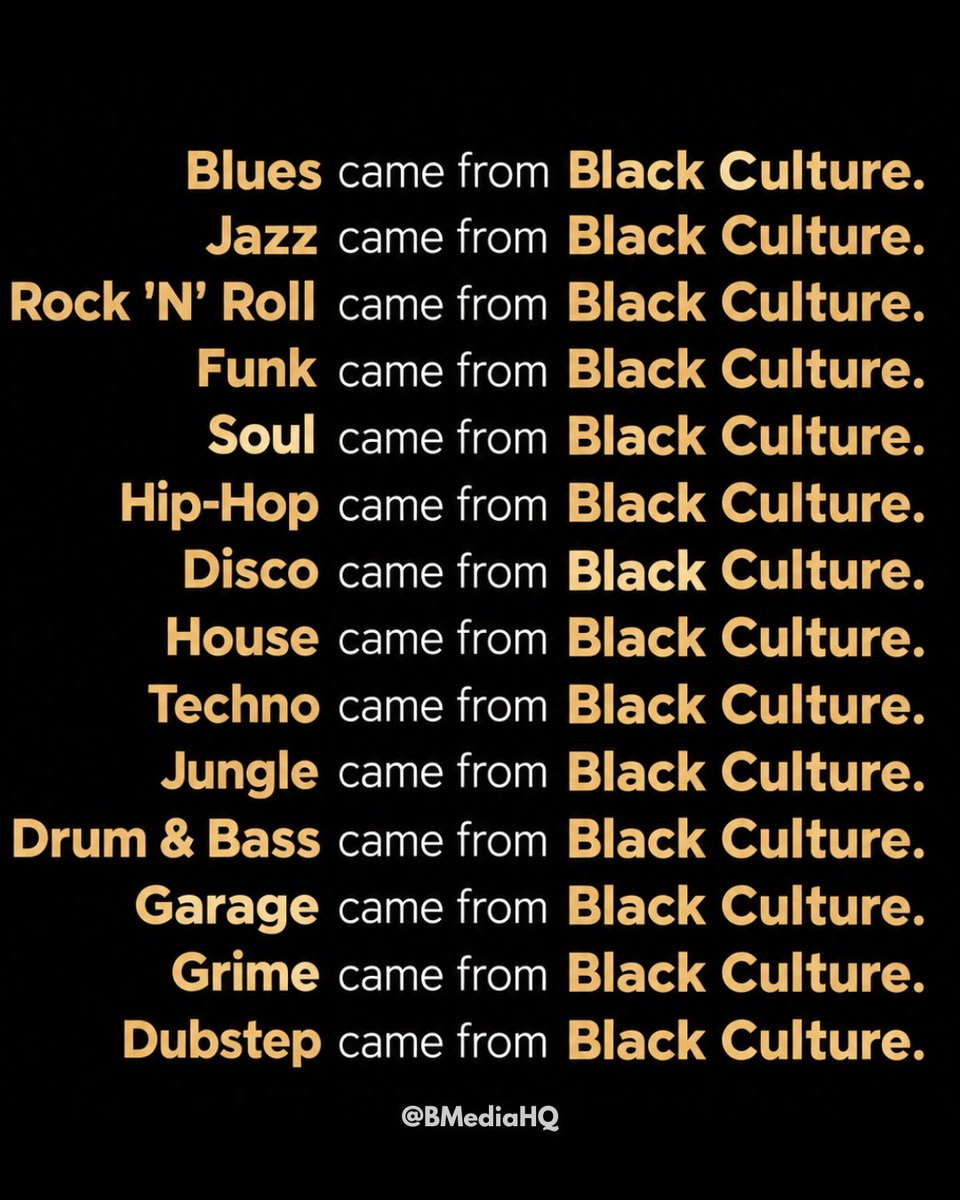
So much of the music we listen to today carries the fingerprints of Black creativity, even when that history is rarely mentioned. Blues developed from the experiences of Black Americans in the South, drawing from spirituals, work songs, field hollers and African musical traditions. Jazz emerged from Black communities in New Orleans and transformed those foundations through improvisation, rhythm and experimentation. From those traditions came rhythm and blues, which helped shape rock ’n’ roll through pioneers such as Chuck Berry, Little Richard, Sister Rosetta Tharpe and Fats Domino, long before the genre became associated with some of its biggest white stars.
Soul and funk pushed that influence even further. Artists such as James Brown, Aretha Franklin, Sly Stone, George Clinton and countless others created sounds that would become building blocks for generations of music. Disco grew largely from Black, Latino and LGBTQ+ nightlife in cities such as New York and Philadelphia, while hip-hop emerged from predominantly Black and Latino communities in the Bronx during the 1970s, turning turntables, breakbeats, rhymes and neighborhood parties into a culture that eventually spread around the world.
Black innovation also sits at the heart of electronic dance music. House was pioneered largely by Black DJs and producers in Chicago, particularly around clubs such as the Warehouse, while techno developed through Black artists in Detroit, including Juan Atkins, Derrick May and Kevin Saunderson. Across the Atlantic, Black British and Caribbean communities played major roles in the development of jungle, drum and bass, UK garage, grime and dubstep, drawing heavily from Ja
“Wherever Mitch McConnell went… he STAYED.” 😭
We all are thinking it!
🎧 Watch Episode 149 of Native Land Pod on YouTube or wherever you listen to your favorite podcast!
#NativeLandPod#welcomehomeyall
Stephen A. Smith reveals he believes White women in the United States of America are generally afforded more humanity than Black women, as Judge Eboni K. Williams highlights the similarities between the cases of Lindsay Clancy and Latarsha Sanders in the state of Massachusetts.
Judge Eboni K. Williams points out that the same judge who presided over Lindsay Clancy’s trial also presided over the 2022 trial of Latarsha Sanders, a Black woman who was found guilty of m*rdering her two sons.
Latarsha Sanders’ convictions were recently overturned after Massachusetts’ highest court ruled that Judge William F. Sullivan wrongly excluded psychiatric records relevant to her mental-health defense, while mental-health and psychiatric evidence was allowed to be presented during Lindsay Clancy’s trial, when Lindsay Clancy similarly k*lled her own three children.
Also, Sumatra Abernathy points out the hypocrisy of some of the same people who voted to protect unborn children by voting against abortion but are now angry with the lone Black holdout juror in the Lindsay Clancy case whose vote resulted in a mistrial, while saying Lindsay Clancy should be found not criminally responsible because of her mental state after she k*lled her three children, while Attorney Ashley Christopher makes an argument about how the same standard is not being applied to Black women.
(🎥The Culture Table/Straight Shooter Media/Youtube)
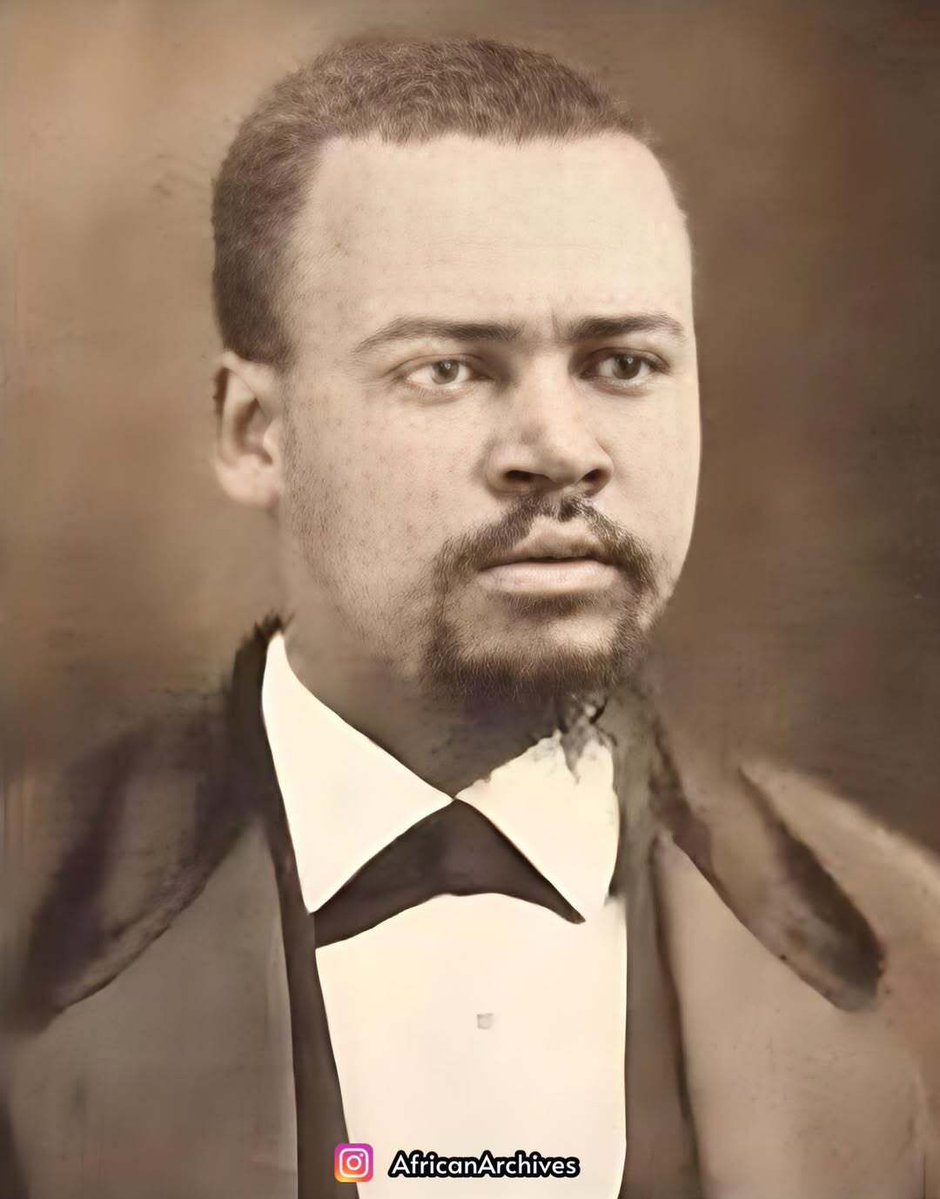
Imagine being born into slavery, separated from your family after trying to teach yourself to read, and repeatedly punished because you refused to stop learning. That was the early life of John Adams Hyman, a man who survived slavery and, within a decade of emancipation, became the first Black person to represent North Carolina in the United States Congress.
Born enslaved in Warren County, North Carolina, in 1840, Hyman developed a desire for education despite living under a system that deliberately restricted literacy among enslaved people. According to accounts of his life, after he was discovered trying to read a spelling book given to him by a sympathetic white man, he was sold away from his family. Hyman later recalled being sold repeatedly as he continued attempting to educate himself, with enslavers fearing that his determination to learn might influence others.
The end of the Civil War transformed his life. With slavery abolished in 1865, Hyman returned to North Carolina, reunited with family and attended school. He became a farmer, merchant and landowner before entering politics during Reconstruction, a remarkable period when formerly enslaved Black Americans began exercising political rights that had been denied to them for generations.
In 1868, Hyman participated in North Carolina's constitutional convention, helping create a new state constitution that expanded public education and recognized Black men's political rights. He was then elected to the North Carolina Senate, where he served for several years despite the violence and intimidation Black political leaders faced from white supremacist organizations including the Ku Klux Klan.
His biggest political breakthrough came in 1874 when voters in North Carolina's Second Congressional District elected him to the U.S. House of Representatives. When Hyman took his seat in 1875, he became North Carolina's first Black member of Congress. While serving in Washington, he advocated for people in his district and supported efforts to reimburse depositors who had lost money following the collapse of the Freedman's Savings Bank, an institution that had held the savings of thousands of formerly enslaved people and their families.
Hyman's later career was more complicated. He lost subsequent congressional campaigns, faced political and personal controversies, and eventually returned to Washington, D.C., where he held several government positions before dying in 1891 at just 51 years old. His story, like the stories of many Reconstruction leaders, should be remembered in its entirety rather than turned into a perfect hero narrative.
Still, the transformation of his life remains extraordinary. A man who had once been punished and sold for seeking an education lived to help write a state constitution, serve in the legislature and walk into the United States Capitol as an elected representative. John Adams Hyman's life shows just how dramatically emancipation briefly changed the possibilities available to formerly enslaved Americans during Reconstruction, and why education and political power became such fiercely contested parts of Black freedom.
If you love our content and would like to support the page, you can buy us a coffee here: https://t.co/K1AhtZuOFs (I also post blogs there and have a book club)—
Black folks, it’s #NationalBlackVoterDay. Check your registration, but watch WHERE you check it. 👀
https://t.co/Pj0FWrczAo is run by Musk’s America PAC and collects personal data.
Use https://t.co/9YJVnrkeXg or your state’s official election site instead. 🗳️
#NativeLandPod
but I’ve learned..
You don't have to guess if something is love. Love is shown through actions. Stop making excuses for people who don't show up for you. Don't ignore the red flags. And don't think you have to stay somewhere 'cause you can't find better, you can and you will.
Nathan Morris of Boyz II Men says the best R&B music was from the early ’70s up to the ’90s, revealing he believes R&B got changed too much, and Wanya Morris says there was a reset where the music industry took away the frequency of men expressing love.
(🎥Shawn Stockman's On That Note/Youtube)
I have a hard Time forgiving malicious, calculated people. There's something about people who go out their way to harm you, misrepresent you, or just straight up lie on you that really makes me cut them off completely. I genuinely pray for people like that, cause it's demonic asf
@WLGarner_Author@MHTruthUltra This country exploits and pillages other countries and has been instrumental in creating these so called terrorists. They’re only terrorists to us when they go against our interests. Oh and America has done nothing out of the goodness of our hearts sir. Please read a book.
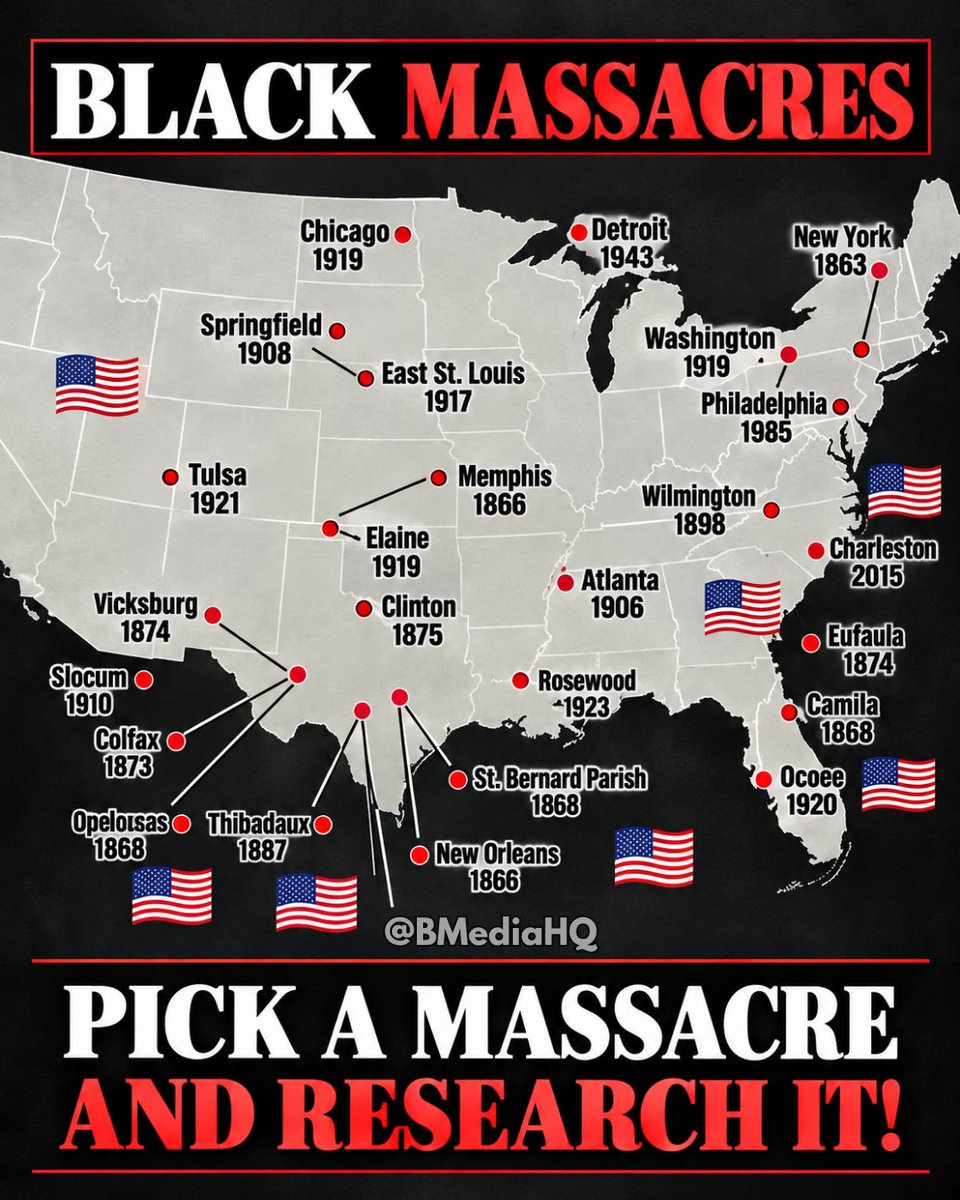
Tulsa was not the only anti-Black massacre in American history. From New Orleans and Colfax to Wilmington, Elaine, Rosewood, Ocoee, and many others, racial violence devastated Black communities across the United States, destroying lives, homes, businesses, and generations of progress. While this map is not exhaustive, it serves as a reminder that these events were part of a broader history that deserves to be remembered, studied, and discussed rather than forgotten.
The United States has been an apartheid, settler-colonial, genocidal project since 1492. It was built on stolen land, stolen labor, and stolen lives. It has never stopped being that.