A new mechanism for “RNA memory”! 😱
Thrilled to share another crazy paper from the lab (can’t believe we posted 2 in 2 days!), summarizing >10 years of research:
Work on transgenerational inheritance of small RNAs in the powerful model organism C. elegans changed how we think about what’s possible in inheritance and evolution, because it allows the most heretical thing: inheritance of parental responses to the environment! However, it’s still unclear whether RNAs are inherited across generations in other animals, largely because the RNA-dependent RNA polymerases that amplify heritable small RNAs and prevent their dilution in C. elegans are not conserved in mammals.
In this new work, an amazing collaboration with the Rink and Wurtzel labs, we show that planarians establish long-lasting and heritable small RNA–based gene regulatory states despite lacking canonical RNA-dependent RNA polymerases and nuclear RNAi machinery (that are required in C. elegans).
You might say “they are both worms…” BUT planarians are evolutionarily very distant from C. elegans (flatworms vs. roundworms, diverged more than 500 million years ago), making this particularly surprising. These are totally different animals.
We find that ingestion of double-stranded RNA induces sequence-specific silencing that persists for months and survives repeated cycles of whole-body regeneration. Even more strikingly, RNAi can be transferred between animals, echoing James V. McConnell’s controversial “RNA memory” experiments from the 1970s (his lab was targeted by the Unabomber terrorist Ted Kaczynski, who sent McConnell a bomb. This and other controversies ended this line of experiments…)
Mechanistically, we find that the response transitions from a transient systemic dsRNA-triggered phase to a stable, cell-autonomous post-transcriptional “memory phase” maintained by antisense small RNAs. Using a new luminescence reporter (transgenesis is currently impossible in planarians), we show that silencing spreads along the targeted gene and identify a weird type of planarian small RNAs with untemplated polyA tails.
RNAi inheritance without canonical RdRPs establishes planarians as a powerful system for studying RNA-based regulatory inheritance beyond C. elegans and raises the possibility that RNA-mediated inheritance may be more broadly conserved in animals, potentially even in mammals.
Here’s a video of a planarian that is treated by RNAi against β-catenin and develops multiple heads instead of just one. This is one of the phenotypes that is inherited. Another phenotype is “loss of eyes” (which we show is not only inherited across multiple regeneration cycles, but can also be transmitted between animals in transplantation experiments).
Amazing work led by first authors Prakash Cherian and Idit Aviram (co-supervised by Omri and me).
Please read the preprint, the link is in the next tweet, and share!
'India has the opportunity to prevent thousands of future cancers in young women. Every year that this vaccine is delayed is one in which real harm accrues. Scepticism strengthens science. Manufactured doubt weakens public health,' writes Anurag Agrawal (@AnuragAgrawalMD), Dean, BioSciences and Health Research, Trivedi School of Biosciences, Ashoka University, addressing misconceptions around HPV vaccination and highlighting the importance of evidence-led public health policy.
(@IndianExpress)
#AshokaUniversity
Call for abstracts is open! Deadline is March 31st. Present your work at India's largest ecology conference. Please share in your networks!
Students can apply for the Ajith Kumar Opportunity Grant as well! @AshokaUniv@wti_org_india
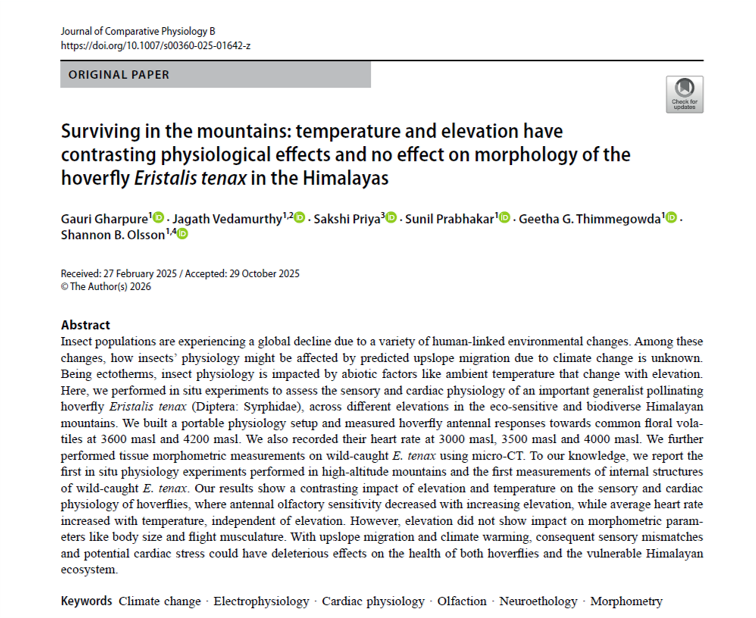
I am excited to share the first paper from my PhD work, now published in the Journal of Comparative Physiology B. These were some of the most challenging and my favourite experiments, and I am very happy to see this work come to fruition! (1/n)
The Department of Psychology and Cognitive Sciences at Ashoka University invites applications for its PhD programme for the academic year 2026-2027
Application Deadline: 31st March, 2026
Apply here: https://t.co/f013FoKoVr
For inquiries, please write to [email protected]
#AshokaUniversity
Delighted to share my first pedagogical article, now published with @SpringerNature in #Resonance (@IAScResonance ), on evolutionary biology. Read here: https://t.co/wFTEU8LERU
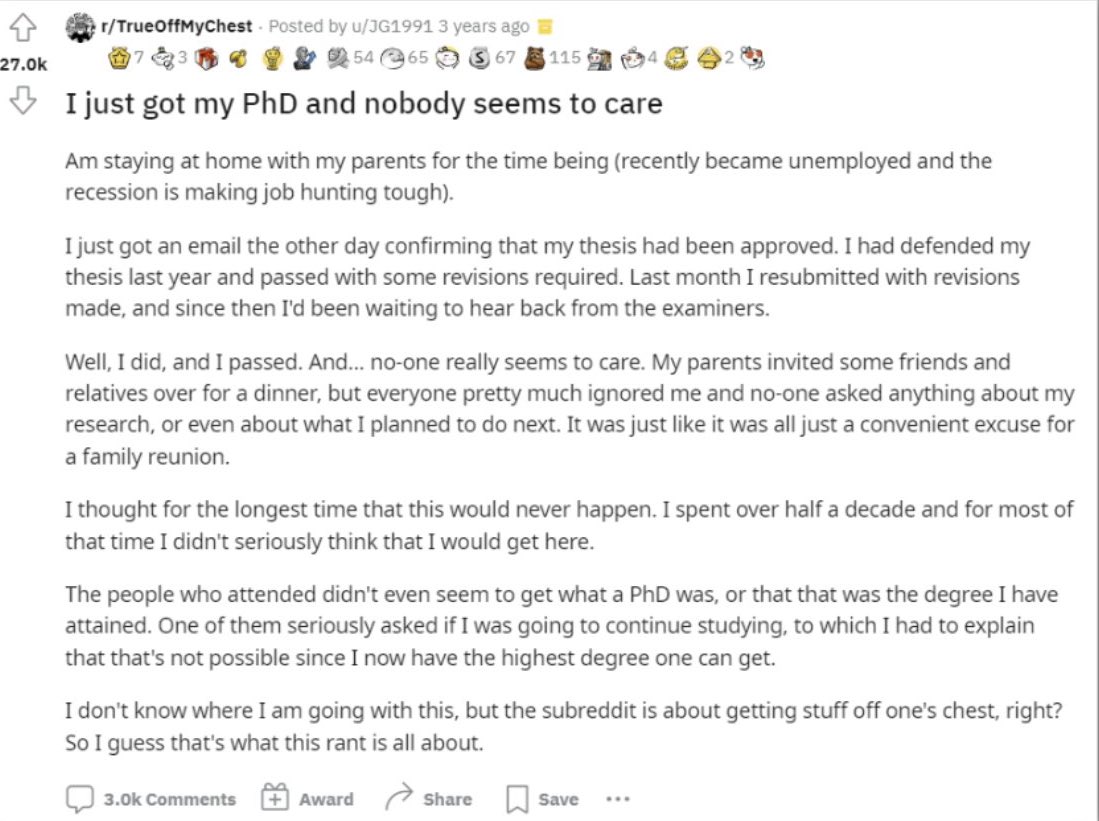
Pursuing a PhD took a significant toll on my mental health, particularly due to financial stress and uncertainty about my career future. This often made me less productive in my research, while promoting unhealthy work habits.
Nobody talks about it, but you see these super-bright PhD students putting out "only" 2-3 good papers over a period of 4-5 years. Then, when they get a research position, they generally start churning out 2-3 papers PER year. It’s not like defending your thesis changes anything overnight. But having a secure future and financial stability frees up (consciously or unconsciously) mental energy for more productive work.
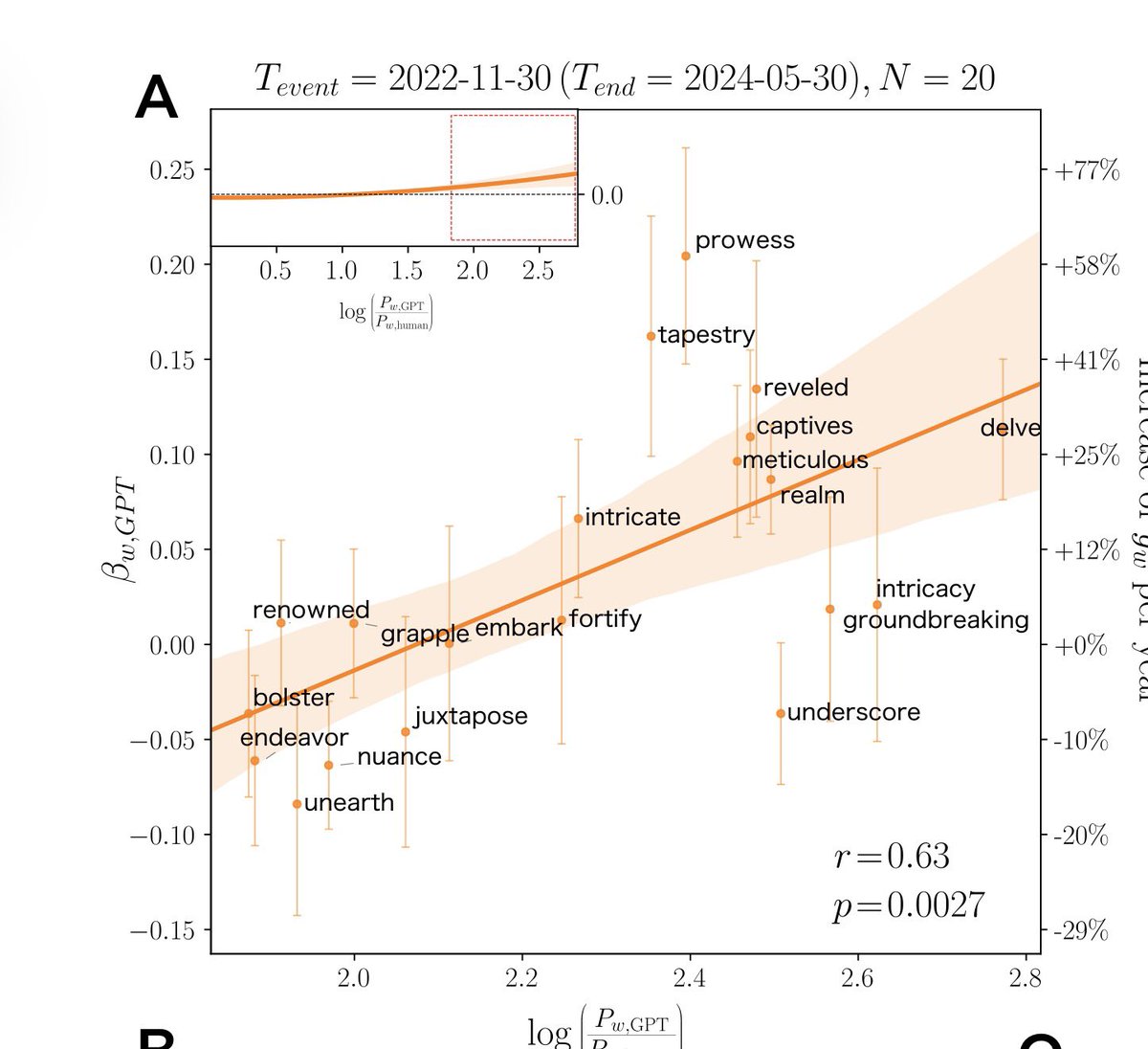
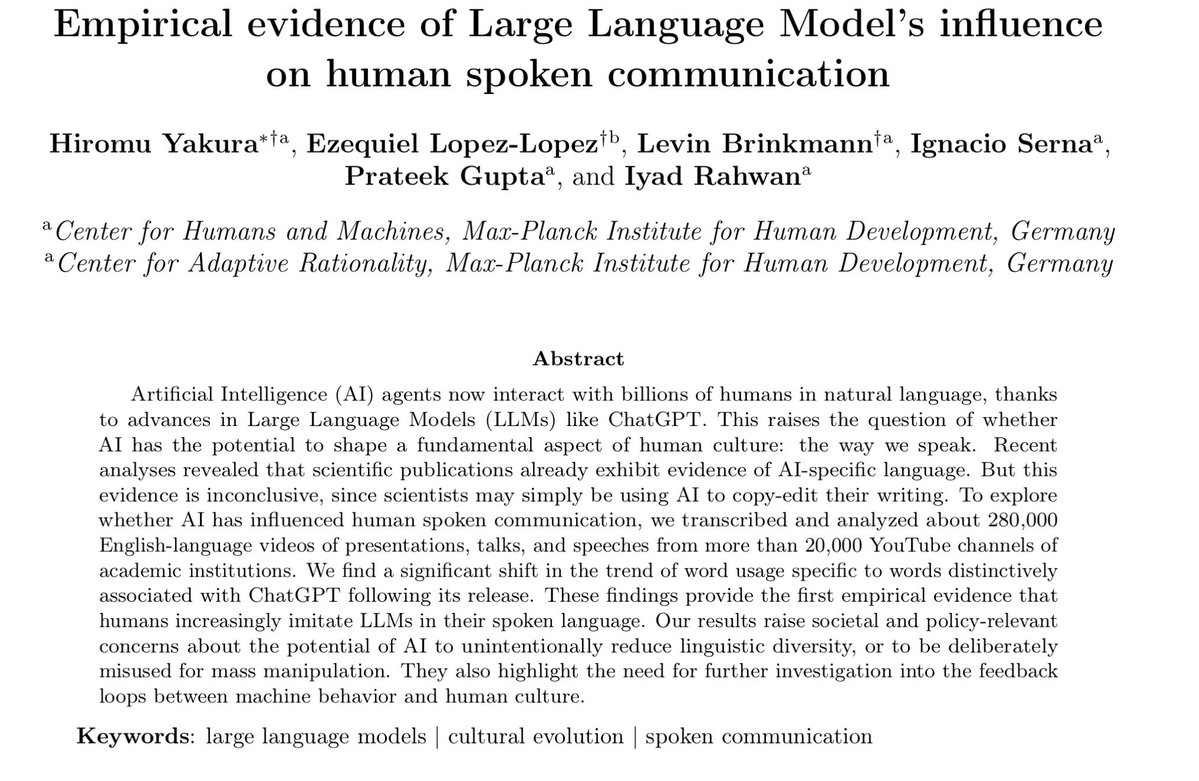
Everyone is starting to sound like AI, even in spoken language
Analysis of 280,000 transcripts of videos of talks & presentations from academic channels finds they increasingly used words that are favorites of ChatGPT
Model collapse, except for humans https://t.co/nlfbEozhCJ
@_KarishmaK So true. Having too much clarity or planning could be a sign of rigid approach, while the nature and range of career options are evolving in interesting ways.
These scientists found love (a woolly rhinoceros genome) in a hopeless place (inside the stomach of a mummified wolf). Read about that and more in this edition of @ScienceMagazine's #ScienceAdviser: https://t.co/6v2Zg0qkSJ
The first-place-winning video in Nikon’s Small World in Motion Competition 2025 documents the self-pollination of a thymeleaf speedwell flower. Filming at 5X magnification, winner Jay McClellan used a custom-built motion-control system to capture the flower. https://t.co/juZI2Y0qtK
@MenonBioPhysics Thanks for sharing. We did a ABModelling project on Lake ecosystem with LGP students. Often it's difficult to convince students that these simple looking problems are not simple and outdated.
A young woman in STEM, after my panel discussion at ISF. 🧮
'A teacher tells me - Girls are not good at Maths. I want to be a physicist. But this statement is really making me doubt my capabilities.'
It is brave young women as these whose questions have nudged me to write the book.
The book has three very relevant chapters - Bias and Discrimination in STEM, Scientist Stereotypes, and Imposter Phenomenon that dive into many of these themes.
Sneak peek from the acknowledgments: 🧪👇
You don’t need a brain to benefit from a good night of sleep. Despite lacking a central nervous system, jellyfish and sea anemones have sleep patterns remarkably similar to those of humans, researchers report.
Learn more: https://t.co/heGVPELMKS