#DCTrailer looks really good.
@ArunMatheswaran’s style and craft come through very well in the trailer. The visuals and sound design are impressive and set a strong mood throughout.
@Dir_Lokesh looks intense and @iWamiqaGabbi has done a lovely job too. Hope the film turns out really well. 💐🔥
@sunpictures
🎥 https://t.co/o6FtV7gfiF
Why should Malayalis change the English accent we speak?
Russians speak English with a Russian accent, and in the same way, Malayalis speak English with a Kerala accent, and it is acceptable as long as we are able to communicate our ideas perfectly to the other person.
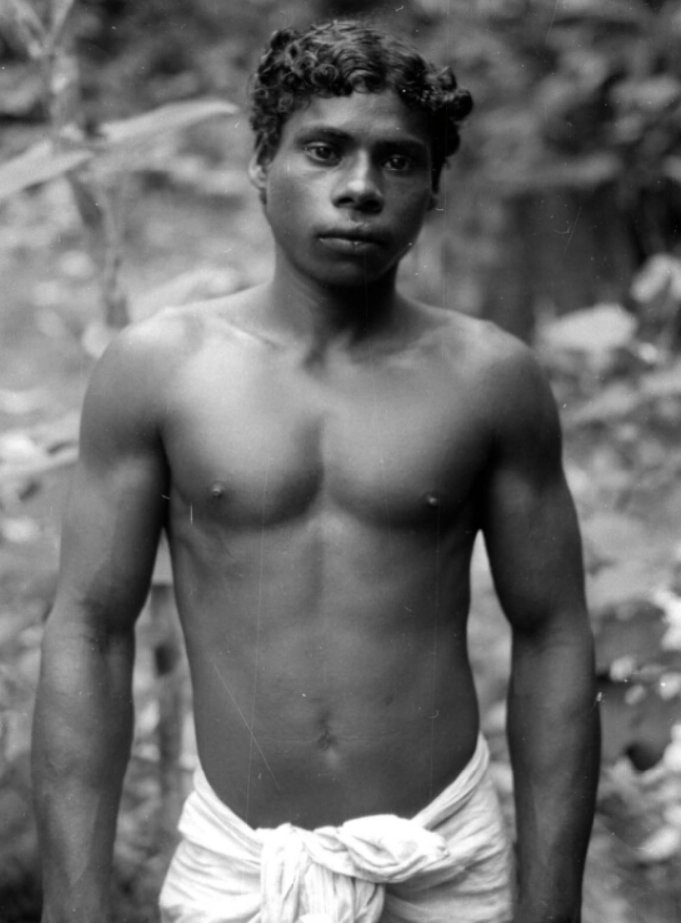
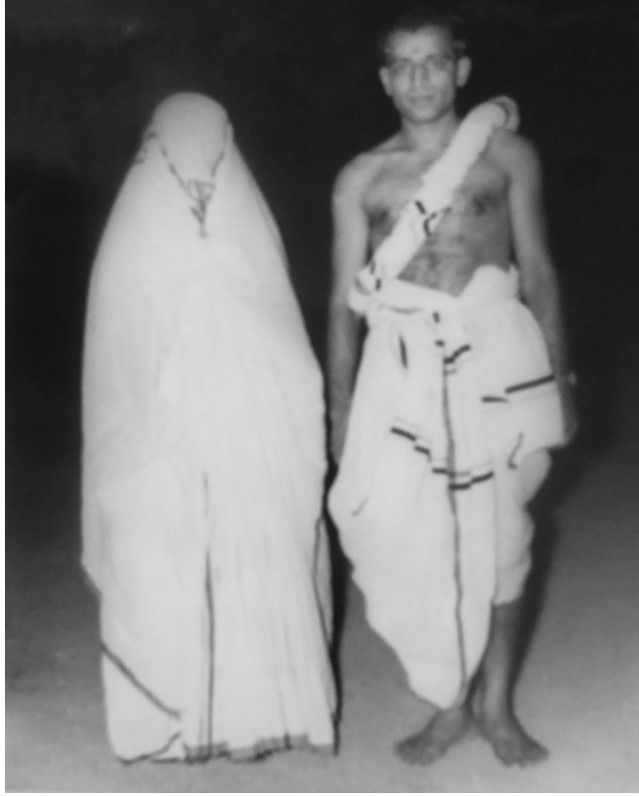
Colonial photographers documented Kerala like a census. Every caste & woman. Savarna historians claim it proves women across all castes went topless freely. But nobody asks the obvious question: Where are the Brahmin (Namboothiri) women? 🧵
@nikhilnarayanan The Travancore regime weaponized caste, forcing Avarna women into a 50-year breast cloth revolt just for basic dignity. Why does democratic Kerala still prioritize feudal protocols for Sringeri over the Sivagiri Mutt Sanyasins who carry Sree Narayana Guru's legacy?
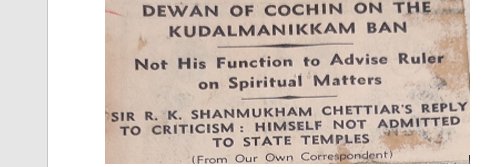
The boycott at Kerala's Koodalmanikyam Temple ends as Brahmin priests return for the festival alongside the newly appointed Ezhava staff. However, the legal battle intensifies as sanatanist file a Supreme Court appeal challenging the appointment of lower caste.
🚨 The return follows years of diplomatic engagement between India, the Dutch government, and Leiden University as part of broader efforts to repatriate colonial-era artefacts
The 21-plate set records Rajaraja I’s grant to a Buddhist vihara at Nagapattinam & has been at Leiden University for over 300 years.
#IndiaNetherlands #CopperPlates #CholaDynasty
@Saatvata In Ezhavar Annum Innum, N.R. Krishnan presents a fascinating linguistic argument: the 9th-c. Tharissapalli plates Macaulay handed to Syrian churches were originally Buddhist, because the word "Palli" historically referred to Buddhist/Jain shrines.
Sree Narayana Guru wasn't even allowed to walk on Travancore’s roads. Why does Kerala gov still use royal protocol to give a Guard of Honour to Sringeri Jagadgurus, but denies that same state guest status to Sivagiri Mutt Sanyasins?🤔
Sree Narayana Guru wasn't even allowed to walk on Travancore’s roads. Why does Kerala gov still use royal protocol to give a Guard of Honour to Sringeri Jagadgurus, but denies that same state guest status to Sivagiri Mutt Sanyasins?🤔
Whenever Sringeri Jagadgurus visit Kerala State, State Administration through Kerala Police gives them Guard Of Honour as they are treated as State Guest (because they are Rajagurus of Erstwhile Travancore Kingdom). A rare honour for only Sringeri Jagadgurus.🙏🙏🫡🫡🙏🙏
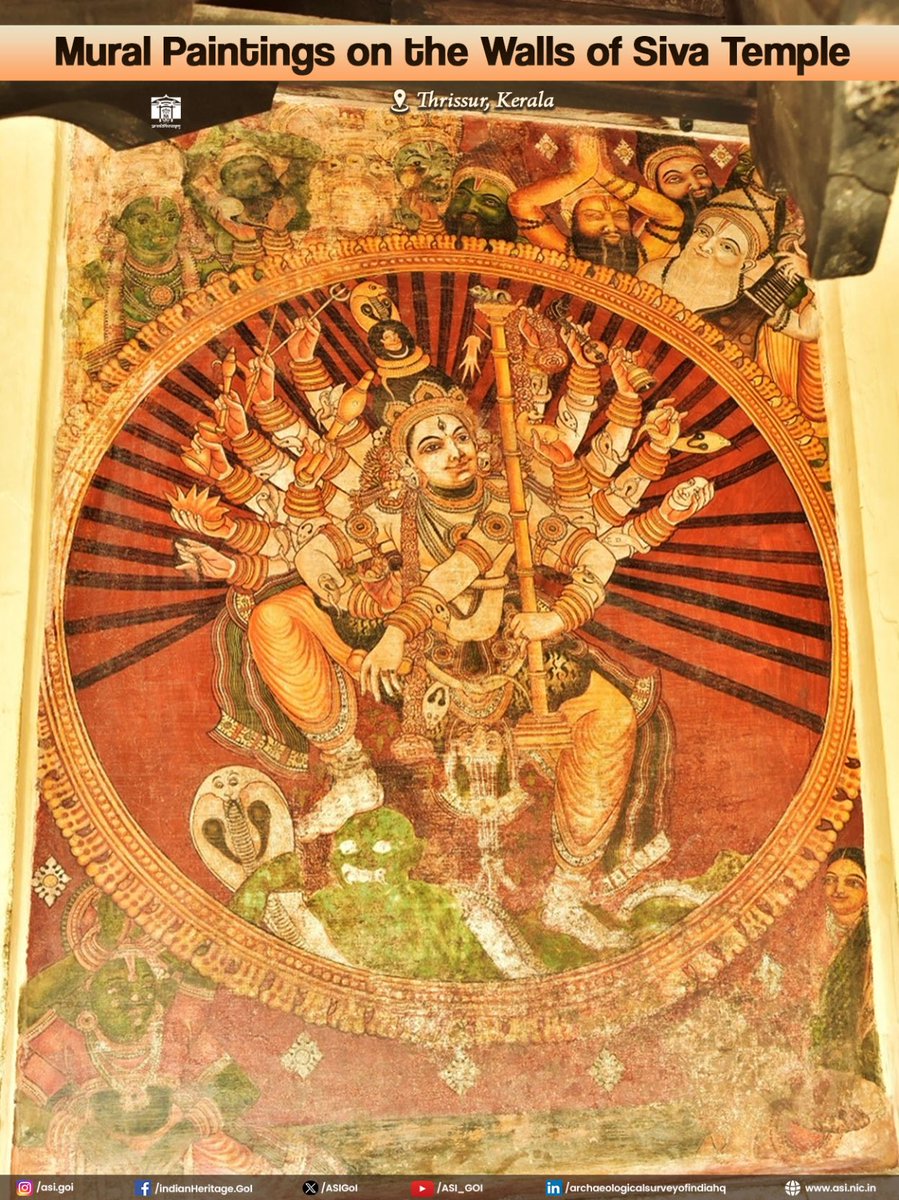
The Siva temple at Thiruvanchikulam, is an important Saivite shrine of the southern region. It is especially renowned for its exquisite mural paintings dating to the 16th–17th centuries CE. The temple itself is closely associated with Sundaramurti Nayanar and Cheraman Perumal Nayanar, the Chera king-saint of the 9th century CE. Originally constructed as a brick temple, the shrine underwent extensive renovations during the 10th–11th centuries CE. The murals adorn the walls of the main shrine and its subsidiary temples.
One of the murals depicts Lord Siva as Nataraja, encircled within a radiant prabha mandala. The central figure, shown with 16 arms, is portrayed in a vigorous dancing posture while holding various attributes such as the trisula, damaru, agni, naga, and parasu. Beneath the raised right leg of Nataraja lies Apasmara Purusha, entangled with naga. The upper and lower sections of the prabha mandala show gods, sages, and devotees, enhancing the cosmic significance of the composition.
Another mural portrays Lord Krishna standing gracefully in the tribhanga posture while playing the flute. He is flanked by female attendants (gopikas), some of whom are shown carrying musical instruments such as the veena. In the lower section of the panel, various animals are depicted gazing towards Lord Krishna, captivated by the divine melody of his flute.
@sarvamedha Historical records show that animal sacrifice was once common at the Sabarimala temple. According to a 1792 A.D. record, 36 goats were sacrificed as part of the kuruthi ritual, and alcohol was traditionally offered as vellam kudi to Kadutha Swami.
@sarvamedha Historical records show that animal sacrifice was once common at the Sabarimala temple. According to a 1792 A.D. record, 36 goats were sacrificed as part of the kuruthi ritual, and alcohol was traditionally offered as vellam kudi to Kadutha Swami.
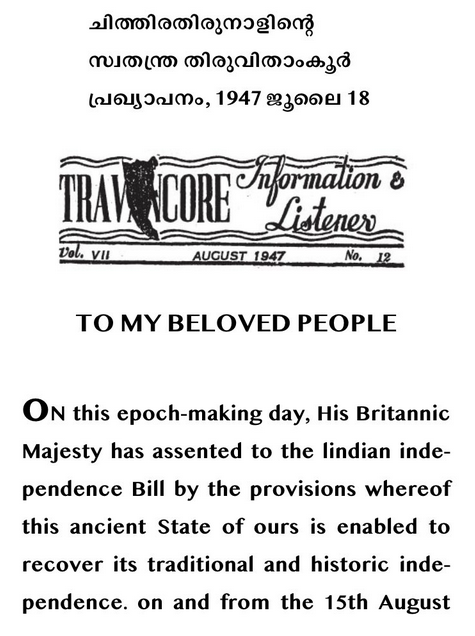
@sarvamedha When India gained independence in 1947, Travancore was one of the 4 major princely states that initially refused to join the Union. King Chithira Thirunal went as far as declaring Travancore an independent country.
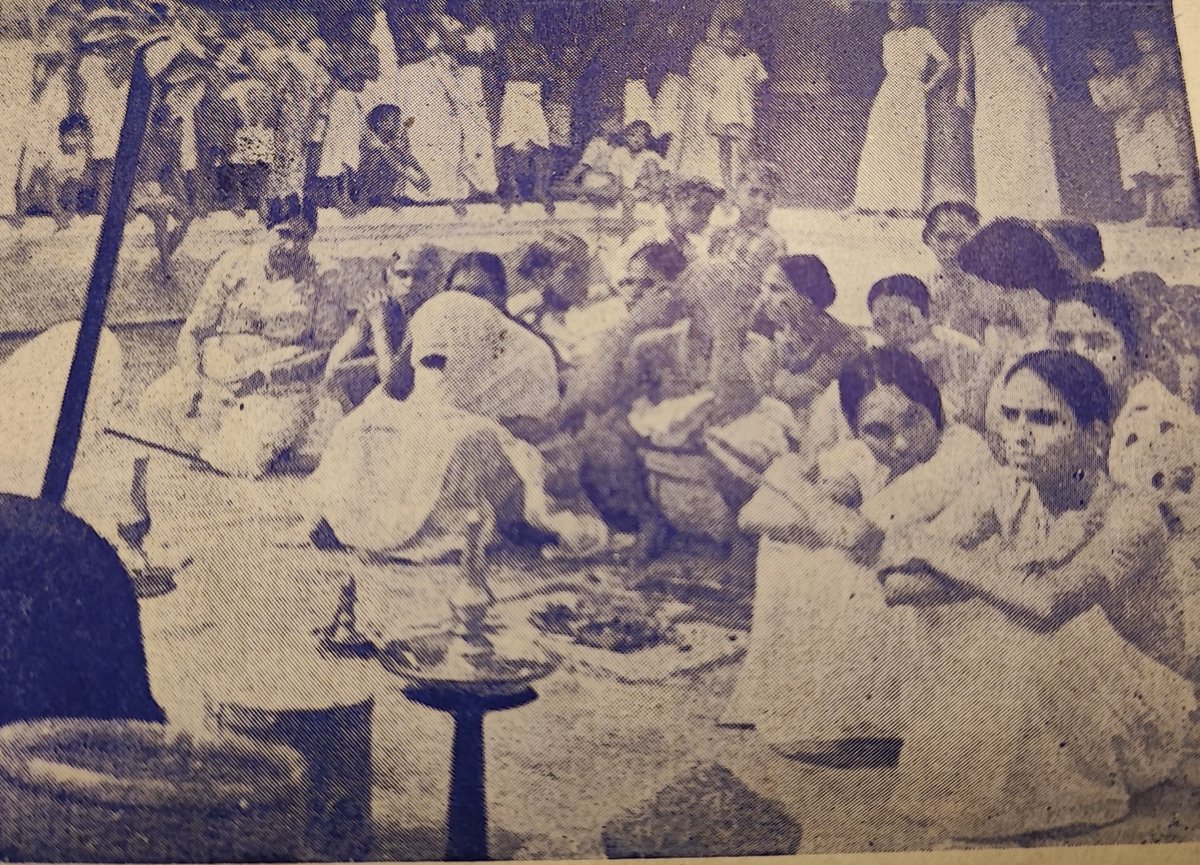
இலங்கையில் தமிழ் மொழிப் பேசக் கூடிய பெண்கள் திர��மணம் நடக்கும் போது துணியால் தலையில் முக்காடு(வெள்ளை நிறம்- சில சமயங்களில் மாறும்)போடும் வழக்கம் மலையாள நம்பூதிரிப் பெண்களிடமும் காணப்படுகிறது. தாலிப் பூட்டும் சடங்கு உட்பட.
இலங்கையில் கேரளத்தின் தொடர்பு
@sam_kanyakumari
While lower-caste women existed visibly working fields, walking markets, and being documented by photographers-the Antharjanam remained in the shadows. Her absolute seclusion, dictated by rigid caste codes, reveals a complex history that simplistic modern debates often overlook.
Colonial photographers documented Kerala like a census. Every caste & woman. Savarna historians claim it proves women across all castes went topless freely. But nobody asks the obvious question: Where are the Brahmin (Namboothiri) women? 🧵
Furthermore, while Sankarasmriti mandated absolute chastity for women, it enforced a severe punishment: any Namboothiri woman suspected of violating these rules faced Bhrashtu (excommunication).