🌍 The Hidden Diversity Within a Species
Many wildlife species are divided into subspecies—populations of the same species that have evolved distinct characteristics after adapting to different geographical regions over thousands of years.
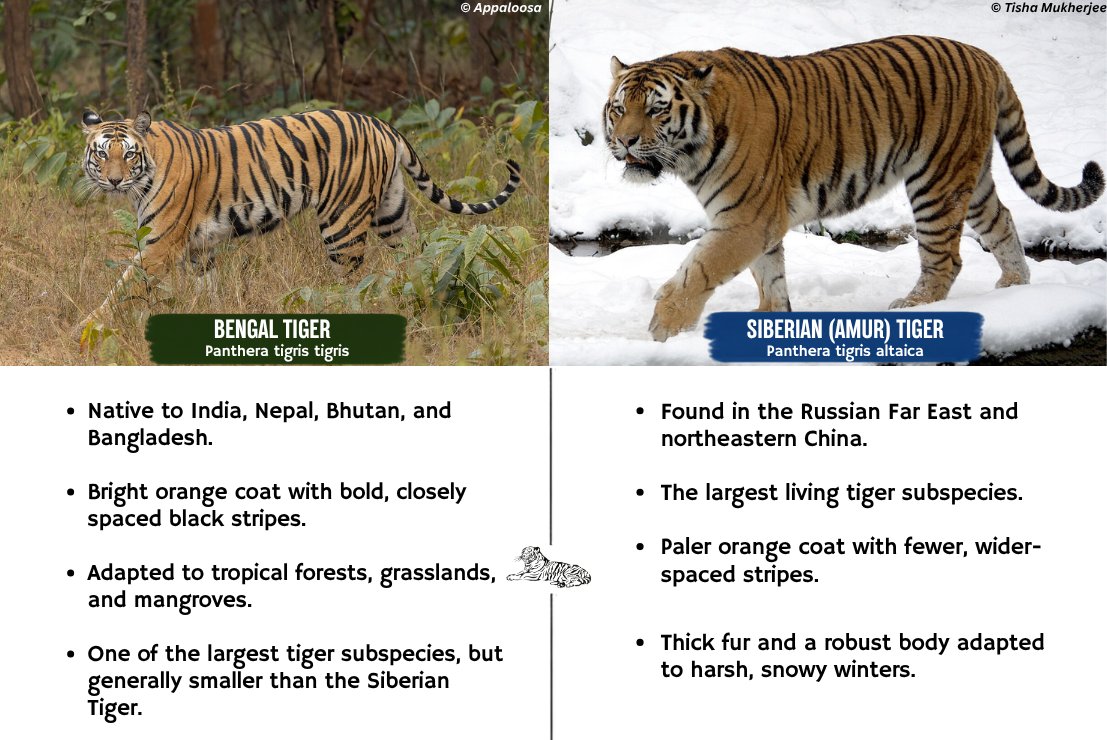
Tigers include the Bengal Tiger and Siberian (Amur) Tiger, among several other recognized subspecies. Elephants include the African Bush Elephant, African Forest Elephant and Asian Elephant.
Bears are represented by eight living species. Some of these, such as the Brown Bear, include subspecies like the Grizzly bear, Kodiak Bear and Himalayan Brown Bear, among several others. Similarly, the Sun Bear has two recognized subspecies—the Mainland Sun Bear and the Bornean Sun Bear.
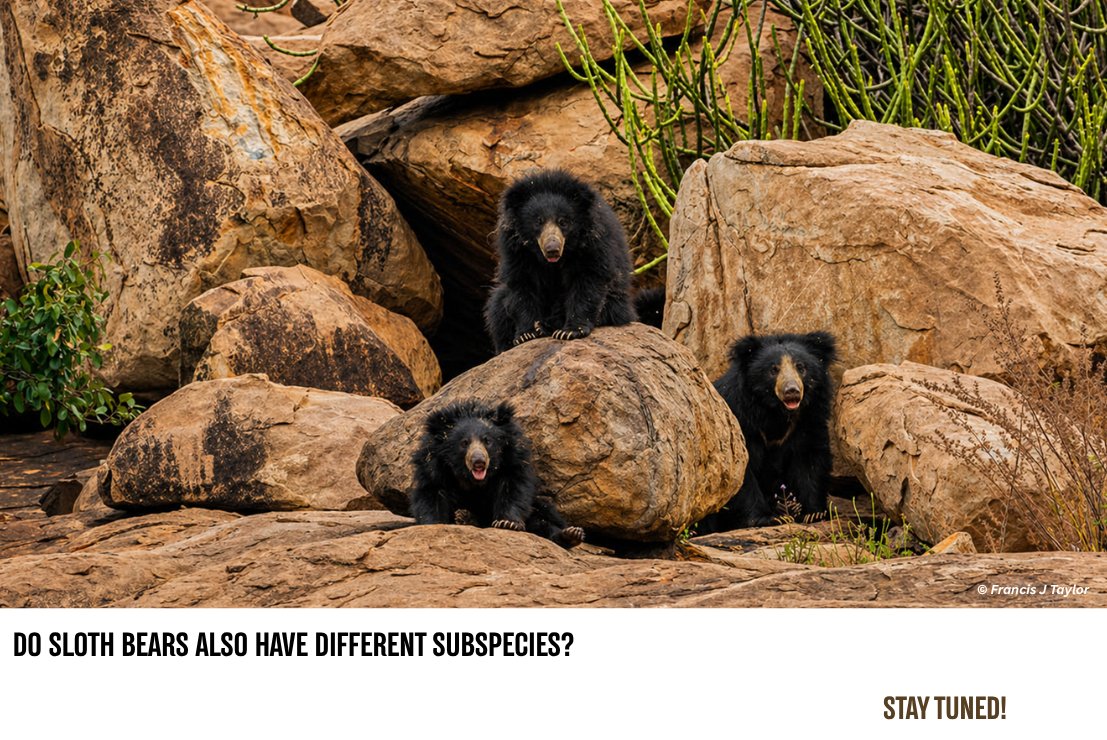
But what about Sloth Bears? Do they also have different subspecies?
We'll explore that in our next post. Stay tuned! 🐻✨
#ProjectSlothBear #WIIProjectSlothBear #SlothBear #WildlifeFacts #Biodiversity #Subspecies #WildlifeEducation
@moefcc@CentralIfs@NationalCAMPA@wii_india@SACONCoimbatore@wii_eiacp@rameshpandeyifs@GobindsagarBha1@RuchiBadola2@CRamesh_WII@BivashPand34733@Kramesh95@amitwii@UpmaManral@ashishjangid22@avinashyadv95@utkarsh41995 @kaushikforwild @Hairypotter0777@Sindhoora_2001@Suraj_Chauhan31@niranjanKv2770@Kavyak0204@MitaliJadh34762
🐾 Hidden Language of Sloth Bears | Part 1: Scent Marking
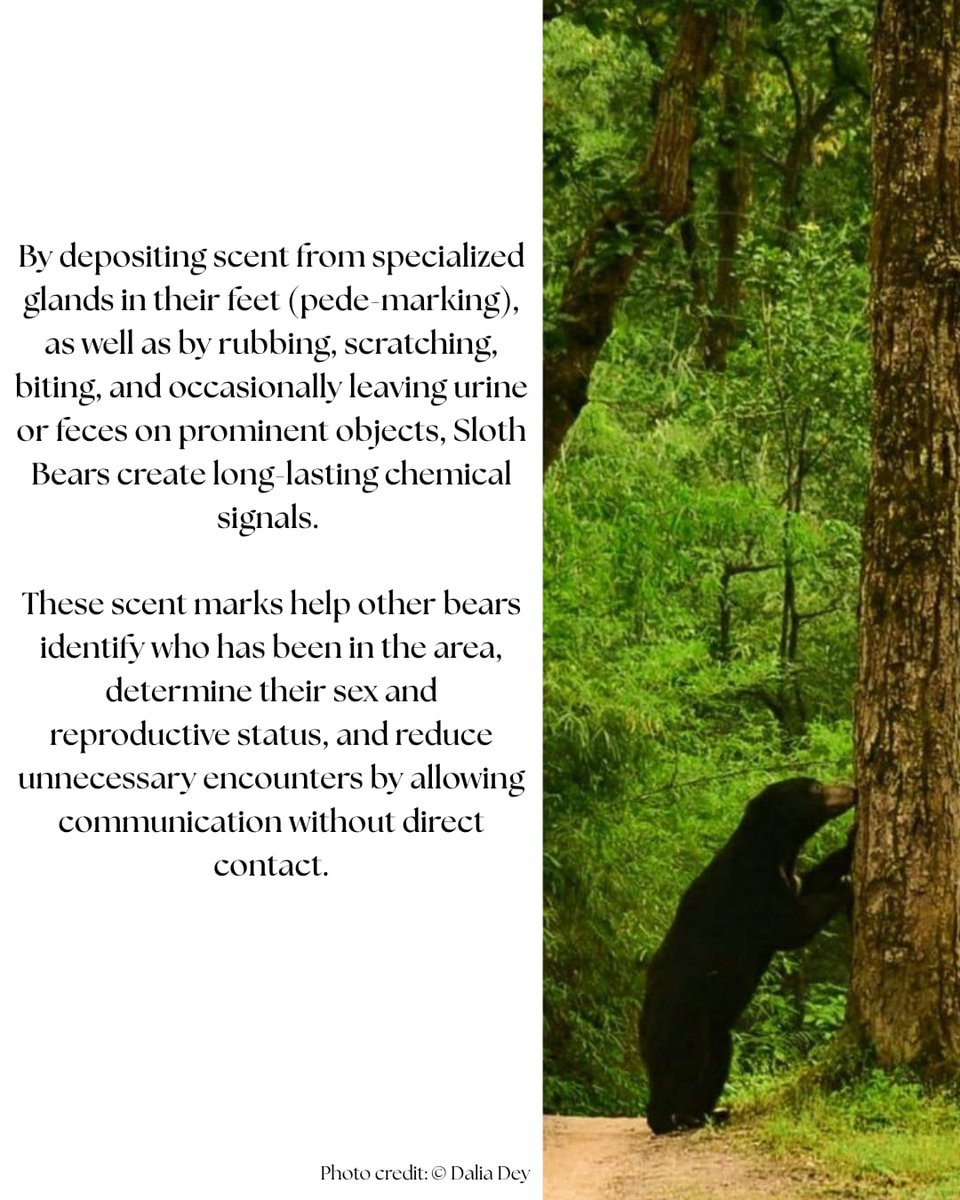
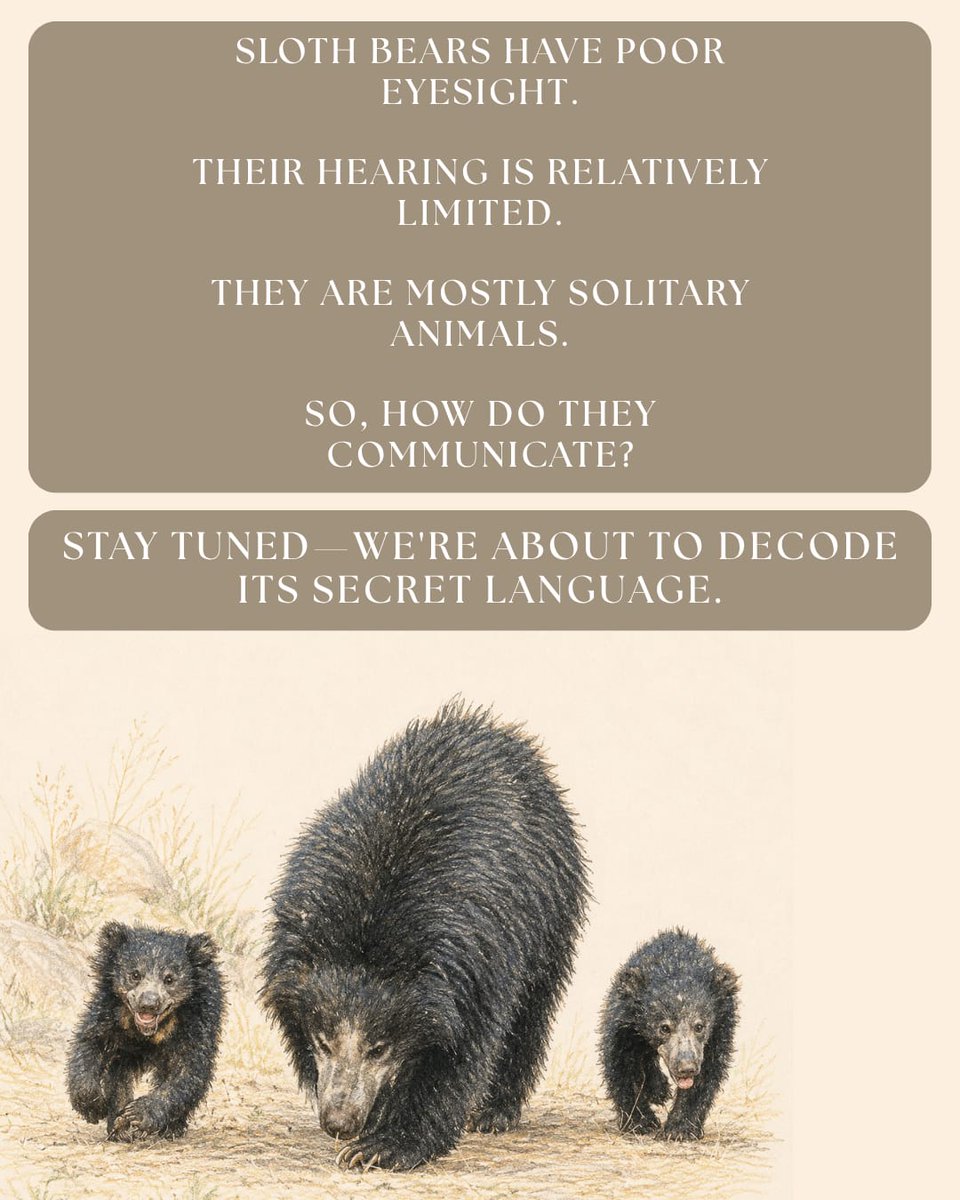
Although Sloth Bears are mostly solitary, they constantly communicate through chemical signals left across the landscape.
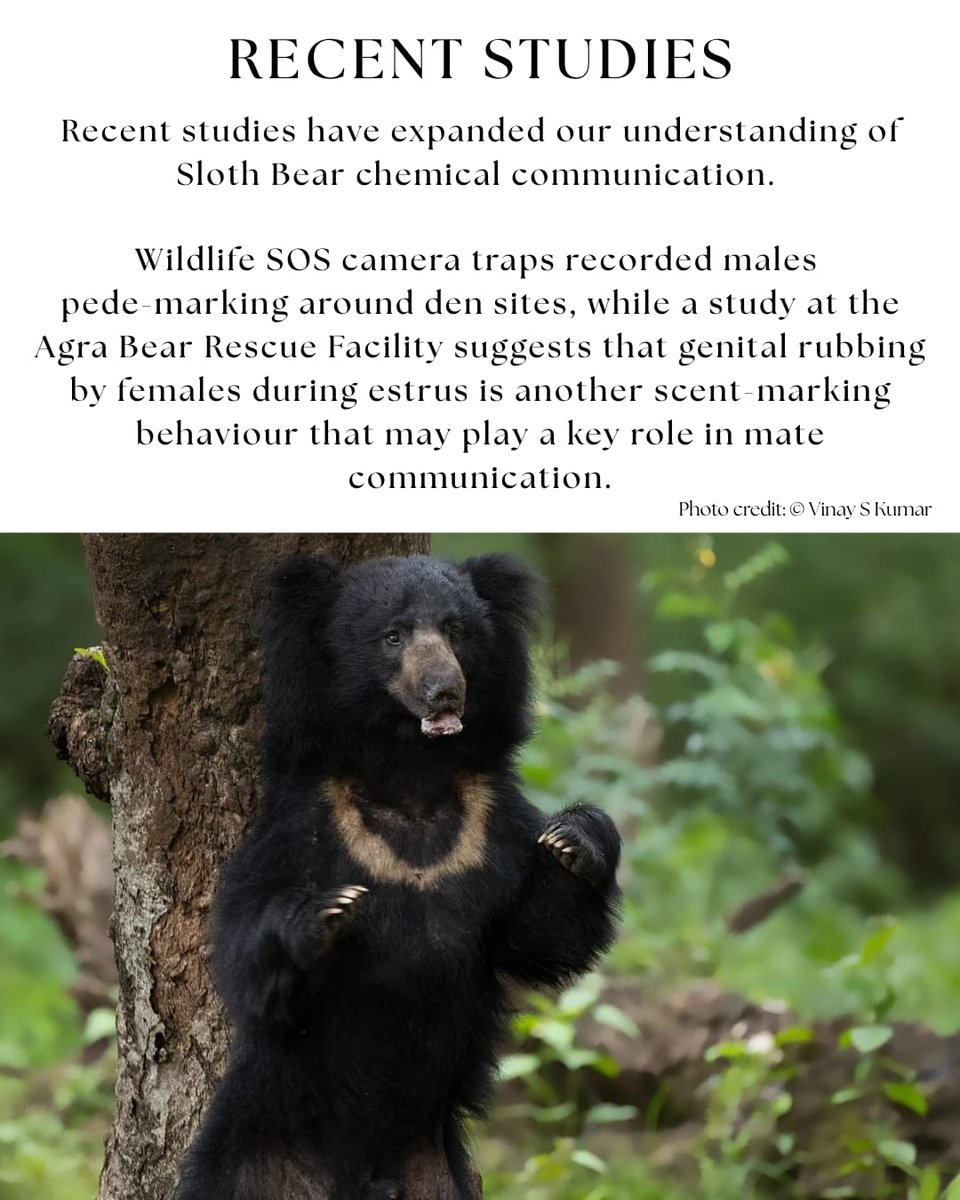
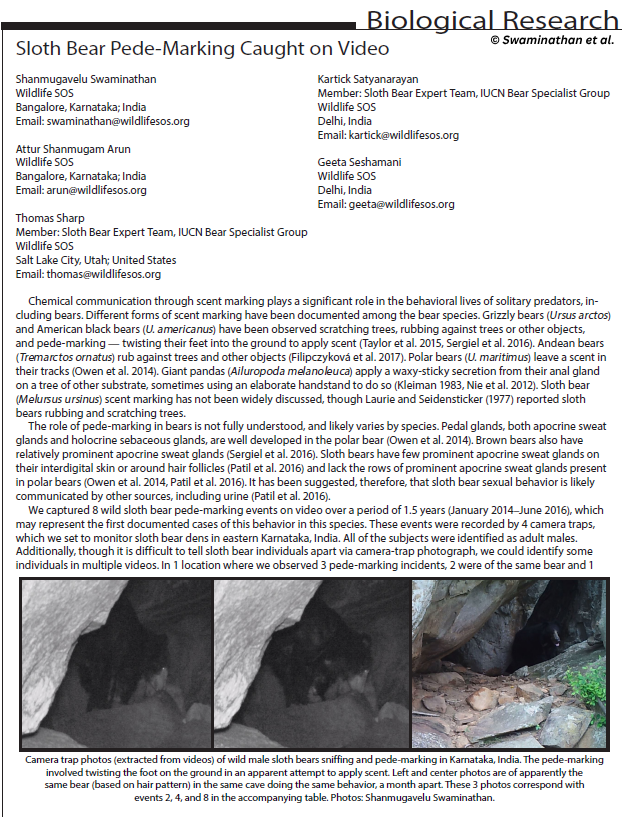
Through pede-marking, rubbing, scratching, biting, and other scent-marking behaviours, they leave information that helps other bears identify who has been there, their reproductive status, and whether to avoid or investigate the area.
A study by Swaminathan et al. (2017) documented wild male Sloth Bears pede-marking around den sites using camera traps, while studies on captive bears suggest that scent-marking behaviours may also play an important role in mate communication.
One signal decoded… many more remain. Stay tuned for the next part of the Hidden Language of Sloth Bears 🐻
#ProjectSlothBear #WIIProjectSlothBear #SlothBear #AnimalCommunication #ChemicalCommunication #ScentMarking #WildlifeResearch #BearBehaviour
@moefcc@CentralIfs@NationalCAMPA@wii_india@SACONCoimbatore@wii_eiacp@rameshpandeyifs@GobindsagarBha1@RuchiBadola2@CRamesh_WII@BivashPand34733@Kramesh95@amitwii@UpmaManral@ashishjangid22@avinashyadv95@utkarsh41995 @kaushikforwild @Hairypotter0777@Sindhoora_2001@Suraj_Chauhan31@niranjanKv2770@Kavyak0204@MitaliJadh34762
🐻🌿 Sloth Bear Sanctuaries of India | Part 5: Arasikere Sloth Bear Sanctuary, Karnataka
📍Established: 2022
📍Location: Hassan district, Karnataka.
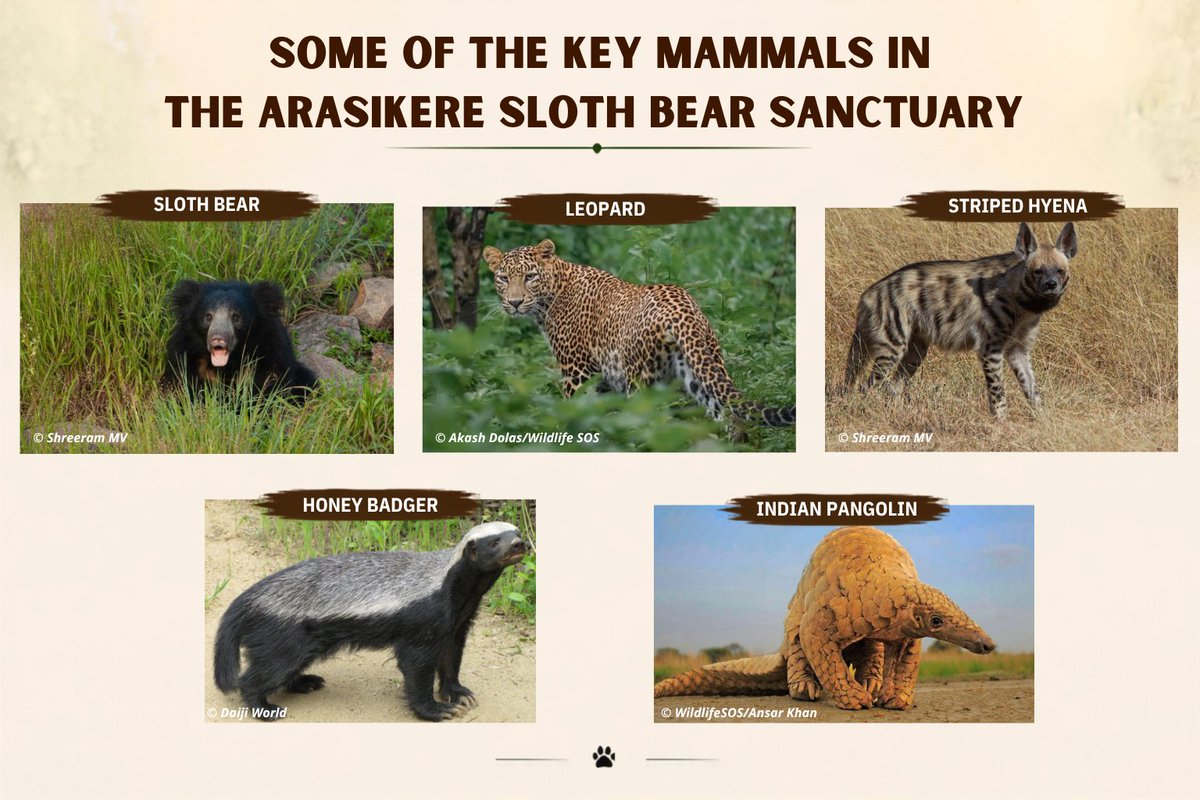
Arasikere Sloth Bear Sanctuary represents an important addition to Karnataka's network of Sloth Bear habitats. The sanctuary comprises Southern Tropical Dry Deciduous and Desert Thorn Forests, with rugged granite hillocks, natural caves, boulder fields, and open grasslands, forming a transitional landscape between dry deciduous forests and thorn scrub.
Key conservation challenges include habitat fragmentation, land-use change, electrocution risks, and increasing human pressures. Addressing these threats through effective habitat management, mitigation of anthropogenic risks, and regular ecological monitoring will be essential to strengthen the sanctuary's long-term conservation value.
📖 Source: Conservation Status Report of Sloth Bear Sanctuaries in India
#ProjectSlothBear #WIIProjectSlothBear #ArasikereSlothBearSanctuary #SlothBear #WildlifeConservation #ProtectedAreas #Karnataka
@moefcc@CentralIfs@NationalCAMPA@wii_india@SACONCoimbatore@wii_eiacp@rameshpandeyifs@GobindsagarBha1@RuchiBadola2@CRamesh_WII@BivashPand34733@Kramesh95@amitwii@UpmaManral@ashishjangid22@avinashyadv95@utkarsh41995 @kaushikforwild @Hairypotter0777@Sindhoora_2001@Suraj_Chauhan31@niranjanKv2770@Kavyak0204@MitaliJadh34762
🐻🌿 Sloth Bear Sanctuaries of India | Part 4: Gudekote Sloth Bear Sanctuary, Karnataka
📍Established: 2013
📍Location: Ballari district, Karnataka.
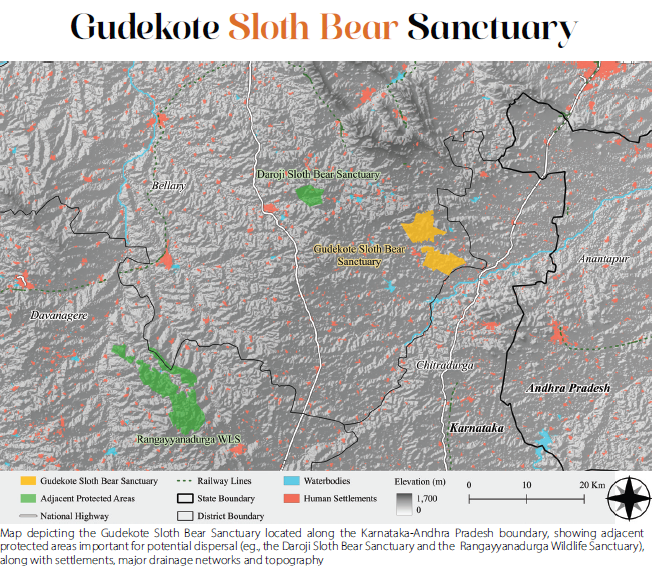
Gudekote Sloth Bear Sanctuary lies along the Karnataka–Andhra Pradesh border and represents an important landscape for Sloth Bear conservation in southern India. The sanctuary also has the potential to strengthen habitat connectivity with nearby protected areas, particularly Daroji Sloth Bear Sanctuary and the Rangayyanadurga Wildlife Sanctuary landscape.
The sanctuary comprises dry deciduous forests, scrub vegetation, rocky hillocks, and granite outcrops, supporting Sloth Bears and a diverse assemblage of dry forest wildlife.
Key conservation challenges include habitat fragmentation, scrubland degradation, increasing human–bear interactions, and knowledge gaps across the surrounding landscape. Protecting these ecological linkages will be crucial for sustaining Sloth Bear populations in the region.
📖 Source: Conservation Status Report of Sloth Bear Sanctuaries in India
#ProjectSlothBear #WIIProjectSlothBear #GudekoteSlothBearSanctuary #SlothBear #WildlifeConservation #ProtectedAreas #Karnataka
@moefcc@CentralIfs@NationalCAMPA@wii_india@SACONCoimbatore@wii_eiacp@rameshpandeyifs@GobindsagarBha1@RuchiBadola2@CRamesh_WII@BivashPand34733@Kramesh95@amitwii@UpmaManral@ashishjangid22@avinashyadv95@utkarsh41995 @kaushikforwild @Hairypotter0777@Sindhoora_2001@Suraj_Chauhan31@niranjanKv2770@Kavyak0204@MitaliJadh34762
🐻 Sloth Bear Sanctuaries of India | Part 3: Daroji Sloth Bear Sanctuary, Karnataka
📍Established: 1994
📍Location: Ballari district, Karnataka
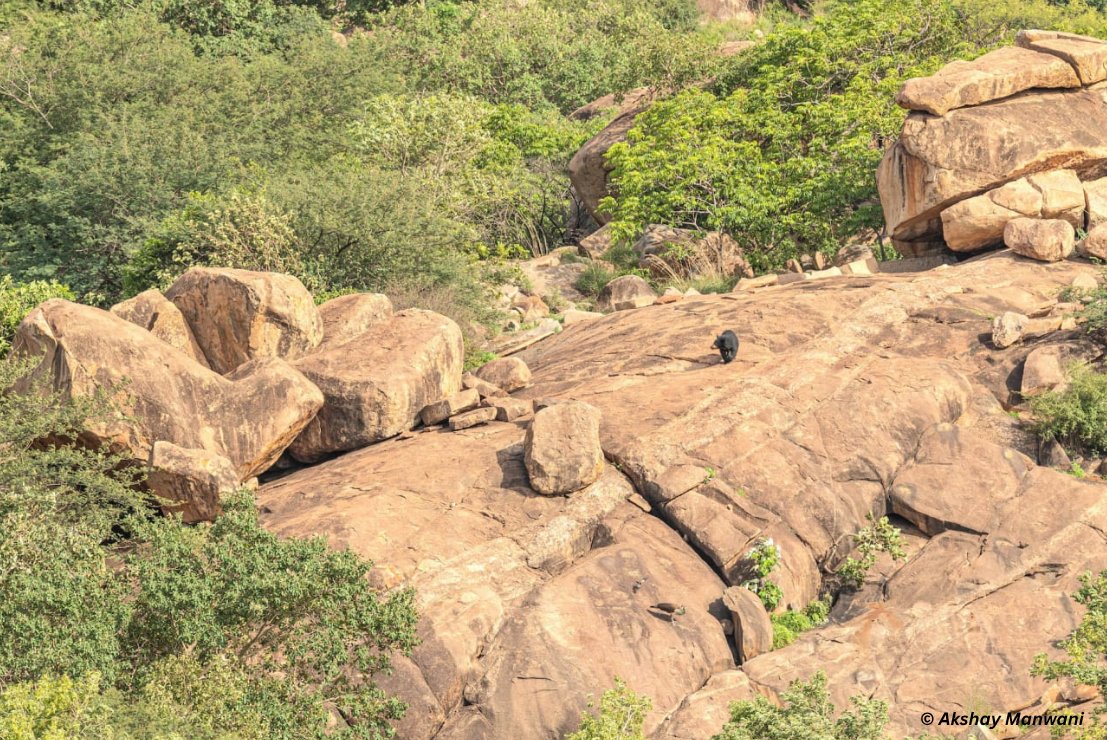
Daroji Sloth Bear Sanctuary is India's first sanctuary dedicated exclusively to the conservation of Sloth Bears. The sanctuary's unique landscape of granitic boulder hills, rocky outcrops, scrub forests, and dry deciduous vegetation supports one of the country's most significant Sloth Bear populations and serves as an important refuge for the species in southern India.
Key conservation challenges include mining pressure and habitat degradation, human-dominated landscapes and human–bear conflict, invasive alien plant species, and recurring forest fires.
Effective management of habitat quality and human-induced pressures will be essential to secure Daroji's role as an important stronghold for Sloth Bears.
📖 Source: Conservation Status Report of Sloth Bear Sanctuaries in India
#ProjectSlothBear #WIIProjectSlothBear #DarojiSlothBearSanctuary #SlothBear #WildlifeConservation #ProtectedAreas #Karnataka
@moefcc@CentralIfs@NationalCAMPA@wii_india@SACONCoimbatore@wii_eiacp@rameshpandeyifs@GobindsagarBha1@RuchiBadola2@CRamesh_WII@BivashPand34733@Kramesh95@amitwii@UpmaManral@ashishjangid22@avinashyadv95@utkarsh41995 @kaushikforwild @Hairypotter0777@Sindhoora_2001@Suraj_Chauhan31@niranjanKv2770@Kavyak0204@MitaliJadh34762
🐻Sloth Bear Sanctuaries of India | Part 2: Ratanmahal Sloth Bear Sanctuary, Gujarat
📍Established: 1982
📍Location: Dahod district, Gujarat, along the Gujarat–Madhya Pradesh border.
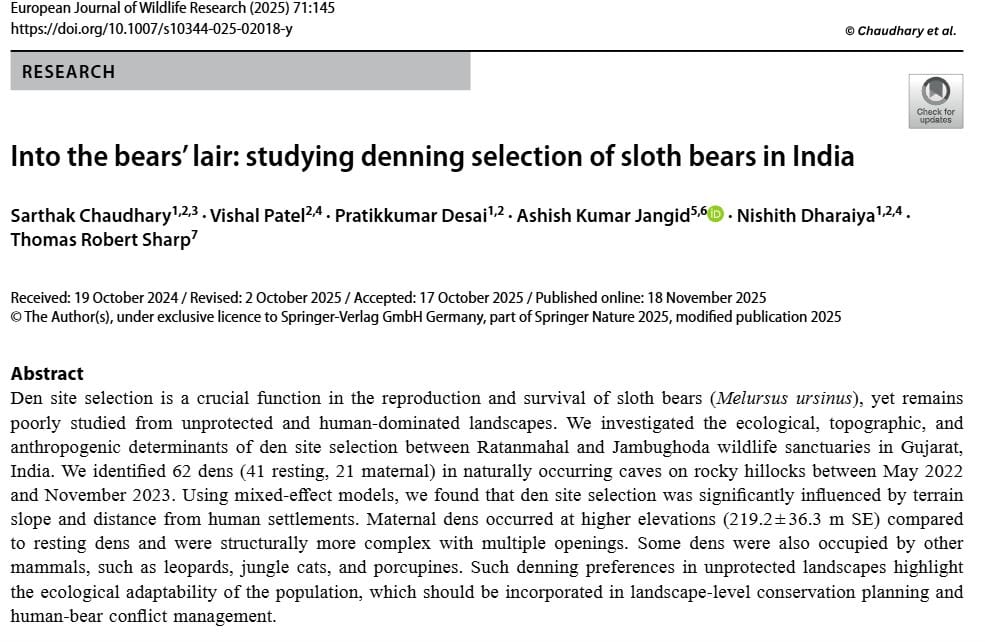
Ratanmahal Sloth Bear Sanctuary was established to conserve an important Sloth Bear population in western India. The sanctuary comprises rugged hills, dry deciduous forests, valleys, and seasonal streams, providing suitable habitat and refuge for Sloth Bears and other wildlife. It also contributes to maintaining ecological connectivity with surrounding forested landscapes.
Key conservation challenges include livestock grazing pressure, invasive plant species, pilgrimage activities within the sanctuary, mining and habitat fragmentation, tourism pressure, and forest fires.
📖 Source: Conservation Status Report of Sloth Bear Sanctuaries in India
#ProjectSlothBear #WIIProjectSlothBear #RatanmahalSlothBearSanctuary #SlothBear #ProtectedAreas #WildlifeConservation #Gujarat
@moefcc@CentralIfs@NationalCAMPA@wii_india@SACONCoimbatore@wii_eiacp@rameshpandeyifs@GobindsagarBha1@RuchiBadola2@CRamesh_WII@BivashPand34733@Kramesh95@amitwii@UpmaManral@ashishjangid22@avinashyadv95@utkarsh41995 @kaushikforwild @Hairypotter0777@Sindhoora_2001@Suraj_Chauhan31@niranjanKv2770@Kavyak0204@MitaliJadh34762
🐻Sloth Bear Sanctuaries of India | Part 1: Jessore Sloth Bear Sanctuary
📍Established: 1978
📍Location: Banaskantha district, Gujarat
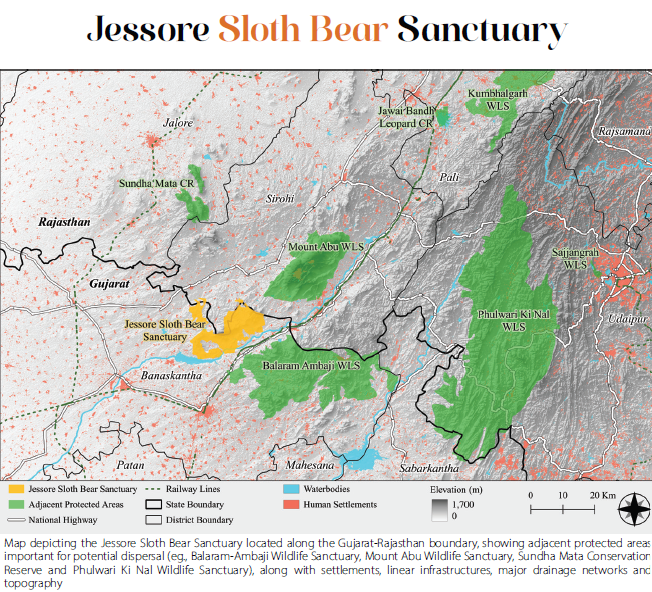
Situated in the southernmost part of the Aravalli landscape, Jessore Sloth Bear Sanctuary protects an important dry forest ecosystem for Sloth Bears. Its rugged hills, rocky outcrops, granite boulders, and dry deciduous–thorn forests provide suitable habitat and natural shelters for the species.
The sanctuary also plays a vital role in maintaining landscape connectivity with neighbouring protected areas across Gujarat and Rajasthan, supporting wildlife movement beyond its boundaries.
Like many protected areas, Jessore faces conservation challenges from settlements, linear infrastructure, and habitat fragmentation, highlighting the importance of landscape-level conservation and habitat connectivity.
Source: Conservation Status Report of Sloth Bear Sanctuaries in India
#ProjectSlothBear #WIIProjectSlothBear #JessoreSlothBearSanctuary #SlothBear #WildlifeConservation #ProtectedAreas #Gujarat
@moefcc@CentralIfs@NationalCAMPA@wii_india@SACONCoimbatore@wii_eiacp@rameshpandeyifs@GobindsagarBha1@RuchiBadola2@CRamesh_WII@BivashPand34733@Kramesh95@amitwii@UpmaManral@ashishjangid22@avinashyadv95@utkarsh41995 @kaushikforwild @Hairypotter0777@Sindhoora_2001@Suraj_Chauhan31@niranjanKv2770@Kavyak0204@MitaliJadh34762
🐻 First Comprehensive Assessment of India's Sloth Bear Sanctuaries
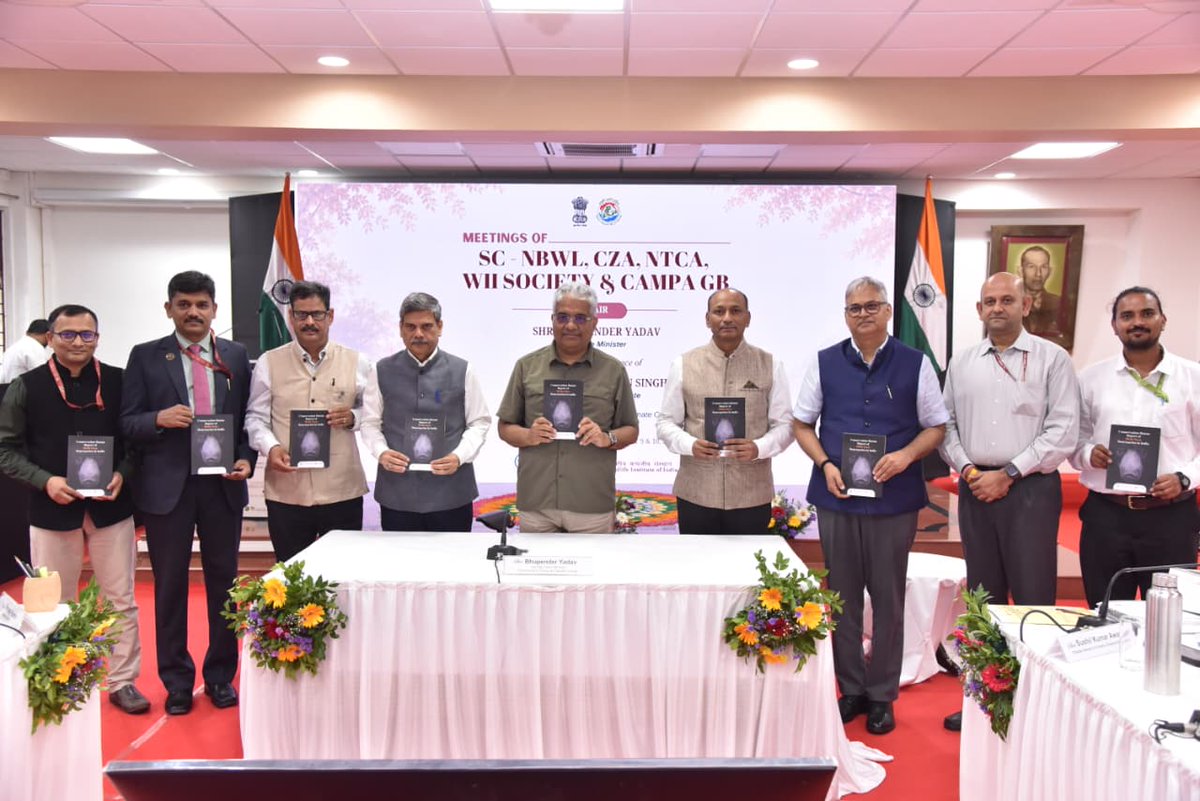
The "Conservation Status Report of Sloth Bear Sanctuaries in India", prepared under Project Sloth Bear by the Wildlife Institute of India, was released during the 91st Meeting of the Standing Committee of the National Board for Wildlife (SC-NBWL) held at Coimbatore on 9 July 2026.
The report provides the first nationwide assessment of India's notified Sloth Bear Sanctuaries, highlighting their conservation status, habitat characteristics, management challenges, and priority actions to support evidence-based conservation.
This publication marks an important milestone under #WIIProjectSlothBear and will serve as a valuable reference for wildlife managers, policymakers, researchers, and conservation practitioners.
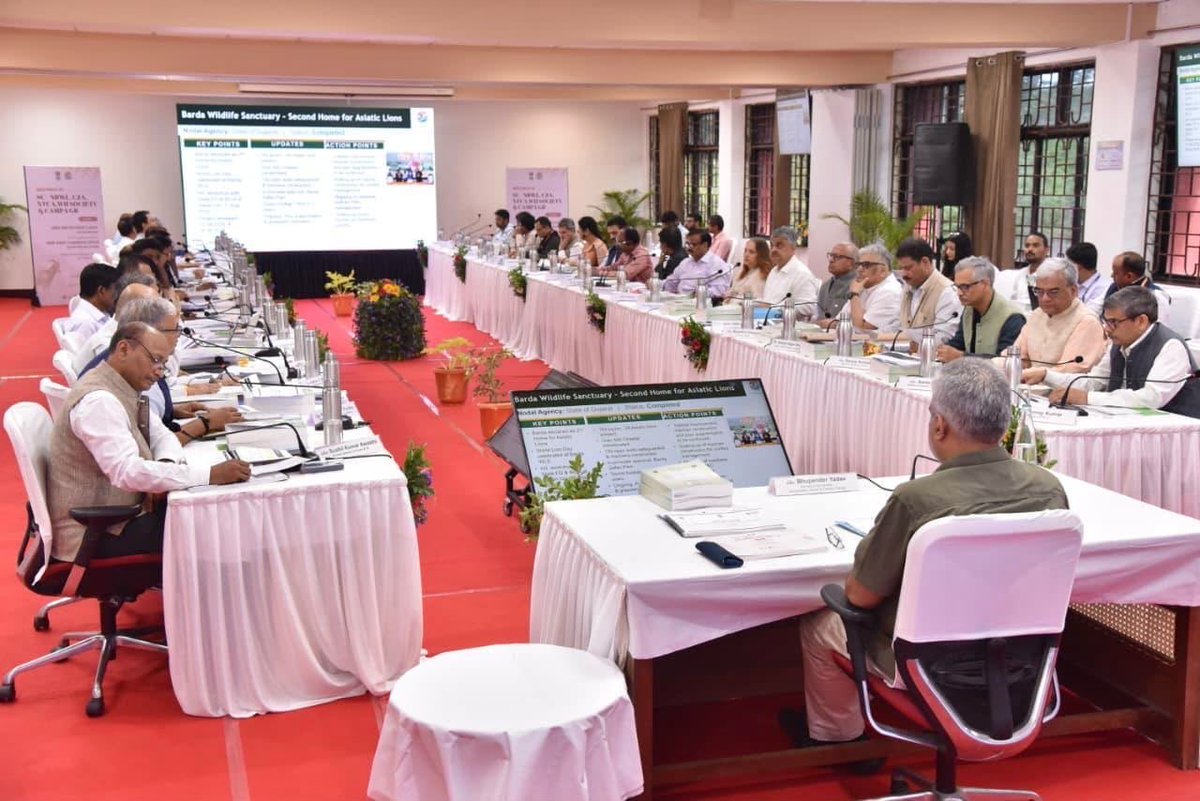
During the meeting, Dr. Ramesh Chinnasamy, Principal Investigator of #WIIProjectSlothBear, also presented the progress and future roadmap of the project to Hon'ble Union Minister for Environment, Forest and Climate Change, Shri Bhupender Yadav and SC-NBWL members.
#ProjectSlothBear #WIIProjectSlothBear #SCNBWL #SlothBear #WildlifeConservation #ConservationBook #ProtectedAreas #SlothBearSanctuary
@byadavbjp@moefcc@CentralIfs@NationalCAMPA@wii_india@SACONCoimbatore@wii_eiacp@rameshpandeyifs@GobindsagarBha1@RuchiBadola2@CRamesh_WII@BivashPand34733@Kramesh95@amitwii@UpmaManral@ashishjangid22@avinashyadv95@utkarsh41995 @kaushikforwild @Hairypotter0777@Sindhoora_2001@Suraj_Chauhan31@niranjanKv2770@Kavyak0204@MitaliJadh34762
Reviewed the progress of Project Sloth Bear during the 91st meeting of the Standing Committee of the National Board for Wildlife (SC-NBWL) today at CASFoS, Coimbatore.
In addition, conservation issues concerning grassland species, particularly those found in the Brahmaputra and Duar–Terai landscapes, including the Greater One-Horned Rhinoceros and the Pygmy Hog, were discussed at length.
A dedicated project for rhino conservation will be launched soon with the assistance of National CAMPA in the species’ range states.
The Pygmy Hog, meanwhile, will be included in the list of critically endangered species to receive focused conservation support under the CSS-IDWH scheme.
🔗https://t.co/sSZ0feNYGL
🌏🌿 Beyond Protected Areas: India's Other Area-Based Conservation Measures
Conserving biodiversity goes beyond Protected Areas. India also safeguards its natural heritage through several area-based conservation measures established under national laws and international commitments.
These include:
🌿47 Biodiversity Heritage Sites (BHS)
🌿18 Biosphere Reserves
🌿89 Ramsar Sites
🌿488 Eco-Sensitive Zones (ESZs)
🌿554 Important Bird Areas (IBAs)
🌿531 Key Biodiversity Areas (KBAs)
🌿7 Natural & 1 Mixed World Heritage Sites
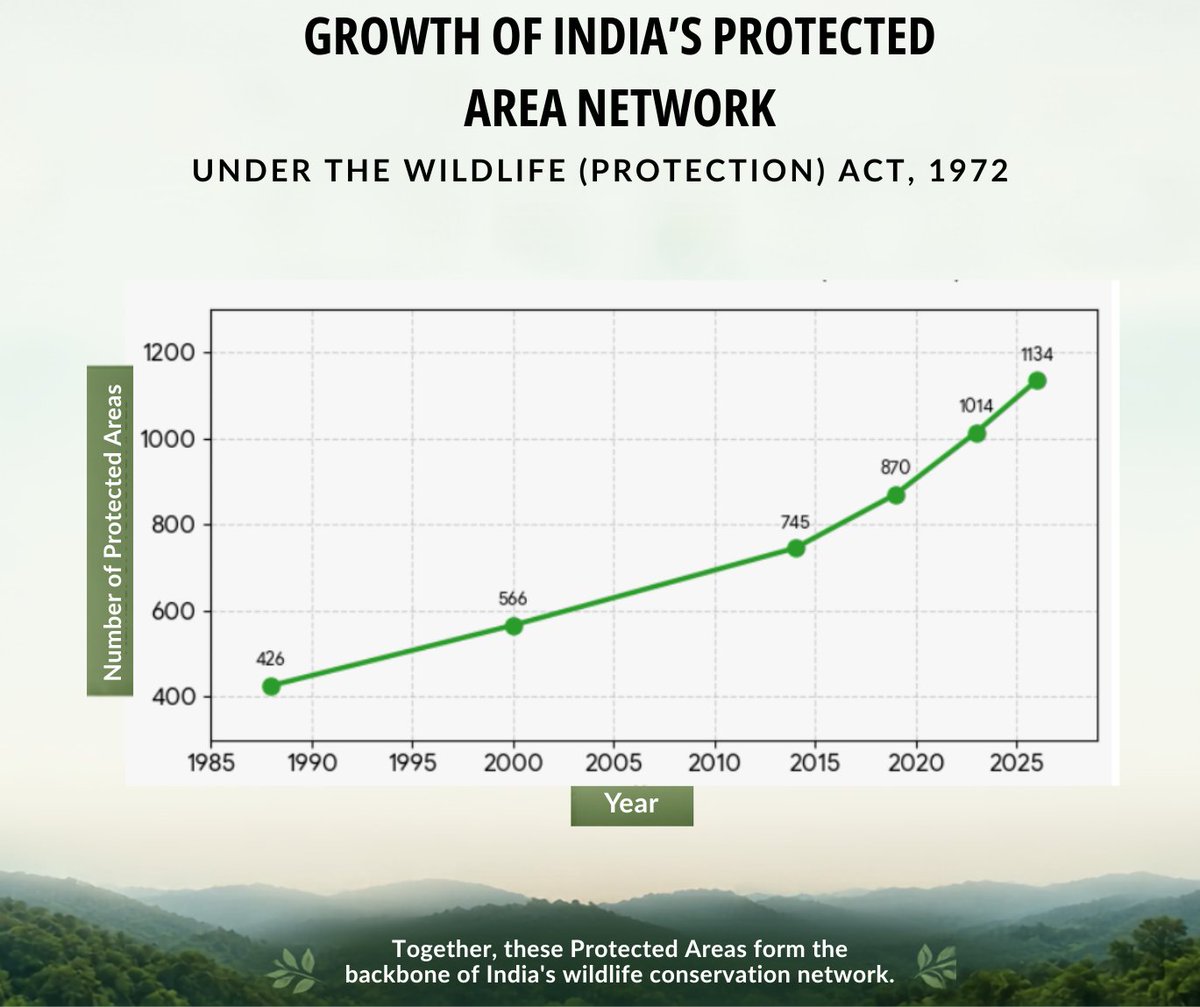
🌳 India's total forest and tree cover extends over 25.17% of the country's geographical area, comprising 21.76% of forest cover and 3.41% of tree cover (ISFR 2023). Together with a Protected Area network covering nearly 5.4% of India's geographical area, these landscapes form the backbone of the country's biodiversity conservation and ecological resilience.
📈 Stay tuned for our next post as we explore how India's Protected Area network has grown over the years.
Source: ENVIS-WII, ISFR 2023, NTCA, NBA, BNHS, UNESCO, Ramsar Convention & MoEFCC.
#WIIProjectSlothBear #Biodiversity #ProtectedAreas #BiodiversityHeritageSites #RamsarSites #BiosphereReserves #EcoSensitiveZones #KeyBiodiversityAreas #WildlifeConservation
@moefcc@CentralIfs@NationalCAMPA@wii_india@SACONCoimbatore@wii_eiacp@rameshpandeyifs@GobindsagarBha1@RuchiBadola2@CRamesh_WII@BivashPand34733@Kramesh95@amitwii@UpmaManral@ashishjangid22@avinashyadv95@utkarsh41995 @kaushikforwild @Hairypotter0777@Sindhoora_2001@Suraj_Chauhan31@niranjanKv2770@Kavyak0204@MitaliJadh34762