왜 스마트 팩토리는 여전히 엑셀로 일할까요? 🏭
기술이 공장 문턱에서 사라지는 죽음의 계곡. 이를 건널 열쇠는 스스로 판단하는 에이전틱 AI 와 가상 공장인 디지털 트윈 입니다. 이제 제조업은 생각의 재설계가 필요합니다! 🚀
읽어보기: https://t.co/6IcXjkD53U
#AI#제조업#혁신
Not all AI agents are built the same. So what sets them apart?
Here’s a breakdown of 10 core types of AI agents you’ll come across in real-world systems, from simple reactive agents to complex multi-agent systems.
1. Task-Specific AI Agent
Built for one focused task like summarizing or translating. It follows a fixed process with no learning or adaptation.
2. Reactive Agent
Responds to immediate input without using memory or history. Think of it like a reflex - it reacts, not plans.
3. Model-Based Agent
Builds an internal map of its environment. Simulates outcomes before acting to make smarter, context-aware decisions.
4. Goal-Based Agent
Starts with a goal and works backward. It plans steps, simulates paths, and selects the route that achieves the goal.
5. Utility-Based Agent
Chooses actions based on how beneficial they are. It weighs all options and picks the one with the highest value.
6. Learning Agent
Improves over time by learning from past actions. Adjusts its strategy using feedback and stores new knowledge.
7. Planning Agent
Focuses on long-term strategy. It defines a goal, maps out steps, and adjusts based on progress not just reaction.
8. Reflex Agent with Memory
Uses preset rules but with added memory of past inputs. Helps respond better when situations repeat or evolve.
9. Multi-Agent System Agent
Works with or against other agents. They share environments, negotiate roles, and coordinate to reach a bigger goal.
10. Rational Agent
Always selects the most logical option. It analyzes the full picture, predicts outcomes, and chooses the smartest path.
Save this if you're exploring Agentic AI or designing intelligent decision-making systems.
I used to think typing faster meant getting more done.
But it only made me feel more tired and distracted.
Every week, I spent hours writing emails, fixing drafts, and trying to make every line sound perfect.
It wasn’t productive work, it was just overthinking on repeat.
Then I started using Typeless / @typelessdotcom and everything felt lighter.
Now I simply speak my thoughts and Typeless turns them into clean, ready-to-use text within seconds.
✅ It makes client emails sound sharp.
✅ It creates blog posts, proposals, or even AI video scripts that look perfectly formatted.
✅ It can even translate content into any language just by saying translate to Spanish and the result appears beautifully formatted.
What I love most is how it feels like a creative partner that keeps up with my mind.
It helps me stay focused, think clearly, and express ideas without friction.
Typing used to slow me down.
Now my thoughts move straight into words with Typeless.
Try it at https://t.co/emTqDMz3T4
#Typeless #WritingTools #WorkSmarter #VoiceToText
GPT-5 → Best for logic & reasoning
Claude 4.5 → Best for writing & memory
Gemini 2.5 → Best for research + images
Perplexity → Best for instant answers
Runway → Best for cinematic AI video
I just found a secret trick to use all of them at one place.
Here’s how ↓
Just focus on something for 4 hours every day, you end up building something insanely impressive.
Below is a simple AI roadmap you can follow.
One small task per day.
Ship something every week.
Start using these tools for 30 days:
> For tasks
• ChatGPT
• Gemini
• Claude
• Grok
> For Vibe coding
• Cursor
> For AI video
• Kling
• Higgsfield
• Vibepost. app
4 hours/day. Ship weekly. Repeat.
99% of people still use plain text to prompt AI.
That’s why their results are random, messy, or wrong.
Use JSON, Markdown, or XML - and the model does exactly what you want.
Here’s a quick guide (with examples): 🧵
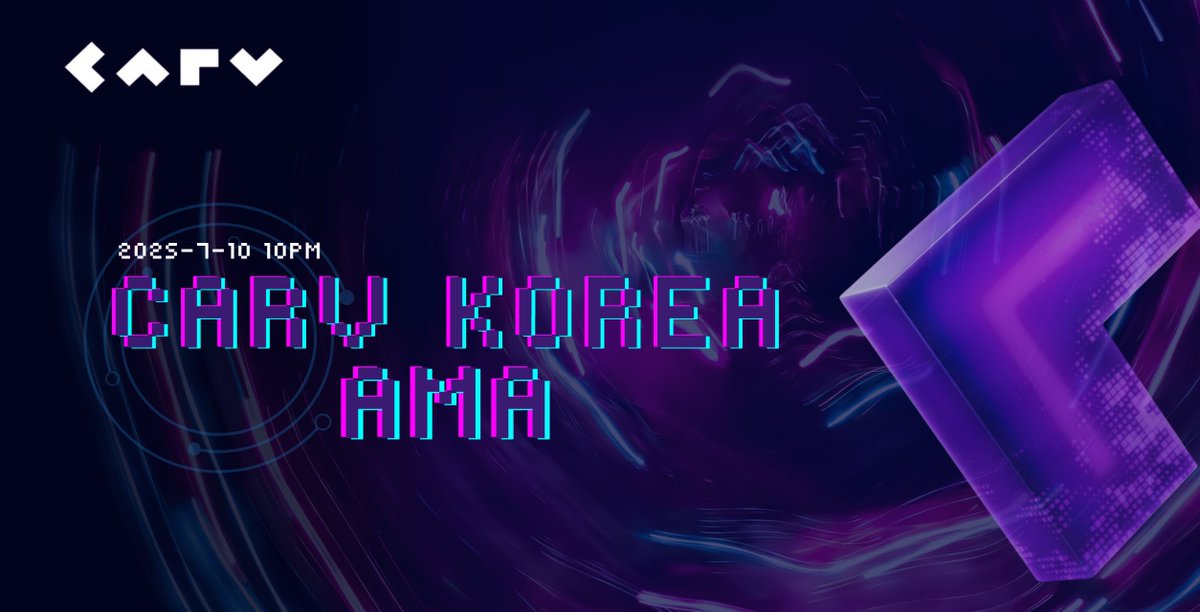
🎤 CARV KOREA AMA
📅 7월 10일 (목) | ⏰ 한국시간 밤 10시
💰 총 상금: 100 $CARV + 최대 500 GEM
🎮 참여 링크:
👾 플레이어 (300 GEM)
🔗 https://t.co/b9wNS5ABFX
👥 청중 (200 GEM)
🔗https://t.co/Kroc8DLjc4
함께 해요!
@carv_official
We're missing (at least one) major paradigm for LLM learning. Not sure what to call it, possibly it has a name - system prompt learning?
Pretraining is for knowledge.
Finetuning (SL/RL) is for habitual behavior.
Both of these involve a change in parameters but a lot of human learning feels more like a change in system prompt. You encounter a problem, figure something out, then "remember" something in fairly explicit terms for the next time. E.g. "It seems when I encounter this and that kind of a problem, I should try this and that kind of an approach/solution". It feels more like taking notes for yourself, i.e. something like the "Memory" feature but not to store per-user random facts, but general/global problem solving knowledge and strategies. LLMs are quite literally like the guy in Memento, except we haven't given them their scratchpad yet. Note that this paradigm is also significantly more powerful and data efficient because a knowledge-guided "review" stage is a significantly higher dimensional feedback channel than a reward scaler.
I was prompted to jot down this shower of thoughts after reading through Claude's system prompt, which currently seems to be around 17,000 words, specifying not just basic behavior style/preferences (e.g. refuse various requests related to song lyrics) but also a large amount of general problem solving strategies, e.g.:
"If Claude is asked to count words, letters, and characters, it thinks step by step before answering the person. It explicitly counts the words, letters, or characters by assigning a number to each. It only answers the person once it has performed this explicit counting step."
This is to help Claude solve 'r' in strawberry etc. Imo this is not the kind of problem solving knowledge that should be baked into weights via Reinforcement Learning, or least not immediately/exclusively. And it certainly shouldn't come from human engineers writing system prompts by hand. It should come from System Prompt learning, which resembles RL in the setup, with the exception of the learning algorithm (edits vs gradient descent). A large section of the LLM system prompt could be written via system prompt learning, it would look a bit like the LLM writing a book for itself on how to solve problems. If this works it would be a new/powerful learning paradigm. With a lot of details left to figure out (how do the edits work? can/should you learn the edit system? how do you gradually move knowledge from the explicit system text to habitual weights, as humans seem to do? etc.).
Less than 24 hours ago, OpenAI dropped GPT-4.1.
But most people missed the secret: they dropped a new prompting guide.
10 powerful tips to unlock its full potential: 👇
Agent2Agent Protocol vs. Model Context Protocol, clearly explained (with visual):
- Agent2Agent protocol lets AI agents connect to other Agents.
- Model context protocol lets AI Agents connect to Tools/APIs.
Both are open-source and don't compete with each other!
You can now do deep research for free.
Google’s Gemini just quietly leveled up its free tier.
It’s crawling thousands of websites and generating 20+ page reports.
12 INSANELY valuable prompts for making money 🧵:
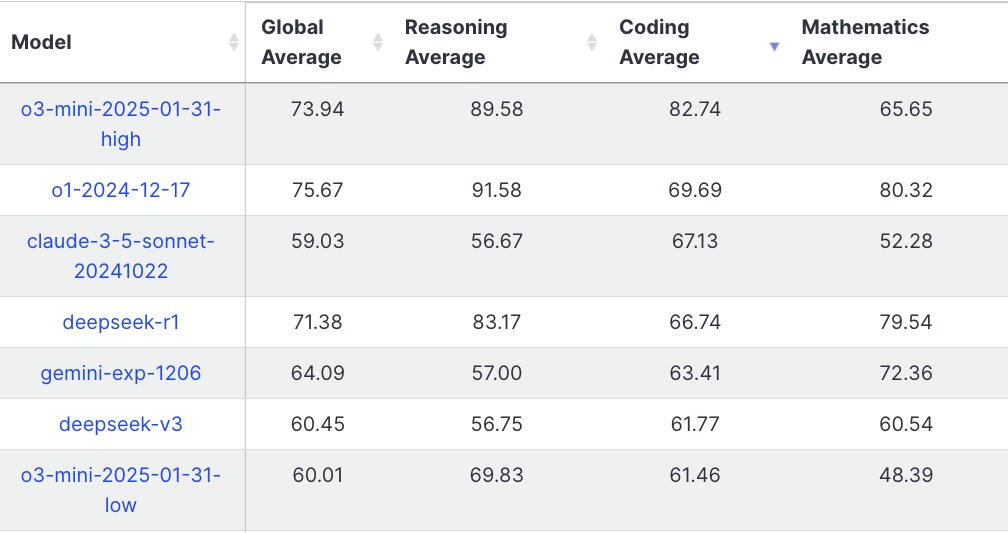
o3 BEATS R1 OVERALL AND BLOWS EVERYONE ELSE AWAY IN CODING
o3-mini high became the BEST LLM BY FAR when it comes to a combination of performance, speed, and price
- beats o1, Sonnet, and others BY A LOT in coding
- 2x cheaper than Sonnet and 15x cheaper than o1
- ~5x faster than R1
- 2nd best model right after o1 in all categories
ChatLLM and CodeLLM now have o3-high if you want to play with it.