Our final lectures for the IAIFI Summer School were from @ACiprijanovic covering the “Domain Shift Problem: Building Robust AI Models with Domain Adaptation.”
Shoutout to @snehjp2, this afternoon’s tutorial lead, who attended the first IAIFI Summer School and has been on the planning committee ever since, culminating in his role this year as a tutorial lead!
Happy to share that our SIDDA paper is officially published in @MLSTjournal! I will be talking about this and domain adaptation more broadly at the @iaifi_news summer school tomorrow :)
https://t.co/D4tEwWbACJ
New paper! Here, we introduce SIDDA: a semi-supervised, out-of-the-box domain adaptation method for classification, built upon optimal transport distances. It leverages existing computational resources (HT torch, geomloss) with minimal computational overhead.
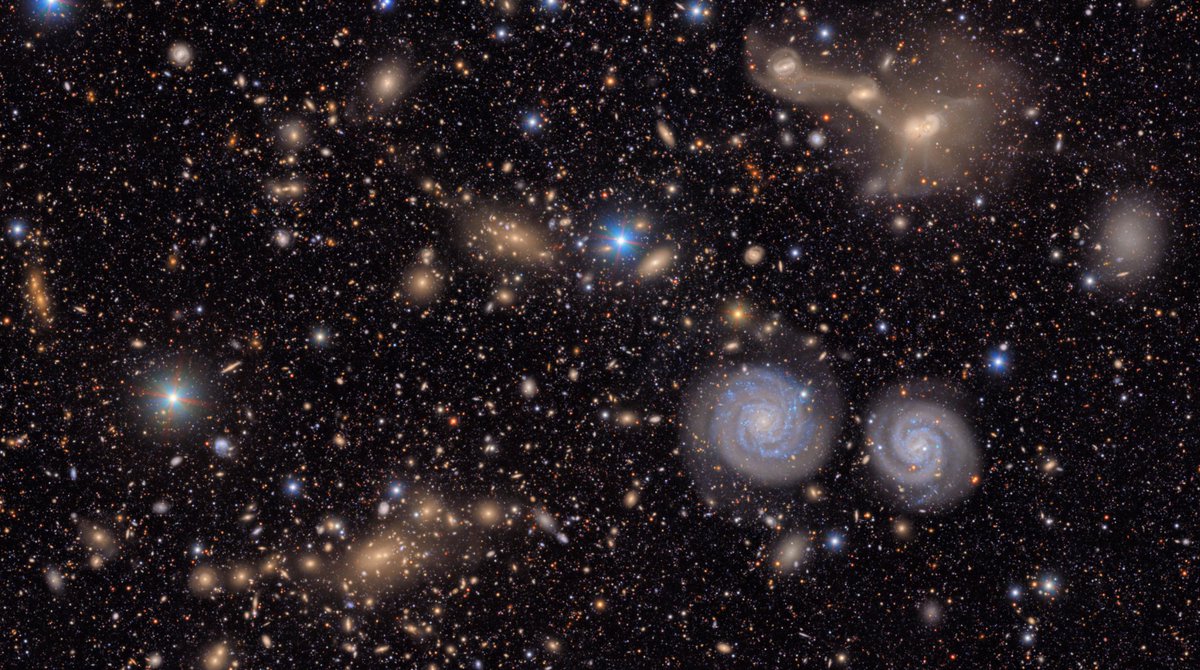
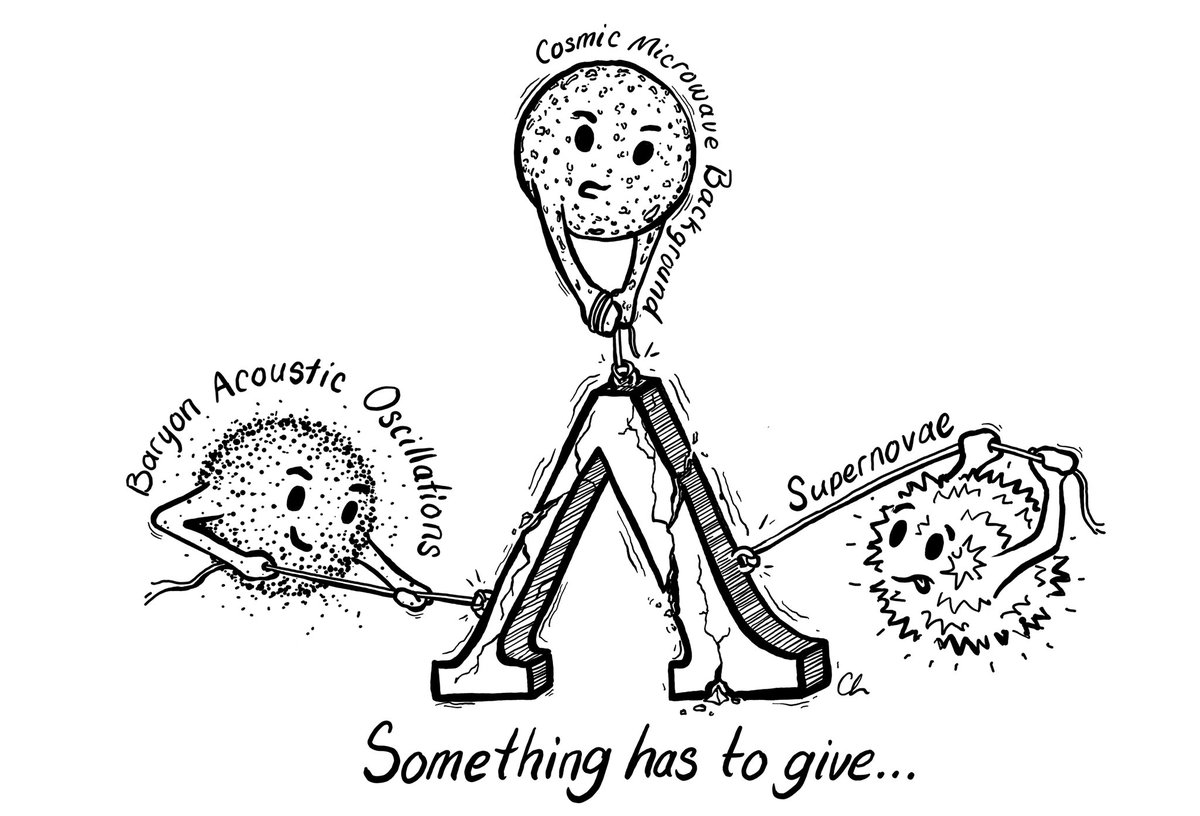
Introducing...your sneak peek at the cosmos captured by @NSF–@doescience Vera C. Rubin Observatory!
Can you guess what regions of sky they are?
This is just a peek...join us at 11am US EDT for your full First Look at how Rubin will #CaptureTheCosmos!
https://t.co/1a74X2edp8
New paper! Here, we introduce SIDDA: a semi-supervised, out-of-the-box domain adaptation method for classification, built upon optimal transport distances. It leverages existing computational resources (HT torch, geomloss) with minimal computational overhead.
We benchmarked SIDDA on both simulated and real datasets, for a variety of shifts -- Poisson noise, PSF blurring, and galaxy images from different instruments. We also spent some time studying the inherent robustness of ENNs for classification tasks + motivating with DA theory.
Moreover, SIDDA requires virtually no hyperparameter tuning (!!), a common struggle with existing DA methods, while inherently improving the calibration of NN-based classifiers. In many cases, it even increases performance on in-distribution data.
SIDDA works by dynamically adjusting the transport plan and loss landscape during training for optimal domain alignment. It also performs particularly well when paired with ENNs, in some cases offering ~40% improvement in target data performance when compared to typical CNNs.
A cool new paper from my group. If your favorite ML model keeps performing poorly due to the domain shift, check our paper out. We demonstrate a fast, easy, and automated solution to domain adaptation with SIDDA!
https://t.co/ERIioWgH5V?
Excited to announce that registration is open for our 2025 IAIFI Summer School! The Summer School will be held at Harvard, August 4–8, 2025 and offers lectures and hands-on tutorials for early career AI+Physics researchers. Apply by February 7, 2025: https://t.co/Re9YJarpEN