@AOC Where is your statement on Iran regime brutality, slaughtering its people? Did you see the number of people killed just in 2 days? 32k+ was the number reorted by your government. How do you keep your mouth shut here while being so outspoken on Gaza? Why the double standard?
In era of pretraining, what mattered was internet text. You'd primarily want a large, diverse, high quality collection of internet documents to learn from.
In era of supervised finetuning, it was conversations. Contract workers are hired to create answers for questions, a bit like what you'd see on Stack Overflow / Quora, or etc., but geared towards LLM use cases.
Neither of the two above are going away (imo), but in this era of reinforcement learning, it is now environments. Unlike the above, they give the LLM an opportunity to actually interact - take actions, see outcomes, etc. This means you can hope to do a lot better than statistical expert imitation. And they can be used both for model training and evaluation. But just like before, the core problem now is needing a large, diverse, high quality set of environments, as exercises for the LLM to practice against.
In some ways, I'm reminded of OpenAI's very first project (gym), which was exactly a framework hoping to build a large collection of environments in the same schema, but this was way before LLMs. So the environments were simple academic control tasks of the time, like cartpole, ATARI, etc. The @PrimeIntellect environments hub (and the `verifiers` repo on GitHub) builds the modernized version specifically targeting LLMs, and it's a great effort/idea. I pitched that someone build something like it earlier this year:
https://t.co/ANHhasxzD8
Environments have the property that once the skeleton of the framework is in place, in principle the community / industry can parallelize across many different domains, which is exciting.
Final thought - personally and long-term, I am bullish on environments and agentic interactions but I am bearish on reinforcement learning specifically. I think that reward functions are super sus, and I think humans don't use RL to learn (maybe they do for some motor tasks etc, but not intellectual problem solving tasks). Humans use different learning paradigms that are significantly more powerful and sample efficient and that haven't been properly invented and scaled yet, though early sketches and ideas exist (as just one example, the idea of "system prompt learning", moving the update to tokens/contexts not weights and optionally distilling to weights as a separate process a bit like sleep does).
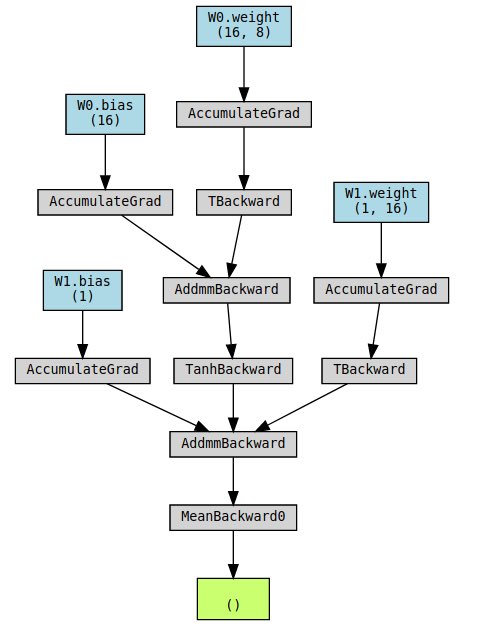
What actually happens when you call .backwards() in @PyTorch?
Autograd goodness 🪄!
PyTorch keeps track of all of the computations you’ve done on each of your tensors and .backwards() triggers it to compute the gradients and stores them in .grad.
1/3
If you need to see something uplifting for a change, and have 5 minutes, watch this. "It's literally the first time I've run free for...decades."
https://t.co/5jIktDKOtm
Since our last update, Google has accelerated our work to help people stay safe, informed & connected. Here’s the latest in our ongoing global #COVID19 response. We’ll keep doing everything we can to help people take care of themselves & their communities
https://t.co/a9fPAJIzuY
Video of my moment of glory at @icmlconf 2019
https://t.co/ffrmIYQmeA
and the slides
https://t.co/vTtf0iDiOL. A great thanks to @kamalikac and @rsalakhu (and many other people) for the time and efforts they devoted to the community when organizing such a large event.
We’re excited to share that weight pruning is now part of the TensorFlow Model Optimization Toolkit!
Learn how sparsity can dramatically reduce model sizes with negligible accuracy loss.
Read here → https://t.co/bhOm3s6ixP
Our research group is starting a (technical) blog! First post, by @RICEric22, covers provable adversarial defenses https://t.co/TO9QYyAnOQ. Each post is downloadable as a Jupyter notebook, so you can recreate all the examples. More info about blog here https://t.co/qIBxeptqbB.