So I gave Fable 5 the watchmaker benchmark: a full Swiss lever movement in Three.js. Real gear ratios (18,000 bph), working escapement, breathing hairspring — and the hands tell actual time. It verified its own work with vision, in a loop, until done. ⌚
🤯Which coworker would you actually want on your team?
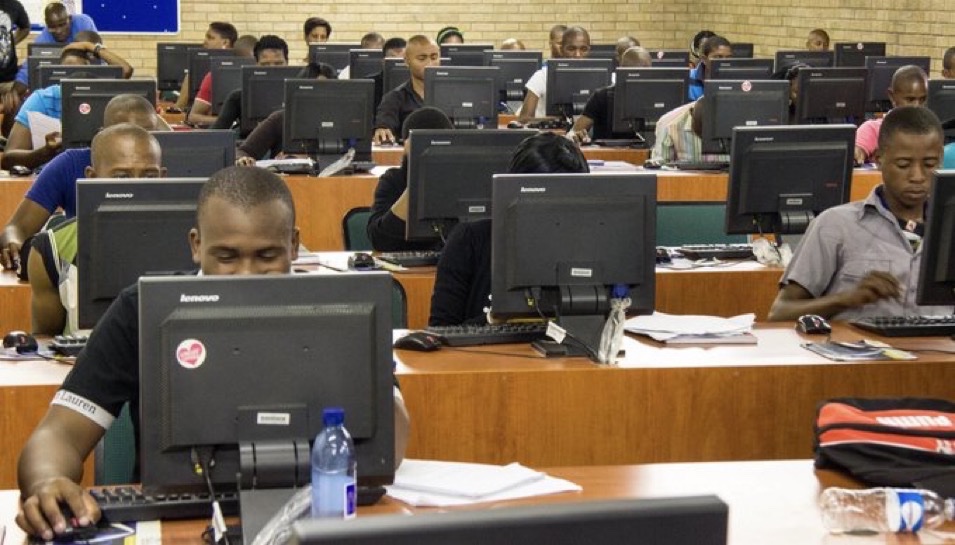
One office. 8 coworkers from different countries.
The camera glides through the room like an FPV tour.
But here’s the wild part:
The entire camera movement was generated from a single red line I drew on the image!
Workflow below 👇
Man, I’m really worried about consumers.
Not everyone’s tech savvy enough to know this ad is completely AI, and they’re not actually showing the product they’re selling.
AI ads are going to really take advantage of people.
Unitree Unveils: GD01, A Manned Transformable Mecha, from $650,000 👏
The world's first production-ready manned mecha. It can transform. It's a civilian vehicle. It weighs ~500kg with you inside.
Please everyone be sure to use the robot in a Friendly and Safe manner.
Most people see a street. He sees $300-600 per block.
A 24-year-old from Chengdu figured out that every hotel, every apartment, every commercial space within walking distance is an untapped asset. One nobody has packaged yet.
He straps a rig to his back, walks in, spends twenty minutes scanning the space, and leaves with a file that lets anyone on earth stand inside that room from their couch.
The client pastes a link on their booking page. Guests tour the property before they arrive. Cancellations drop. Reviews go up.
He gets paid $400 for the scan. $99 every month for hosting.
The technology: 3D Gaussian Splatting. Free on GitHub since 2023. The app: Luma AI. Also free. The page he delivers: built by Claude in ten minutes.
Total tool cost: $20/month.
Month one: $3,500. Month six: $18,000.
The streets haven't changed.
He just started charging for them.
‼️🚨 ALARMING: Google now treats privacy as suspicious behavior by default. Users of GrapheneOS, CalyxOS, /e/OS, and other deGoogled Android phones are being locked out of millions of websites unless they install the exact Google Play Services software they deliberately removed.
GrapheneOS is recommended by the EFF and used by journalists, lawyers, and activists in high-risk environments. The audience most likely to read Google's data practices and refuse its terms is now flagged as fraudulent for that exact decision.
What happened?:
▪️ Google announced "Cloud Fraud Defense" at Cloud Next on April 22-23, 2026, branding it "the next evolution of reCAPTCHA." Existing reCAPTCHA customers were auto-migrated.
▪️ When the system flags traffic as suspicious, the old click-the-bus puzzle is gone. Users get a QR code instead.
▪️ Scanning the QR code requires Google Play Services running on the device. Internet Archive snapshots show this requirement has been live since at least October 2025, silently rolled out for 7 months before anyone noticed.
▪️ No Play Services = no QR scan = locked out.
The bigger picture:
▪️ Google already tried this in 2023. It was called Web Environment Integrity (WEI), and it would have let Google decide which devices were "real enough" to access the web. Standards bodies and the public pushed back hard, and Google killed it. Three years later, the same idea is back, just hidden behind a QR code instead of a browser feature.
▪️ reCAPTCHA runs on millions of websites. Every developer who keeps using it is now, by default, telling deGoogled Android users they're not welcome...
Google just got a DISCOM licence for its Vizag data centre hub.
Read that again. Google. Got an electricity distribution licence. In India.
For the first time, a tech giant is not just a customer of the grid. It is a regulated utility. The same legal authority that lets Tata Power sell electricity to a Mumbai apartment now lets Google supply its own data centre.
This is not a story about cheap power. This is a story about who controls infrastructure. Vizag is going to host hyperscale AI workloads — single buildings drawing more electricity than entire small towns. The traditional DISCOM model assumed customers and utilities were separate. AI workloads broke that assumption.
Also note who quietly approved this: Andhra Pradesh. The state betting hardest on data centre investment is also the one rewriting the regulatory book.
The next time someone tells you data centres are 'just servers,' remind them they now come with their own utility licence.
Google Chrome silently installs a 4 GB AI model on your device.
> No consent dialog. No opt-out UI. Re-installs itself if the user removes it manually.
That is the true definition of malware.
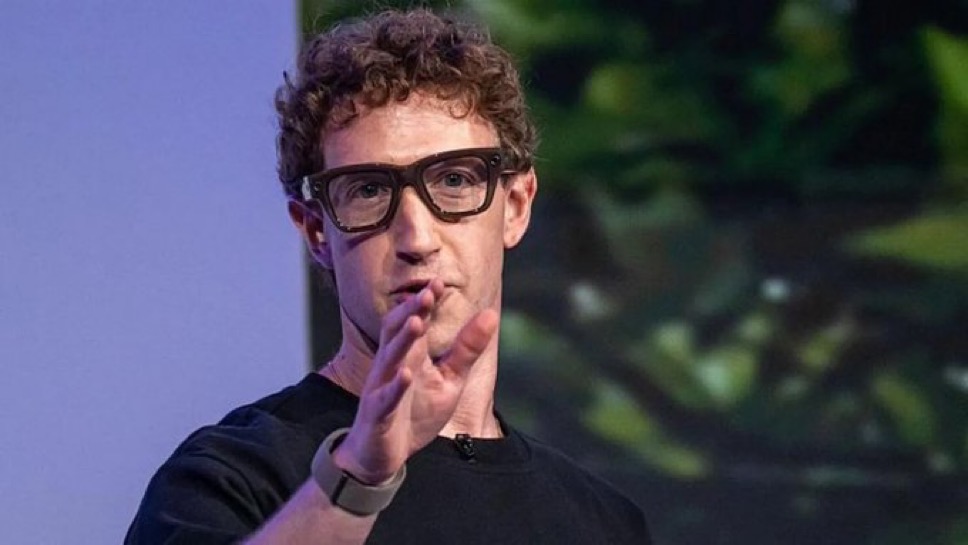
Meta has stopped working with Sama, a company in Kenya that helped train its AI using videos from the Ray-Ban glasses.
After that, Sama fired about 1,100 workers. Some of the workers say they lost their jobs after speaking out about the very private videos they had to watch.
The workers saw very private videos from the smart glasses, including people using the bathroom, taking off clothes, having sex, private talks, and even bank card details.
So many users did not know that a guy in Kenya were watching their videos to train the AI so a class-action lawsuit against Meta was filed
Sama has lost the contract with Meta and fired 1,000 people
Meta has not given a detailed public statement on ending the contract or the workers’ claims
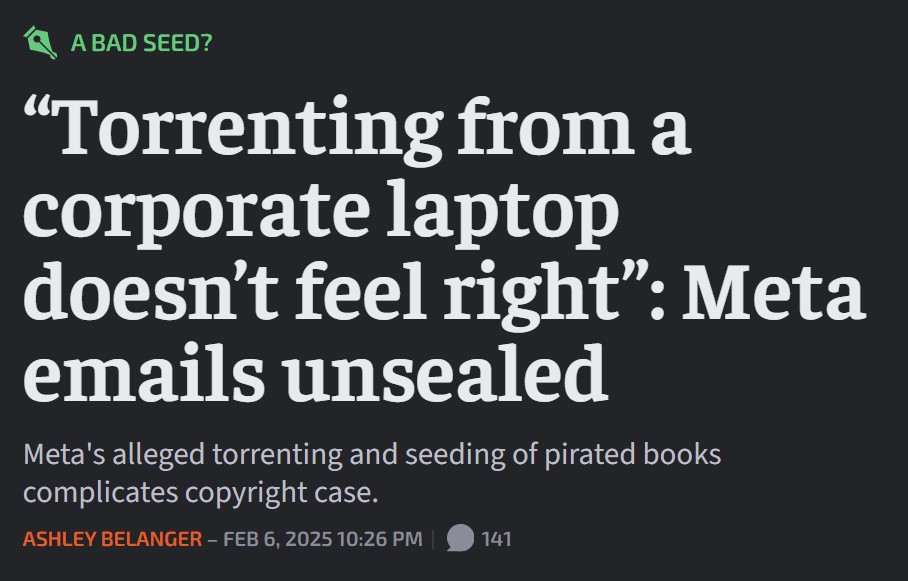
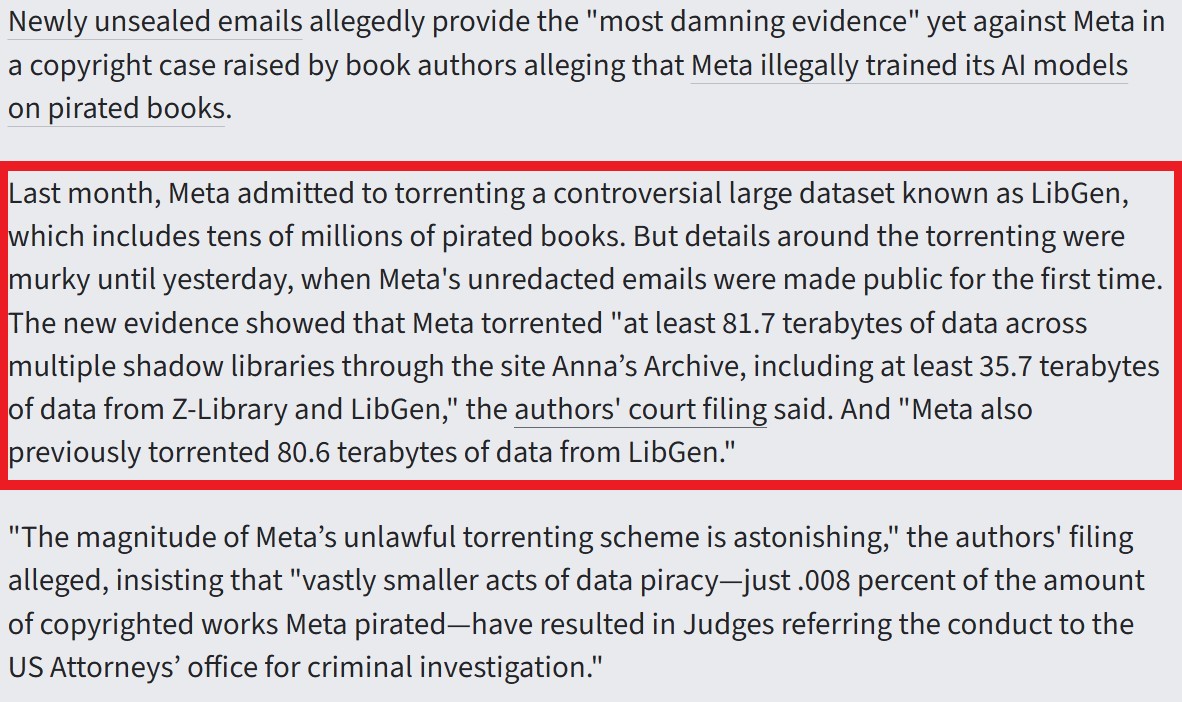
Meta illegaly downloaded 80+ terabytes of books from LibGen, Anna's Archive, and Z-library to train their AI models.
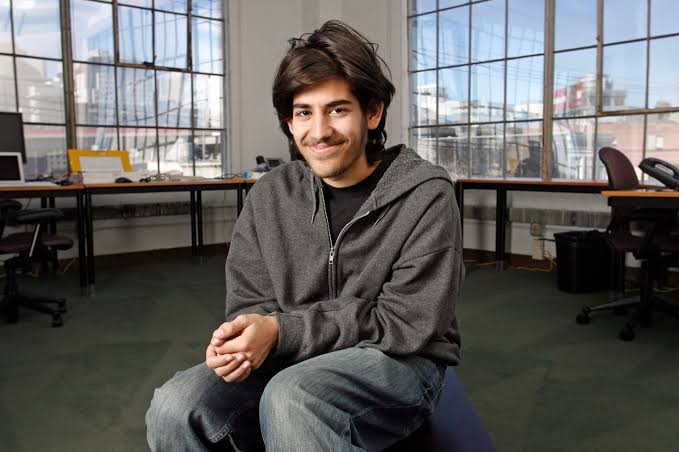
Aaron Swartz downloaded 70 GBs of articles from JSTOR (0.0875% of Meta) in 2010. Faced $1 million in fine and 35 years in jail. Took his own life in 2013.
For the last three years, a startup in Bangalore has been obsessed with a pursuit that typically invites raised eyebrows, naked skepticism, and accusations of stealing from sci-fi:
@dognosis is training dogs to detect cancer.
And until you've spent time at their facility - a former pomegranate farm in the outskirts of Bangalore - perhaps skepticism is the rational response.
But Dognosis isn't betting on some pie-in-the-sky idea or some charming novelty act, they're betting on evolution.
@akadogluk and @Itamar_Bitan based their company on the fact that the dog's nose - a product of fifteen millennia of co-evolution with humans - can detect the faint chemical trace of cancer in your breath at a resolution that our machines, algorithms, and laboratory tests have never come close to matching.
We've known this fact for decades. We've consistently failed to do anything meaningful with that knowledge.
The missing link has been figuring out what the dog's nose knows, and applying it in a standardised, scalable, and clinically validated way.
Dognosis is building this missing piece of the equation i.e. the translation layer that allows the dog's nose to speak a language medicine can understand, enabling us to harness an ancient biological intelligence and plug it into our modern medical infrastructure.
Maybe you've read the paragraphs above and retained your skepticism. That's fair. But this past Friday, the Journal of Clinical Oncology - the world's most influential cancer journal - opted to make life much harder for the skeptics.
On Friday, the JCO published Dognosis' landmark study on breath-based multi-cancer detection - the largest of its kind ever conducted - showing that a team of trained dogs, equipped with sensors and AI, could detect multiple cancers from breath alone at 90%+ accuracy - including at Stage I, when it matters most - for $2 a test.
According to Akash, it proved "that everything we’ve known about the dogs is true".
Needless to say, it's a genuine milestone for Indian healthcare, health-tech, deep-tech, and, uh, dog-tech, that deserves far more attention than it's gotten so far.
To help change that, we were lucky to have Akash stop by the Tigerfeathers editorial desk this past week to unpack the Dognosis journey - helping us understand what they're building, how they're doing it, why it matters, and what comes next.
From where we're sitting, Dognosis is an n-of-1 Indian startup with an n-of-1 story that everyone in the Indian tech ecosystem should be aware of. If you've been intrigued by what you've read so far and you're keen to go deeper, dive into our piece here👇
https://t.co/limlGrgxJ1
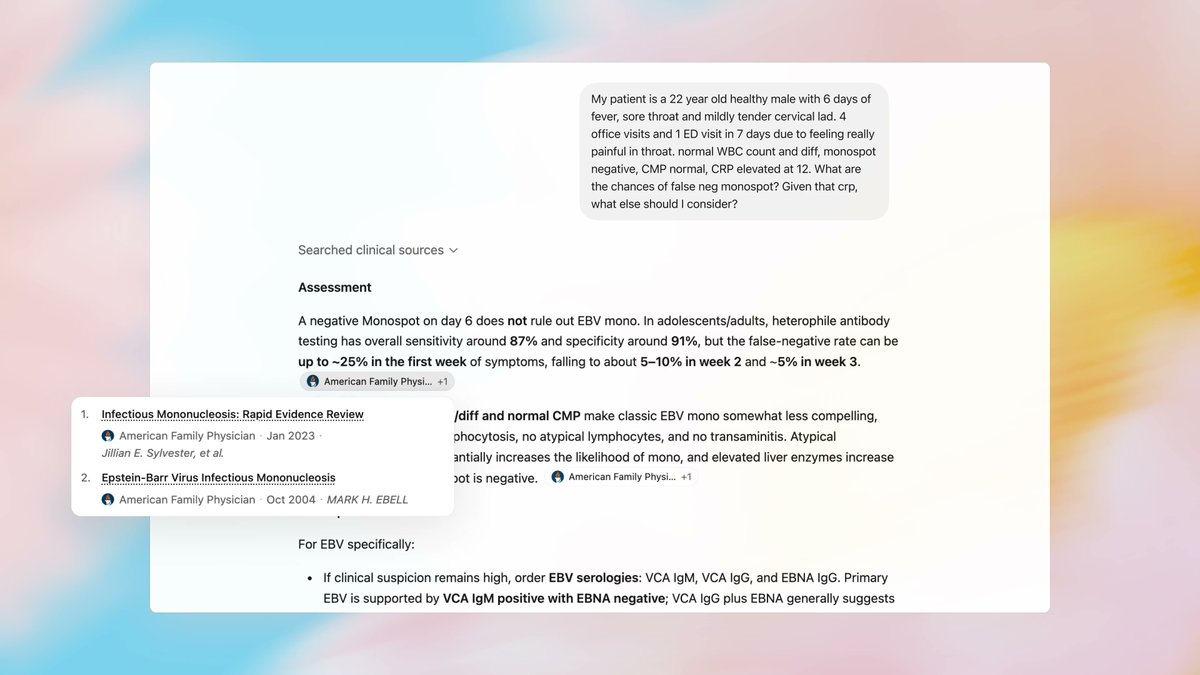
Today we’re introducing two big steps for health at OpenAI:
- ChatGPT for Clinicians, a free version of ChatGPT designed for clinical work
- HealthBench Professional, a new benchmark to evaluate real clinician chat tasks
We’re excited about what this can unlock for care. ❤️
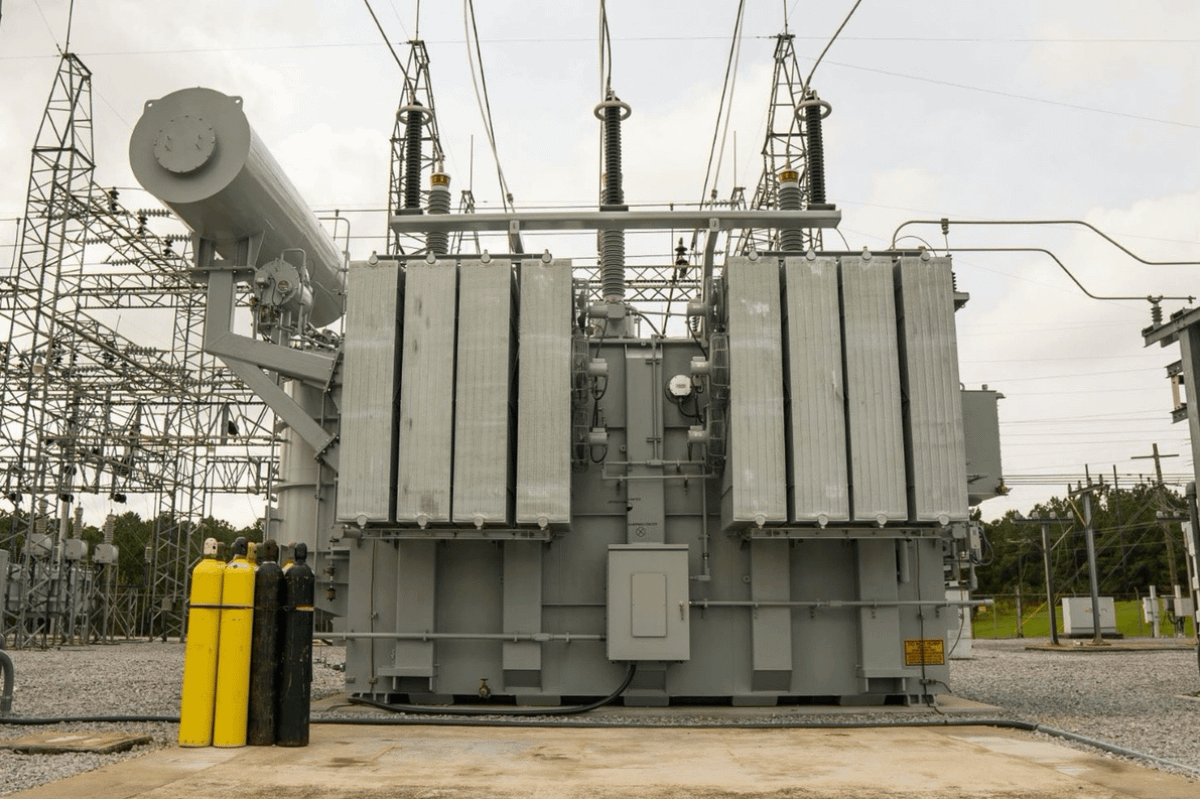
Half of America's AI data centers planned for 2026 are delayed or cancelled. They're waiting on transformers. I build chemical plants. Transformer prices have tripled in the last four years. Lead times are 2 to 4 years. Each new plant we build competes with AI data centers for the same grid equipment. Every large power transformer in America runs on grain-oriented electrical steel. It's made by rolling iron and silicon together until their crystals align in one direction. No other alloy works at utility scale and only one US company makes it: Cleveland-Cliffs. The average large power transformer on the grid is 38 years old. Service life is 40. Amazon, Google, Meta, and Microsoft committed $650 billion to AI infrastructure this year. Nvidia's most expensive GPU is useless without a transformer.
Mark Cuban just described the largest wealth transfer of the AI era.
Almost nobody understood what he said.
Cuban: “There are 33 million companies in this country. Aren’t going to have AI budgets. Aren’t going to have AI experts.”
Not tech startups.
The shoe store. The regional trucking outfit. The accounting firm with 12 employees.
The businesses that actually run the physical economy.
They know AI is coming. They have no idea what to do with it.
Cuban: “You’ve got the head of Microsoft saying software is dead because everything’s going to be customized to your unique utilization.”
Software is dead.
The SaaS era ran on one rule. Build a generic product. Force millions of companies to bend their workflows around it. Charge rent forever.
AI ends the contract.
The business stops bending to the software. The intelligence bends to the business.
But customized by whom.
The third-generation manufacturer cannot tell Claude from Gemini. The county hospital is staring at a reactor asking where the light switch is.
Cuban: “Who’s going to do it for them?”
That question is worth more than the frontier models themselves.
Hundreds of billions are being burned to build the foundation. The smartest engineers alive are locked in a bloodbath over who owns the base layer.
Let them fight.
Let them burn the capital. Let them drive the cost of raw intelligence toward zero.
Because the wealth does not collect where the brain is built.
It collects where the brain meets the business.
Every ambitious kid in college right now thinks survival means a seat at OpenAI or Anthropic.
Cuban is staring at the other 99 percent of the economy.
Learn the models. Then learn the messy, unglamorous reality of how a 50-person company actually operates.
Walk through the door. Understand their problems. Wire the intelligence directly into their revenue.
That is not a job title. That is an entire economic class being born.
You do not need to build the brain. You need to build the nervous system.
The biggest winners of the electricity era were not the engineers who built the generators. They were the ones who walked into dark factories and showed the owners where to plug in.
33 million companies are standing in the dark right now.
Silicon Valley is racing to build the god. The fortunes will belong to whoever teaches him a trade.
look at this little guy.
i designed this creature years ago. picked this scene on purpose — the hatching, the sac, the wet emergence, the fur — because i knew how badly it would have broken, every time, in every version of this tech up to now. limbs through membranes. bodies folding into themselves. things growing out of nothing. fur turning into soup. physics giving up at the moment of rupture.
this one didn't.
the sac deforms under pressure. the fluid behaves like fluid. the rupture is actually there, the moment where enclosed becomes emerged, and the membrane remembers what it was holding. the fur stays fur, even wet — matted, heavy, clinging the way real fur does. he has weight when he lands.
i let the model contribute. the little mouth at the end wasn't in my prompt. a happy accident that wanted to stay.
What I told 2,000 future founders in Bengaluru today:
1/ We believe we are at the start of a second wave of Indian companies that will build world-class AI native products for the global market. Emergent and Giga are the model of the future.
2/ Just because a space seems crowded doesn't mean it's too late. Zepto, Emergent, Giga - none were first movers. Second mover advantage is real.
3/ In fact, a good formula for finding startup ideas is to look at ideas that are showing some promise and just execute them better. Execution is everything: if you're an exceptional engineer, and you can build and move faster than your competitors, you'll win.
4/ There is every reason to believe Indian teams can beat US teams building global products. The level of engineering talent here is on a whole different level, and that's the key input.
5/ In the AI era, the best founders are the ones building at the edge of what's technically possible. You need to be experimenting wth the latest models, the latest open source projects.
6/ Stay in the flow of information. Watch the right podcasts, follow the right people on X. With AI changing this fast, you need to know what the smartest builders are thinking.
7/ Most of the best startups don't come from someone explicitly trying to start a company. They start from someone building a project just for fun, or tinkering with a new technology because they are curious. India needs more of this "tinkering" culture - this is how you have novel ideas when technology is shifting quickly.
8/ Founders are getting younger. Aadit was 18 when he started Zepto. The Giga founders were 20 when they came to SF. Young people who can learn very fast have the advantage right now.
9/ The best founders are pushing AI coding to the max. You can now write 20K lines of code / day. One person can do the work that just a year ago would take a 100 person team. The best builders are taking advantage and building at Garry Tan speeds.
𝑺𝒆𝒆𝒊𝒏𝒈 𝒊𝒔 𝑵𝒐 𝑳𝒐𝒏𝒈𝒆𝒓 𝑩𝒆𝒍𝒊𝒆𝒗𝒊𝒏𝒈.
You may have come across face-swap videos of Shah Rukh Khan and other actors singing about tasty fruits
... a thread about 𝑫𝒆𝒆𝒑 𝑭𝒂𝒌𝒆𝒔?
and how even 𝐍𝐚𝐫𝐚𝐲𝐚𝐧𝐚 𝐌𝐮𝐫𝐭𝐡𝐲 and 𝐑𝐚𝐭𝐚𝐧 𝐓𝐚𝐭𝐚 were faked 😯